 Bellingham Siding
 Exterior Work in Lynden: What Makes This Area Different
Lynden sits at the north end of Whatcom County, close enough to the Nooksack River valley and the Canadian border that its weather runs a few degrees cooler and a few percentage points wetter than people expect from a "Pacific Northwest" forecast. The marine air that rolls in off the Salish Sea doesn't stop at the Bellingham city limits — it pushes inland through the county, carrying moisture and humidity that settle into farmland, tree lines, and residential streets alike. Combine that with driving rain that comes in sideways during fall and winter storms, and you get an exterior climate that is genuinely tough on building materials, even away from the immediate waterfront.
Homes in and around Lynden also deal with a long moss and algae season. Cooler temperatures, shaded lots, and extended damp stretches from October through May give organic growth plenty of time to take hold on north-facing walls, under eaves, and anywhere siding stays shaded and slow to dry. Add the area's mix of older farmhouses, mid-century ranches, and newer subdivision construction, and you've got a wide range of siding conditions — some holding up fine, some quietly failing behind a coat of paint.
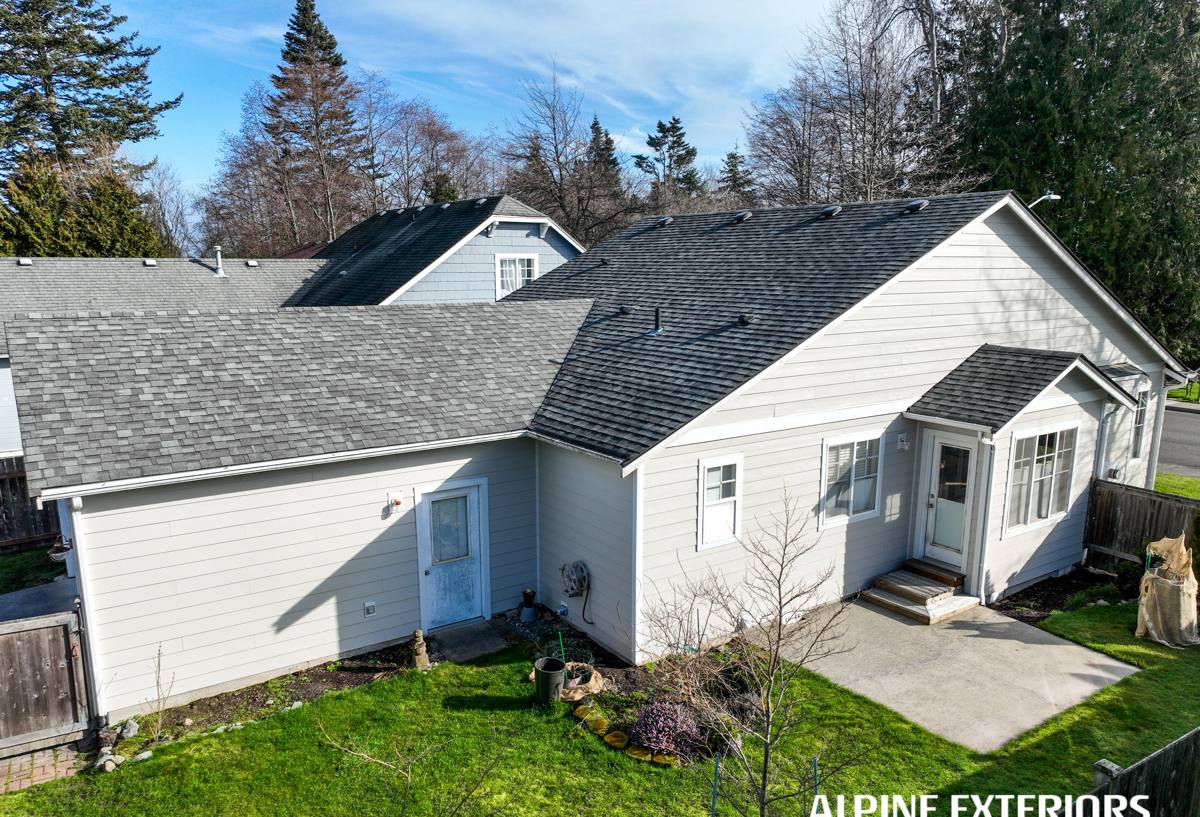
How Whatcom County Weather Wears Down Siding
Moisture Cycling
The bigger issue in Lynden isn't any single storm — it's the repeated cycle of wet and dry that siding goes through for eight or nine months a year. Materials that absorb water expand; materials that don't hold their shape crack, swell at seams, or delaminate at the edges. Over years, that cycling is what separates siding that lasts three decades from siding that needs patching after ten years.
Moss, Algae, and Shaded Walls
Any wall that doesn't get regular direct sun — common on tree-lined lots and homes with deep eaves — stays damp longer after rain. That's exactly the environment moss and algae need. Left alone, organic growth holds moisture directly against the siding surface, which accelerates rot in wood-based products and can stain or degrade paint finishes on others.
Driving Rain and Wind-Driven Wet
Storms moving through Whatcom County often bring rain at an angle rather than straight down, which pushes water into laps, seams, and trim junctions that a vertical-only rain assumption wouldn't reach. Siding and flashing details that aren't installed with wind-driven rain in mind are where leaks usually start — not in the field of the wall, but at the transitions.
Why We Only Install James Hardie Fiber Cement
We made a deliberate decision as a company: we install James Hardie fiber cement siding, and nothing else. Not vinyl, not LP SmartSide, not Cemplank or Allura, not primed spruce or cedar. That's not a marketing angle — it's a standard we hold because of what we've seen these products do (and not do) in exactly the kind of wet, moss-prone, temperature-swinging climate Lynden sits in.
What James Hardie Gets Right for This Climate
- Non-combustible core: fiber cement doesn't feed a fire the way wood-based siding can, which matters for insurance conversations as much as safety.
- Dimensional stability: Hardie board doesn't swell and shrink with moisture the way wood and some composite products do, so seams and paint lines stay tighter over time.
- ColorPlus factory finish: baked-on color resists fading and chipping far better than field-applied paint, and it holds up against the county's damp, low-light stretches without needing repainting on a short cycle.
- HZ5 engineering: Hardie's HZ product line is engineered for colder, wetter climate zones — which is a closer match to Whatcom County's conditions than siding designed for a national average.
- Transferable warranty: a real, documented warranty that follows the house, not just the original owner.
Why We Say No to the Alternatives
Vinyl siding is inexpensive and low-maintenance in mild climates, but it's a petroleum-based product that expands and contracts with temperature swings, can crack in a hard freeze, and simply isn't as rigid or impact-resistant as fiber cement. LP SmartSide and similar engineered wood products perform reasonably well when installation is flawless, but they're wood-based at their core — meaning any gap in caulking, flashing, or edge sealing gives moisture a path in, and once wood-based siding starts absorbing water, the clock is running. Primed spruce and cedar are honest, traditional materials, but they demand a maintenance schedule — recoating, caulking, inspecting — that most homeowners don't keep up with for 20+ years, and Lynden's moisture load isn't forgiving of missed maintenance. We'd rather install one product very well than offer five products and let each customer discover the trade-offs the hard way.
Siding Installed the Way It's Supposed to Be
Fiber cement is only as good as its installation. Hardie's own technical bulletins are specific about clearances, fastener patterns, and flashing details for good reason — skip them and even the best siding material can trap moisture behind it. Our crews follow manufacturer installation specs as a floor, not a suggestion, including:
- Proper ground and roof clearance to keep splash-back and runoff away from the board's bottom edge
- Correct fastener spacing and depth so panels aren't over- or under-driven
- Flashing and kick-out details at windows, doors, and roof-to-wall intersections — the spots wind-driven rain actually finds
- A drainage plane behind the siding so any incidental moisture has somewhere to go
- Caulking and sealant only where Hardie's specs call for it, not as a substitute for proper flashing
Roofing, Windows, and Decks: The Full Envelope
Siding doesn't work in isolation — it's one piece of the building envelope, and it fails faster when the rest of the envelope isn't doing its job. We also handle roofing, window replacement, and deck construction, which matters in Lynden specifically because:
- Roofing: a roof that's shedding water properly, with clean gutters and correct drip edge, keeps runoff from washing straight down the face of new siding.
- Windows: window flashing integrates directly with siding at every opening — mismatched details here are a common source of hidden leaks, siding job or not.
- Decks: ledger board attachment and deck-to-house flashing are a frequent point of rot on older homes; if we're already opening up a wall for siding, it's worth checking.
Having one crew that understands how all four systems interact means fewer gaps between trades — and fewer callbacks down the road.
Planning a Siding Project: What Affects Cost and Timeline
| Factor | Why It Matters |
|---|---|
| Home size and wall complexity | More corners, gables, and trim details mean more cutting, fitting, and labor time |
| Current siding condition | Rot or hidden water damage found during tear-off may need sheathing repair before new siding goes on |
| Existing moss or algae damage | Heavily shaded walls with organic growth may need more prep and moisture assessment |
| Trim and accent choices | Board-and-batten accents, shakes, or custom trim add material and labor cost over standard lap siding |
| Window and door count | Every opening needs flashing integration, which adds detail work |
| Access and lot conditions | Tree cover, slope, or tight lot lines can affect staging and crew efficiency |
Every home is different, and the only reliable way to scope cost and timeline is a walk-through — we're not going to throw out a number without seeing the actual walls.
Why a Local, Whatcom County Crew Matters
A crew that works this county regularly knows what Lynden's climate actually does to a house over years, not just what a spec sheet says it should do. That shows up in small decisions — where to add extra flashing attention, which walls are worth a closer look for moss damage, how to sequence a project around the wetter months — that a crew unfamiliar with the area might not think to make. It also means someone local is accountable if a question comes up after the job is done, not a call center in another state.
A Straightforward Process
- A no-pressure on-site walk-through and honest assessment of your current siding's condition
- A clear, itemized estimate — material, labor, and any repair work identified during tear-off
- Manufacturer-spec installation, with flashing and drainage details treated as non-negotiable
- A final walk-through so you know exactly what was done and what to expect from the finish over time
If your Lynden home is due for new siding — or you're just not sure whether what's on the walls now still has good years left in it — we're happy to take a look. Reach out for a free, no-pressure estimate and we'll give you a straight answer, not a sales pitch.