 Bellingham Siding
 Siding Replacement Built for Lynden's Climate, Not a National Average
Lynden sits inland from the Bellingham waterfront, but it's still squarely inside Whatcom County's marine-influenced climate belt. That means the same moisture load that hammers homes closer to the water — long stretches of low-intensity rain, damp air off the Salish Sea, and short, low-angle winter sun — reaches Lynden too. Add the county's agricultural humidity and tree cover along the Nooksack corridor, and you get siding conditions that are tougher than what a generic national siding guide assumes. A replacement job here has to account for all of it, not just swap old boards for new ones in the same pattern.
This page covers siding replacement specifically for Lynden homes: what the climate does to siding over time, what a correct replacement actually involves, how we run the job, and why it matters to hire a crew that already works this area regularly.
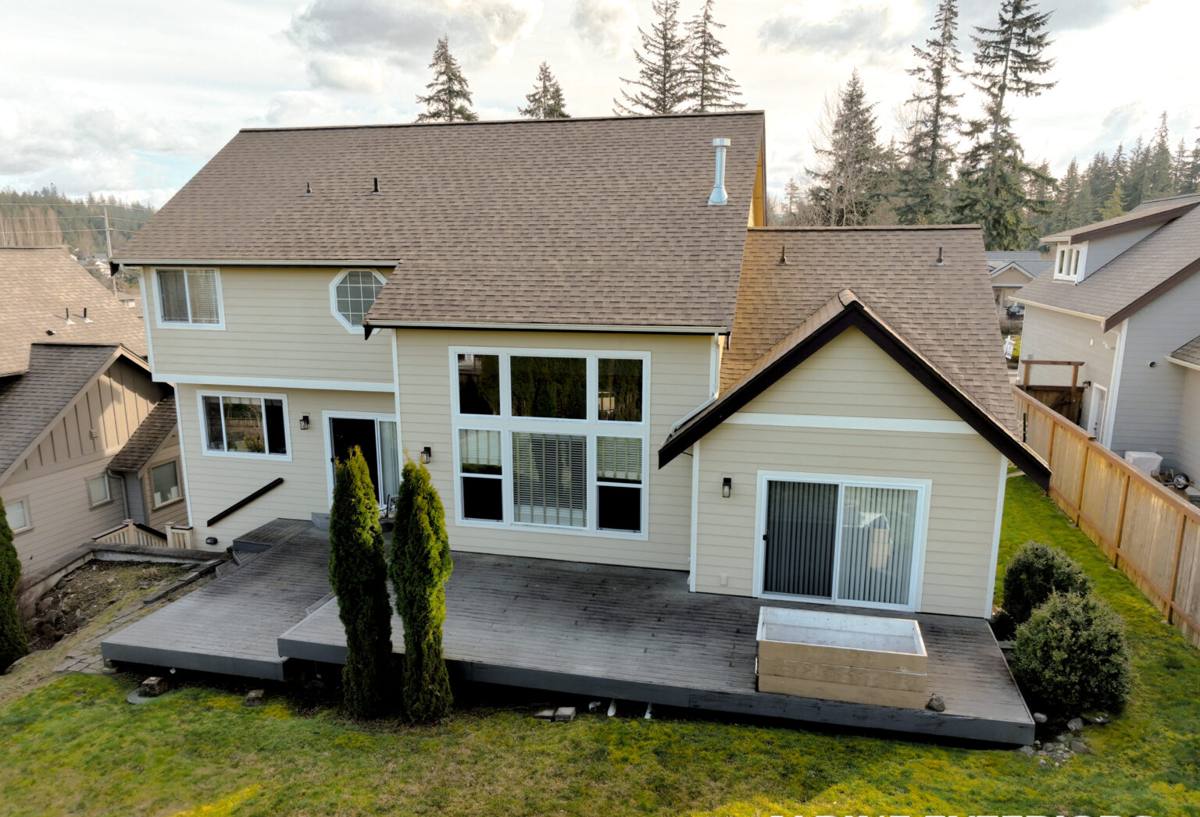
What Whatcom County's Climate Does to Siding Over Time
Siding failure in this region rarely happens because of one dramatic event. It's cumulative — moisture and biological growth working on a wall system for years before the damage becomes visible.
Driving rain
Wind-driven rain doesn't just fall straight down; it gets pushed sideways into wall assemblies, especially on west and southwest exposures. Over time this drives moisture into seams, laps, and fastener penetrations that weren't detailed correctly the first time. Siding that looks fine from the street can be hiding soft sheathing behind it.
Salt-tinged, humid air
Even set back from the immediate shoreline, homes in this part of Whatcom County are exposed to salt-tinged marine air more often than most of the country ever sees. That air accelerates corrosion of fasteners and metal flashing and keeps painted or coated surfaces damp longer after every rain event, which shortens the useful life of anything not built to shed moisture quickly.
A long moss and algae season
Shade, moisture, and mild temperatures add up to a moss and algae season that runs much longer here than in drier climates. Moss holds water directly against a wall surface for extended periods, and on the wrong substrate that constant dampness is exactly what breeds rot at seams and butt joints.
Temperature swings and expansion
Whatcom County doesn't get extreme heat, but the freeze-thaw cycles common in winter and the swelling/shrinking that comes with constant moisture exposure stress siding joints and fastener holes every year. Materials that expand and contract more than a fiber cement product will loosen over time, opening gaps that let water in.
Signs a Lynden Home Needs Siding Replaced, Not Just Patched
- Soft or spongy spots when you press on the siding, especially near the bottom courses and around window trim
- Persistent moss or dark streaking that comes back within weeks of cleaning
- Paint that's bubbling, peeling, or chalking heavily instead of just fading evenly
- Visible warping, cupping, or delamination in panel-style or engineered wood siding
- Gaps opening at seams, corners, or where siding meets trim
- Rising heating bills with no other explanation, which can point to a compromised weather barrier
- Interior signs — musty smell, staining on interior walls near exterior corners, or visible mold near baseboards on exterior walls
Any one of these can sometimes be handled with a repair. Several at once, or any sign of sheathing damage underneath, means the wall assembly needs a full look before more money goes into patchwork.
What a Correct Siding Replacement Actually Involves
Replacing siding well is a wall-system job, not a cosmetic swap. Skipping steps here is exactly how a home ends up needing another full replacement in half the time it should have lasted.
Tear-off and inspection
Old siding comes off in sections so the sheathing underneath can be inspected as we go, not guessed at from the outside. Any rot, soft sheathing, or compromised framing gets identified and repaired before anything new goes up — covering damage over is how small problems become expensive ones.
Water-resistive barrier and flashing
A new weather-resistive barrier gets installed correctly lapped, and flashing gets detailed at every window, door, and penetration. In a climate with this much driving rain and prolonged dampness, flashing details are where most long-term failures actually start — this is not a step to rush.
Proper fastening and clearances
Fastener spacing, penetration depth, and butt joint treatment all follow the manufacturer's specification, not a generalized "close enough" approach. Ground clearance and clearance from roof lines are set to keep splash-back and roof runoff away from the bottom courses, which is one of the most common places we find hidden rot on older Lynden homes.
Ventilation behind the cladding
Where the wall assembly calls for it, a drainage plane or rainscreen gap lets any moisture that does get past the outer layer drain and dry instead of sitting against the sheathing — important in a climate where surfaces stay damp for days at a time.
Why We Install Only James Hardie Fiber Cement
We don't offer vinyl, LP SmartSide, primed spruce, cedar, or other fiber cement brands as options here — not because those products have no legitimate use anywhere, but because after years of doing this work in Whatcom County's specific conditions, we standardized on one system and stopped installing anything else.
James Hardie fiber cement is non-combustible, which matters for insurance and peace of mind regardless of climate. More specific to this region: it doesn't feed moss and algae growth the way wood-based or engineered wood products can, it doesn't swell, cup, or delaminate from repeated wetting the way engineered wood substrates are prone to, and the ColorPlus factory finish holds color and resists the fading and chalking that a long, damp season accelerates on field-painted products. Hardie also offers HZ5 formulations engineered specifically for cold, wet, freeze-prone climates — which is exactly the profile Whatcom County fits.
None of that means Hardie is maintenance-free or immune to bad installation. It still requires correct flashing, fastening, and clearances to perform as designed — the product doesn't save a job from a sloppy install. What it does is give a correctly installed wall system a much longer, more predictable service life in this climate, backed by a strong transferable warranty, without the moisture-driven weaknesses we kept running into with other materials.
Our Siding Replacement Process
- On-site assessment — we walk the exterior, check for soft spots, moss patterns, and trouble areas around windows and rooflines, and talk through what we find.
- Written estimate — scope, product line, color, and cost laid out clearly before any work starts.
- Tear-off and sheathing inspection — old siding removed in sections, damage repaired as it's found, not hidden.
- Weather barrier and flashing installation — the part of the job that determines how the wall performs for the next several decades.
- Hardie installation to manufacturer spec — correct fastening, clearances, and joint treatment throughout.
- Final walkthrough — we go over the finished work with you before calling the job done.
Cost Factors for Siding Replacement in Lynden
| Factor | Why It Matters Here |
|---|---|
| Extent of hidden damage found during tear-off | Rot from long-term moisture exposure isn't visible until old siding comes off; repairs add cost but prevent repeat failure |
| Home size and wall complexity | More corners, dormers, and trim details mean more flashing and cutting time |
| Siding profile and Hardie product line chosen | Lap, shingle, and panel profiles differ in material and labor cost |
| Trim and accessory work | Window and door trim replacement is often bundled in for a consistent, weathertight result |
| Access and site conditions | Tree cover, slope, or tight lot lines common on Whatcom County properties can affect staging and labor time |
We don't quote siding replacement over the phone. Every estimate reflects an actual walk-around of your home's specific conditions.
Why Hiring a Crew That Already Works Lynden Matters
A siding crew that regularly works Whatcom County isn't guessing at how this climate behaves — they've already seen where moss builds up fastest, which exposures take the worst of the driving rain, and where older homes in this area tend to hide rot. That translates into fewer surprises during tear-off, flashing details that account for real local weather patterns instead of a generic install manual, and a finished wall system suited to the conditions it actually has to survive, not just the conditions on a spec sheet.
It also means a contractor who can speak plainly about tradeoffs — including telling you when a full replacement isn't necessary yet, or when a repair will genuinely hold for a few more years. That kind of honesty only comes from a crew with enough local experience to know the difference.
Before You Hire — A Quick Checklist
- Ask what happens if rot is found during tear-off, and how that's priced
- Confirm which specific Hardie product line and color they're quoting, not just "fiber cement"
- Ask how they handle flashing at windows, doors, and roof lines
- Get the workmanship warranty in writing, separate from the manufacturer's material warranty
- Ask for a timeline that accounts for weather delays, which are common here
If your Lynden home is showing any of the warning signs above, or you're simply planning ahead for a siding replacement, we're happy to take a look and walk you through what we see — no pressure, no obligation. The form below gets you a free, honest estimate from a crew that already knows this climate.