 Bellingham Siding
 Ferndale's Exterior Climate: What Homes Here Actually Face
Ferndale sits close enough to Bellingham Bay and the Salish Sea that salt-laden air is a real factor on exterior surfaces, not a theoretical one. Add Whatcom County's long, wet fall-through-spring stretch of driving rain, frequent wind-driven storms off the water, and the shaded, damp conditions that let moss and algae colonize a north-facing wall for months at a time, and you get a climate that is genuinely harder on siding than most of the country deals with. Homes on larger lots with mature trees, or set back from the road under fir and cedar cover, tend to see the moss and moisture problems first. Homes closer to open water or exposed to prevailing wind see the salt exposure and paint-film breakdown first. Most Ferndale properties get some combination of both.
None of this is unique to any one street or neighborhood in town — it's a function of being in this corner of Whatcom County, a few miles from the water, under a marine-influenced weather pattern that keeps humidity high for most of the year. Siding, trim, and fascia boards that were installed without that reality in mind are the ones we get called out to look at most.
Salt Air and Coastal Proximity
Airborne salt accelerates corrosion on fasteners, flashing, and any exposed metal trim, and it breaks down cheaper paint films faster than an inland location would. It doesn't ruin every product, but it does mean fastener quality, flashing detail, and finish quality matter more here than they would fifty miles inland.
Driving Rain and Wind-Driven Moisture
Wind off the water pushes rain sideways into wall assemblies, which is exactly the condition that exposes weak caulk joints, poor flashing at windows and doors, and siding installed too tight to the ground or to trim. Water intrusion problems in this area are rarely about the siding material failing outright — they're almost always about a detail at a joint, corner, or penetration that wasn't built to shed water moving horizontally, not just falling straight down.
Moss, Algae, and Prolonged Dampness
Shaded walls that stay damp for days at a stretch grow moss and algae readily. On some materials that's a surface-cleaning issue. On others, especially anything with exposed wood fiber or a finish that lets moisture track behind the surface, sustained dampness becomes a rot and delamination issue over years, not months.
Why a Local Whatcom County Crew Matters
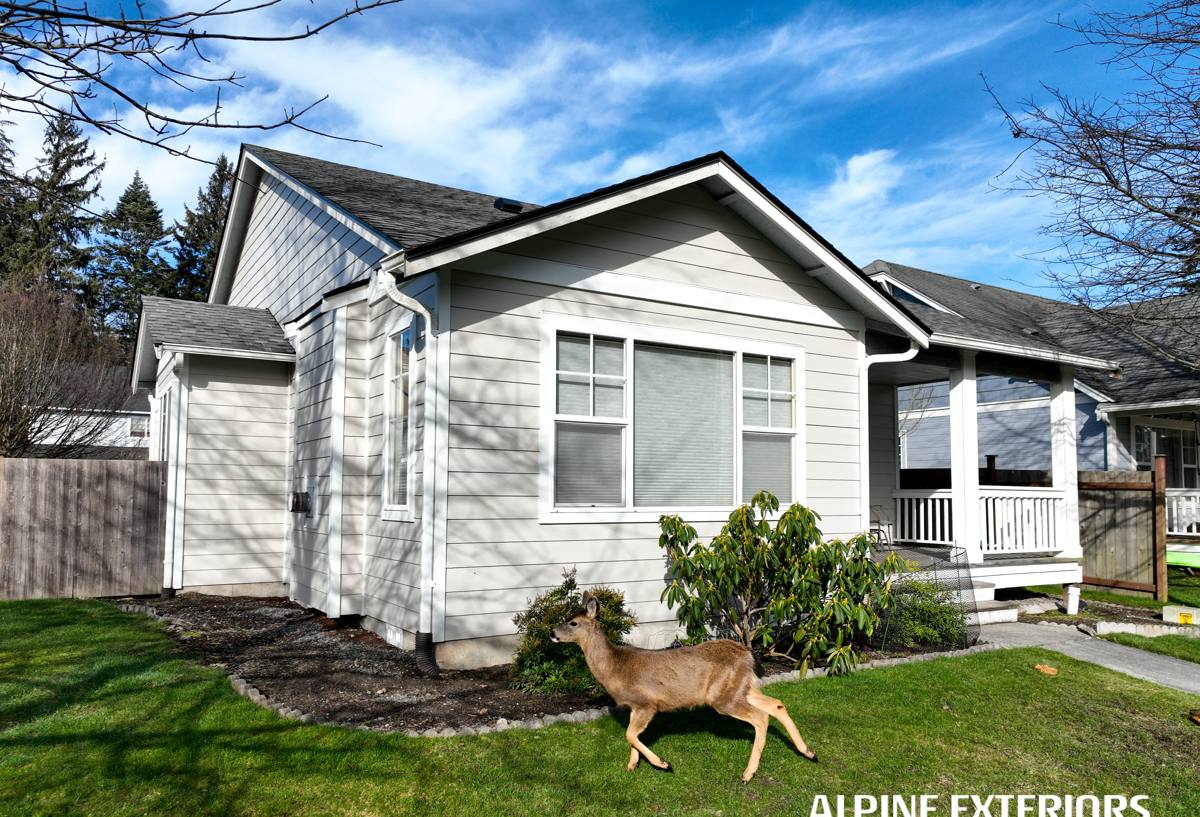
A crew that works Bellingham, Ferndale, and the surrounding county day in and day out knows which wall orientations on a given lot will fight moss, which older homes in the area were built with siding details that don't hold up to this climate, and which fastener and flashing choices actually perform here versus on paper. That's not something a crew based somewhere with a drier climate picks up quickly. It also means straightforward scheduling and warranty follow-up — you're not waiting on a company routing crews in from out of the area, and you're not stuck if a question comes up two years after installation.
We also know the practical side: permitting expectations for exterior work in Whatcom County jurisdictions, how to sequence a siding job around the wet season so materials and open wall assemblies aren't sitting exposed longer than necessary, and how to plan around the fact that a dry weather window here can be narrower than homeowners expect.
Why We Install Only James Hardie Fiber Cement Siding
We made a deliberate decision to install one siding system — James Hardie fiber cement — instead of offering a menu of options. That's not a marketing position; it's a response to what this climate does to the alternatives. Vinyl siding can warp and its seams and butt joints give water a path inward under sustained wind-driven rain. LP SmartSide, Cemplank, Allura, primed spruce, and cedar all have real strengths, but each carries a maintenance burden, a moisture-sensitivity, or an installation tolerance that we've found doesn't hold up consistently in a marine climate with this much sustained dampness and salt exposure.
James Hardie fiber cement is non-combustible, dimensionally stable in swings of moisture and temperature, and its ColorPlus factory finish is baked on under controlled conditions rather than field-applied — which matters directly for a coastal, high-humidity area where field-applied finishes are the first thing to show wear. Hardie's HZ5 product line is engineered specifically for climates with heavy moisture exposure, which describes Whatcom County closely. It comes with a strong, transferable manufacturer warranty, and when it's installed to Hardie's specifications — correct fastening, clearances, flashing, and joint treatment — it performs consistently over decades rather than years. That combination is why it's the only siding system we put on homes.
How a Siding Replacement Works for a Ferndale Home
- On-site assessment — we look at wall orientation, existing moisture damage, trim and flashing condition, and any moss or algae staining pattern, since that tells us where water is actually getting in.
- Tear-off and sheathing check — old siding comes off and we inspect the sheathing underneath for rot before anything new goes up. This step is where hidden damage from years of wind-driven rain usually surfaces.
- Weather-resistive barrier and flashing — correct house wrap, window and door flashing, and z-flashing at horizontal joints are what actually keep driving rain out; this is the part of the job that matters most in this climate and is also the easiest to shortcut if a crew isn't paying attention.
- Hardie installation to spec — proper fastener spacing, clearance from grade and roof lines, and factory-finish joint treatment, all following Hardie's published installation requirements so the warranty stays intact.
- Trim, caulking, and final detail — the corners, butt joints, and penetrations where most future leaks would start.
Signs a Ferndale Home May Need Siding Replacement
- Persistent moss or algae growth that returns quickly after cleaning
- Soft spots, bubbling, or visible rot at the bottom courses of siding or near ground contact
- Peeling or chalking paint that keeps reappearing within a year or two of repainting
- Warping, cupping, or visibly separated seams, especially on the wind- or water-facing side of the house
- Staining or discoloration around window and door trim, which usually points to a flashing failure rather than a cosmetic issue
- Visible gaps at corner boards or trim that widen and narrow with temperature and humidity swings
Cost Factors for Siding Replacement in This Area
| Factor | Why It Matters Locally |
|---|---|
| Home size and wall complexity | More corners, dormers, and trim details mean more flashing and cutting labor |
| Existing sheathing condition | Rot from past water intrusion, more common on wind-exposed or shaded walls here, adds repair scope |
| Siding profile and color | Hardie plank, shingle-style, and panel profiles vary in material and labor cost |
| Access and site conditions | Mature trees, sloped lots, and tight setbacks common on Whatcom County properties can affect staging and labor time |
| Trim and flashing scope | Getting this right for driving-rain exposure adds upfront cost but is what prevents repeat problems |
What Drives the Range Higher or Lower
A straightforward single-story home with simple wall lines and sound sheathing sits at the lower end of any honest estimate range. A larger or more architecturally detailed home, or one where we find hidden moisture damage once the old siding comes off, will run higher. We don't give firm numbers without seeing the house, because guessing at scope before an inspection isn't useful to you.
Beyond Siding: Roofing, Windows, and Decks
Siding doesn't work in isolation on a home exposed to this climate. Roofing that's shedding water properly, windows that are flashed and sealed correctly, and decks built with moisture-appropriate materials and fasteners all work together to keep a Ferndale home dry through the wet season. We handle all four, which matters when a siding job uncovers a roofing or window flashing issue that's actually the source of the water problem, rather than treating siding as the only variable.
What to Expect From the Process
We walk every homeowner through what we find during tear-off before we proceed with anything beyond the original scope, so there are no surprise decisions made without you. Timelines depend on weather windows as much as crew scheduling — we plan around Whatcom County's wet season rather than pretending it doesn't affect the work. And because we're local, follow-up on workmanship or warranty questions doesn't mean waiting on a company that's moved on to a job three counties away.
If your Ferndale home is showing any of the wear this climate causes, or you're planning ahead before it does, we're happy to take a look. The estimate is free, there's no pressure, and you'll get a straight answer about what your home actually needs.