 Bellingham Siding
 Siding in Sudden Valley: A Climate Built for Moss and Moisture
Sudden Valley sits along Lake Whatcom, tucked into forested hills southeast of Bellingham, and that setting shapes what happens to a house's exterior over time. Heavy tree cover means large stretches of a home's siding rarely see direct sun, even in summer. That shade holds moisture on the wall longer after every rain, and in Whatcom County, rain is a year-round guest, not a season. The result is the same pattern we see on wooded, lake-adjacent properties throughout this part of Washington: moss and algae take hold on north- and east-facing walls, in gaps around trim, and along anywhere water sits instead of running off.
Add in the broader marine climate that defines this stretch of the Pacific Northwest coast — damp, salt-tinged air pushing inland off Bellingham Bay and the Sound, driving rain that comes in sideways during winter storms — and you've got an exterior that's under near-constant low-grade attack. None of this is dramatic. It's slow. It's the kind of wear that shows up as soft trim, peeling paint, and streaky green siding five or eight years after installation, usually because the original material or install wasn't matched to what this climate actually does to a house.
Why We Install James Hardie Fiber Cement, and Nothing Else
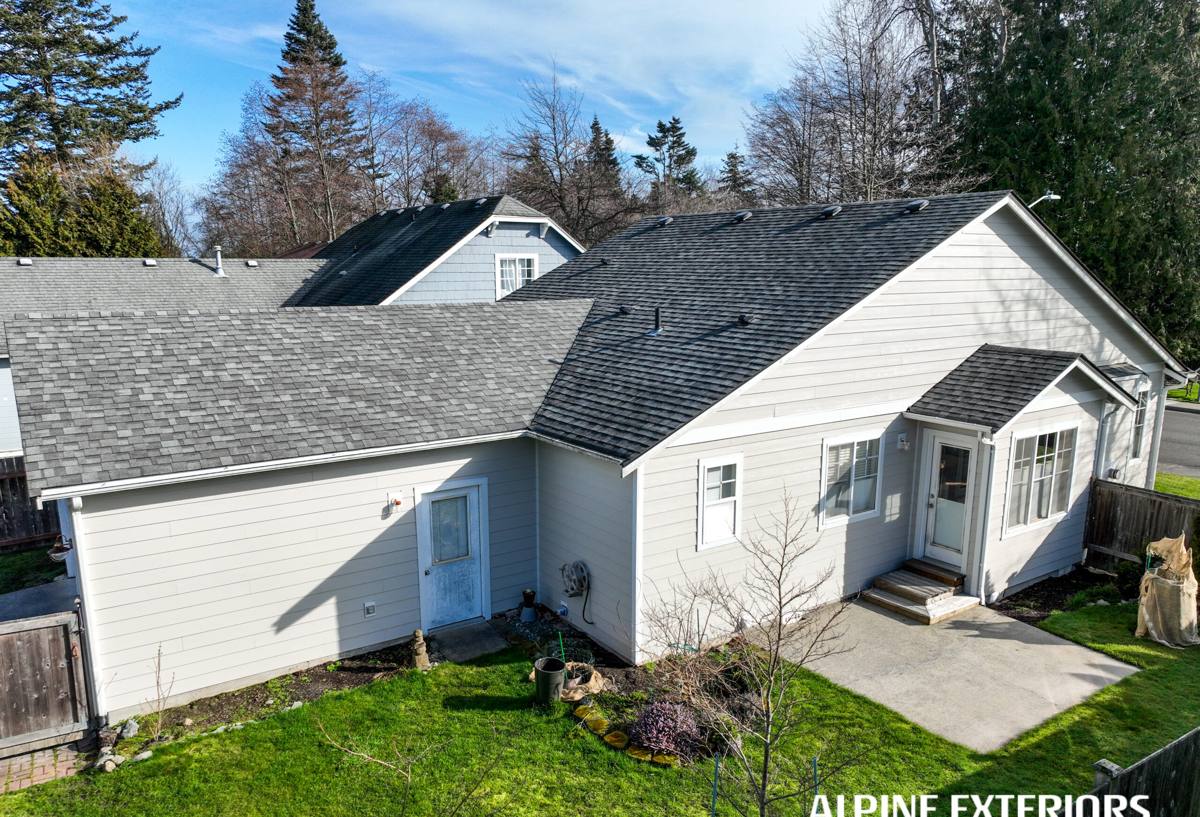
We standardized on James Hardie fiber cement siding for every home we work on, including here in Sudden Valley, and we didn't arrive at that decision casually. Fiber cement is dimensionally stable — it doesn't swell, cup, or rot when it stays wet for extended periods, which matters a great deal on a shaded wall that might not fully dry out for days after a storm. It's also non-combustible, which is worth real weight for homes surrounded by trees and set back from main roads, where wildfire risk and slower emergency access are part of the picture even in a wet region.
Hardie's ColorPlus factory-applied finish is baked on under controlled conditions rather than field-painted, which gives it better adhesion and UV resistance than a job-site paint job ever will. For Sudden Valley specifically, that matters because moss and mildew treatments, pressure washing, and general exterior cleaning are harder on a painted finish that's already fighting to bond to the substrate. A factory finish holds up to that maintenance cycle far better.
James Hardie also builds climate-engineered product lines — its HZ5 and HZ10 designations are formulated for different regional exposure levels, from moderate to extreme moisture and freeze-thaw conditions. Western Washington falls into the wetter end of that spectrum, and installing the version of the product actually engineered for this climate, rather than a generic national spec, is part of doing the job right. Combined with a strong transferable warranty, it's a product system we can stand behind on a wooded, damp property without qualifications.
What We Don't Install, and Why
We don't install vinyl, LP SmartSide, Cemplank, Allura, or unprimed cedar and spruce siding. That's not a knock on every use case for those products — vinyl has its place, and engineered wood has genuine strengths. But in a climate like Whatcom County's, we've seen the trade-offs play out too consistently: vinyl expands and contracts hard against temperature swings and can crack or bow over time; wood-based engineered siding is more sensitive to edge moisture intrusion if installation or caulking isn't perfect; and solid wood requires a maintenance commitment — restaining, resealing, ongoing rot inspection — that most homeowners underestimate going in. Fiber cement sidesteps most of that without asking for a different kind of trade-off. That's the whole reason we picked one product line and stuck with it.
More Than Siding: Roofing, Windows, and Decks
Siding rarely fails in isolation, and a wooded property like the ones around Sudden Valley makes that especially true. A roof that's shedding granules or holding moss sends water down onto siding and trim below it. Old windows with failed seals let moisture into the wall cavity right behind new siding. A deck built without proper flashing against the house wall is one of the most common sources of hidden rot we find during a siding tear-off. Because we handle siding, roofing, windows, and decks, we look at the whole exterior envelope rather than treating each surface as a separate problem — which matters most on a property where trees, shade, and standing moisture touch every part of the house at once.
The Siding Replacement Process for a Sudden Valley Home
Inspection and Assessment
We start by walking the whole exterior, not just the siding that looks obviously worn. On shaded, wooded lots we pay particular attention to north-facing walls, areas under overhangs where wind-driven rain collects, and anywhere trim meets siding, since those joints are where water intrusion usually starts.
Tear-Off and Moisture Check
Once the old siding comes off, we check the sheathing and framing underneath for soft spots or hidden rot before anything new goes up. This step matters more here than in drier parts of the state — a house that's been shaded and damp for years can be hiding moisture damage that isn't visible from outside.
Weather Barrier and Installation to Spec
James Hardie's warranty and performance depend on installation matching the manufacturer's specifications: correct fastening, proper clearances from grade and roof lines, and a weather-resistant barrier installed correctly underneath. We follow that spec on every job, not as an upsell but because it's the difference between siding that performs for decades and siding that fails early despite being a good product.
Trim, Caulking, and Finish Details
The last stage is where a lot of exteriors either hold up or don't — trim details, caulking at penetrations, and finish work around windows and doors. These are the spots most exposed to driving rain, and they're where we spend extra attention on a property like this one.
Cost Factors for Sudden Valley Properties
Every home is different, but a few factors consistently move the price on siding work in this area:
| Factor | Why It Matters Here |
|---|---|
| Tree-line access and staging | Wooded lots with limited driveway or yard space can slow material staging and equipment setup |
| Existing moisture or rot damage | Shaded walls with long-term moss exposure sometimes reveal sheathing repairs once old siding is removed |
| Home size and wall complexity | Multiple gables, dormers, and trim details add labor time independent of square footage |
| Siding profile and color selection | ColorPlus finishes and certain board profiles carry different material costs |
| Roofing, window, or deck work bundled in | Addressing flashing or window seals at the same time can prevent repeat labor later |
Choosing a Contractor for This Kind of Property
A wooded, lake-community home rewards a contractor who understands the specific way moisture, shade, and moss interact with an exterior here, rather than a crew running a generic checklist. A few things worth asking before you hire anyone:
- Are they James Hardie certified or experienced specifically with fiber cement installation to manufacturer spec?
- Will they inspect and document sheathing condition before installing new siding, not just after a problem shows up?
- Do they carry current Washington state contractor licensing and adequate insurance?
- Can they explain how they'll handle flashing and trim at roof lines, windows, and decks — not just the flat wall area?
- Will you get a written scope and warranty terms, including what's covered by the manufacturer versus the installer?
Living With Moss and Shade: Maintenance That Actually Helps
Even the right siding benefits from a little seasonal attention in a place like Sudden Valley. Keeping tree branches and vegetation pulled back from exterior walls improves airflow and sun exposure, which slows moss growth more than almost anything else you can do. A gentle rinse of shaded walls once or twice a year — low pressure, no harsh chemicals that can damage caulking or finish — keeps organic growth from getting a foothold. And checking gutters and downspouts before the wet season starts prevents overflow that soaks siding and trim from above, which is one of the more common causes of premature wear we see on properties surrounded by trees.
Get a Local, No-Pressure Estimate
If you're weighing a siding replacement, or want a second opinion on moss, moisture, or trim issues showing up on a Sudden Valley home, we're happy to take a look. There's no cost and no pressure to move forward — just a straight assessment of what your exterior actually needs and what that would involve. Use the form below to request a free estimate.