 Bellingham Siding
 Metal Roofing in Sudden Valley: A Different Set of Demands
Sudden Valley sits on the south shore of Lake Whatcom, wrapped in dense second-growth forest, with homes at a range of elevations and orientations relative to the water. That setting puts a metal roof through a specific combination of stress that a lot of general roofing advice doesn't account for: lake-driven humidity that behaves a little like salt air on exposed panels and fasteners, wind-driven rain that hits different roof planes with very different force depending on a lot's exposure, and heavy tree canopy that keeps large sections of most roofs shaded and damp for long stretches of the year. Metal is one of the better roofing materials for a property like this when it's specified and installed correctly. It's also one of the least forgiving materials when it isn't — a metal roof with the wrong fastener, a poorly lapped seam, or missing isolation between dissimilar metals will show problems here faster than it would on a drier, more open lot.
We install metal roofing throughout Sudden Valley and the wider Bellingham area, and our specifications for this neighborhood are built around what we've seen hold up on shaded, moisture-heavy lake properties — not a generic install written for a dry climate.
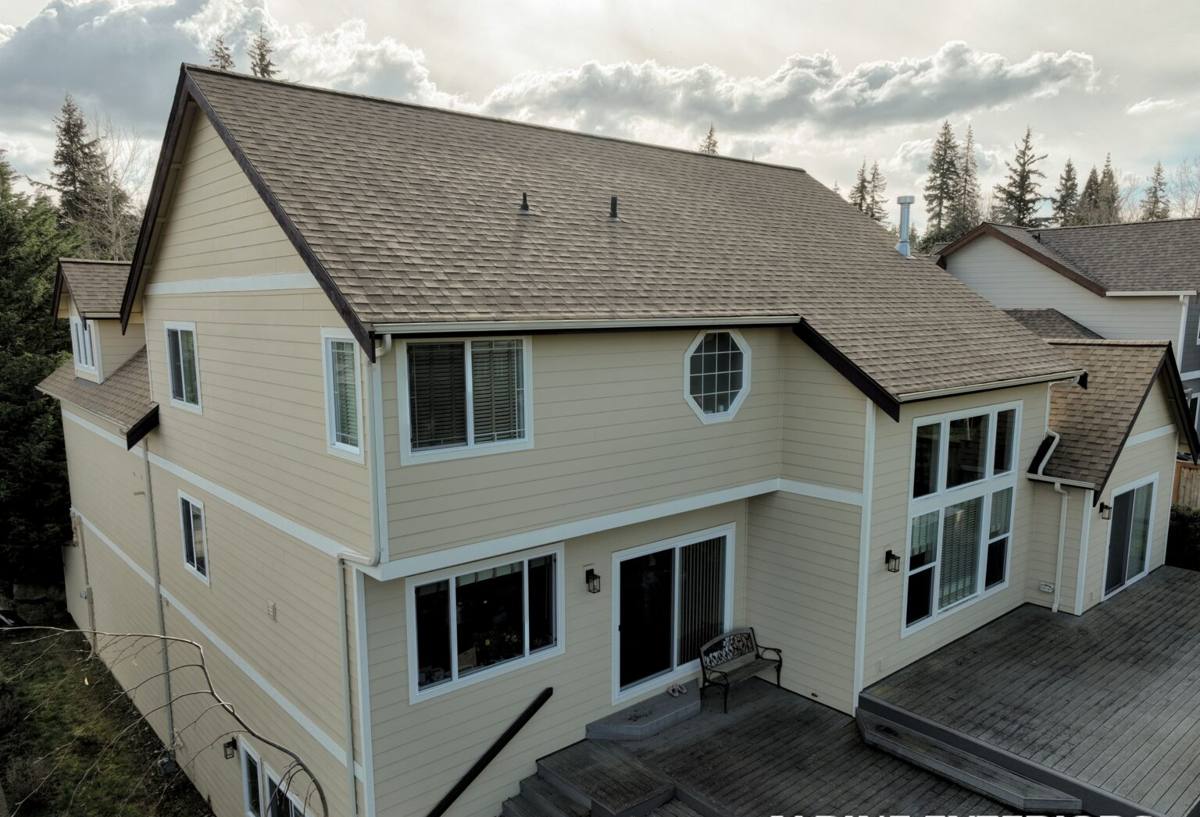
What This Climate Does to a Metal Roof
Salt-Adjacent Humidity Off the Lake
Sudden Valley isn't on saltwater, but Lake Whatcom keeps the air noticeably damper than it is a few miles inland, and that moisture sits on roof surfaces longer than it would on a drier site. For metal roofing, sustained humidity is the condition that matters most — it's what drives galvanic corrosion at fastener heads and cut edges, and what shortens the life of coatings that aren't rated for prolonged moisture contact. Panels, fasteners, and flashing all need to be matched for that environment, not just for Whatcom County's average rainfall.
Wind-Driven Rain on Uneven Terrain
Sudden Valley's hills mean two roofs a few hundred feet apart can face very different wind and rain exposure depending on elevation and which way the slopes face relative to the lake and surrounding ridgelines. Metal roofing sheds bulk water well, but wind-driven rain finds its way in at the details — ridge caps, penetrations, valleys, and roof-to-wall transitions — not through the field of the panels themselves. We adjust flashing and underlayment detailing to the specific exposure of each roof plane rather than applying one standard across the whole house.
A Long Moss Season Under the Canopy
Heavy tree cover keeps shaded roof sections damp well after the rest of a roof has dried, and that's exactly the condition moss needs to establish. Metal roofing resists moss far better than asphalt shingles because there's no granule surface for spores to root into, but moss and organic debris can still build up in valleys, at panel laps, and against any trim or transition where water and needles collect. Left alone, that buildup holds moisture against the panel finish and accelerates coating breakdown at exactly the spots most likely to leak.
Panel and Coating Choices That Make Sense Here
Not every metal roofing product is built for a shaded, humid, lakeside lot, and the differences show up over years, not months.
- Standing seam over exposed-fastener panels: Standing seam uses concealed clips and interlocking seams instead of exposed screws through the panel face. On a property with this much sustained moisture, keeping fasteners off the weather surface removes one of the most common long-term leak and corrosion points.
- Coating system matters as much as the base metal: A quality paint or coating system resists fading and chalking far longer under damp, shaded conditions than a lower-grade finish, and it's the coating — not just the steel or aluminum underneath — that determines how the roof looks and performs after a decade or two.
- Fastener and flashing metal must match the panel: Mixing incompatible metals (for example, the wrong fastener alloy against a given panel type) sets up galvanic corrosion that shows up first at every screw head or flashing lap. In a humid environment like this, that reaction moves faster than it would in a dry climate.
- Underlayment built for long dry-out times: A high-quality synthetic or self-adhered underlayment gives the roof deck a second line of defense during the stretches when shaded panels stay damp longer than sunlit ones.
What Correct Metal Roof Installation Requires
A metal roof only performs the way it's engineered to when the details behind the panels are right. That means proper deck preparation, underlayment suited to the panel type and this climate, correct fastener spacing and torque so panels can expand and contract without stress cracking, and flashing at every penetration, valley, and roof-to-wall transition that's lapped correctly for the direction water actually moves on that specific roof plane. On a Sudden Valley roof with mixed sun and shade exposure across its planes, those details matter more than the brand of panel chosen — a loosely installed premium panel will still leak, and a well-installed mid-grade panel will often outperform it.
Comparing Roofing Materials for a Shaded, Lakeside Property
| Material | Moisture & Moss Resistance | Maintenance Under Heavy Canopy | Typical Longevity Here |
|---|---|---|---|
| Standing seam metal | Sheds water well; concealed fasteners limit corrosion points | Low; occasional debris and moss clearing in valleys | 40–60 years with correct install and coating |
| Exposed-fastener metal | Good field performance, but exposed screws are a recurring corrosion and leak point | Moderate; fastener gaskets need periodic inspection | 25–40 years, largely dependent on fastener upkeep |
| Asphalt shingle | Granule surface holds moisture and gives moss spores a place to root | Higher; moss and algae establish faster in shade | Shorter on consistently shaded slopes than in the open |
Signs a Sudden Valley Roof Needs Attention
- Moss or organic buildup returning quickly in valleys or on shaded slopes after cleaning
- Rust or white corrosion streaking at fastener heads, seams, or cut panel edges
- Visible gaps, loose panels, or fastener backout along ridges or eaves
- Debris accumulation at roof-to-wall transitions or behind chimneys and vents from surrounding trees
- Water staining on interior ceilings near exterior walls after a heavy or extended rain
- Coating that's dulling, chalking, or peeling unevenly on the shaded side of the roof
Why a Local Crew Matters for This Roof, on This Lake
Sudden Valley is a private community with its own internal road network and homeowners association, and a crew that already works this neighborhood knows the practical side of that — how to schedule around community access, and how much roof exposure actually varies from one lot to the next even within the same subdivision. That local familiarity translates directly into roofing decisions: which slopes need extra valley flashing because they collect debris from overhanging trees, which elevations face the brunt of wind-driven rain off the lake, and which fastener and coating combination holds up best in a humid, shaded microclimate rather than a dry inland one. Those are the choices that separate a metal roof that looks right at installation from one that still performs correctly twenty and thirty years later.
A Simple Checklist Before Hiring for Metal Roofing in Sudden Valley
- Ask what panel system and coating they install and why, and get the warranty terms in writing
- Confirm current Washington contractor licensing and active liability insurance
- Ask how they detail valleys and roof-to-wall transitions on shaded, tree-covered lots
- Ask about experience with HOA or private-road community access and scheduling
- Get a clear, written scope of work — panel type, underlayment, flashing plan, and fastener spec — before signing anything
Our Process
We start with an on-site roof assessment, walking each plane of the existing roof and noting how sun, shade, and tree cover vary across the home — that variation matters more in Sudden Valley than it does on a typical open lot in town. From there we put together a clear, written scope covering panel type, coating, underlayment, and flashing detail before any work begins, and we price it honestly rather than leading with a number that leaves out the details that actually determine how long the roof lasts. Throughout the install, proper flashing, fastener spacing, and moisture management get treated as standard practice on a shaded, lakeside roof like this, not as optional upgrades.
If you're weighing a metal roof for a Sudden Valley property, we're happy to walk the roof with you and give an honest read on what it actually needs. Reach out below for a free, no-pressure estimate.