 Bellingham Siding
 Birchwood's Exterior Climate Challenge
Homes in Birchwood sit within Bellingham's marine climate belt, which means exterior surfaces here deal with a different set of stresses than homes even fifty miles inland. Proximity to Bellingham Bay puts a steady, low-grade dose of salt-laden air on every wall, window frame, and roofline. Combine that with Whatcom County's long wet season — months of driving rain, fog, and overcast skies — and you get conditions that are genuinely hard on building materials. Add mature tree cover, which many Birchwood lots have, and you get shaded, slow-drying wall sections where moss and algae get a real foothold.
None of this means a home in Birchwood is doomed to premature failure. It means the exterior has to be chosen and installed with those specific stresses in mind, not treated like it's going up in a dry inland subdivision. That's the entire premise behind how we approach siding, roofing, windows, and decks in this neighborhood.
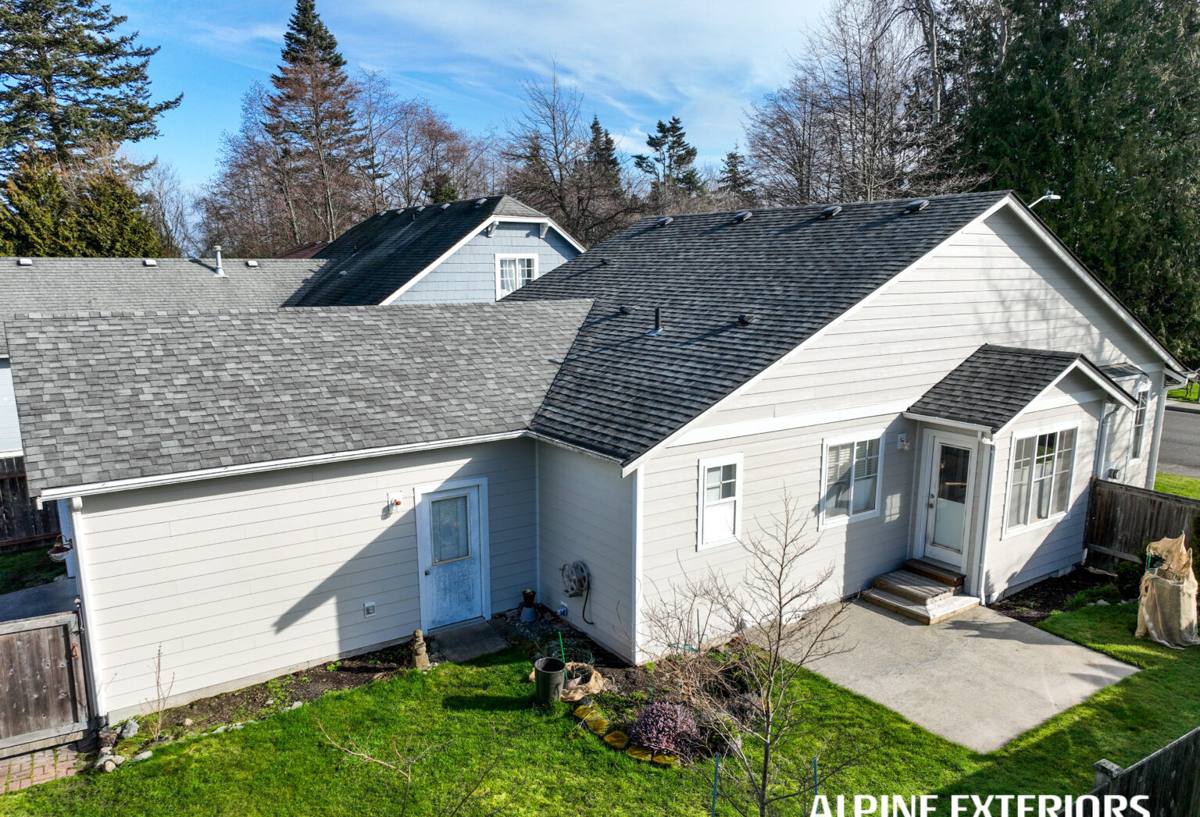
Signs Your Birchwood Home's Siding Is Under Stress
Because the moisture load here is constant rather than occasional, siding problems tend to show up gradually — a little bit of swelling, a little bit of discoloration — until one wet winter pushes things past the point of cosmetic. Homeowners in this area should watch for a specific set of warning signs:
- Dark green or black streaking on north- and west-facing walls, especially under eaves or near tree cover
- Soft spots or visible swelling along the bottom few feet of siding, where splashback and standing moisture concentrate
- Paint that's failing faster on one side of the house than the others — usually the side that gets the most wind-driven rain
- Nail pops, warping, or visible seams opening up, which let moisture behind the cladding instead of shedding it
- A chalky, pitted look to metal trim or fasteners, which is often an early sign of salt-air corrosion
- Musty odors or soft drywall on interior walls that back up to exterior siding — a sign moisture has already gotten in
Any one of these on its own isn't necessarily an emergency, but they're worth having looked at before the next wet season, not after.
Moss Isn't Just Cosmetic
It's tempting to treat moss growth as a pressure-washing problem. In a lot of cases, though, moss on siding is a symptom, not the disease — it grows where moisture is already lingering longer than it should. Persistent moss cover also holds water against the surface underneath it, which accelerates whatever degradation is already happening. Removing the moss without addressing why that section of wall stays damp longer than the rest of the house just buys a season or two.
Why We Only Install James Hardie Fiber Cement
We install one siding system: James Hardie fiber cement. That's not a marketing preference — it's a standard we hold because of what we've seen wet coastal climates do to other materials over a full service life. Vinyl siding can warp and gap over time as temperatures cycle, and those gaps become entry points for the kind of driving rain Birchwood gets. Wood siding, whether cedar or primed spruce, looks great on day one but needs a disciplined repainting and sealing schedule to keep moisture out — skip a cycle in this climate and rot can set in fast. Engineered wood products like LP SmartSide perform better than raw wood in some respects, but they're still a wood-based substrate, which means edge and cut-end moisture management has to be close to perfect for the life of the product.
Fiber cement doesn't share those vulnerabilities. It's non-combustible, it doesn't swell or rot the way wood-based products can, and it holds up to sustained damp conditions without the same maintenance burden. James Hardie's ColorPlus factory finish is baked on rather than field-applied, which matters in a climate where a fresh coat of site-applied paint doesn't always get a full, dry cure window before the rain comes back. We'd rather install a product engineered for exactly this kind of exposure than one that depends on a homeowner's maintenance schedule staying perfect for twenty years.
Built for This Specific Climate
James Hardie engineers its HZ5 product line specifically for climates like ours — the Pacific Northwest's combination of moisture, moderate temperatures, and freeze-thaw cycling. That's a meaningfully different set of engineering priorities than a product built for a hot, dry region. When we spec Hardie siding for a Birchwood home, we're specifying the version of the product designed for the actual weather that home will face.
How Local Conditions Shape Our Installation Approach
The product is only half the equation — installation detail is where a lot of siding failures actually originate, regardless of material. In a climate this wet, we pay particular attention to:
- Rain-screen gap: a drainage space behind the siding so any moisture that does get past the cladding can drain and dry instead of sitting against the wall sheathing
- Flashing at every penetration: windows, doors, hose bibs, and vents are all places where water finds its way in if flashing isn't detailed correctly
- Proper fastener placement and spacing per Hardie's published installation specs, which affects both appearance and long-term performance
- Correct caulking and sealant use — Hardie's system actually calls for less reliance on caulk than older siding systems, which reduces a common failure point
- Ground clearance at the base of walls, since splashback off patios, walkways, and landscaping is a steady source of moisture at the bottom courses
This level of detail is exactly why manufacturer warranties on fiber cement products typically require installation by a qualified contractor — the material can perform exactly as engineered and still underperform if it goes up wrong.
Beyond Siding: Roofing, Windows, and Decks in Birchwood
Siding doesn't work in isolation — it's one piece of a building envelope that has to work together to keep a Whatcom County home dry. We handle roofing, window replacement, and decks alongside siding for that reason.
A roof in this climate needs underlayment and flashing details that account for sustained rain, not just occasional storms, and moss management on roofing surfaces follows the same logic as moss on siding: it's a sign that a section is staying wet longer than it should. Windows are a common leak point in older Birchwood homes, particularly single-pane or early dual-pane units where seals have degraded — replacing failing windows at the same time as siding lets us properly flash the new window into the new wall assembly rather than working around an existing, possibly compromised install. Decks exposed to this much moisture need decking and fastener choices that won't trap water against structural framing, plus attention to how the deck ledger connects to the house so that connection point isn't a hidden moisture trap.
Materials Compared for This Climate
| Material | Moisture Behavior | Moss/Algae Resistance | Maintenance Burden |
|---|---|---|---|
| James Hardie Fiber Cement | Does not swell, warp, or rot; stable in sustained damp conditions | Factory finish resists staining better than bare wood | Low — no repainting cycle required for years |
| Vinyl Siding | Can warp or gap with temperature cycling, opening paths for driven rain | Prone to surface algae in shaded, damp areas | Low upfront, but gaps/damage are hard to spot-repair invisibly |
| Cedar / Primed Spruce | Absorbs moisture at cut ends and joints if not sealed and maintained | Susceptible to moss and rot in persistently shaded, wet areas | High — regular painting/sealing required |
| LP SmartSide (Engineered Wood) | Better than raw wood but still wood-substrate; edge sealing is critical | Can support moss growth if coating is compromised | Moderate — coating and edge maintenance matter over time |
Why a Local Crew Matters Here
A contractor based in this area understands things a crew working from a different climate zone simply won't know without learning it the hard way on your house. That includes which orientations on a Birchwood lot get the most wind-driven rain, how tree cover on a given property affects drying time after a storm, and what Whatcom County and City of Bellingham permitting and inspection processes actually require. It also means we're a known, reachable business if a question comes up two years after installation — not a crew that worked through the area once and moved on.
Being local also shapes how we sequence a project. We plan around this region's weather patterns rather than assuming ideal conditions, and we know which weeks of the year give the best shot at a clean, uninterrupted install without a fresh wall assembly sitting exposed to a surprise rain event.
What to Expect From a Project Timeline
| Factor | What It Affects |
|---|---|
| Home size and wall complexity | Labor hours and material quantities |
| Existing siding removal/disposal | Added time if tear-off is needed vs. new construction |
| Underlying sheathing condition | Whether repairs are needed before new siding goes on |
| Trim, window, and door detail work | Flashing and finish carpentry time around openings |
| Weather windows | Scheduling around Whatcom County's wetter months |
| Color and finish selection | Lead time on specific ColorPlus finishes or custom orders |
A Simple Maintenance Checklist for Birchwood Homeowners
- Walk the exterior once a year, ideally at the end of the wet season, and look for the warning signs listed above
- Keep gutters clear so overflow isn't running down and saturating wall sections repeatedly
- Trim back vegetation that's keeping any section of the house in constant shade and dampness
- Address moss growth by identifying and fixing the underlying moisture source, not just cleaning the surface
- Have flashing and caulking around windows and doors checked periodically, since these are common early failure points
If you're noticing any of these signs on a Birchwood home, or you're simply due for an honest look at your siding, roof, windows, or deck, we're happy to come take a look. We offer free, no-pressure estimates and can walk you through exactly what we're seeing and what your options are.