 Bellingham Siding
 Exterior Work in Bellingham's York Neighborhood
York is one of Bellingham's older, established neighborhoods, sitting close enough to the water and downtown to catch the full range of what Whatcom County weather throws at a house. A lot of the homes here were built decades before anyone was thinking about house wrap, rainscreen gaps, or factory-cured paint finishes. That combination — older construction methods and a demanding coastal climate — is exactly the situation where siding choice and installation quality matter most.
We do siding, roofing, windows, and decks, and in York those four things tend to fail together. A roof that's shedding water onto a wall, a window that's letting moisture behind the trim, and siding that can't dry out fast enough all feed the same rot problem. We look at the whole envelope, not just one product.
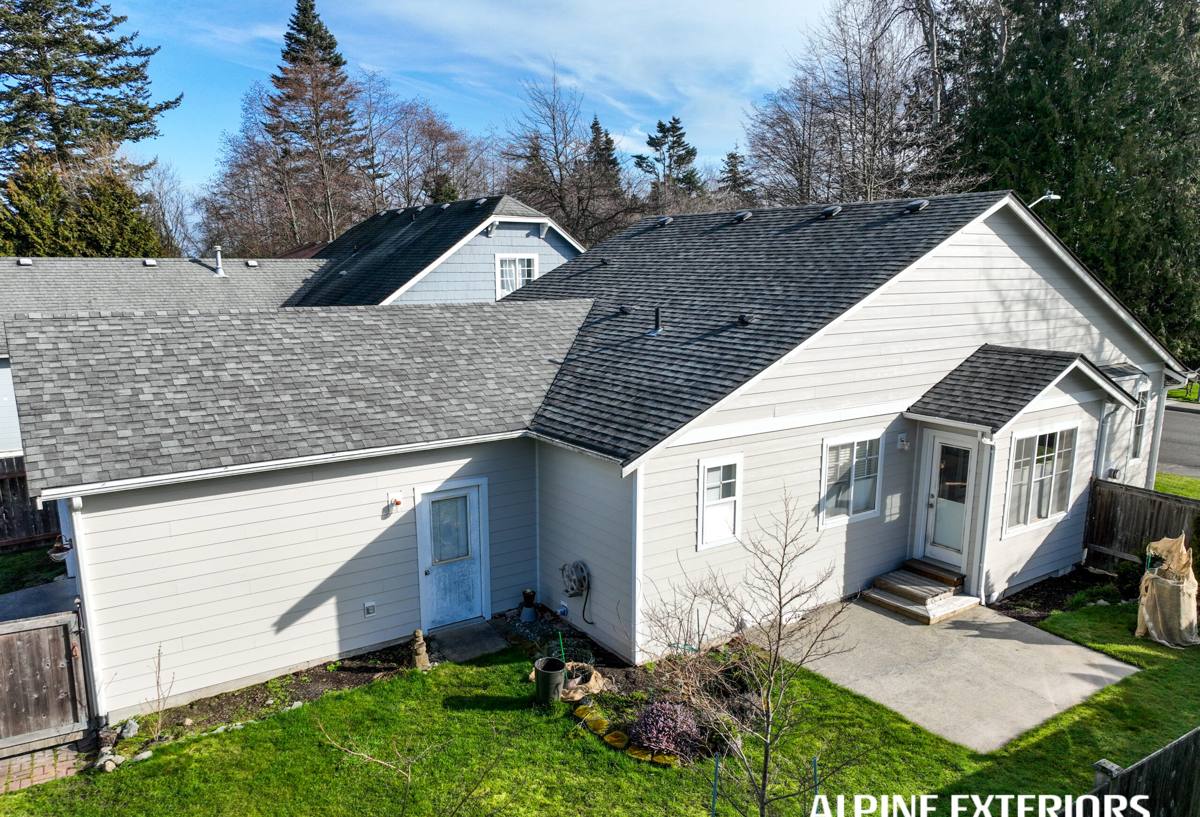
What Bellingham's Climate Does to Siding in York
Bellingham Bay and the Salish Sea keep this whole area humid and salt-tinged, and York is close enough to feel it. Add Whatcom County's long, low-intensity rainy season — months of driving, wind-blown rain rather than short downpours — and you get siding that rarely gets a real chance to dry out between storms. That's the environment where moisture problems compound instead of resolving on their own.
The moss and algae factor
Shade, moisture, and mild temperatures are a perfect combination for moss and algae growth on north- and west-facing walls, roof valleys, and anywhere air doesn't move freely. On some siding materials that growth just sits on the surface and can be cleaned off. On others, especially wood-based or wood-adjacent products, sustained moss and algae contact can hold moisture against the substrate long enough to start real decay underneath a finish that still looks fine from the street.
Salt air and coastal exposure
Salt-laden air accelerates corrosion on fasteners and metal trim, and it's harder on paint and coatings than inland exposure. Siding and trim in York benefit from finishes and fastening systems that are specifically rated to hold up under that kind of exposure, not just a coat of paint applied on site.
Why Older Homes in York Need a Closer Look
Many York homes predate modern water-management details like drainage planes, kick-out flashing at roof-to-wall intersections, and proper weep paths at the base of walls. When we're replacing siding on a house like this, we're not just swapping panels — we're often correcting decades-old flashing shortcuts and adding the drainage gap that today's code and best practice call for. Skipping that step and just re-cladding over old problems is how a new-looking exterior fails again in five or ten years.
- Check for soft or discolored sheathing at every window and door opening before new siding goes on
- Verify flashing at roof-wall intersections, chimneys, and any wall penetrations
- Confirm there's a drainage gap or rainscreen behind the new siding, not siding installed flat against the wall
- Inspect and, where needed, replace deteriorated trim boards rather than siding over them
- Re-flash and re-caulk window and door openings as part of the siding scope, not as an afterthought
Why We Only Install James Hardie Fiber Cement
We made a decision as a company to install James Hardie fiber cement siding exclusively. We don't install vinyl, LP SmartSide, Cemplank, Allura, primed spruce, or cedar. That's not a marketing angle — it's a standard we hold because of what we've seen happen to each of those products in exactly the kind of climate York sits in.
Vinyl is affordable and low-maintenance in mild, dry climates, but it's a thin plastic product that can warp in temperature swings, crack in cold snaps, and fade under sun exposure over time. It also doesn't hold paint well if a homeowner ever wants to change the color. Wood-based products like LP SmartSide, primed spruce, and cedar look great when new, but they're organic materials — they need consistent maintenance and dry conditions to avoid swelling, checking, and rot, and Bellingham's rain season doesn't give them much of a break. Cemplank and Allura are fiber cement competitors to Hardie with reasonable core products, but we standardized on Hardie specifically for its ColorPlus factory-applied finish and its HZ5 product engineering for the Pacific Northwest, along with the strength of Hardie's transferable warranty when the job is installed to their specification.
How the materials actually compare
| Material | Moisture behavior | Maintenance | Typical lifespan (installed correctly) |
|---|---|---|---|
| James Hardie fiber cement | Non-combustible, dimensionally stable, engineered for wet climates | Low — factory finish holds color, occasional wash | 30+ years, often longer |
| Vinyl | Doesn't rot, but can warp/crack with temperature swings | Low, but color fades and can't be repainted well | 20-30 years, variable |
| Wood / LP SmartSide / cedar | Absorbs moisture; needs to dry between rain events | High — regular sealing, painting, caulk checks | 15-25 years with diligent upkeep |
| Other fiber cement (Cemplank, Allura) | Similar core material properties to Hardie | Low to moderate, depends on finish system | Comparable, warranty terms vary |
None of these are junk products — vinyl and cedar both have real, valid uses. We simply won't put our name on an install where we think the material is a poor match for what a York roof and wall are going to face over the next 30 years.
What a Hardie Siding Job Looks Like Here
Every project starts with a walk-around of the whole exterior, not just the siding. We're looking at roof condition, window flashing, deck ledger connections, and any signs of past water intrusion — because those all affect how we scope the siding work.
Typical project steps
- Exterior assessment, including moisture checks at vulnerable points (window sills, base of walls, roof-wall intersections)
- Removal of old siding and inspection of the sheathing underneath
- Repair or replacement of any compromised sheathing or framing
- Installation of a weather-resistant barrier and rainscreen/drainage gap
- Flashing at all penetrations, windows, doors, and roof intersections
- Installation of James Hardie panels or lap siding per manufacturer spec, including fastener pattern and clearances
- Trim, caulking, and final finish work
We also handle the roof, windows, and decks that often come up during a siding project. It's common to find a window that needs re-flashing or a deck ledger that needs attention once the old siding comes off — having one crew that does all four trades means those issues get fixed as part of the same job instead of becoming a separate headache later.
Roofing, Windows, and Decks Alongside Siding
In a wet, coastal climate, siding doesn't work in isolation. A roof with worn flashing or clogged valleys sends water down the wall behind the siding. Older windows without proper flashing leak into the wall cavity around the frame. A deck attached to the house needs correct ledger flashing so it doesn't become a water path into the siding and framing behind it. When we're on site for a siding job in York, we flag anything we see in these other areas so it can be addressed rather than ignored.
Why a Local Crew Matters
Bellingham and Whatcom County weather isn't generic Pacific Northwest weather — the combination of bay-effect moisture, coastal wind-driven rain, and a moss season that can run most of the year is specific to this area. A crew that works here regularly knows which details actually matter: where moss tends to build up on a York-style roofline, how far to hold trim off a deck surface, which flashing details fail first on older construction in this area. That local pattern recognition is worth more than a generic install checklist.
Cost Factors to Expect
| Factor | Why it affects cost |
|---|---|
| Sheathing/framing condition | Hidden rot found during tear-off adds repair scope |
| House size and wall complexity | More corners, gables, and trim detail means more labor |
| Siding profile chosen | Lap, panel, and shingle-style Hardie products vary in material and install cost |
| Flashing and drainage upgrades | Older homes often need new flashing systems added, not just replaced |
| Scope beyond siding | Bundling roof, window, or deck work can improve overall efficiency |
Getting Started
If you're in York and dealing with siding that's showing its age — moss buildup, soft spots, paint that won't hold, or visible gaps at trim — we're happy to take a look and give you a straightforward assessment of what's going on and what it would take to fix it right. We'll tell you honestly if it's a full siding replacement or something smaller. Reach out for a free, no-pressure estimate using the form below.