 Bellingham Siding
 What "ColorPlus Technology" Actually Means
When people say "James Hardie colors," they're usually talking about ColorPlus Technology, which is James Hardie's factory-applied finish system. It's not paint you choose from a fan deck at the hardware store and it's not something a crew mixes on site. The color is baked onto each board in a controlled factory environment, in multiple coats, before the siding ever reaches Bellingham. That distinction matters more than most homeowners realize, and it's the reason we bring it up before we even get into which colors look good on a Craftsman versus a modern farmhouse.
Field-applied paint — the kind that goes on any fiber cement, wood, or engineered wood siding after installation — depends on weather conditions the day it's sprayed, the skill of whoever's holding the sprayer, and how well the substrate was prepped. Factory finish removes almost all of that variability. Every board gets the same coating thickness, the same cure time, and the same quality control before it leaves the plant.
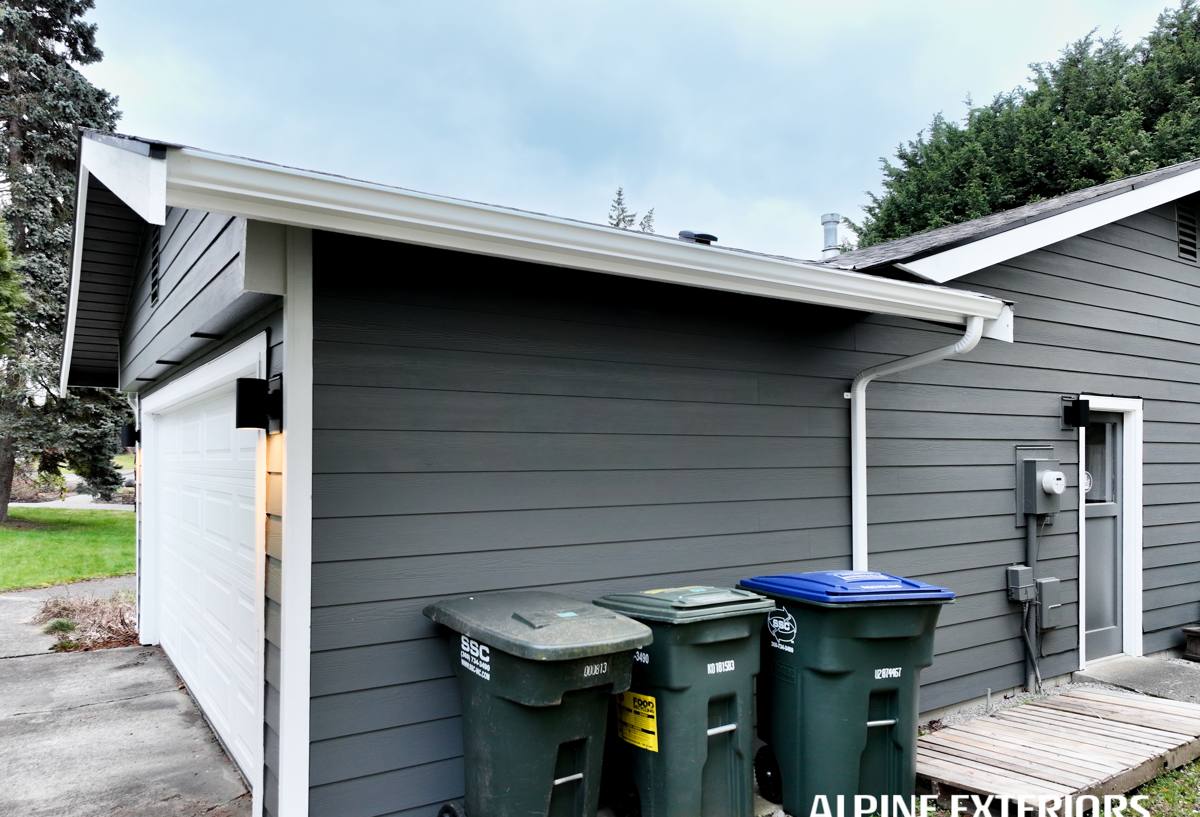
The Color Collections
James Hardie organizes its ColorPlus palette into a few collections, and understanding the structure helps narrow decisions fast instead of scrolling through dozens of swatches.
Statement Collection
This is the standard, always-available lineup — the colors most homes in Whatcom County end up with. It includes a range of neutrals, warm whites, grays, greens, and a few deeper accent tones. These are stocked colors, which generally means shorter lead times and no upcharge.
Dream Collection
A smaller set of premium, often deeper or more saturated colors. These are special-order in most markets, which means longer lead times and sometimes a price adjustment. We'll tell you upfront if a color you like falls into this category so there are no surprises on the schedule.
Primed for Paint
Hardie also sells primed boards with no ColorPlus finish, meant to be field-painted after installation — typically when a homeowner wants a custom color outside the standard palette, or wants the whole house to match brick, stone, or trim in a very specific way. We'll walk through that trade-off honestly if it comes up, because it does change the maintenance conversation.
Why the Factory Finish Matters Here Specifically
Bellingham sits close enough to the water that salt air is a real factor on siding, especially on homes closer to Bellingham Bay, Chuckanut, or the waterfront neighborhoods. Add in driving rain off the Sound and a moss season that can run most of the wet part of the year in shaded, north-facing lots, and you've got a finish that's under more stress here than it would be in a dry inland climate.
Factory-cured finishes resist UV fading and moisture intrusion better than most field-applied coatings because the cure process is more complete and more even before the boards are ever exposed to weather. That doesn't mean the color never changes — all exterior finishes weather over decades — but it means the fade curve is slower and more predictable, and the finish is less prone to the peeling and cracking that shows up on lesser field-painted siding after a few wet Whatcom County winters.
Moss and algae growth is really a substrate and moisture-management issue more than a color issue — any siding installed with poor drainage detailing in a shaded, damp yard will grow something eventually. But darker, flatter colors do show surface dirt and biological growth a little sooner than lighter, satin-finish colors, which is worth factoring in if your lot doesn't get much direct sun.
HZ5 Product Line and What It Means for Color Performance
James Hardie engineers its siding by climate zone under the HZ5 system, and the Pacific Northwest — including Whatcom County — falls into the zone built for higher moisture exposure and freeze-thaw cycling. The HZ5 formulation isn't a color difference, it's a substrate difference: the board itself is engineered to resist moisture-related damage in wetter climates. Pairing that substrate with the ColorPlus finish is what gives you the full system warranty, which is a meaningful part of why we only install it as a matched system rather than mixing components.
Matching Siding, Trim, and Accent Colors
Most Bellingham projects use two to three colors: a primary field color for the siding, a trim color (often a warm or bright white), and sometimes an accent color on shutters, a front door surround, or a gable feature. James Hardie's trim boards and soffit panels come in a coordinated set of ColorPlus colors specifically so these combinations are tested to look right together rather than guessed at.
A few combinations that work well in this region
- Cool grays or blue-grays paired with bright white trim — reads clean against evergreen backdrops common on wooded Whatcom County lots
- Warm "Woodland Cream" or soft tan tones with dark bronze or black window frames — common on Craftsman-style homes in older Bellingham neighborhoods
- Deep green or navy field color with white trim — holds up visually against the gray, overcast stretches of a Bellingham winter better than very light, low-contrast schemes
- Board-and-batten or shake accent panels in a contrasting tone on gables, paired with a neutral primary field color
Choosing a Color for Your Specific Home
A color that looks great as a paint chip can read completely differently across an actual elevation, especially under the flat, diffused light Bellingham gets for a good portion of the year. A few things worth walking through before committing:
Light exposure
North-facing walls and heavily treed lots see mostly indirect, cooler light. Colors can read grayer or cooler than expected. South and west exposures get warmer, more direct light and will show more contrast and more fading over time on darker colors.
Roof and hardscape
Roof color, existing stonework, and driveway/walkway material all constrain the palette more than people expect. A color that clashes with an existing composition roof is a common regret.
Neighborhood and HOA rules
Some Bellingham subdivisions and planned communities have exterior color guidelines. Worth checking before falling in love with a Dream Collection color that might need approval or might not be allowed at all.
Resale versus personal preference
Neutral, well-established colors tend to hold broader buyer appeal if resale is a factor within the next several years. That's a personal call, not a rule — plenty of homeowners choose a bolder color because they plan to be in the house long-term.
What ColorPlus Costs and How Touch-Ups Work
Color choice affects both the up-front project and long-term upkeep. Here's a general breakdown of the factors that move cost and maintenance, without pretending to quote exact numbers that vary by project scope:
| Factor | Statement Collection | Dream Collection / Custom Paint |
|---|---|---|
| Availability | Stocked, shorter lead times | Special order, longer lead times |
| Typical cost impact | Standard project pricing | Often a modest upcharge |
| Touch-up material | Factory-matched touch-up kits widely available | May require special-order touch-up matching |
| Repaint interval | Finish warranty covers factory color for a set term; no repainting needed for the life of that warranty if maintained | Field-painted (primed) boards need repainting on a normal exterior paint cycle, typically well before ColorPlus needs attention |
ColorPlus siding isn't maintenance-free — it still needs periodic rinsing to keep salt air residue and organic growth from building up, and any deep scratch or gouge from a ladder or storm debris should get touched up with matched touch-up paint before moisture can get behind the finish. But it's a meaningfully lower-maintenance system than field-painted siding, which is one of the core reasons this is the only siding system we install.
James Hardie's Finish Warranty, in Plain Terms
James Hardie backs ColorPlus with a separate finish warranty from the substrate warranty — it covers the factory finish against cracking, peeling, and chipping for a defined term, and it's transferable to a new owner if the home sells, which matters for resale conversations. The underlying HZ5 board itself carries its own long-term substrate warranty. We'll walk through the specific current terms and registration steps as part of any proposal — warranty language is the kind of thing worth reading exactly as written rather than summarized secondhand.
A Practical Checklist Before You Pick a Color
- Pull a physical sample chip and view it against your actual roof, stone, and trim — not just on a screen
- Look at the sample in both morning and late-afternoon light on your property
- Check whether your neighborhood or HOA has color restrictions
- Decide if you want a Statement Collection color (faster, standard pricing) or a Dream Collection color (special order)
- Plan trim and accent colors alongside the field color, not as an afterthought
- Ask about current touch-up kit availability for the specific color you choose
- Confirm your installer registers the warranty properly after the job is complete
If you're weighing colors for a siding replacement or new build in Bellingham or anywhere else in Whatcom County, we're happy to bring physical ColorPlus samples out to your property, look at them against your home's actual light and existing materials, and walk through a free, no-pressure estimate.