 Bellingham Siding
 Siding in a Waterfront Neighborhood
Fairhaven sits close to Bellingham Bay, and that proximity to open water shapes everything about how exterior materials hold up there. Homes in this part of Bellingham catch salt-laden air off the water, take the brunt of wind-driven rain rolling in from the Strait of Georgia, and sit under tree cover that keeps north- and west-facing walls damp and shaded for long stretches of the year. None of that is unusual for Whatcom County, but the combination is a little more concentrated the closer a home sits to the water.
We work on homes throughout Bellingham, and Fairhaven jobs tend to share a pattern: siding that looks fine from the street but is quietly failing at the bottom courses, around window trim, and behind anything that traps moisture against the wall. Catching that pattern early — and understanding why it happens here specifically — is most of what separates a siding job that lasts from one that doesn't.
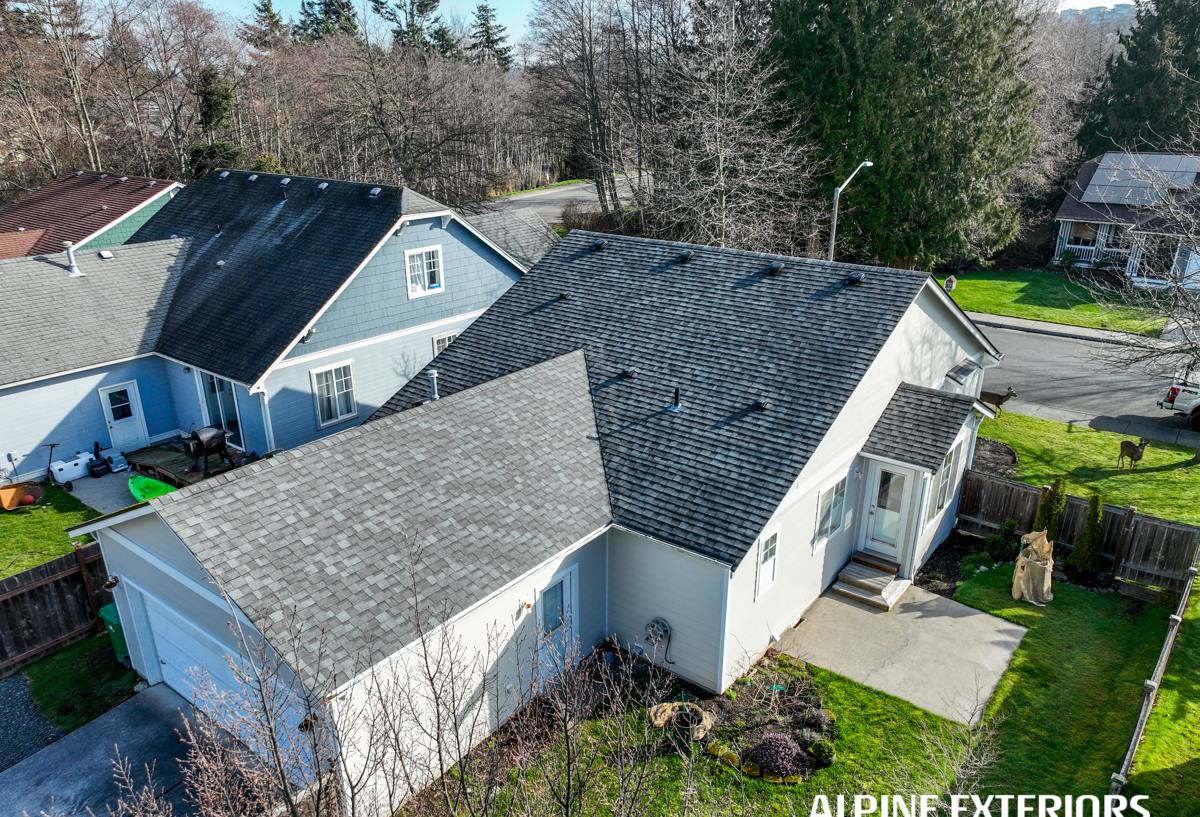
What Bellingham Bay Weather Does to Siding
Salt Air and Fasteners
Salt air doesn't just sit on the surface of a wall — it works its way into seams, joints, and fastener heads. Over years, that accelerates corrosion on nails, screws, and any exposed metal trim or flashing that isn't rated for a coastal-adjacent environment. Once fasteners start to corrode, they can stain the siding face, loosen their grip, or fail outright, which is when boards start to gap, curl, or fall.
Driving Rain
Rain in this part of Washington rarely falls straight down. Wind off the water pushes it sideways into wall assemblies, which means the weak points aren't just horizontal surfaces — they're vertical seams, butt joints, and anywhere caulk or sealant has started to crack. A siding system that isn't detailed correctly at those seams will let water behind the cladding long before anyone notices a problem on the surface.
Moss, Algae, and Shade
Bellingham's long wet season and heavy tree canopy in neighborhoods like Fairhaven mean north-facing and shaded walls stay damp far longer after a storm than walls that get afternoon sun. That extended dampness is exactly what moss and algae need to take hold. On porous or absorbent materials, sustained moisture doesn't stay on the surface — it gets pulled into the material itself, which is where swelling, softening, and long-term rot start.
Why Some Siding Materials Struggle Here
Wood-based siding products — including primed spruce, cedar, and engineered wood siding like LP SmartSide — depend on an intact factory coating and careful field caulking to keep moisture out. In a climate where rain comes in sideways and walls stay wet for days at a time, any gap in that protection gives moisture a way in. Wood-based cores can swell, delaminate at cut edges, or begin to soften from the inside out, often well before the problem is visible from the ground.
Vinyl siding handles moisture differently — it doesn't absorb water the way wood-based products do — but it has its own weak points in a marine climate. It expands and contracts more than fiber cement with temperature swings, its seams and J-channels are where wind-driven rain finds a way behind the panel, and it can become brittle over time, especially at fastener points exposed to salt air.
These aren't defects so much as trade-offs, and every siding material has them. But after years of siding work in coastal Whatcom County conditions, we made a standardized call: we install James Hardie fiber cement siding exclusively. It's not the cheapest option on the shelf, but it's the one we're willing to warranty and stand behind on homes that take this kind of weather year after year.
Why We Only Install James Hardie Fiber Cement
James Hardie fiber cement is a cement, sand, and cellulose fiber composite — it doesn't have a wood core to swell or delaminate, and it doesn't rely on a plastic panel that can go brittle in cold, salt-laden air. A few specifics that matter for a Fairhaven install:
- Non-combustible core — fiber cement doesn't contribute fuel to a fire, which matters given how many homes here sit near dry brush or wooded lots in summer.
- ColorPlus factory finish — a baked-on finish applied under controlled conditions, which holds up better against UV and moisture than field-applied paint, and doesn't require repainting on the same schedule as wood siding.
- HZ5 and HZ10 product engineering — Hardie's climate-specific formulations are built to perform in wet, humid regions like the Pacific Northwest, with moisture resistance built into the material itself rather than relying entirely on the finish.
- Transferable warranty — a real, honored warranty structure that follows the home, not just the original owner.
Fiber cement isn't magic — it still has to be installed correctly, with proper clearances, flashing, and caulking, to perform the way it's designed to. But the material itself gives us a much wider margin for error against this specific climate than the alternatives.
How We Approach a Fairhaven Siding Job
Assessment First
Before we quote a full replacement, we look at what's actually happening behind the existing siding — not just what it looks like from the driveway. That means checking for soft spots, staining patterns that suggest hidden moisture, and how the current weather barrier and flashing are holding up. In a neighborhood this close to the water, we pay particular attention to north- and west-facing walls and anything shaded by trees.
Tear-Off and Weather Barrier
Once old siding comes off, we inspect the sheathing underneath for rot or damage and repair anything compromised before a single new board goes up. A correctly lapped, water-resistant barrier goes on next — this layer, more than the siding itself, is what keeps wind-driven rain from reaching the framing.
Installation Detail
Fastener spacing, clearances at grade and roof lines, and caulking at seams and penetrations all matter more in a coastal-adjacent climate than in a drier one. We follow Hardie's installation specifications closely because that's what the warranty depends on, and because it's the difference between siding that sheds water and siding that traps it.
Trim, Paint, and Final Walkthrough
We finish with trim work and any field-applied touch-up, then walk the job with the homeowner before calling it done. Small details — a gap at a corner board, a caulk line that needs another pass — get caught here rather than left for the next storm to find.
What Drives the Cost of a Siding Job in Fairhaven
| Factor | Why It Matters Here |
|---|---|
| Home size and wall complexity | More corners, dormers, and trim details mean more cutting, fitting, and flashing work |
| Extent of hidden damage | Rot found under old siding at tear-off adds sheathing repair before new siding can go on |
| Siding profile and color | Lap width, shingle-style panels, and ColorPlus finish tiers price differently |
| Access and site conditions | Sloped lots, mature landscaping, and tight setbacks common in older Fairhaven lots affect labor time |
| Trim and accessory work | Window and door trim, corner boards, and fascia often get replaced or upgraded alongside siding |
We won't quote a number without seeing the house — anyone who does that over the phone is guessing. What we can say honestly is that fiber cement typically costs more upfront than vinyl and can run comparable to or above engineered wood siding, but it's priced that way because the material and the labor to install it correctly both cost more, and because it's built to go decades without a repaint.
Why a Local Crew Matters for This Kind of Work
Siding crews that don't work Whatcom County regularly can underestimate how much this climate demands from an installation. Clearances that would be fine in a drier region aren't generous enough here. Flashing details that are optional elsewhere aren't optional on a wall that faces the bay. A crew that works Bellingham homes year-round has already seen where the old siding failed on the last dozen jobs like this one, and builds the new installation to avoid the same failure points.
There's also a practical side to it: a local crew can respond quickly if something needs attention after the job is done, and stands behind the work because they're not driving in from out of the area for a one-off project.
Beyond Siding: The Rest of the Exterior
Siding rarely fails in isolation. A roof that's shedding water poorly, gutters that overflow onto a wall, or windows with failed seals all put extra moisture load on the siding around them. We handle roofing, windows, and decks alongside siding work, which means we can flag a related issue during a siding estimate instead of leaving a homeowner to discover it separately later. Decks in particular take a similar beating from this climate — driving rain, standing moisture, and moss are just as hard on deck boards and framing as they are on wall siding.
Signs Your Fairhaven Home May Need Siding Attention
- Soft or spongy spots when you press on the siding, especially near the bottom courses
- Persistent moss or algae growth that returns soon after cleaning
- Paint that's peeling, bubbling, or failing faster than expected
- Visible gaps, warping, or boards pulling away from the wall
- Staining or streaking around nail heads or seams
- Rising energy bills that could point to a compromised weather barrier
- Interior wall or ceiling staining near exterior walls, which can indicate moisture getting through
Get a Straight Answer About Your Siding
If you're not sure whether your Fairhaven home needs a full siding replacement or just some targeted repair and maintenance, we'll tell you honestly which one it is — we'd rather earn a repeat customer than oversell a job. Reach out for a free, no-pressure estimate and we'll walk the exterior with you, explain what we're seeing, and lay out real options for your home and your budget.