 Bellingham Siding
 Fairhaven's Climate Is Rough on Siding
Fairhaven sits close to Bellingham Bay, and that proximity to the water shapes everything about how siding ages here. Salt-laden air off the bay works on fasteners, trim, and paint film year-round, not just during storms. Add in driving rain that comes off the water at an angle, and siding has to shed water at laps, corners, and penetrations far more aggressively than it would inland. Then there's the tree cover common throughout the neighborhood's older residential streets, which keeps siding shaded and damp for long stretches and extends what's already a long Pacific Northwest moss and algae season into something closer to a year-round condition.
None of this is unique to any one house — it's the baseline every exterior in this part of Whatcom County has to deal with. What it means practically is that siding material choice, water management details, and fastener selection matter more here than they would in a drier, more sheltered part of the state.
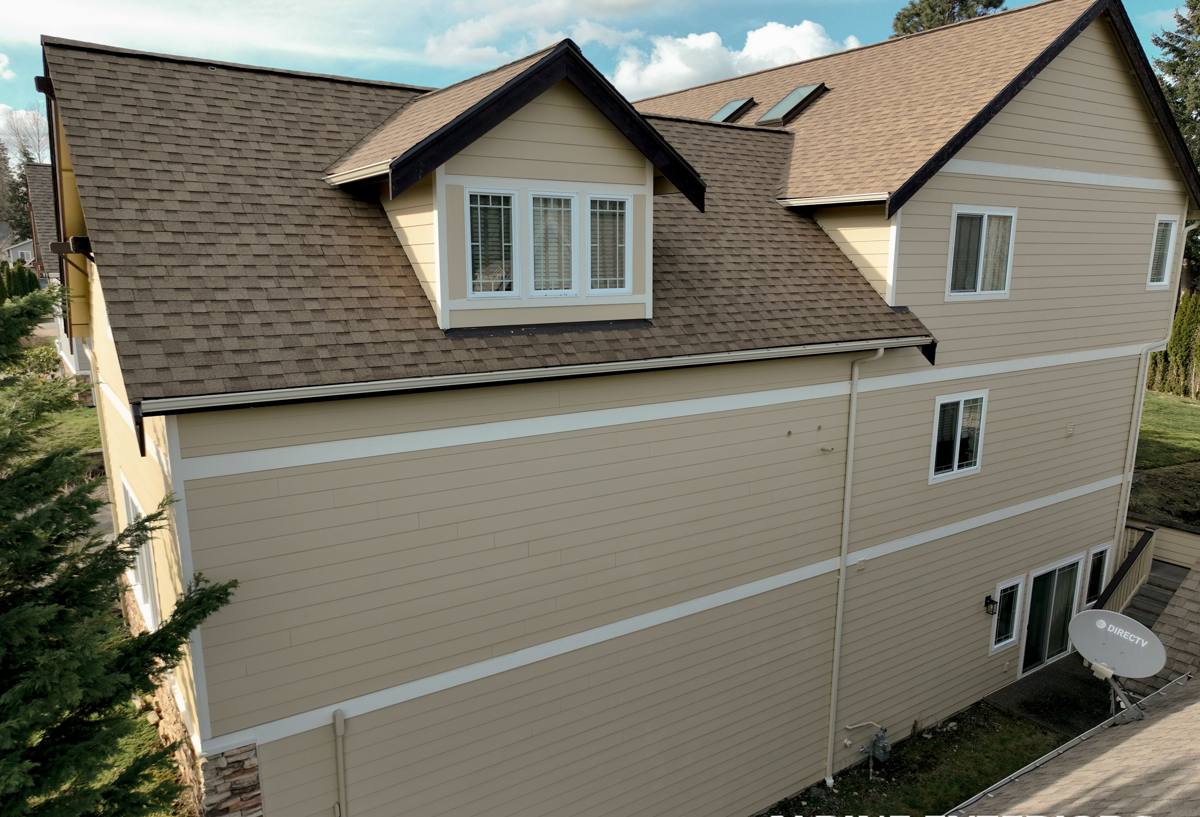
Signs Your Fairhaven Home Needs Siding Replacement
Coastal exposure tends to show up as a specific set of symptoms. If you're seeing more than one of these, it's worth getting a professional look rather than waiting.
- Soft, spongy, or crumbling boards, especially near the bottom courses and around window and door trim
- Paint that's peeling, bubbling, or chalking within just a few years of a repaint
- Moss or algae staining that comes right back a season or two after cleaning
- Visible cracking, warping, or buckling panels, particularly on shaded or bay-facing walls
- Gaps opening up at seams and laps, which let wind-driven rain get behind the siding
- Rising heating bills that suggest the wall assembly behind the siding is no longer doing its job
- Original siding that's 20-plus years old, especially if it's a wood-based product
Any one of these on its own might just need a repair. Several together usually mean the siding system — not just the surface — has reached the end of its useful life.
What a Correct Siding Replacement Involves
Water Management Comes First
Siding is the visible layer, but the work that actually keeps a Fairhaven home dry happens underneath it. A correct replacement starts with a weather-resistant barrier installed and lapped properly, careful flashing at every window, door, and penetration, and — given how much rain and moss exposure this area gets — a drainage gap (rainscreen) behind the siding on walls that need it. That gap lets any moisture that does get past the siding dry out instead of sitting against the wall sheathing.
Material Selection Matters More Here
Not every siding product handles salt air, sustained dampness, and moss pressure the same way. Some absorb and hold moisture, some need a maintained paint film to stay protected, and some simply weren't engineered with a marine climate in mind. Choosing a product that's built for this environment from the start saves a lot of grief ten years down the road.
Fastening and Trim Details
In a salt-air environment, fastener choice isn't a minor detail — corrosion-resistant fasteners rated for the exposure, correctly countersunk and sealed, prevent the kind of streaking and loosening that shows up fast on cheaper hardware. Trim and caulking at joints need the same attention, since these are the spots wind-driven rain finds first.
Why We Install Only James Hardie Fiber Cement
We standardized on James Hardie fiber cement siding for every job we do, including here in Fairhaven, and we don't install LP SmartSide, vinyl, Cemplank, Allura, primed spruce, or cedar. That's not a knock on those products — each has legitimate uses — but it reflects an honest assessment of what holds up best in this specific climate, and we'd rather install one system well than several systems adequately.
James Hardie's fiber cement is non-combustible, doesn't provide the organic material moss and algae feed on the way wood-based products can, and is engineered in climate-specific HZ product lines built for regions with sustained moisture exposure — which describes Whatcom County well. Its ColorPlus factory finish is baked on under controlled conditions, which holds color and resists peeling far longer than a field-applied paint job has to fight gravity, weather, and cure time to match. It also carries a strong, transferable warranty, which matters to homeowners who may sell before the siding's functional life is up.
The trade-off is that fiber cement is heavier and less forgiving to install correctly than some alternatives — it demands proper fastening, spacing, and flashing to perform as designed. That's exactly why installation quality matters as much as the product choice itself.
Our Siding Replacement Process
- Assessment: We inspect the current siding, trim, and — where accessible — the sheathing underneath, looking specifically for moisture damage that's common in shaded, bay-exposed walls.
- Tear-off: Old siding comes off and the sheathing gets a real look, not a guess. Any hidden rot or soft sheathing gets addressed before anything new goes up.
- Weather barrier and flashing: A new weather-resistant barrier is installed with correct laps, and flashing is set at every window, door, and penetration.
- Drainage gap: On walls where moisture and moss exposure call for it, a rainscreen gap is installed so water that gets behind the cladding can dry out instead of sitting against the wall.
- Siding installation: James Hardie panels or lap siding go on to manufacturer specification — correct fastener type, spacing, and clearances.
- Trim, caulking, and finish work: Joints get sealed correctly and any factory-finish touch-up is done to spec, not painted over generically.
- Final walkthrough: We go over the finished job with you before calling it done.
Comparing Siding Materials for Fairhaven's Climate
Here's how the main siding categories stack up against the specific conditions Fairhaven homes face — salt air, driving rain, and heavy moss pressure.
| Factor | James Hardie Fiber Cement | Vinyl | Wood / LP SmartSide |
|---|---|---|---|
| Moss and algae resistance | Strong — no organic material for growth to feed on | Moderate — surface can still host growth in shaded, damp spots | Weaker — organic material is more susceptible without diligent maintenance |
| Driving rain / moisture behavior | Engineered climate lines built for sustained moisture exposure | Can trap moisture behind panels if installed poorly | Vulnerable to swelling, rot if moisture gets past the finish |
| Salt air durability | Non-combustible, holds up well with correct fasteners | Can become brittle and discolor over time | Finish and fasteners degrade faster near salt exposure |
| Finish longevity | Factory-applied ColorPlus finish, long fade resistance | Color is baked into the material but can fade and chalk | Field-applied paint typically needs recoating every few years |
| Fire rating | Non-combustible | Combustible | Combustible |
| Maintenance burden | Low — periodic cleaning and caulk checks | Low but limited repair options if damaged | Higher — repainting, sealing, and rot monitoring |
What Drives the Cost of a Siding Replacement
Every Fairhaven home is a little different, so a real number comes from an on-site look, not a general estimate. That said, a few factors consistently move the price:
- Size and complexity of the house — square footage, number of stories, and roofline complexity
- Condition of the sheathing underneath the existing siding, which isn't known until tear-off
- Amount of trim, corner detail, and architectural features to work around
- Whether a rainscreen drainage gap is being added where it wasn't there before
- Site access — tight lots, mature landscaping, or limited staging space can add labor time
- Siding profile chosen — lap siding, panel systems, and shingle-style Hardie products price differently
Why Hiring a Crew That Already Works Fairhaven Matters
A contractor who works this neighborhood regularly already knows what to expect before the tear-off starts. They know which wall orientations tend to hide moisture damage, how much shade and tree cover to plan moss mitigation around, and how the bay's exposure changes wind-driven rain behavior from one side of a house to the other. They also know City of Bellingham permitting requirements and, where relevant, any neighborhood design considerations tied to Fairhaven's older housing stock and historic character — details that are easy to miss for a crew that's never worked the area before.
That local familiarity shows up in fewer surprises mid-project and a finished install that's actually built for the conditions your specific house faces, not a generic specification.
Questions to Ask Before You Hire
Whoever you choose for a siding replacement in Fairhaven, a few questions up front will save headaches later.
- Are they licensed, bonded, and insured to work in Washington?
- Are they certified or experienced specifically with the manufacturer's product line they're proposing?
- Can they speak to recent work in Bellingham or elsewhere in Whatcom County?
- Does the written scope of work spell out weather barrier, flashing, and drainage gap details — not just "install siding"?
- What does the manufacturer's warranty actually cover, and is it transferable if you sell the home?
- How do they plan around the region's rain patterns to protect the wall assembly during the project itself?
If your Fairhaven home is showing signs it needs new siding, we're happy to take a look and give you a straightforward, no-pressure estimate — just fill out the form below.