 Bellingham Siding
 Fairhaven's Waterfront Setting Puts Real Demands on Siding
Fairhaven sits close to Bellingham Bay, and that proximity to open water shapes what siding has to survive here. Salt-laden air moves off the bay and settles on exposed exterior surfaces, wind-driven rain finds its way into every gap a builder left loose, and the shaded, damp stretches of the neighborhood stay wet longer than drier inland pockets of Whatcom County. None of that is unusual for a Pacific Northwest coastal community, but it does mean siding installed in Fairhaven needs to be treated differently than siding installed on a dry, sheltered lot twenty minutes inland.
The combination that matters most is salt air plus driving rain plus a long moss season. Salt air accelerates corrosion on fasteners and trim metal. Driving rain, especially in exposed or wind-funneled spots near the water, pushes moisture sideways into seams and laps that would stay dry in a calmer climate. And Whatcom County's mild, wet winters give moss and algae months of steady moisture to establish themselves on north-facing walls, under eaves, and anywhere airflow is restricted. Siding that isn't installed with all three factors in mind tends to show problems early — not because the product failed, but because the installation didn't account for the environment it was going into.
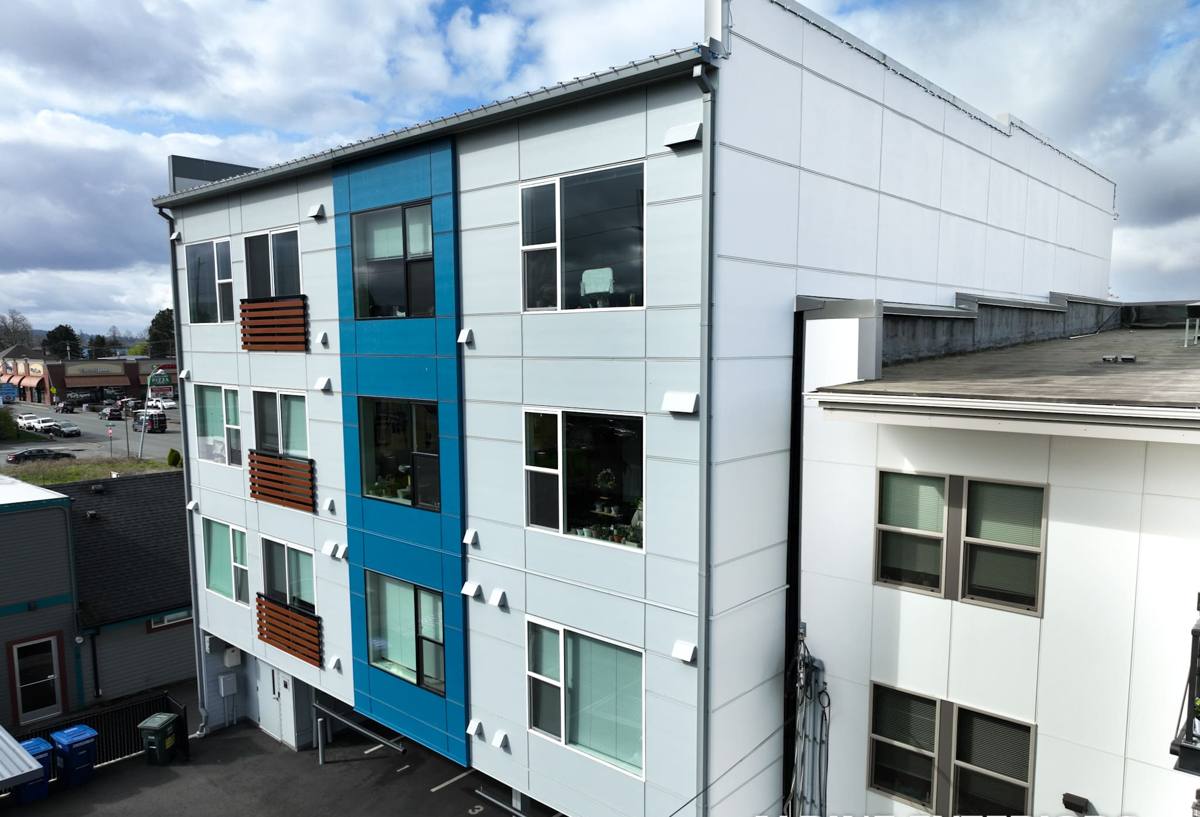
What Correct Installation Looks Like in a Marine Environment
Good siding installation in Fairhaven starts before the first piece of siding goes up. It starts with the water-resistive barrier, the flashing details, and the fastener choices — the parts of the job nobody sees once the siding is on, but that determine whether the wall assembly stays dry for the next thirty years.
Weather-Resistive Barrier and Flashing
A continuous, properly lapped weather-resistive barrier behind the siding is the first line of defense against wind-driven rain. Every penetration — windows, doors, hose bibs, light fixtures, vents — needs flashing that directs water back out, not into the wall cavity. In a neighborhood exposed to bay winds, sloppy flashing at these transition points is the single most common cause of hidden moisture damage, and it's invisible from the street until the damage shows up as rot, staining, or a soft spot in the wall.
Fastener and Hardware Selection
Salt air corrodes ordinary fasteners faster than it corrodes fasteners rated for coastal or marine exposure. Nails, screws, and any exposed trim hardware near the water need corrosion-resistant coatings or stainless materials, and they need to be driven correctly — not overdriven, not underdriven, and spaced according to the manufacturer's engineering, not guessed at.
Proper Clearances and Drainage
Siding installed tight to grade, decks, or roof lines traps moisture against the bottom edge of the wall, and in a wet climate that moisture never fully dries out between rain events. Correct clearances, a drainable gap behind the siding, and weep paths at the bottom of the wall all matter more here than they would in a drier region.
Why We Install Only James Hardie Fiber Cement in Fairhaven
We standardized on James Hardie fiber cement siding for every job we take on, and Fairhaven's climate is a big part of why. Fiber cement doesn't rot, doesn't swell with moisture the way wood-based products can, and it's non-combustible — a real advantage in a region where wildfire smoke and ember exposure have become a more regular late-summer concern. Hardie's HZ5 product line is specifically engineered for wet, freeze-prone climates like ours, and the factory-applied ColorPlus finish is baked on under controlled conditions, which gives it better resistance to the kind of moisture and UV cycling that Fairhaven's exposure creates than a field-applied paint job typically achieves.
We don't install vinyl, LP SmartSide, primed spruce, cedar, or other fiber cement brands like Cemplank or Allura. That's not a knock on every homeowner who has one of those products already — it's a statement about what we're willing to warranty and stand behind on a coastal Whatcom County home. Vinyl can warp and fade under UV and temperature swings and offers little protection against wind-driven rain intrusion at the seams. Wood-based sidings need consistent maintenance to keep moisture out, and a missed year or two in a climate this wet can let rot get started before anyone notices. Other fiber cement brands may be reasonable products, but we've chosen to specialize in one system, install it correctly every time, and back it with a manufacturer warranty that's actually transferable if the home sells.
Our Fairhaven Installation Process
- On-site assessment. We walk the home, check existing siding and sheathing condition, look at drainage patterns, and identify any areas with a history of moisture problems — common around north-facing walls and shaded, wind-exposed corners near the water.
- Tear-off and substrate check. Old siding comes off and we inspect the sheathing underneath. Any soft, water-damaged sheathing gets replaced before anything new goes up — installing over compromised substrate just hides a problem instead of solving it.
- Weather barrier and flashing. A continuous water-resistive barrier goes on first, followed by properly integrated flashing at every window, door, and penetration.
- Hardie panel or lap installation. Siding is installed to James Hardie's published fastening and clearance specifications, using corrosion-resistant fasteners appropriate for coastal exposure.
- Trim, caulking, and touch-up. Trim is set, joints are sealed with products rated for exterior, high-moisture use, and any factory-finish touch-up is done with matched ColorPlus product.
- Final walkthrough. We review the completed work with the homeowner, point out anything they should keep an eye on, and go over basic upkeep for the specific exposure their home faces.
Moss, Mildew, and Long-Term Maintenance
Whatcom County's mild, wet winters mean moss and algae have months of steady moisture to work with, especially on shaded siding, under overhangs, and on walls that don't get much direct sun or wind to dry them out. Fiber cement resists this better than wood, but no siding is immune to surface growth in a climate this damp — it's a matter of routine cleaning, not a defect in the product.
- Rinse siding periodically with a garden hose and soft brush on shaded or north-facing walls where moss tends to establish
- Keep gutters clear so overflow doesn't run down the wall face and stay damp longer than the rest of the siding
- Trim back vegetation and tree cover that keeps siding shaded and wet for extended periods
- Check caulking at trim joints and penetrations every year or two, and re-seal if it's cracked or pulling away
- Have flashing and fastener condition checked periodically, especially on walls with direct bay exposure
None of this is heavy maintenance — it's the kind of upkeep that keeps a correctly installed system performing the way it's supposed to for decades.
Matching Siding to Fairhaven's Coastal, Historic Character
Fairhaven has a distinct visual identity — a mix of historic buildings and homes with a strong sense of place near the water. Homeowners here often want siding that respects that character without pretending to be something it's not. James Hardie's lap and panel profiles, combined with the ColorPlus color range, give us the flexibility to match traditional lap-siding proportions or cleaner modern lines depending on the home, without resorting to a product that won't hold up to the exposure. Color retention matters more here than in a sheltered inland neighborhood — a factory finish that's engineered to resist fading from UV and salt exposure keeps a home looking the way it did on installation day for far longer than a field-applied paint or stain would.
Cost Factors for Siding Installation in Fairhaven
Every home is different, and we don't quote pricing without seeing the actual condition of the walls, but the factors below are what typically move a Fairhaven project up or down in scope and cost.
| Factor | Why It Matters Here |
|---|---|
| Existing sheathing condition | Homes with a history of moisture intrusion may need sheathing repair or replacement before new siding goes on |
| Wind and rain exposure | Walls facing open water or prevailing weather may need additional flashing detail and corrosion-resistant hardware |
| Home size and complexity | Number of corners, windows, and rooflines affects labor time and trim work |
| Siding profile and finish | Lap width, panel style, and ColorPlus color selection affect material cost |
| Access and site conditions | Tight lots, slopes, or limited staging area common in older neighborhoods can affect labor time |
Choosing a Contractor Who Knows Fairhaven's Climate
Not every siding crew has experience with the specific demands of a coastal Whatcom County job. Before hiring anyone for a Fairhaven siding project, it's worth asking a few pointed questions.
- Do they install to the manufacturer's published fastening and clearance specifications, or their own shortcuts?
- Do they carry manufacturer certification for the specific product they're installing?
- Will they inspect and repair sheathing before installing new siding over it?
- Do they use corrosion-resistant fasteners appropriate for salt air exposure?
- Can they explain how their flashing details handle wind-driven rain, specifically?
- Is their warranty transferable if the home is sold?
A contractor who's worked in Fairhaven and along Bellingham's waterfront should be able to answer these without hesitation, because they've already dealt with the consequences of getting it wrong on a previous job.
If you're considering new siding for a home in Fairhaven, we're happy to take a look and put together a straightforward, no-pressure estimate — no obligation, just an honest read on what your home needs. Use the form below to get started.