 Bellingham Siding
 Siding in the Columbia Neighborhood: A Different Kind of Exposure
Homes in Columbia sit close enough to Bellingham Bay that the weather off the water shapes almost everything about how a house ages here. Salt-laden air moves in off the bay, driving rain comes in sideways during the fall and winter storm cycles, and the long gray stretch between October and April keeps exterior surfaces damp for weeks at a time. Add in the mature tree canopy common to older Bellingham neighborhoods, and you get near-constant shade on north and east walls — exactly the conditions moss and algae need to take hold.
None of that is unusual for Whatcom County. But it does mean siding decisions that work fine in a drier inland climate can fail early here. Homeowners in Columbia are often dealing with a mix of housing stock — older homes with original wood or early composite siding, plus newer construction — and the siding on each reacts differently to the same weather. Understanding what your specific siding does when it's wet, cold, and salted for months at a stretch is the starting point for any real repair-versus-replace decision.
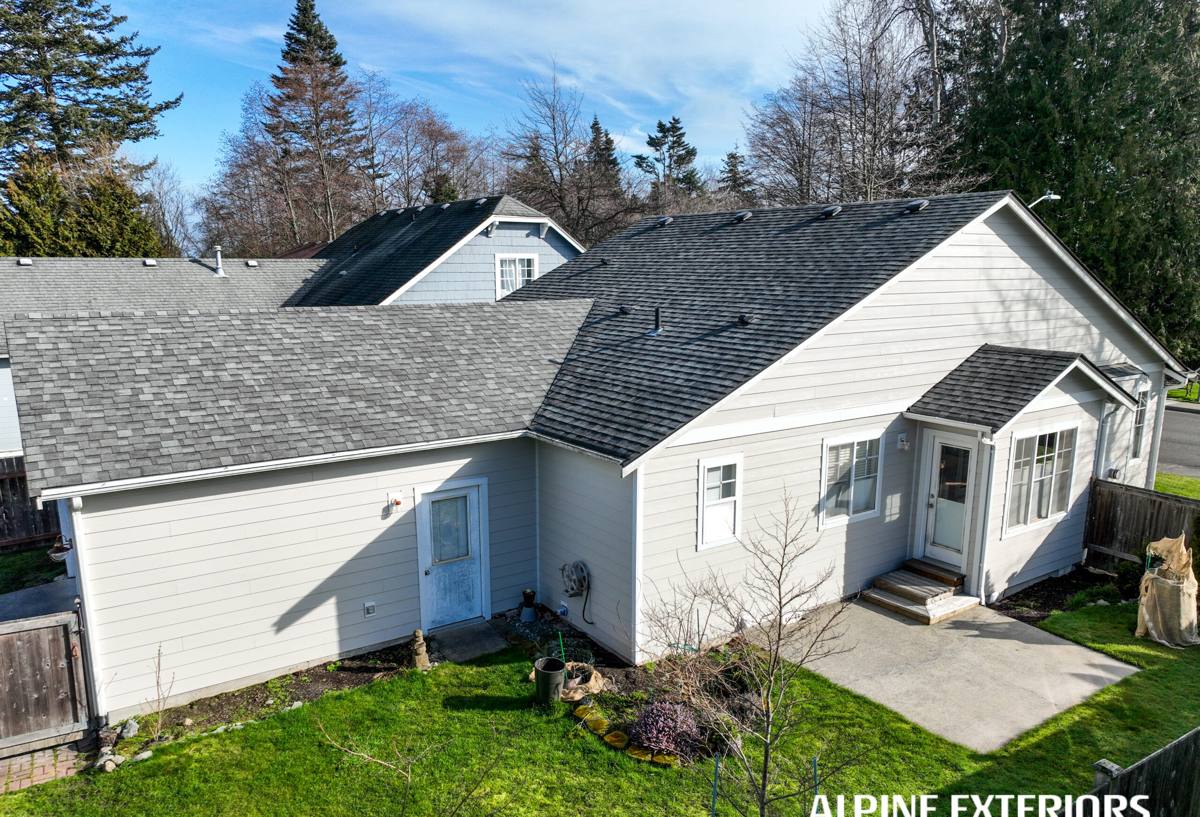
What Constant Moisture and Salt Air Actually Do
Three things happen repeatedly to siding in this environment, and they compound over time:
- Moisture absorption: Wood-based and many composite sidings soak up water at cut edges, seams, and fastener holes. Repeated wet-dry cycles swell and shrink the material, which eventually cracks paint film and opens the door to rot.
- Moss and algae colonization: Shaded, damp wall sections develop moss and green staining faster than homeowners expect. Beyond the cosmetic issue, moss holds moisture against the siding surface far longer than open air would, accelerating whatever decay process is already underway.
- Salt-driven corrosion and finish breakdown: Airborne salt from the bay settles on painted and coated surfaces. Over years, it contributes to premature chalking, fading, and fastener corrosion, particularly on west- and water-facing elevations.
Any siding product will show some wear under these conditions. What separates a good long-term choice from a poor one is how the material responds to sustained moisture exposure — does it swell, delaminate, or rot, or does it simply shed water and dry out.
Why We Install Only James Hardie Fiber Cement
We made a deliberate decision as a company to install James Hardie fiber cement siding exclusively — no vinyl, no LP SmartSide, no Cemplank or Allura, no primed spruce or cedar. That's not a marketing position; it's a practical one based on what holds up in this specific climate.
Fiber cement is a mix of cement, sand, and cellulose fibers, which means it doesn't absorb and swell the way wood-based products do, and it doesn't soften or warp the way vinyl can under prolonged UV and temperature swings. James Hardie's HardieZone system (HZ5 for our region) is engineered specifically for climates with sustained moisture and moderate freeze-thaw activity — which describes Whatcom County well. The factory-applied ColorPlus finish is baked on under controlled conditions rather than field-painted, so it resists the chalking and fading that salt air accelerates on site-painted products.
Fiber cement is also non-combustible, which matters increasingly for insurance underwriting and for homeowners thinking about long-term risk, even in a region not typically associated with wildfire. And Hardie's warranty structure — a genuinely transferable product warranty backed by a large, established manufacturer — gives homeowners something concrete if a defect does show up years down the road, rather than relying on a smaller regional manufacturer's more limited coverage.
We're upfront that Hardie costs more upfront than vinyl or engineered wood products. Our position is that for a house that's going to sit exposed to bay-driven weather for the next 30-50 years, the maintenance savings and reduced failure risk make that upfront cost the better long-term math — not the cheaper short-term one.
How Fiber Cement Compares to the Alternatives
| Material | Moisture Behavior | Maintenance | Typical Lifespan |
|---|---|---|---|
| James Hardie Fiber Cement | Does not absorb/swell; factory finish resists moss staining | Occasional wash; repaint only if ever needed, decades out | 30-50+ years with proper install |
| Vinyl Siding | Sheds water but can warp/buckle with heat cycling; seams can trap moisture | Low, but color fades and can't be repainted easily | 20-30 years |
| LP SmartSide / Engineered Wood | Wood-strand core is more moisture-tolerant than solid wood, but edges and cuts remain a vulnerability | Requires diligent caulking/paint upkeep | 20-30 years, shorter if maintenance lapses |
| Cedar / Primed Spruce | Absorbs moisture readily; prone to rot, cupping, and moss growth in shade | High — regular painting/staining and moisture monitoring | 15-25 years depending on upkeep |
These aren't claims that the alternatives are defective products — vinyl, engineered wood, and traditional wood siding all have legitimate uses. Our point is narrower: in a bay-exposed, shade-heavy, high-moisture neighborhood like Columbia, the trade-offs of those materials show up faster and cost homeowners more in upkeep than fiber cement does.
What a Siding Project on a Columbia Home Looks Like
Every project starts with an honest assessment of what's actually happening behind the existing siding, not just what's visible on the surface. That means checking for trapped moisture, soft sheathing, and any areas where prior siding or flashing details let water in behind the wall assembly — a common issue on older homes that have been re-sided once or twice already without addressing the underlying water management.
Our general process
- On-site inspection of existing siding, trim, flashing, and any visible moisture damage
- Removal of failing material and inspection of the sheathing underneath
- Correction of house-wrap, flashing, and drainage plane details before any new siding goes up
- Installation of James Hardie panels, lap siding, or trim per manufacturer specifications, including proper fastening and clearances
- Factory-finished ColorPlus product means no field painting is required for the siding itself
Correct installation matters as much as the product choice. Fiber cement that's improperly fastened, caulked at the wrong joints, or installed without the right clearance from grade and roofing can develop problems regardless of the material's inherent durability. We install to Hardie's published specifications because that's what keeps the warranty valid and the wall assembly performing as designed.
Beyond Siding: The Rest of the Exterior Envelope
Siding doesn't work in isolation. On a house exposed to the kind of driving rain Columbia gets off the bay, the roof, windows, and siding all have to work together to keep water out. We handle all four exterior trades — roofing, siding, windows, and decks — because problems in one area often show up as damage in another. A roof with failing flashing at a wall intersection will saturate the siding below it regardless of what that siding is made of. Windows with deteriorated flashing or caulking will do the same around their perimeter.
When we're on site for a siding estimate, we look at the whole envelope, not just the walls. It's common to find that a siding problem actually originated with a roofing or window detail, and fixing the siding alone wouldn't have solved it.
Signs It's Time to Have Your Siding Looked At
- Visible moss or persistent green staining on shaded walls that returns quickly after cleaning
- Soft spots, bubbling paint, or a "give" when you press on the siding
- Cracked, warped, or separating boards, especially near the ground or around window trim
- Increased drafts or musty smell near exterior walls
- Visible gaps at seams, corners, or where siding meets trim, roofline, or foundation
- Siding that's been repainted multiple times but still looks weathered within a year or two
None of these automatically mean full replacement is needed — sometimes it's a localized repair or a flashing correction. But any of them are worth having a professional look at before the next wet season, since problems in this climate tend to get worse quietly, behind the wall, before they show up as visible damage.
Cost Factors Homeowners Should Understand
| Factor | Why It Matters |
|---|---|
| House size and wall complexity | More corners, gables, and trim details mean more labor and material per square foot |
| Existing damage found during tear-off | Rotten sheathing or hidden water damage adds repair scope beyond the siding itself |
| Siding profile and color | Lap siding, panel systems, and shingle-style products carry different material and labor costs |
| Trim and accessory work | Fascia, soffits, and window trim replacement is often bundled with a full siding project |
| Access and site conditions | Mature landscaping, steep grades, or tight lot lines common in older neighborhoods can affect labor time |
We won't quote a number without seeing the house, but these are the variables that drive most of the difference between one Columbia home's project cost and the next.
Why Working with a Local Crew Matters Here
A contractor based in and around Bellingham has seen how Whatcom County's specific weather pattern — the bay-driven moisture, the shaded lots, the moss pressure — plays out on real houses over multiple seasons. That matters more than it sounds like it should. Installation details that work fine in a drier climate, like fastener spacing or caulk joint placement, need to be handled differently when a wall is going to stay damp for a third of the year. A local crew is also positioned to actually be there if a warranty question or a minor issue comes up years after the install, rather than having moved on to a different region entirely.
If you're in Columbia and thinking about your home's siding, roofing, windows, or decks, we're happy to come take a look and give you a straightforward, no-pressure estimate — no invented urgency, just an honest read on what your house needs.