 Bellingham Siding
 Fiber Cement Siding Built for What Columbia's Climate Actually Does to a House
Columbia is one of Bellingham's older, more established neighborhoods, and that means a mix of home ages and siding types sitting under mature tree canopy just a short distance from Bellingham Bay. That combination — shade, moisture, and salt-tinged coastal air — is exactly the kind of environment that wears out the wrong siding material faster than most homeowners expect. This page covers one thing specifically: what a correct fiber cement siding job looks like for a home in Columbia, and why we only install James Hardie products to do it.
We are not a general contractor who happens to offer siding. Fiber cement from James Hardie is the only siding system we install, on every job, in every Bellingham neighborhood we work in — including Columbia. That focus is the point. When you only work with one system, you get very good at installing it correctly, and you stop making the compromises that come from juggling five different manufacturers' specs.
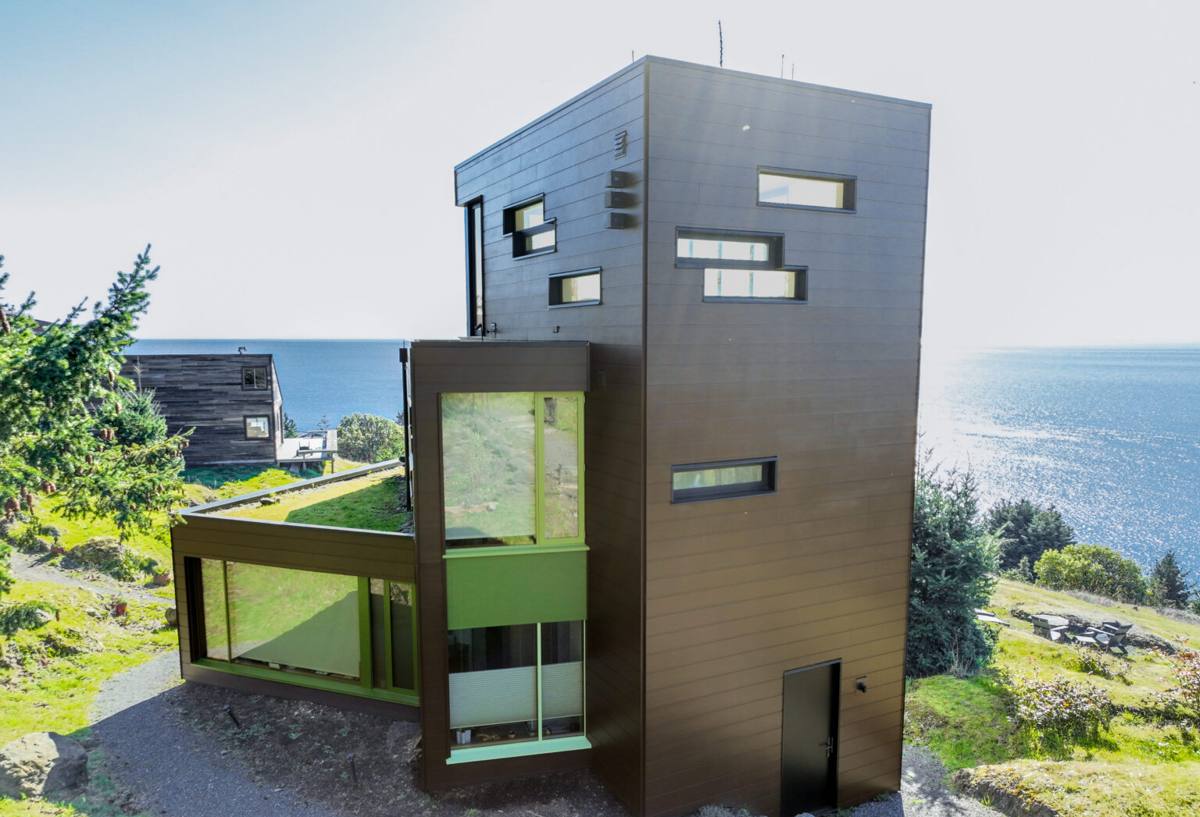
What Whatcom County's Marine Climate Does to Siding Over Time
Bellingham sits on the water, and the weather that comes with that location is harder on exterior building materials than most inland homeowners realize. Three factors matter most for a Columbia home's siding.
Salt Air and Coastal Moisture
Proximity to Bellingham Bay means the air carries a steady low level of salt and moisture, even blocks inland. Over years, that airborne moisture accelerates corrosion on fasteners and trim, and it keeps wood-based sidings damp longer after every rain than the same product would stay in a drier inland climate.
Driving Rain
Storms off the Strait of Georgia and Puget Sound don't just fall straight down — wind-driven rain gets pushed sideways into wall assemblies, working its way behind poorly lapped siding, undersized flashing, and gaps around trim. A siding system's water-shedding detailing matters more here than in a calmer climate.
A Long Moss Season
Between the tree cover common on older Columbia lots and Bellingham's extended wet season, north- and shade-facing walls stay damp for long stretches of the year. That's ideal growing conditions for moss and algae, which hold moisture against the siding surface and accelerate paint failure and substrate breakdown on materials that aren't engineered to resist it.
Why We Standardized on James Hardie Fiber Cement
We used to see the same pattern on service calls across Whatcom County: siding that looked fine in the showroom but struggled once it met a real Pacific Northwest winter. James Hardie's fiber cement is engineered specifically for climates like ours — it's non-combustible, dimensionally stable when wet, and manufactured in HZ5 formulations built for the freeze-thaw and moisture cycling common in the Pacific Northwest.
The factory-applied ColorPlus finish matters as much as the substrate. It's baked on under controlled conditions and backed by its own finish warranty, which means the color layer resists the fading and chipping that field-applied paint struggles with under Bellingham's UV and moisture combination. We're not against every alternative product on principle — vinyl, cedar, and engineered wood sidings like LP SmartSide all have legitimate uses. We simply made a professional decision, after years of installing and servicing siding in this climate, that Hardie's moisture behavior, fire performance, and long-term finish durability were worth standardizing on for every home we touch, including every Columbia project.
What a Correct Fiber Cement Installation Actually Involves
Fiber cement siding is only as good as the installation behind it. Most of the siding failures we get called out to inspect aren't product failures — they're installation shortcuts. Here's what we hold every Columbia job to.
Moisture Management Comes First
Before a single plank goes up, the wall needs a correctly lapped weather-resistive barrier, properly flashed windows and doors, and rainscreen or drainage detailing where the assembly calls for it. Given how much wind-driven rain a Columbia home can see in a given winter, this hidden layer of work matters more than the visible siding itself.
Fastening, Clearances, and Expansion
James Hardie specifies exact fastener types, spacing, and penetration depth, along with minimum clearances from grade, roofing, and decks. Skipping these — over-driving nails, fastening too close to panel edges, or leaving no gap at grade — is the single most common cause of premature cracking and moisture intrusion we see on fiber cement that was installed by crews unfamiliar with the product.
Joints, Caulking, and Finish Details
Butt joints, trim transitions, and penetrations need to be sealed with the right sealant and detailed to shed water rather than trap it. On a shaded lot like many in Columbia, a joint that holds moisture becomes a moss and mildew starting point within a season or two.
How Fiber Cement Compares to Other Siding Options in This Climate
| Material | Moss & Moisture Resistance | Maintenance | Typical Lifespan Here |
|---|---|---|---|
| James Hardie Fiber Cement | High — engineered for wet, humid climates | Occasional wash; factory finish holds color | Multiple decades with correct install |
| Vinyl Siding | Moderate — doesn't rot, but seams and gaps can trap moisture behind panels | Low, but panels can warp or fade in UV/temperature swings | Variable; degrades faster in direct sun exposure |
| Cedar / Wood Siding | Low to moderate — absorbs moisture, prone to moss and rot in shade | High — regular refinishing and moisture checks needed | Shorter without consistent upkeep |
| LP SmartSide (engineered wood) | Moderate — treated substrate still wood-based, sensitive to installation | Moderate; edge sealing and caulking need monitoring | Depends heavily on installation quality |
This table reflects general material behavior, not a claim that any product will fail on a given home — installation quality changes these outcomes significantly for every material listed. It's part of why we made a standardization decision rather than offering all of them and hoping each gets installed correctly.
Our Process on Columbia Siding Projects
Inspection and Assessment
We start by looking at the existing siding, the wall assembly underneath where accessible, and any moisture or moss patterns specific to how the home sits relative to sun, shade, and prevailing wind — details that vary block to block in a tree-covered neighborhood like Columbia.
Prep and Weather-Resistive Barrier
Old siding comes off, damaged sheathing gets addressed, and a new weather-resistive barrier goes on with correctly lapped and taped seams before any flashing or trim is installed.
Installation to Manufacturer Specification
Hardie planks, panels, or trim go up following James Hardie's published fastening, clearance, and joint-treatment requirements — not a generalized "how we've always done siding" approach.
Final Walkthrough
We walk the finished job with the homeowner, review the warranty paperwork, and point out any maintenance basics specific to the home's exposure — for instance, which walls will need periodic washing given shade and moisture patterns.
Signs a Columbia Home May Need Siding Attention
- Green or black streaking on north-facing or shaded walls that keeps coming back after cleaning
- Soft, spongy, or discolored siding near ground level or below downspouts
- Paint or finish failing years earlier than expected on one section of the house
- Visible gaps, cracking, or separation at trim, corners, or window flashing
- Warping, cupping, or bowing on wood or engineered wood panels
- Rooms near exterior walls feeling drafty or harder to keep warm than the rest of the house
Any one of these is worth a look before it becomes a larger repair, especially heading into another wet Whatcom County winter.
Why It Matters to Hire a Crew That Already Works in Columbia
Siding installation isn't identical from block to block. A crew that regularly works in Columbia already understands the City of Bellingham's permitting process, has a feel for how tree-heavy lots affect drainage and drying time around a house, and has seen firsthand how older homes in this part of town were originally built and where past repairs tend to hide problems. That local familiarity shortens the learning curve on your project and reduces the chance of a surprise once old siding comes off.
It also means we're not guessing about how this climate treats a James Hardie installation five or ten years down the road — we're the ones who get the service calls if a detail was cut on a job, so we have every incentive to get it right the first time on your home.
Get a Straightforward Estimate for Your Columbia Home
If your siding is showing moss, moisture damage, or just isn't holding up to Bellingham's weather the way it should, we're happy to take a look and give you a straightforward, no-pressure estimate for James Hardie fiber cement siding. Use the form below to get started.