 Bellingham Siding
 Building Decks for Silver Beach's Conditions
Silver Beach sits among the wooded, lake-adjacent neighborhoods that give this part of Bellingham its character — mature tree canopy, shaded yards, and homes tucked into lots that rarely get a full day of direct sun. That's a beautiful setting, but it's a tough one for an outdoor deck. Whatcom County's marine air, long wet season, and heavy tree cover combine to keep wood surfaces damp for much of the year, and damp wood is exactly what moss, algae, and rot need to get established. A deck built for a dry inland climate will not hold up the same way here, and a deck built without accounting for shade and moisture will show problems within a few seasons — soft spots, green staining, slick footing, and fasteners that rust and streak the boards.
We build and repair decks in this neighborhood regularly, so this isn't theoretical for us. It shapes decisions from footing depth to which decking material we'll recommend and which ones we'll steer you away from.
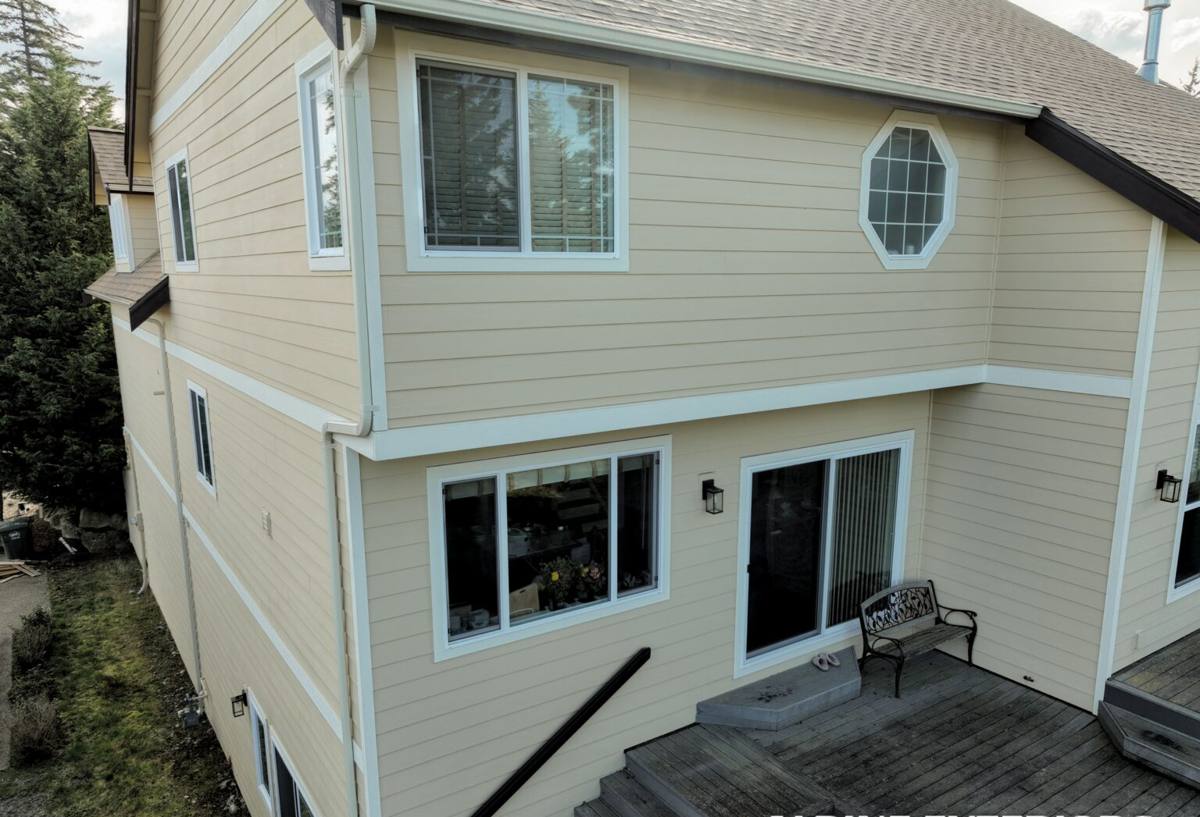
What Makes Silver Beach Lots Different
Shade and Moss Season
Tree cover keeps decks and roofs from drying out between rain events. In a sunnier neighborhood, a deck surface might dry within a day of a storm. Under heavy shade, it can stay damp for a week or more, especially through the fall and winter months. That extended dampness is what drives moss growth on horizontal surfaces and green algae film on anything with a north or east exposure. Moss isn't just cosmetic — on a walking surface it's a slip hazard, and left unchecked it holds moisture directly against the wood.
Drainage and Slope
Many lots in this area have some grade change, and lake-adjacent properties often deal with soil that stays saturated longer than you'd expect after our wetter months. A deck built without a clear plan for water runoff — proper slope, gaps between boards, and a way for water to get out from underneath — will trap moisture right where you don't want it: against ledger boards, footings, and framing.
Marine Air and Metal Fasteners
The moist, salt-influenced air that moves through Whatcom County accelerates corrosion on lower-grade hardware. Cheap fasteners and connectors that might last a decade in a dry climate can start rusting and staining decking within a few years here. This is a small detail that makes a large difference in how a deck looks and holds together over time.
Choosing the Right Materials for This Neighborhood
There's no single "best" decking material — there's a best material for your budget, your sun exposure, and how much upkeep you're willing to do. For a shaded, moss-prone lot like most of what we see around Silver Beach, the trade-offs shift compared to a wide-open, sunny yard.
| Material | How it handles shade & moisture | Maintenance | Typical lifespan here |
|---|---|---|---|
| Pressure-treated fir/pine | Needs regular sealing to shed water; prone to moss/algae in deep shade without upkeep | Annual cleaning, re-sealing every 2-3 years | 15-20 years with upkeep |
| Cedar | Naturally rot-resistant but still needs finish maintenance in constant shade | Cleaning and oil/stain every 1-2 years | 15-25 years with upkeep |
| Composite / capped composite | Doesn't absorb water like wood; still needs periodic cleaning where moss can gain a foothold on any surface | Occasional wash, no sealing/staining | 25-30+ years |
In heavily shaded, low-maintenance-preference situations, we lean toward composite for the walking surface simply because it removes the sealing cycle that shade makes hard to keep up with. For homeowners who want the look and feel of real wood and are willing to maintain it, cedar or treated lumber are still solid choices — they just need a realistic maintenance plan, which we'll walk through with you before you commit either way.
What a Correct Deck Build Involves
A deck that holds up in this climate is decided by what's underneath and behind the decking boards, not just the surface material.
- Footings sized and set below frost depth — undersized or shallow footings shift with saturated soil over time.
- Proper ledger flashing where the deck attaches to the house — this is the single most common failure point we find on older decks in wet climates, and it's invisible until there's rot behind the siding.
- Joist tape or flashing on framing to keep standing water out of end grain, where rot starts fastest.
- Corrosion-resistant hardware — hot-dip galvanized or stainless connectors and fasteners rated for treated lumber contact.
- Correct board spacing and slope so water actually leaves the surface instead of pooling.
- Airflow underneath — enough clearance and, where needed, venting so the underside of the deck can dry out between storms.
Skipping any one of these doesn't show up on day one. It shows up in year three or four, as soft framing, staining, or a ledger connection that's failed quietly behind the wall.
Our Process From Estimate to Finished Deck
We keep the process straightforward and give you real information at each step rather than surprises later.
- On-site walkthrough — we look at your lot's sun exposure, drainage, existing structure (if replacing a deck), and how you actually use the space.
- Honest material recommendation — based on your shade level, budget, and maintenance appetite, not a one-size-fits-all pitch.
- Written estimate — clear scope, materials, and price range before any work starts.
- Permit handling — we take care of the paperwork with the City of Bellingham or Whatcom County, whichever applies to your property.
- Build — footings, framing, flashing, and decking, in that order, with inspections where required.
- Walkthrough and care guidance — we show you what maintenance actually looks like for the material you chose, specific to a shaded lot.
Maintenance Realistic for a Moss-Prone, Shaded Lot
Every deck needs some upkeep — the honest question is how much, and what happens if you skip it. Here's a practical yearly checklist for decks in tree-covered, damp settings like Silver Beach:
- Sweep leaves and debris off the surface regularly through fall — trapped organic matter is what feeds moss and holds moisture.
- Rinse or soft-wash the surface at least once a year to remove moss and algae film before it builds up.
- Check gaps between boards periodically and clear out packed debris so water can drain through.
- Inspect the ledger flashing and any spots where the deck meets the house for staining or soft wood.
- For wood decking, re-seal or re-stain on the schedule your material actually needs — not just when it looks dry.
- Trim back overhanging branches where practical to reduce leaf drop and let a little more air and light reach the deck.
Permits and Local Requirements
Most deck projects that involve new footings, structural attachment to the house, or a certain height above grade require a permit through the City of Bellingham (or Whatcom County, depending on the exact location). Requirements and thresholds can change, so we handle this as part of the job rather than leaving it on you — we pull what's needed, coordinate inspections, and make sure the finished structure is documented correctly. This matters for resale and for insurance, since an unpermitted structural deck can become a problem later even if it looks fine today.
Why a Crew That Already Works Silver Beach Matters
Every neighborhood in Whatcom County has its own quirks — soil, slope, sun exposure, and how the tree canopy sits relative to a given lot. A crew that's already worked in Silver Beach knows what to expect before they even walk the site: where moss tends to be worst, how much shade to plan around, and which details in a build actually matter for lots like these versus a sunnier, more open part of Bellingham. That's not a sales point — it's the difference between a deck that gets sized up correctly on day one and one that gets treated like a generic build and starts showing problems a few years in.
We also stand behind our work locally, which means if something needs attention after the build, we're not a crew that has to drive across the state to get back to you.
Cost Factors to Expect
| Factor | Why it moves the price |
|---|---|
| Decking material | Composite runs higher upfront than pressure-treated wood but lower over the deck's lifetime in maintenance |
| Deck size and shape | Multi-level decks, curves, and larger footprints add framing and labor |
| Site access and slope | Sloped or hard-to-access lots (common near the lake) can add footing and excavation work |
| Railing style | Cable, glass, and composite railing systems cost more than standard wood balusters |
| Demo of an existing deck | Removing and disposing of an old structure adds to the scope |
| Permit and engineering needs | Larger or elevated decks may require engineered plans, adding time and cost |
We give you a real number for your specific lot and goals rather than a generic per-square-foot figure that doesn't account for shade, slope, or material choice — those variables move the price more than square footage alone.
If you're planning a new deck or need to replace one that's showing its age in Silver Beach, we're happy to come take a look. The estimate is free, there's no pressure, and you'll get a straight answer about what your lot actually needs.