 Bellingham Siding
 Siding in Sunnyland: A Neighborhood Built for the Long Haul, Living in a Tough Climate
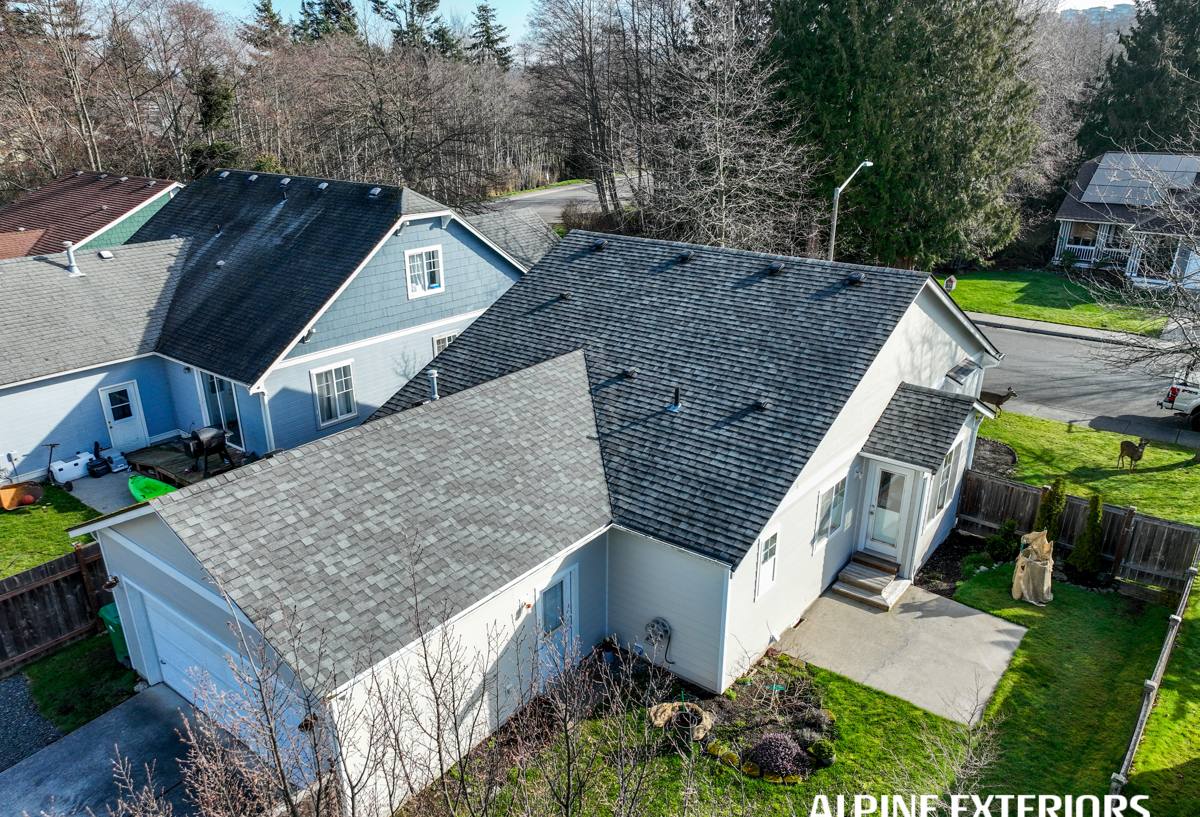
Sunnyland is one of Bellingham's established, close-in neighborhoods, with a housing stock that spans decades of building styles and just as many rounds of exterior remodeling. Whatever era a given house was built in, the exterior cladding on it has been fighting the same fight for years: Whatcom County's marine climate. Salt-tinged air off Bellingham Bay, long stretches of driving rain, and a moss season that seems to run longer every year all add up to real, measurable wear on siding, trim, roofing, and anything else exposed to the weather. We work on homes throughout Sunnyland and the surrounding Bellingham neighborhoods, and the patterns we see here are consistent enough that we can generally tell a homeowner what's going on with their siding before we even get out of the truck.
This page is about what that climate does to exterior materials, how we approach siding replacement for homes in this part of Bellingham, and why our company installs exclusively James Hardie fiber cement siding rather than the vinyl, engineered wood, or other fiber cement products you'll see elsewhere.
What Bellingham's Marine Climate Does to a House
Salt Air
Proximity to Puget Sound and Bellingham Bay means airborne salt is a constant, low-level presence, even blocks away from the water. Salt air accelerates corrosion on fasteners, flashing, and any exposed metal, and it interacts with certain paints and coatings in ways that shorten their service life. Materials and finishes that hold up fine inland can fail faster here.
Driving Rain
Bellingham doesn't just get a lot of rain — a good portion of it arrives sideways, driven by wind off the water. That matters more than raw rainfall totals. Wind-driven rain finds every gap in flashing, every under-caulked seam, and every place where siding wasn't lapped correctly, and it pushes moisture into places gentler rain never would. Over years, that's what turns a small installation shortcut into a rot problem.
A Long Moss and Mildew Season
Cool, wet, and shaded conditions for much of the year are exactly what moss, algae, and mildew need to establish themselves on north-facing walls, under eaves, and anywhere airflow is limited. Beyond the cosmetic staining, moss and algae hold moisture against the siding surface far longer than open air would, which is a slow but steady drain on any material that isn't fully sealed against it.
How This Shows Up on Sunnyland Homes
Because Sunnyland's housing stock includes a real mix of ages and original siding materials, we see the full range of climate-related failure modes in the neighborhood:
- Wood and engineered wood siding: swelling, delamination at panel edges, and soft spots where moisture has gotten behind the surface coating
- Vinyl siding: warping and buckling from temperature swings, plus a chalky, faded look after years of UV and salt exposure
- Older fiber cement or hardboard: paint failure at butt joints and corners, and staining from moss and mildew that keeps coming back no matter how often it's cleaned
- Trim and fascia: rot at the most exposed corners, especially where gutters have overflowed or flashing was undersized
None of this means Sunnyland is an unusually harsh place to own a home — it's a fairly typical Whatcom County exterior environment. But it does mean that the material choice and installation quality matter more here than they would in a drier, calmer climate.
Why We Install Only James Hardie Fiber Cement Siding
We get asked fairly often why we don't offer vinyl, LP SmartSide, Cemplank, Allura, or primed wood siding alongside Hardie. The honest answer is that after years of exterior work in this climate, we standardized on one product line because it consistently performs, and we didn't want to keep repairing or defending the trade-offs of the alternatives.
- Non-combustible core: fiber cement doesn't feed a fire the way wood-based products can, which matters increasingly for insurance and wildfire-adjacent building codes even in a wet region like ours.
- Engineered for this exact climate: Hardie's HZ5 product line is specifically formulated for the moisture, freeze-thaw cycling, and moderate weather swings of the Pacific Northwest, rather than a one-size-fits-all national spec.
- Factory-applied ColorPlus finish: the color and topcoat are baked on under controlled conditions before the boards ever leave the plant, which holds up far better against salt air and UV than field-applied paint, and it comes with its own dedicated finish warranty.
- Dimensional stability: fiber cement doesn't expand and contract with temperature the way vinyl does, and it doesn't absorb and swell with moisture the way wood-based composites can — both of which are common failure points in a climate defined by rain and temperature swings.
- Warranty structure: Hardie backs its siding with a long, transferable limited warranty, which also tends to support resale value when a home changes hands.
We're not saying every alternative product is unusable everywhere — plenty get installed successfully in drier climates or under ideal conditions. We're saying that, for the specific combination of salt air, wind-driven rain, and moss exposure that Sunnyland and the rest of Bellingham deal with, Hardie fiber cement is the product we're willing to put our name behind and warranty our workmanship on.
How the Main Options Compare in This Climate
| Material | Moisture Behavior | Salt Air / UV Resistance | Maintenance | Fire Resistance |
|---|---|---|---|---|
| James Hardie fiber cement | Dimensionally stable, engineered HZ5 for PNW moisture | ColorPlus factory finish resists fading and salt exposure | Occasional wash; no repainting for years with ColorPlus | Non-combustible |
| Vinyl siding | Doesn't rot, but seams and gaps allow moisture behind panels | Fades and chalks over time; can warp with heat | Low, but replacement often needed sooner in coastal exposure | Melts/deforms in heat |
| LP SmartSide / engineered wood | Wood-based core is moisture-sensitive at cut edges and seams | Prone to UV wear on field-applied finishes | Requires diligent caulking and repainting on a schedule | Combustible |
| Primed cedar or spruce | Natural wood movement; needs perfect detailing to shed water | Salt air accelerates weathering of the coating | Regular repainting/staining; highest upkeep | Combustible |
How a Siding Replacement Project Works in Sunnyland
Every home is different, but a typical Hardie siding replacement in this part of Bellingham follows a consistent sequence:
- On-site assessment: we look at the existing siding, trim, flashing, and any signs of moisture intrusion, not just the surface appearance
- Removal and inspection of the sheathing: this is the step that actually reveals whether wind-driven rain has caused hidden damage behind the old siding
- Weather-resistive barrier and flashing: correctly lapped house wrap and properly integrated flashing around windows, doors, and penetrations is what actually keeps driving rain out — the siding itself is the second line of defense, not the first
- Hardie installation to manufacturer spec: correct fastening, gapping, and caulking at joints, which is what determines whether the product performs for its full warranty life
- Trim, caulking, and paint touch-up: finishing details matter as much in a wet climate as the siding itself
- Final walkthrough: so you understand what was done and what upkeep, if any, the new siding needs going forward
Installation quality is where a lot of siding problems actually originate, regardless of material. A premium product installed with the wrong fastener spacing, missing caulk joints, or improperly lapped flashing will still fail early. That's why we treat installation detail as seriously as the material choice.
Beyond Siding: Roofing, Windows, and Decks
The same climate that wears down siding in Sunnyland is working on the rest of a home's exterior at the same time. We also handle roofing, window replacement, and deck construction, and we look at all four together when we're on site, because they interact:
- A roof with failing flashing or clogged gutters will overflow directly onto siding below, accelerating exactly the kind of rot and staining described above
- Old or poorly sealed windows are a common entry point for wind-driven rain, and window replacement is often bundled with a siding project since both involve the same flashing and weatherproofing work
- Decks exposed to the same rain and moss conditions need materials and fastening details suited to this climate, not a generic national spec
Addressing siding in isolation, without checking the roof and window flashing tied into it, is one of the more common ways an otherwise good siding job ends up with a moisture problem a few years later.
What to Look for When Hiring an Exterior Contractor Here
Bellingham has no shortage of contractors willing to quote a siding job, but the marine climate makes installation quality more consequential here than in drier parts of the state. A few things worth checking before you hire anyone:
- Do they carry current Washington contractor licensing and adequate liability insurance?
- Are they familiar with James Hardie's published installation requirements, including fastener spacing, clearances, and caulking specs — not just general siding experience?
- Will they inspect and address the sheathing and flashing underneath, or only swap the visible siding?
- Do they offer a workmanship warranty separate from the manufacturer's product warranty?
- Can they explain, specifically, why they recommend the material and approach they're proposing for your home?
Rough Cost Factors for a Sunnyland Siding Project
| Factor | Why It Affects Cost |
|---|---|
| Home size and wall complexity | More corners, gables, and cutouts mean more labor and material waste |
| Extent of hidden damage | Rot found behind old siding adds sheathing and framing repair before new siding goes on |
| Existing siding removal | Full tear-off versus working with a simpler substrate changes labor time |
| Trim and detail work | Board-and-batten accents, wide trim boards, and custom details add material and labor |
| Access and site conditions | Steep lots, tight setbacks, or limited equipment access common in older neighborhoods add time |
We don't publish fixed prices because these factors vary too much house to house to be honest about a number without seeing the home. What we can say is that a proper estimate should walk through each of these factors with you, not just quote a flat per-square-foot number.
Why a Local Crew Matters
A contractor who works around Bellingham and Whatcom County regularly develops a feel for which walls take the worst of the wind-driven rain, which neighborhoods deal with heavier moss growth, and how salt air exposure varies even within a few miles of the water. That local pattern recognition shapes real decisions — where extra flashing attention is worth it, how aggressively to detail a north-facing wall, and what kind of moisture problems to check for before quoting a project. It's a different starting point than a crew unfamiliar with this specific climate working from a generic national playbook.
Get a Free Estimate for Your Sunnyland Home
If your siding is showing its age, dealing with recurring moss and staining, or you're just planning ahead, we're happy to take a look and walk you through what we're seeing and what your options are. There's no cost and no pressure — fill out the form below to get a free estimate for your Sunnyland home.