 Bellingham Siding
 Exterior Contracting for Edgemoor Homes
Edgemoor sits on the bluffs and slopes overlooking Bellingham Bay, and that setting is exactly what makes exterior maintenance here different from a lot of the rest of Whatcom County. Homes in this neighborhood tend to be older, larger, and built to take advantage of water views and mature tree cover — which also means they take a steady beating from salt-laden air, wind-driven rain off the bay, and the deep shade that keeps north- and west-facing walls damp for months at a time. We work on siding, roofing, windows, and decks throughout Bellingham, and Edgemoor is one of the areas where getting the exterior right the first time really matters, because these are not cheap or simple houses to keep dry.
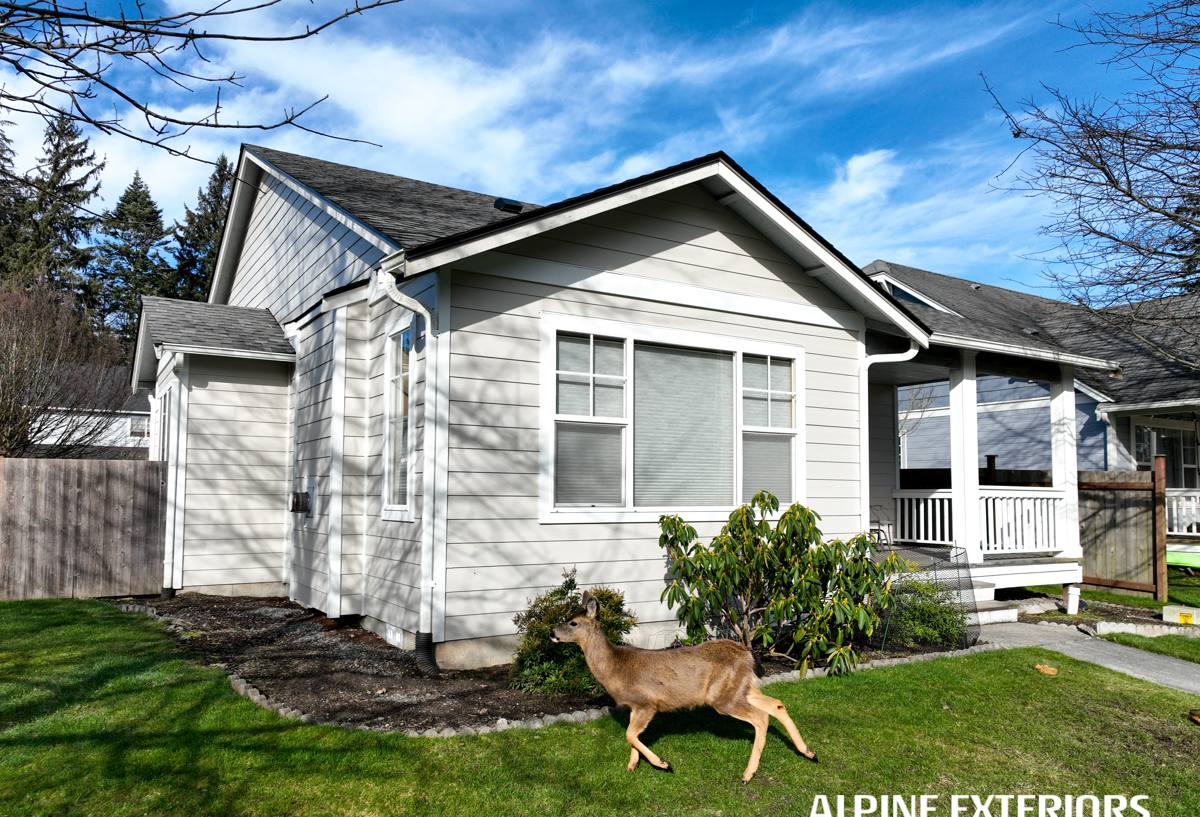
What the Edgemoor Climate Does to Siding
Three things define exterior wear in Edgemoor: proximity to salt water, exposure to driving rain off the bay, and a long moss and mildew season that stretches from fall through spring. None of these are dramatic on their own, but combined and repeated year after year, they add up to real damage on the wrong siding material.
Salt Air
Homes closer to the bluff and the water get airborne salt on a regular basis. Salt accelerates corrosion on fasteners and trim hardware, and it degrades paint film faster than it would inland. Any siding product that depends on a surface-applied paint job for its weather protection is going to show chalking, fading, and coating failure sooner near the water than it would a few miles east.
Driving Rain
Storms coming off the Strait of Georgia and Bellingham Bay hit west- and south-facing walls at an angle, not straight down. That means siding, trim, and window flashing details take direct wind-driven water, not just runoff. Lap joints, butt seams, and corner details are where poorly installed siding fails first under this kind of exposure — water finds the gap and works its way behind the cladding.
Moss and Shade
Between the tree canopy that gives Edgemoor its character and our regional cloud cover, a lot of exterior wall area here rarely sees direct sun. That keeps siding damp longer after every rain event, which is exactly the condition moss, algae, and mildew need to take hold. Siding that swells, delaminates, or absorbs moisture under those conditions ages faster and needs more frequent cleaning and recoating just to look presentable.
Why We Only Install James Hardie Fiber Cement
We made a decision a while back to standardize on James Hardie siding and stop installing other materials, even when customers ask for them. In a neighborhood like Edgemoor, where the combination of salt exposure, rain, and shade is about as tough as it gets locally, that decision matters more than it would somewhere drier and more open.
- Non-combustible core: Hardie's fiber cement won't ignite, which matters given the wildfire smoke and ember exposure the whole region has seen more of in recent summers.
- Factory-applied ColorPlus finish: The color and protective coating are baked on at the factory under controlled conditions, which holds up to salt air and UV exposure far better than field-applied paint on wood or engineered wood products.
- Climate-engineered HZ formulations: Hardie's HZ10 product line is engineered specifically for the wetter, cooler climate zones like ours, which is a real factor in a neighborhood with as much shade and moisture retention as Edgemoor.
- Dimensionally stable: Fiber cement doesn't swell, cup, or rot the way wood-based sidings can when they stay damp for extended periods, which is the exact condition a lot of shaded Edgemoor walls sit in for much of the year.
- Strong transferable warranty: A material warranty that survives a change of ownership adds real value in a neighborhood where homes tend to be long-term family properties or high-value resales.
We don't install vinyl, LP SmartSide, Cemplank, Allura, or primed wood siding. Those products all have their place in the market, and some perform reasonably well in the right setting — but we've chosen to build our business around one system we can stand behind fully, install to spec, and warranty with confidence. That's Hardie.
How a Siding Project Works Here
Assessment and Moisture Check
On an older, established home, we start by checking for hidden moisture damage behind the existing siding, especially at window and door flashing, corner boards, and any wall areas that stay shaded most of the day. Edgemoor's tree cover means we pay particular attention to north-facing walls and anywhere gutters or downspouts have been dumping water against the foundation or siding base.
Removal and Sheathing Repair
Once the old siding is off, we address anything underneath that needs it — rotted sheathing, compromised house wrap, or flashing that wasn't installed correctly the first time. This step is where a lot of the real value of a siding replacement happens, even though it's invisible once the job is done.
Weather Barrier and Flashing Detail
Given the wind-driven rain exposure common on bluff-facing walls, we're careful with house wrap laps, window and door flashing, and any penetrations — hose bibs, vents, light fixtures. These details are what actually keep water out; the siding itself is the visible layer on top of a system that has to work as a whole.
Hardie Installation to Spec
James Hardie siding has manufacturer installation requirements around fastening, clearances, and joint treatment. Installing it correctly is what makes the warranty valid and what determines how the product actually performs over the next several decades. We follow those specifications on every job, not as an upsell but because it's the only way the product does what it's designed to do.
Roofing, Windows, and Decks for Edgemoor Properties
Siding rarely fails in isolation on a home exposed to bay weather — roofing, windows, and decks are all dealing with the same salt air, rain, and shade. We handle all four so the exterior gets treated as one connected system rather than four separate vendors working around each other's schedules and assumptions.
- Roofing: Roof condition directly affects how much water reaches your siding at the top course and around fascia; a roof leak or poor flashing at the roofline is one of the most common causes of siding damage we find during tear-off.
- Windows: Window flashing integration with siding is one of the most failure-prone details on any home; replacing windows and siding together lets us tie the two systems in correctly rather than patching around an existing window.
- Decks: Bay-facing decks take direct sun and salt exposure on top of our wet winters, which shortens the life of untreated or poorly maintained decking and framing.
Cost Factors for an Edgemoor Exterior Project
| Factor | Why It Matters Here |
|---|---|
| Home size and wall complexity | Edgemoor homes often have larger footprints, multiple stories, and varied rooflines that add labor time and material cuts |
| Access and site slope | Bluff-side and sloped lots can require additional staging, scaffolding, or equipment access planning |
| Existing damage found at tear-off | Shaded, moisture-prone walls sometimes reveal sheathing or framing repair needs once old siding comes off |
| Trim and detail work | Older, architecturally detailed homes often have more corner boards, trim, and custom details than a standard tract house |
| Product line and finish | Hardie's various plank profiles, textures, and ColorPlus finishes carry different material costs |
Why a Local Crew Matters in Edgemoor
Working in Edgemoor means understanding how a specific bluff or wooded lot handles wind and rain, not just applying a generic install process. A crew that works across Bellingham and Whatcom County regularly sees how differently homes weather depending on their orientation to the bay, their tree cover, and their elevation — and that experience shapes decisions on flashing details, product selection, and where to spend extra attention during installation. It also means a local point of contact for warranty questions or follow-up, not a call center somewhere else.
Signs Your Edgemoor Home May Need Exterior Attention
- Visible moss or algae buildup on siding, especially on shaded or north-facing walls
- Paint that's chalking, peeling, or fading faster than expected, particularly on walls closer to the water
- Soft spots, bubbling, or visible swelling in siding boards
- Water staining or dark streaks below window sills or at siding seams
- Gaps opening up at trim boards, corners, or butt joints
- Rust staining from fasteners bleeding through paint or siding surface
If you're noticing any of these signs, or you're planning ahead for a home you own in Edgemoor, we're happy to walk the exterior with you and give you a straight assessment. Reach out for a free, no-pressure estimate using the form below — we'll look at your siding, roofing, windows, and decks and tell you honestly what needs attention now versus what can wait.