 Bellingham Siding
 Why Edgemoor's Setting Is Hard on Siding
Edgemoor sits on the wooded bluffs along Bellingham Bay, and that setting is part of what makes it one of the more distinctive neighborhoods in Whatcom County — mature tree canopy, close proximity to saltwater, and a mix of older homes and custom-built ones tucked into the hillside. It's also a setting that puts real, sustained stress on exterior siding. Homes near the water take on salt-laden air that accelerates corrosion of fasteners and finishes, while the tree cover that gives Edgemoor its character also means more shade, more standing moisture, and slower drying times after every rain.
Add in Bellingham's driving winter rain, which tends to come in sideways off the Sound rather than straight down, and you've got siding that's fighting wind-driven moisture intrusion at every seam, corner, and window trim. Then there's moss. Whatcom County's long, wet, mild winters create a moss season that can run from fall through spring on shaded, north-facing walls — exactly the kind of exposure common on tree-shaded Edgemoor lots. Moss holds moisture against the siding surface for months at a time, which is a slow but steady threat to any material that isn't built to shed water and resist rot.
None of this means Edgemoor homes are doomed to premature siding failure. It means the material and the installation both have to be matched to the actual conditions on the bluff, not to a generic siding job done the same way everywhere.
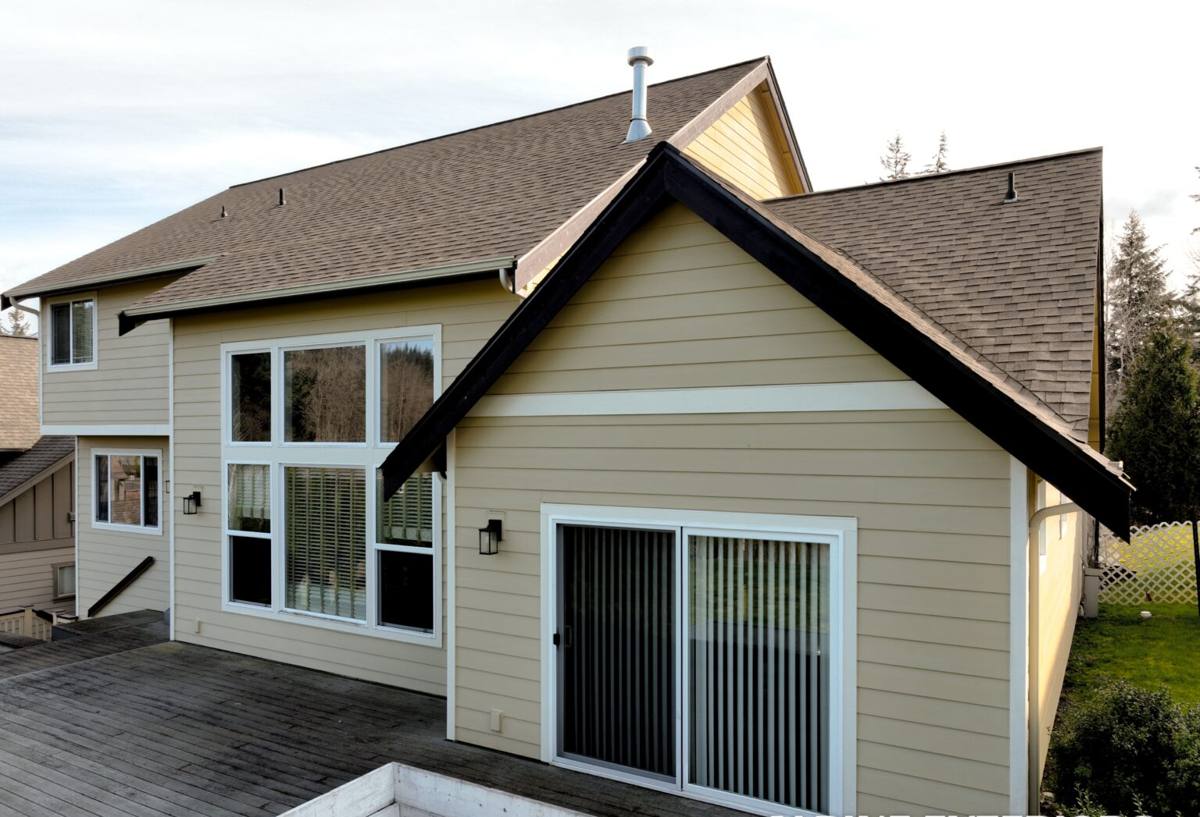
What a Correct Siding Replacement Actually Involves
Siding replacement is not just stripping old panels and nailing up new ones. Done correctly, it's a moisture-management project first and a cosmetic upgrade second. The visible siding is the last layer of a system that includes the wall sheathing underneath, a water-resistive barrier, properly lapped flashing at every window, door, and penetration, and correct fastening so the panels can expand and contract without cracking or popping loose.
On a job in a setting like Edgemoor, where shade and salt air are already working against the wall assembly, skipping any part of that system shows up faster than it would on a drier, more open lot. A rushed tear-off that misses rotten sheathing, or a re-flash job that reuses old, brittle house wrap, sets the new siding up to fail years before it should — regardless of how good the siding material itself is.
The Core Steps of a Proper Job
- Full removal of old siding and trim, not overlay installation on top of existing material
- Inspection of sheathing for soft spots, rot, or hidden moisture damage before anything new goes up
- Repair or replacement of any compromised sheathing and framing found during tear-off
- Installation of a new water-resistive barrier, correctly lapped from bottom to top
- Proper flashing at every window, door, deck ledger, and wall penetration
- Correct fastener type, spacing, and depth for the chosen siding product
- Caulking and sealing only where the manufacturer specifies it — not as a substitute for correct flashing
Signs Edgemoor Homeowners Should Watch For
Because of the shade and salt air in this area, siding problems here often show up first as surface and moisture symptoms rather than obvious structural damage. Catching them early keeps a siding project a planned replacement instead of an emergency repair.
- Persistent moss or algae streaking on north- and west-facing walls that returns soon after cleaning
- Soft or spongy spots when you press on siding near the base of the wall or under windows
- Paint that's peeling, bubbling, or chalking faster than the rest of the house
- Visible warping, cupping, or separation at panel seams
- Rust streaking from fasteners, especially on walls with more direct exposure to salt air
- A musty smell or visible staining on interior walls that share an exterior wall with a shaded, damp side of the house
Material Comparison: What Holds Up in This Setting
We install James Hardie fiber cement siding exclusively, and the reasons come down directly to conditions like the ones Edgemoor homes face. Here's how the common siding materials compare on the factors that matter most in a shaded, salt-air, high-moisture environment.
| Material | Moisture & Rot Resistance | Moss/Algae Behavior | Salt Air Durability | Maintenance Burden |
|---|---|---|---|---|
| James Hardie Fiber Cement | Non-combustible, engineered to resist moisture damage and won't rot | Factory ColorPlus finish resists staining; regular washing keeps it clean | Holds up well; fastener and finish specs account for coastal exposure | Low — no repainting for years, occasional wash |
| Vinyl Siding | Doesn't rot itself, but traps moisture behind panels if installed poorly | Can stain and is hard to fully clean without damaging the surface | Can become brittle and fade faster under sun and salt exposure over time | Low, but panels can warp or crack and are hard to color-match if replaced |
| LP SmartSide (engineered wood) | Wood-based; vulnerable to moisture intrusion at cut edges and seams | Prone to moss and algae growth in persistently shaded, damp areas | Requires diligent sealing and maintenance in coastal, high-moisture climates | Moderate to high — edge sealing and repainting on a regular cycle |
| Cedar | Naturally rot-resistant but still needs sealing and maintenance to stay that way | Susceptible to moss and mildew, especially in shaded coastal conditions | Needs regular refinishing to hold up near salt air | High — refinishing and repair on an ongoing basis |
We've made the choice to install James Hardie exclusively because it's the product we've seen consistently hold up to years of Whatcom County's wet, shaded, coastal-adjacent conditions when it's installed to the manufacturer's specifications. It's non-combustible, comes with a factory-applied ColorPlus finish so the color isn't just paint sitting on the surface, and Hardie's HZ5 product line is engineered specifically for climates like ours. It also carries a strong transferable warranty, which matters to a lot of Edgemoor homeowners thinking about resale.
Cost Factors for an Edgemoor Siding Job
Every siding project is priced around the specifics of the house, so we won't quote numbers that don't apply to your home. What we can tell you is which factors move the price up or down, so you know what to expect walking into an estimate.
| Factor | Why It Affects Cost |
|---|---|
| Hidden sheathing or framing damage | Shaded, moisture-exposed walls are more likely to need repair once old siding comes off |
| Wall height and roofline complexity | Steep bluff-lot homes and multi-story walls take more time and equipment |
| Access and staging | Wooded, sloped lots common in Edgemoor can limit equipment access and require more hand-carrying of material |
| Trim and detail work | Custom homes with more window and corner detail require more precise cutting and flashing |
| Siding profile and color | Lap width, shingle-style panels, and custom ColorPlus colors vary in material cost |
Our Process, Start to Finish
1. On-Site Assessment
We walk the exterior with you, check for the moisture and moss patterns common to shaded, coastal-adjacent lots, and look at what's actually happening behind the current siding wherever we can tell.
2. Tear-Off and Moisture Check
Old siding and trim come off completely. We inspect the sheathing underneath before anything new goes up, and flag any repair needed — no surprises added after the fact without a conversation first.
3. Weather Barrier and Flashing
New water-resistive barrier goes on correctly lapped, and every window, door, and penetration gets flashed to shed water the way it's supposed to — this is the step that determines whether the wall stays dry for the next 30 years.
4. Hardie Installation
Panels, fasteners, and trim go in to James Hardie's installation specifications, which is what keeps the manufacturer's warranty intact and keeps the siding performing the way it's engineered to.
5. Finish and Cleanup
We caulk and seal only where specified, do a final walk-through with you, and clear the site of debris and old material.
Why a Crew That Already Works Edgemoor Matters
A contractor who's worked this specific stretch of Bellingham already understands things a crew from outside the area has to learn on your dime: how much shade a given lot actually gets through the seasons, how aggressively moss establishes itself on the north side of a bluff-facing wall, and how salt air off the bay factors into fastener and finish choices. That local pattern recognition shows up in fewer surprises during tear-off and a install that's actually matched to how this neighborhood weathers, not a one-size-fits-all approach.
It also matters for something more practical: being reachable. A crew based in and around Bellingham is available for the walk-through, responsive if a question comes up mid-project, and around afterward if you ever have a warranty question.
Maintenance After Installation
James Hardie siding is genuinely low-maintenance, but "low" isn't "none," especially in a shaded, moss-prone setting like Edgemoor.
- Rinse the siding down once or twice a year, focusing on shaded north- and west-facing walls where moss and algae are most likely to establish
- Trim back tree limbs and shrubs that keep siding in constant shade or dripping with condensation
- Check caulking at trim and penetrations annually and touch up if it's cracked or pulling away
- Walk the exterior after major storms to catch any impact damage early
If you're seeing moss buildup, soft spots, or aging siding on an Edgemoor home, we're happy to walk the exterior with you and give you an honest read on what it needs. Reach out for a free, no-pressure estimate using the form below.