 Bellingham Siding
 Two Serious Products, One Decision
If you've spent any time researching siding replacement in Whatcom County, you've run into two names over and over: James Hardie fiber cement and LP SmartSide engineered wood. Both are legitimate, widely used products with real manufacturer backing. Neither one is a scam or a bad brand. But they are built from fundamentally different materials, and those materials behave differently once they're on a house in Bellingham's climate for twenty, thirty, or forty years.
We get asked about this comparison often enough that it's worth laying out plainly. We install James Hardie fiber cement exclusively. We don't install LP SmartSide, and we want to explain why in a way that's fair to the product, not just convenient for our sales pitch.
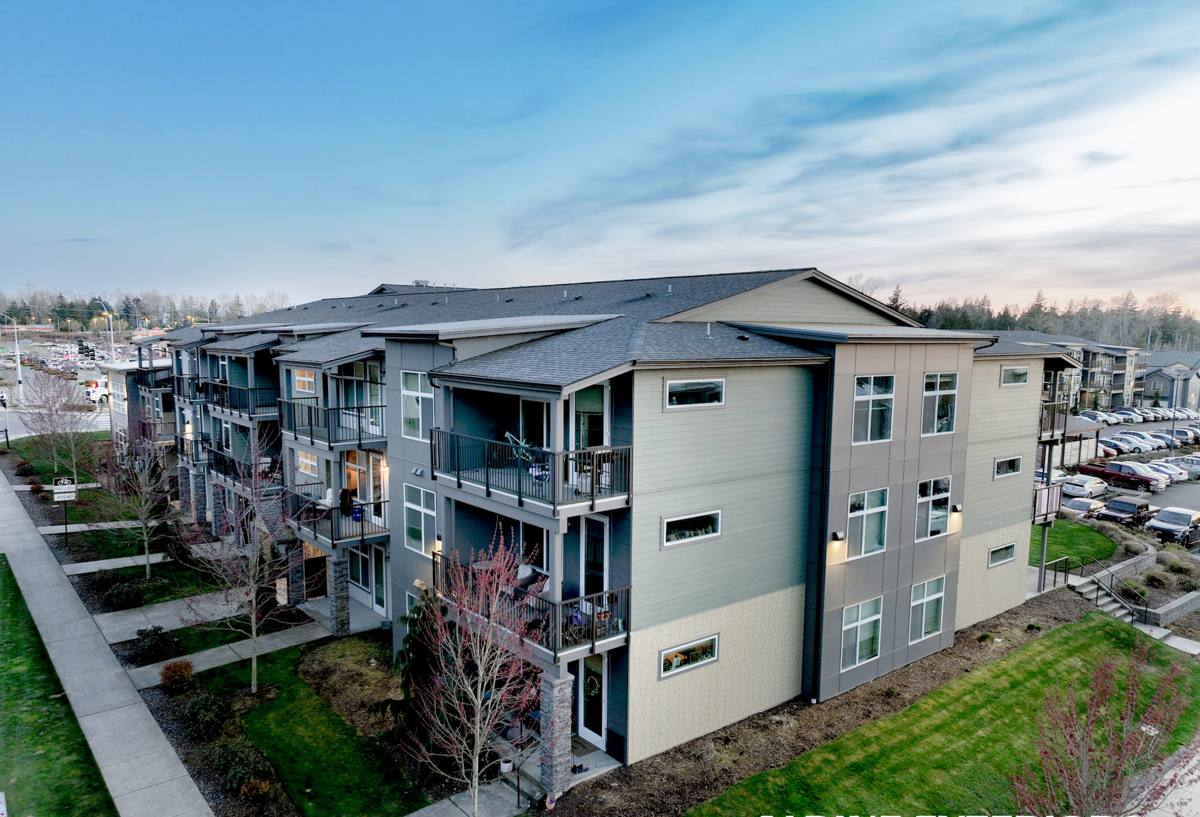
What Engineered Wood Actually Is
LP SmartSide is a wood-strand product. Wood fibers are bonded with resins under heat and pressure, then coated with a treated overlay and factory primer to resist moisture and insects. It's a genuine engineering improvement over old-school solid wood or hardboard siding, which had a rough history with moisture damage in wet Pacific Northwest climates. LP has addressed a lot of those historical failure points, and the product carries a real warranty from a real manufacturer.
The core trade-off is unavoidable, though: it is still wood at its core. Wood-based products expand, contract, and absorb moisture differently than a cement-based product, and the long-term performance depends heavily on keeping the factory coating and every cut edge properly sealed for the life of the siding.
Where It Holds Up Fine
In dry climates, or in applications with generous roof overhangs and good drainage, engineered wood siding can perform well for many years. It's lighter than fiber cement, easier on installers physically, and often less expensive up front. For some projects in drier regions, it's a perfectly reasonable choice.
Where the Trade-offs Show Up
The issues tend to surface at seams, cut ends, and fastener penetrations — anywhere the factory coating has been interrupted. If those spots aren't field-sealed correctly during installation, and re-sealed as part of ongoing maintenance, moisture can work its way into the wood substrate over time. That's not a defect in the product; it's a function of what the product is made of.
Why Bellingham's Climate Changes the Math
This is the part that matters most for a Whatcom County homeowner. Bellingham sits right on the water, which means salt-laden air, driving wind-driven rain off the Sound, and a moss and algae season that runs most of the year in shaded, north-facing exposures. Add in the long stretches of overcast, damp weather typical of the region, and you have a climate that is genuinely hard on any siding material that relies on a surface coating to keep moisture out of a wood core.
We're not saying engineered wood siding automatically fails here. We're saying the margin for installation error and maintenance neglect is much smaller in this climate than it is in, say, eastern Washington or the Southwest. A missed caulk joint or a cracked coating on a house in a dry inland climate might sit fine for years. That same gap on a house a few blocks from Bellingham Bay, catching driving rain and staying damp under moss growth, is a different story.
Fiber cement doesn't eliminate maintenance — no exterior product does — but it removes the wood-moisture equation entirely. The board itself is cement, sand, and cellulose fiber. It doesn't rot, and it isn't a food source for the insects and organic growth that our wet, mossy climate encourages.
Side-by-Side: What Actually Differs
| Factor | James Hardie Fiber Cement | LP SmartSide Engineered Wood |
|---|---|---|
| Core material | Cement, sand, cellulose fiber | Wood strands with resin binder |
| Moisture vulnerability | Not a wood-rot risk | Rot risk if coating/seals fail |
| Combustibility | Non-combustible | Combustible (wood-based) |
| Weight/handling | Heavier, more installer skill required | Lighter, easier to handle |
| Finish options | Factory ColorPlus finish, 15-yr finish warranty on top of product warranty | Factory primer; typically field-painted |
| Typical upfront cost | Higher material and labor cost | Generally lower upfront cost |
| Long-term maintenance | Repaint cycle only if not ColorPlus; no coating-seal urgency | Ongoing vigilance on caulking, cut edges, coating integrity |
Neither column is "bad." The table just shows that you're choosing between different risk profiles and different maintenance commitments, and that choice matters more in a coastal, high-moisture climate than it does in a dry one.
Fire Consideration, Not Fearmongering
One more factual difference worth naming plainly: fiber cement is non-combustible, and wood-based siding is not. This isn't specific to any one manufacturer's quality — it's inherent to the material. For homeowners weighing insurance considerations or simply wanting one less combustible material on the exterior of their home, that's a legitimate factor in the decision, separate from moisture performance entirely.
Why We Standardized on James Hardie
As a company, we made a call some time ago to install one fiber cement system rather than carry both engineered wood and fiber cement as options. A few reasons drove that:
- We wanted a product whose core material isn't affected by the constant damp and salt air that comes with being this close to the water.
- We wanted a factory-applied finish system (ColorPlus) that removes the field-painting variable and its own maintenance schedule.
- We wanted a warranty structure — Hardie's transferable, multi-decade product warranty — that we felt comfortable standing behind on every job, not just the ones with ideal exposure.
- We wanted to build installation expertise on one system deeply, rather than splitting crew training across two very different materials with different fastening, flashing, and joint-sealing requirements.
That's a business and craftsmanship decision on our part, not a claim that LP SmartSide is unsafe or that every installation of it fails. Plenty of engineered wood siding jobs, installed correctly and maintained diligently, perform well. We simply decided we didn't want to carry that maintenance-dependent risk profile on homes in this specific climate.
James Hardie's Climate-Engineered Lines
Part of why fiber cement makes sense here is that Hardie doesn't sell one generic product — it engineers its HardiePlank lines by climate zone (HZ5 and HZ10 designations), tuning the formulation for regions that see heavy moisture cycling versus drier zones. For Whatcom County, that means the product arriving on your house has already been formulated with a wet coastal climate in mind, not just a general-purpose national spec.
What Correct Installation Involves
Fiber cement's durability depends on doing the install right — this isn't a material where you can cut corners and get away with it any more than you can with wood:
- Proper clearance from grade, decks, and roof lines to keep the bottom edge of the siding out of standing water and splash-back
- Correct fastener type and placement per Hardie's published fastening schedule
- Rain-screen or drainage plane behind the siding, especially important given how much rain Bellingham sees
- Sealed and flashed window and door penetrations, not just caulked
- Factory-cut edges used wherever possible, with field cuts properly sealed per manufacturer spec
A poorly installed Hardie job and a poorly installed engineered wood job can both cause headaches. The difference is that fiber cement gives you a wider margin for the small imperfections that happen on any real job site, because the core material itself isn't the failure point.
A Practical Homeowner Checklist
If you're currently weighing options for a siding replacement, these are the questions worth asking whichever contractor you're talking to:
- What is the core material, and how does it behave when it gets wet repeatedly over years, not just once?
- Is the finish factory-applied or field-applied, and what's the maintenance schedule for whichever one it is?
- What does the manufacturer's warranty actually cover, and is it transferable if you sell the house?
- Has this product been engineered or rated for a wet, coastal climate specifically, or is it a generic national spec?
- What does correct installation require — drainage plane, fastening schedule, flashing details — and will the crew actually follow it?
The Bottom Line for Whatcom County Homes
Engineered wood siding isn't a scam product, and we're not going to pretend otherwise. But Bellingham's combination of salt air, near-constant driving rain, and long moss seasons is a genuinely demanding environment for any siding material with a wood core and a surface-dependent moisture defense. We chose to install only James Hardie fiber cement because it removes that variable from the equation and gives us a product we're comfortable standing behind on every home we work on, regardless of a lot's exposure or a homeowner's future maintenance habits.
If you're comparing options for your own home, we're happy to walk through what we see in this climate specifically and why we landed where we did. Reach out for a free, no-pressure estimate — we'll look at your home's actual exposure and give you a straight answer, not a sales script.