 Bellingham Siding
 Every siding call we go on in Whatcom County starts with some version of the same question: "Can this be patched, or do we need to replace it?" It's a fair question, and the honest answer is that it depends on what's actually happening behind the surface, not just what you can see standing on the sidewalk. This guide walks through how we evaluate that decision, what tends to push a project from repair into replacement territory, and how our local climate factors into the call.
Why This Decision Matters More Here Than in Drier Climates
Bellingham sits in a spot that's tough on exterior building materials. We get salt-laden air off Bellingham Bay and the Salish Sea, long stretches of driving rain pushed in off the water, and a moss and algae season that can run most of the year on shaded, north-facing walls. None of that is dramatic on its own, but it adds up. Siding here doesn't fail because of one big storm — it fails from years of moisture cycling in and out of the material, salt air accelerating corrosion on fasteners and trim, and moss holding dampness against the surface longer than it should sit there.
That means the repair-vs-replace decision in Whatcom County often turns less on "how old is it" and more on "how has it been living." Two houses of the same age and same siding product can be in completely different condition depending on sun exposure, gutter maintenance, and how well the original installation handled water.
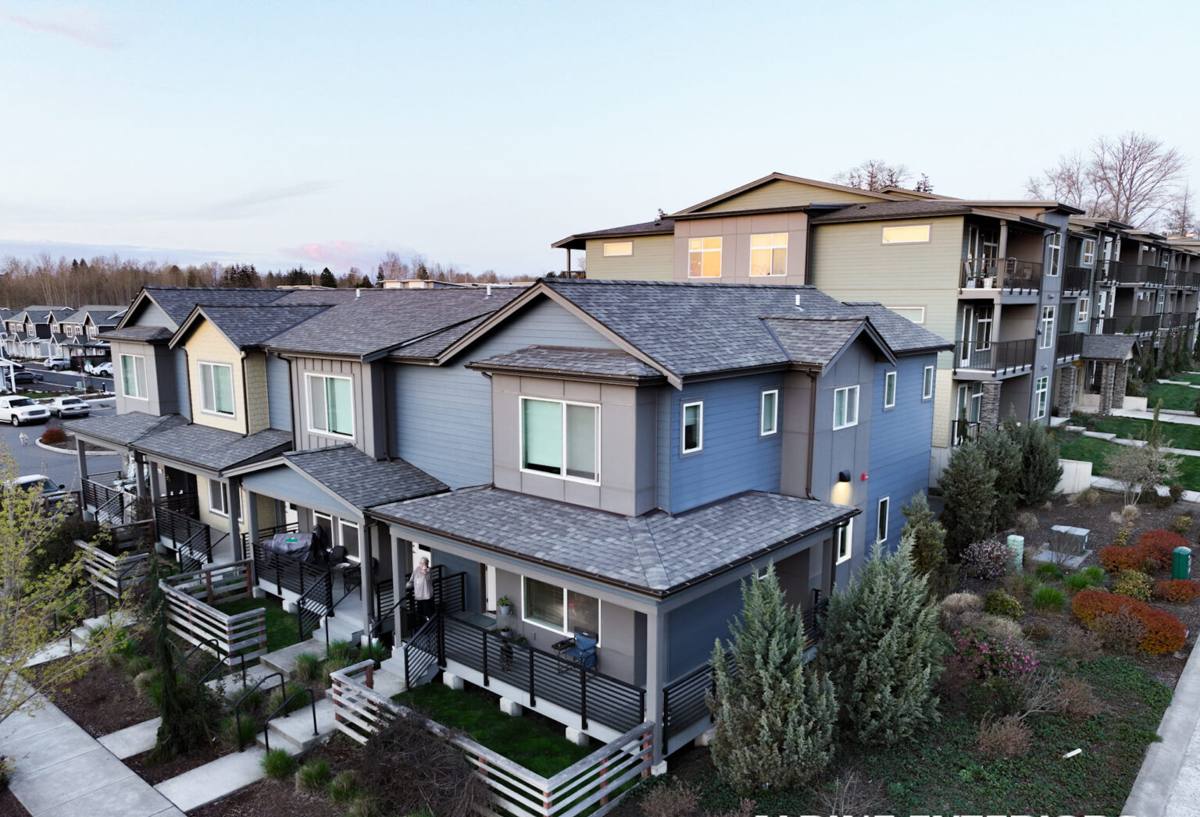
What a Legitimate Repair Actually Looks Like
Repair is the right call when the damage is isolated and the surrounding material is still sound. We're talking about things like:
- A single cracked or impact-damaged board from a fallen branch or ladder mishap
- Localized woodpecker or pest damage on an otherwise healthy wall
- A few boards near a downspout or hose bib that took on water damage from a specific, fixable leak source
- Caulking and trim touch-ups where the siding field itself is in good shape
In these cases, replacing a small section makes sense — the rest of the wall isn't compromised, and there's no reason to spend money re-siding a whole elevation over one bad spot. A good contractor will tell you this even when a full replacement would be the bigger sale, because chasing unnecessary work is how you lose repeat customers in a town this size.
The Catch With "Just Patch It"
The limitation is that a repair only fixes what you can see. If the underlying problem is moisture intrusion, poor flashing, or a material that's failing system-wide, a patch buys you a year or two before the same symptom shows up somewhere else on the same wall. We'll always tell you when we think that's what's happening rather than just billing for a patch and moving on.
Signs That Point Toward Replacement
These are the patterns that tell us a homeowner is better off budgeting for replacement rather than continuing to chase repairs:
Widespread Moisture Damage
Soft, spongy, or delaminating boards in more than one area, staining that keeps reappearing after cleaning, or a musty smell near exterior walls usually means moisture has been getting behind the siding for a while — not just sitting on top of it. Once that's happening in multiple spots, patching one board doesn't address the other three that are a season behind it.
Moss and Algae That Keep Coming Back Fast
Some moss growth on siding is normal here and doesn't mean the material is failing. But if you're pressure washing or treating the same wall every year and it's back within a few months, that's often a sign the siding is staying damp longer than it should — sometimes because of poor original ventilation or a product that just doesn't shed moisture well in this climate.
Warping, Buckling, or Separated Seams
This shows up a lot with products that expand and contract more than fiber cement, or with siding installed without the right gaps and fasteners for our wet-to-dry cycling. Once boards start bowing away from the wall or seams are visibly separating, you're looking at a systemic installation or material issue, not a one-off repair.
Fastener and Trim Corrosion
Salt air off the bay is harder on exposed metal than most people expect, even a few miles inland. Rusting nail heads bleeding through paint, corroded trim, or fasteners that have lost their grip are a sign the whole assembly is aging out, not just the boards around them.
Age Plus Condition, Not Age Alone
A well-installed, well-maintained fiber cement wall can look good for decades. A poorly installed or moisture-compromised wall of any material can fail well before its "expected" lifespan. We look at actual condition, not just a number.
Repair vs. Replacement: A Practical Comparison
| Factor | Repair Makes Sense | Replacement Makes Sense |
|---|---|---|
| Extent of damage | Isolated, one or two boards | Spread across multiple walls or elevations |
| Cause | One-time impact or pest damage | Ongoing moisture intrusion or material failure |
| Underlying material | Sound, just cosmetically damaged | Soft, delaminating, or warped |
| Moss/algae pattern | Normal seasonal growth, cleans up and stays clean | Rapid regrowth, staining that won't lift |
| Trim and fasteners | Solid, no corrosion | Rusting, loosening, or failing |
| Cost over time | One clear fix, unlikely to recur | Repeated repair calls on the same wall |
What Product You Have Changes the Math
The repair-vs-replace decision also depends heavily on what's currently on the house. This is one of the reasons we made the call years ago to install only James Hardie fiber cement siding rather than offer a mix of products.
Vinyl siding is difficult to repair invisibly once it's faded — new panels rarely color-match old ones after UV exposure, and it can crack in cold snaps. Primed wood and cedar need consistent repainting and caulking to keep moisture out, and once rot sets in behind the paint film, it often spreads before it's visible from outside. Engineered wood products like LP SmartSide perform reasonably when installed and maintained exactly to spec, but they're more sensitive to sustained moisture exposure at cut edges and seams than fiber cement is — which matters in a climate that doesn't give siding much of a dry season to recover in.
We don't install those products, and we're not going to tell you your existing siding is garbage if you have one of them — plenty of these products perform fine for years when they were installed correctly and maintained well. What we will tell you honestly is how that specific material tends to age here, so you can make a clear-eyed decision about whether repair still makes sense or whether you're better off switching materials at replacement time.
Why We Recommend Hardie When Replacement Is the Right Call
When a homeowner is past the point of reasonable repair, we recommend James Hardie fiber cement siding — specifically the HZ5 product line engineered for our climate zone. A few reasons this holds up well to Bellingham conditions specifically:
- Non-combustible core — fiber cement doesn't feed a fire the way wood-based products can
- Factory-applied ColorPlus finish — baked-on color that resists the fading and touch-up mismatch issues we see with field-painted siding
- Moisture-resistant composition — engineered to handle sustained wet conditions without swelling or delaminating the way some wood-based products can
- Strong transferable warranty — backed by the manufacturer when installed to their spec, which matters if you sell the home before the siding's functional life is up
None of that means Hardie is maintenance-free — it still needs proper caulking, occasional moss treatment, and attention at trim and flashing details like any siding system. But it's the product we're willing to stand behind after seeing how different materials actually age on homes around Whatcom County over time.
A Practical Checklist Before You Decide
- Walk the full exterior, not just the spot that prompted the call — check north-facing and shaded walls closely
- Press on suspect boards; soft or spongy material means the damage goes deeper than the surface
- Check trim, corner boards, and fasteners for rust or looseness, not just the field of the siding
- Note how fast moss or algae returns after cleaning on the same section
- Ask what's causing the damage, not just what it will cost to fix it — a repair estimate should come with a cause, not just a price
- Get a second opinion if a contractor recommends full replacement without explaining why repair won't hold
What Happens If You Wait
Deferring a decision isn't free. Moisture that's gotten behind siding keeps working on the sheathing and framing underneath while you wait, and that's a materially bigger repair than the siding itself. In a climate with as much sustained rain and humidity as ours, a wall that needs attention this year usually needs more attention — and more money — in two or three years if it's left alone. That doesn't mean every issue is urgent, but it does mean "we'll deal with it next summer" should be a decision you make with full information, not by default.
Get an Honest Assessment
If you're staring at damaged, aging, or moss-covered siding and aren't sure whether it needs a patch or a full re-side, we're happy to take a look and tell you straight what we're seeing — including if the answer is "this can wait" or "a repair is genuinely fine here." Reach out for a free, no-pressure estimate and we'll walk the property with you.