 Bellingham Siding
 Sehome's Exterior Climate: What Homes Are Really Up Against
Sehome sits close enough to Bellingham Bay that salt-laden air is a constant factor on the exterior of every home in the neighborhood, even a mile or two inland. Add in the wind-driven rain that rolls off the Salish Sea for much of the year, and the shade cover from mature trees on the hill and along the residential streets near Western Washington University, and you get a set of conditions that are genuinely tough on exterior building materials. Wood surfaces stay damp longer than they would in a drier climate. North- and west-facing walls that don't get much direct sun can hold moisture for days after a storm. And Whatcom County's long, gray moss season — often stretching from October well into April — means anything porous or textured on the exterior becomes a place for moss, algae, and mildew to take hold.
None of this is unique to Sehome, but it's more pronounced here than in a lot of inland Whatcom County neighborhoods because of the proximity to the water and the tree cover on and around Sehome Hill. If you own an older home in the area — and a good number of Sehome's homes date back several decades — there's a real chance the siding was never matched to these conditions in the first place.
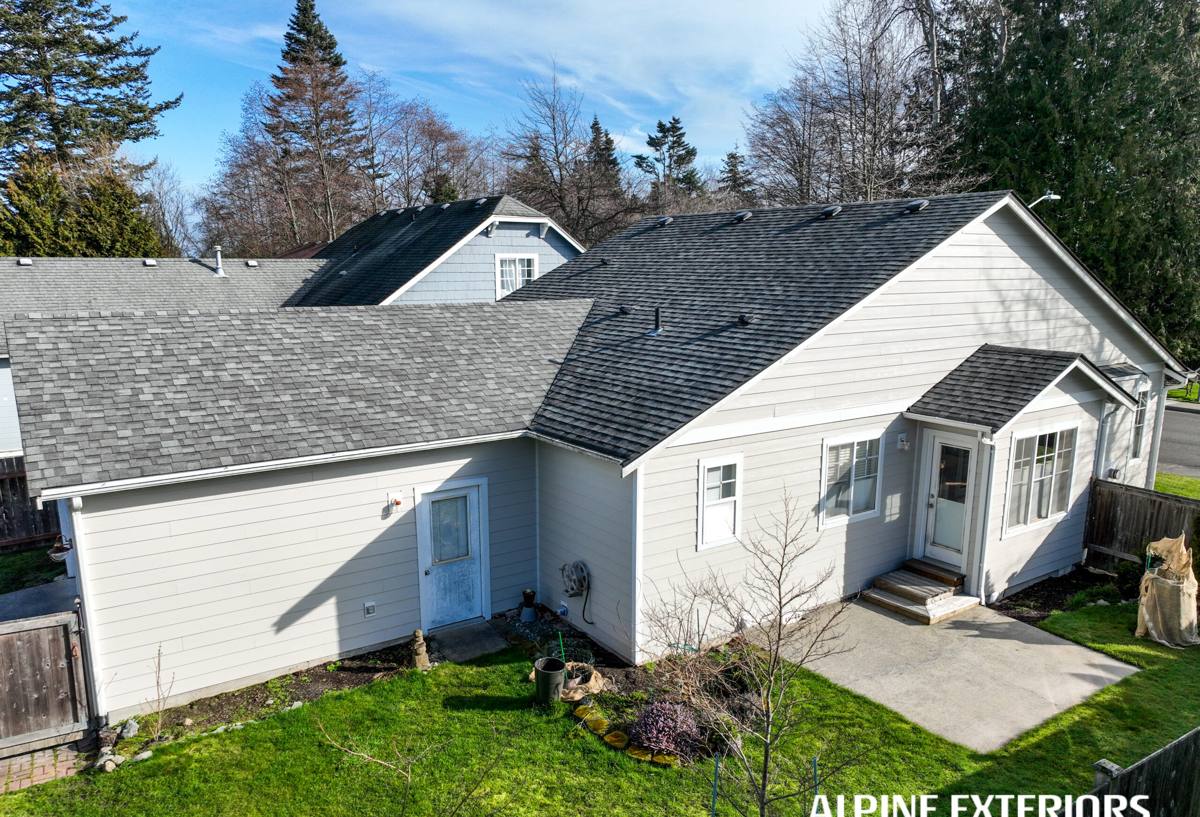
Why Siding Material Choice Matters More Here Than It Would Elsewhere
In a drier, sunnier climate, the gap between a mediocre siding product and a great one might take fifteen or twenty years to show up. In Bellingham, and especially in a neighborhood like Sehome with its salt exposure and shade, that gap shows up faster. Paint fails sooner on materials that swell and shrink with moisture. Seams and butt joints that aren't detailed correctly become entry points for water. Anything with exposed wood grain or a porous surface becomes a magnet for the moss and algae that thrive in this climate.
That's the lens we use when we talk to Sehome homeowners about siding. It's not about picking whatever looks good on a sample board — it's about picking a system that will still look good, and still be doing its job of protecting the structure, after a decade of Bellingham winters.
Why We Install Only James Hardie Fiber Cement
We made a decision as a company to install James Hardie fiber cement siding exclusively. We don't install vinyl, LP SmartSide, Cemplank, Allura, primed spruce, or cedar. That's a deliberate standard, not a sales pitch, and it's worth explaining honestly rather than just asserting it.
Vinyl
Vinyl is inexpensive and low-maintenance in a general sense, but it's a poor fit for this specific climate. It expands and contracts with temperature swings, which opens gaps at seams over time, and it can crack in the impact damage that comes with wind-driven debris. In coastal, salt-exposed neighborhoods like Sehome, vinyl also tends to show chalking and discoloration sooner than homeowners expect.
LP SmartSide and other engineered wood
Engineered wood siding products have improved a lot over the years and can perform well when installed and maintained exactly to spec. The trade-off is that they're wood-based, which means they're more sensitive to sustained moisture exposure than fiber cement, and in a neighborhood with heavy tree cover and long damp stretches, that sensitivity matters. Any lapse in caulking, flashing, or paint maintenance shortens the product's life more than it would on a non-wood material.
Cedar and primed spruce
Real wood siding has genuine appeal, and we understand why homeowners like it. But it also asks the most of the climate it's in — regular refinishing, careful moisture management, and vigilance about the moss and mildew that this region practically hands you for free. In Sehome's shaded, salt-air conditions, that maintenance burden is significant.
What we install instead
James Hardie fiber cement is non-combustible, dimensionally stable across temperature and moisture swings, and factory-finished with ColorPlus technology so the color coat is baked on rather than field-applied. It resists moisture intrusion far better than wood-based products, doesn't provide the same food source for moss and mildew that raw or painted wood does, and carries a strong transferable warranty when installed correctly. It's not the cheapest option on the market, but for a neighborhood with Sehome's exposure, it's the one we're willing to stand behind.
The Hardie Product Lines We Work With
James Hardie makes several distinct product lines, and part of doing this job right is matching the line to the house and the location on the property.
- HardiePlank lap siding — the most common choice for traditional Pacific Northwest home styles, available in a range of textures and exposures.
- HardiePanel vertical siding — often used for accent sections, gables, or more modern exteriors.
- HardieShingle siding — a staggered or straight-edge shingle profile for homes that want that look without the maintenance of real cedar shingles.
- Board and batten profiles — for a cleaner, more contemporary vertical look.
For a region like Bellingham, James Hardie's climate-engineered HZ5 formulation is built specifically for areas with freeze-thaw cycles and sustained moisture, which fits Whatcom County's weather pattern well.
What Correct Installation Actually Involves
A lot of the difference between siding that performs for thirty-plus years and siding that fails early has nothing to do with the product itself — it's the installation. In a wet, salt-exposed climate like Sehome's, a few details matter more than others:
- Proper weather-resistive barrier and, where appropriate, a rain screen gap to let moisture drain and the wall assembly breathe.
- Correct flashing at every window, door, and roofline transition, since these are the points where water intrusion actually starts.
- Manufacturer-specified fastening patterns and clearances, including gaps at the ground and any hardscaping, to keep the bottom edge of the siding from sitting in standing moisture.
- Factory-mitered or properly caulked and sealed joints, since a poorly sealed seam undoes a lot of the benefit of a premium material.
James Hardie's warranty coverage assumes installation to their specifications, so cutting corners here isn't just a workmanship issue — it can affect what's actually covered if something goes wrong down the road.
Comparing the Common Options
| Material | Moisture Resistance in This Climate | Maintenance Burden | Typical Lifespan Here |
|---|---|---|---|
| James Hardie fiber cement | Strong — non-combustible, dimensionally stable | Low; factory finish, occasional wash | 30+ years with proper install |
| Vinyl | Moderate; seams and warping are the weak points | Low, but limited repair options | 15-25 years, shorter with salt exposure |
| LP SmartSide / engineered wood | Moderate; sensitive to sustained moisture | Moderate; caulking and paint upkeep | 20-30 years if maintained closely |
| Cedar / primed spruce | Lower without diligent upkeep | High; refinishing, moss/mildew treatment | Varies widely with maintenance |
These are general patterns, not guarantees for any individual home — actual performance depends heavily on installation quality, sun/shade exposure, and how consistently a homeowner keeps up with basic maintenance.
More Than Siding: Roofing, Windows, and Decks
Siding rarely fails in isolation. A lot of the moisture problems we see on Sehome homes trace back to a roof that's past its service life, window flashing that was never properly integrated with the wall assembly, or a deck ledger board that's been quietly feeding water into the rim joist for years. Because we handle siding, roofing, windows, and decks, we can look at a home's exterior as one connected system rather than treating siding as a stand-alone project. That matters in a climate where water finds the weakest point in the envelope and stays there.
Why a Local Crew Matters in a Neighborhood Like Sehome
Homes in Sehome vary a lot — some are older houses close to the university with mature landscaping and tight lot lines, others are newer builds with more modern exteriors. A crew that works in Bellingham and Whatcom County regularly knows how to plan around this area's rain windows, understands which wall orientations in this neighborhood tend to hold moisture longest, and isn't guessing at how the local permitting and inspection process works. That local familiarity translates into fewer surprises during the project and a finished exterior that's actually built for the conditions it has to survive.
Signs Your Siding May Need Attention
Not every home needs full replacement — sometimes repair or targeted maintenance is the right call. A few signs worth having a professional look at:
- Visible moss, algae, or persistent dark streaking that returns quickly after cleaning
- Soft spots, bubbling paint, or a chalky texture on wood-based or engineered siding
- Gaps or warping at seams and corner boards
- Cracked or missing panels after a windstorm
- Rising energy bills that might point to a compromised wall assembly behind the siding
- Visible water staining on interior walls near exterior corners
A Straightforward Path Forward
If you're weighing a siding project on a Sehome home — whether it's full replacement, repair after storm damage, or just an honest assessment of what condition your current siding is in — we're glad to take a look and give you a straight answer, including whether James Hardie is the right call for your situation. We offer free, no-pressure estimates, and there's a form below to get that conversation started.