 Bellingham Siding
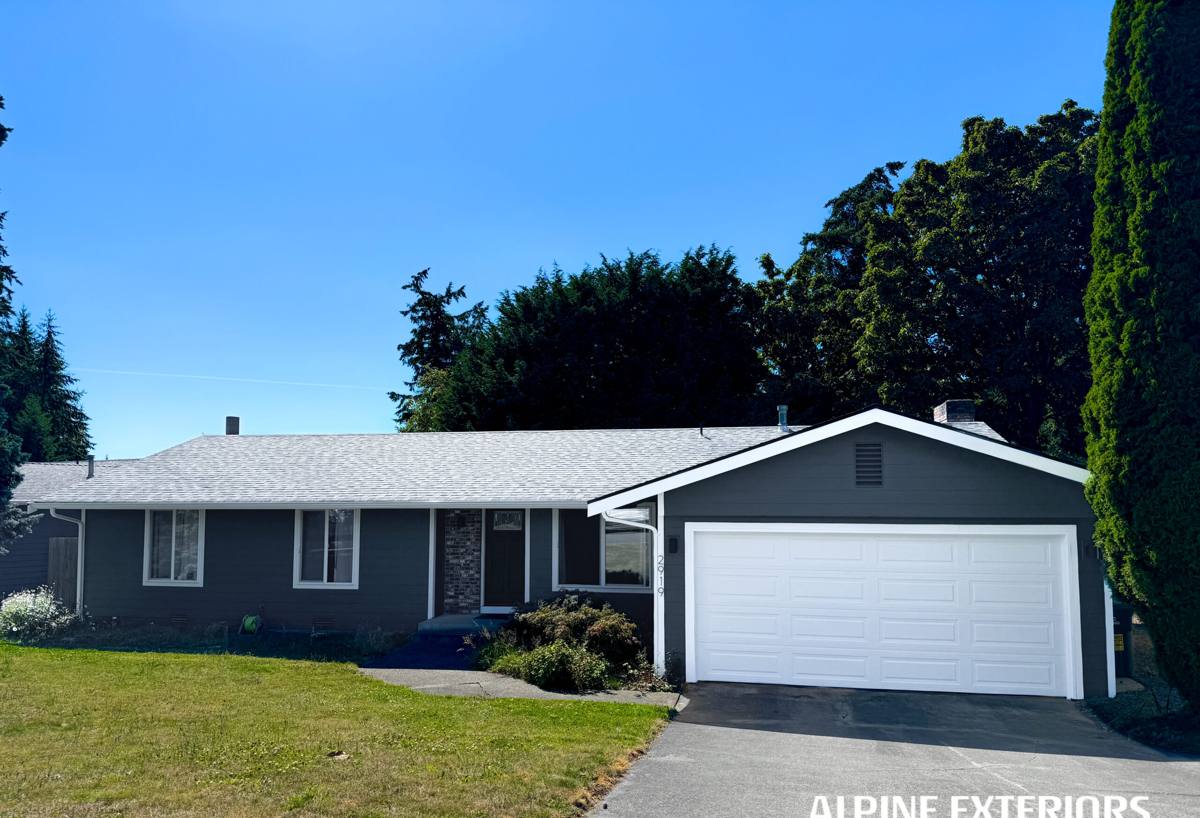
 Siding in Barkley Has a Specific Job to Do
Barkley sits close enough to Bellingham Bay and the surrounding wetlands that homes here deal with a combination most siding products were never engineered for: salt-tinged air drifting off the water, wind-driven rain that hits walls sideways instead of falling straight down, and a moss season that can stretch from October well into spring. None of these factors is dramatic on its own. Together, over years, they're exactly what wears out the wrong siding system faster than homeowners expect.
When we replace siding in Barkley, we're not just swapping old boards for new ones. We're building an exterior wall assembly that's supposed to hold up under Whatcom County's specific weather pattern for decades, not just look good on installation day.
Why Salt Air, Driving Rain, and Moss Change the Calculation
Salt Air
Homes closer to the water see fine salt particles carried on the wind settle on exterior surfaces. Over time this accelerates corrosion on fasteners, trim, and any metal flashing that isn't rated for coastal exposure. It also breaks down lower-grade paint finishes faster than manufacturers' warranties usually assume.
Driving Rain
Bellingham's rain rarely falls straight down. Wind pushes it sideways into wall assemblies, which means siding, seams, and flashing details all have to resist wind-driven moisture, not just shed water off a flat surface. Products and installation details that work fine in drier, calmer climates can fail here specifically because of how the rain arrives.
Moss Season
Moss and algae need shade, moisture, and time to establish, and Whatcom County gives them plenty of all three for much of the year. Siding that traps moisture against its surface, or that's installed too tight to the ground or landscaping, gives moss a foothold that spreads and stains the finish long before the siding itself has failed structurally.
Signs a Barkley Home Needs Siding Replacement, Not Another Repair
Not every issue calls for a full tear-off. But certain signs mean patching is a temporary fix at best:
- Soft or spongy spots when you press on the siding, especially near the bottom courses or around windows
- Paint that's bubbling, peeling, or failing repeatedly in the same spots year after year
- Visible gaps, warping, or buckling boards, particularly on walls that face prevailing wind and rain
- Persistent moss or dark staining that comes back within a season or two of cleaning
- Rising energy bills alongside noticeable drafts near exterior walls
- Siding that's original to a home built more than 20-25 years ago, especially wood, vinyl, or older composite products
If you're seeing more than one of these at once, it's usually a sign that moisture has gotten behind the siding, not just on top of it — which is a replacement conversation, not a caulk-and-paint conversation.
What a Correct Siding Replacement Job Actually Involves
Tear-Off and Inspection
We remove the old siding down to the sheathing and actually look at what's underneath before assuming anything. Rot, hidden water damage, and compromised sheathing are common findings on older Barkley homes, and they have to be addressed before a single new board goes up. Skipping this step and siding over existing problems is one of the most common shortcuts in the industry, and it's one we don't take.
Moisture Barrier and Flashing
Given how much wind-driven rain this area sees, the weather-resistive barrier and flashing details around windows, doors, and penetrations matter as much as the siding itself. Properly lapped house wrap, correctly integrated window flashing, and drainage gaps where called for are what actually keep water out — the siding is the visible layer, not the only layer.
Installation to Manufacturer Spec
Fiber cement siding has specific fastening patterns, clearances, and joint treatments that are engineered into the product's warranty. Nail spacing, board overlap, gaps at trim, and clearance from grade and roof lines all affect how the assembly performs in wet, coastal conditions. Installed correctly, it's built for exactly this climate. Installed loosely, it can develop the same moisture problems as any other product.
Why We Install Only James Hardie Fiber Cement
We don't install LP SmartSide, vinyl, Cemplank, Allura, primed spruce, or cedar. That's a deliberate standard, not a limitation on what we know how to work with.
Vinyl is inexpensive and low-maintenance, but it's a thin plastic product that can warp in direct sun, crack in freezing temperatures, and it doesn't hold paint if a homeowner ever wants to change the color. In a marine climate with real wind exposure, vinyl's seams and expansion joints also give wind-driven rain more opportunities to find a way in.
Cedar and primed spruce are genuinely attractive materials, but they're organic wood products in a climate that stays damp for much of the year. That combination means an ongoing maintenance commitment — recoating, caulking, and watching for rot — that most homeowners underestimate when they choose it.
Other fiber cement brands, like LP SmartSide (which is actually an engineered wood product, not fiber cement) or lesser-known fiber cement lines, can be reasonable products. We simply standardized on one manufacturer so we can guarantee installation quality, warranty coverage, and product consistency across every job we do, rather than juggling multiple systems with different specs and different failure points.
James Hardie is non-combustible fiber cement, engineered specifically for climate zones like the Pacific Northwest through its HZ product lines, and finished with a factory-applied ColorPlus finish that resists fading and chipping far better than field-applied paint. It carries a strong, transferable warranty, and after years of installing it to spec, we know how it performs on homes exactly like the ones in Barkley.
Comparing Siding Options
| Material | Moisture Resistance in a Wet, Coastal Climate | Maintenance | Typical Lifespan |
|---|---|---|---|
| James Hardie fiber cement | Engineered for wet climates; non-combustible; won't rot | Occasional wash; factory finish resists fading | 30-50 years with correct install |
| Vinyl | Seams and joints vulnerable to wind-driven rain; can warp | Low, but limited repair options if damaged | 15-25 years, less in harsh exposure |
| Cedar / primed spruce | Prone to moisture absorption, rot, and moss growth | High — recoating, caulking, ongoing inspection | 15-25 years with diligent upkeep |
| Other fiber cement (LP, Cemplank, Allura) | Varies by product and installation detailing | Moderate | Varies with brand and install quality |
Our Process, From Estimate to Finished Job
We keep the process straightforward because homeowners have enough to think about during an exterior project:
- Free on-site estimate where we assess your current siding, look for underlying moisture or structural issues, and talk through options
- A written scope and quote that spells out product, color, and what's included — no vague allowances
- Tear-off and inspection of sheathing before any new material goes up
- Weather barrier, flashing, and drainage details installed correctly around every window, door, and penetration
- James Hardie installation to manufacturer specification, including fastening pattern and clearances
- Final walkthrough so you can see the finished work and ask questions before we consider the job done
Cost Factors for Siding Replacement in Barkley
Every home is different, but the same handful of factors drive most of the cost variation we see on jobs in this area:
| Factor | Why It Matters |
|---|---|
| Home size and wall complexity | More corners, gables, and dormers mean more cutting, flashing, and labor time |
| Condition of existing sheathing | Hidden rot or water damage found during tear-off adds repair scope before siding can go up |
| Siding profile chosen | Lap siding, shingle-style panels, and board-and-batten all have different material and labor costs |
| Trim and detail work | Window and door trim, corner boards, and fascia detailing add finish-carpentry time |
| Access and site conditions | Tight lots, landscaping, or multi-story walls can affect scaffolding and staging needs |
We walk through these factors on-site so the number you get reflects your actual home, not a generic square-footage estimate.
Why a Crew That Already Works Barkley Matters
Siding contractors who work across Whatcom County regularly know how this specific stretch of Washington behaves — where moss tends to establish first on a given elevation, how much wind exposure a typical Barkley lot gets compared to more sheltered inland neighborhoods, and which flashing and drainage details actually hold up through a wet Bellingham winter. That's knowledge you build by doing the work locally, year after year, not by reading a manufacturer's install guide once.
It also means a contractor who's still around if a warranty question comes up five or ten years down the road — something worth asking about before you hire anyone for a project this size.
If your siding is showing its age or you just want an honest read on whether repair or replacement makes more sense for your home, we're happy to take a look. Fill out the form below for a free, no-pressure estimate.