 Bellingham Siding
 Siding in Barkley: A Neighborhood With Its Own Climate Demands
Barkley sits close enough to Bellingham Bay and the Puget Sound weather system that its homes take on a specific set of exterior challenges most inland communities don't deal with in the same combination. Salt-laden air off the water, long stretches of driving rain through fall and winter, and a moss and lichen season that can stretch nearly nine months out of the year all work on exterior materials at once. We've replaced and repaired siding on enough homes in and around Whatcom County to know that what looks fine in a showroom sample doesn't always hold up the same way three blocks from the water as it does twenty miles inland.
This page is about what that climate actually does to siding, roofing, windows, and decks over time, and how we approach exterior work differently because of it.
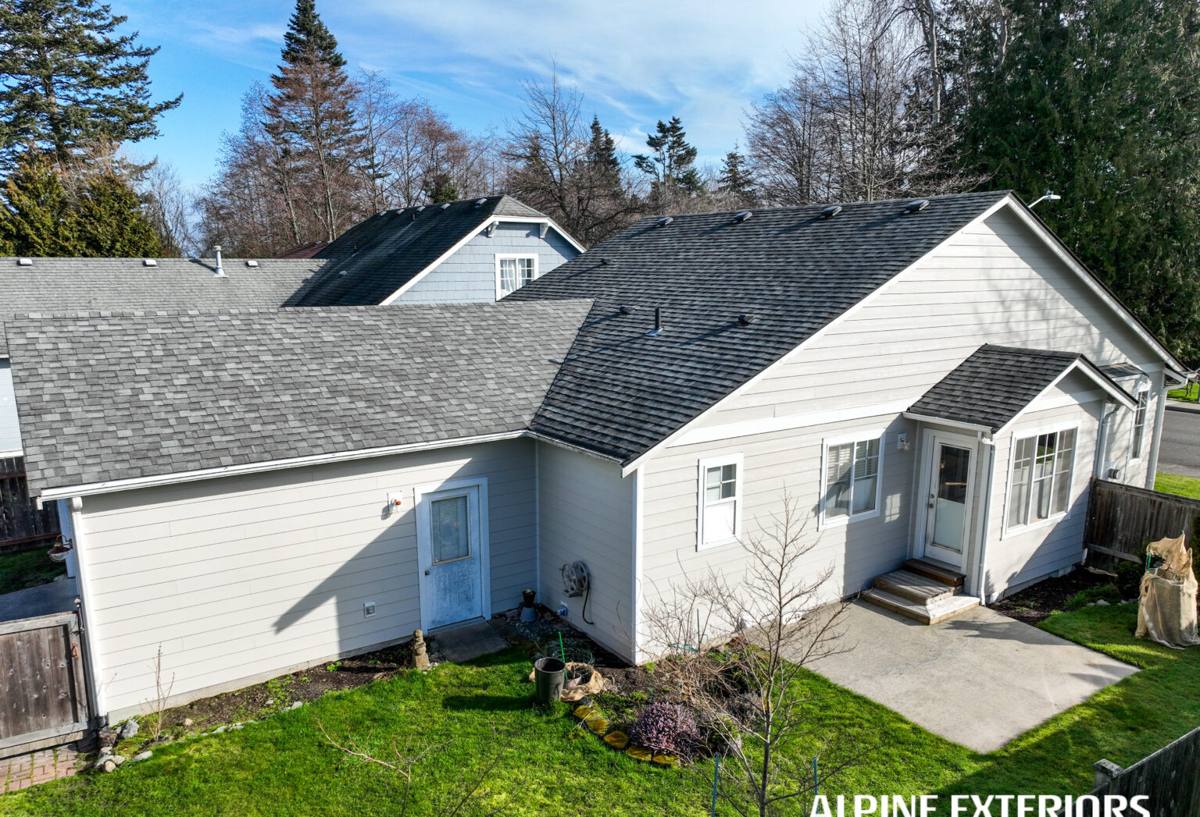
What Bellingham's Marine Climate Does to Exterior Materials
Salt Air and Corrosion
Proximity to Bellingham Bay means airborne salt content is higher than it is further inland, even a few miles away. Salt accelerates corrosion of fasteners, flashing, and metal trim, and it interacts with certain siding finishes in ways that speed up fading and surface breakdown. Homes closer to the water need materials and hardware that are genuinely rated for that exposure, not just "exterior grade" in a generic sense.
Driving Rain and Wind-Driven Moisture
Bellingham gets a lot of its rain sideways, not straight down. Wind off the Sound pushes moisture into seams, laps, and penetrations that would stay dry in a calmer climate. Siding systems that rely on face-sealing (caulk and paint holding water out) rather than proper water-shedding design tend to show problems first at these pressure points — window and door trim, butt joints, and anywhere two materials meet.
Moss, Lichen, and Prolonged Dampness
Whatcom County's moss season is long because the conditions that grow moss — shade, moisture, and moderate temperatures — persist here for most of the year. Moss and lichen hold water against a surface far longer than open air would, and on the wrong material that constant dampness is exactly what degrades paint film, softens wood fiber, or works its way into seams. Roofs and north-facing siding walls are usually the first places it shows up.
Why We Standardized on James Hardie Fiber Cement
We install James Hardie fiber cement siding exclusively. That's not a brand preference for its own sake — it's a decision built around what actually holds up in this specific climate over a 20-, 30-, or 40-year timeline, not just the first five years after install.
- Non-combustible core: Fiber cement doesn't feed a fire the way wood-based products can, which matters as wildfire smoke and dry-season risk have become more of a regional concern even in a historically wet county.
- Engineered for wet-climate exposure: Hardie's HZ5 product line is formulated specifically for regions with prolonged moisture and freeze-thaw cycling — the Pacific Northwest is squarely the climate zone it was designed for.
- Factory-applied ColorPlus finish: The finish is baked on in a controlled factory process rather than field-applied, which gives more consistent coverage and better adhesion than paint applied on-site in variable weather — a real factor when install windows are squeezed between rain systems.
- Dimensionally stable: Fiber cement doesn't swell, cup, or shrink with moisture the way wood-based sidings can, which matters directly for how well caulk joints and paint lines hold up against driving rain.
- Strong transferable warranty: Hardie backs its products with a warranty structure that's meant to hold up over decades, not just the first few years, and it transfers if the home sells.
We don't install LP SmartSide, vinyl, Cemplank, Allura, primed spruce, or raw cedar. Each of those has legitimate use cases somewhere, but given what we've seen this climate do to siding over time, we'd rather stand behind one system we trust completely than offer a menu of products with different long-term risk profiles.
How We Approach Siding Replacement Projects in Barkley
Assessment First
Before we talk product, we look at the house: which walls take the most weather, where moss and moisture have already left marks, what the current siding and flashing conditions actually are underneath the surface. A south or west wall exposed to prevailing wind and rain needs different attention at seams and penetrations than a sheltered side yard.
Water Management, Not Just Water Resistance
Correct installation in a marine climate means the siding system sheds water rather than just resisting it at the surface. That means proper rainscreen or drainage gap detailing where called for, correctly lapped house wrap, and flashing at every window, door, and horizontal trim board — the places wind-driven rain actually finds a way in.
Fastening and Hardware
Given the salt exposure closer to the bay, we pay attention to fastener material and coating so hardware doesn't become the weak point in an otherwise well-built system. Corroding fasteners are a slow, quiet failure mode that often isn't visible until staining or a loose board shows up.
Beyond Siding: Roofing, Windows, and Decks Facing the Same Climate
Siding rarely fails in isolation — the same moisture and salt exposure that wears on cladding works on everything else attached to the exterior of the home.
Roofing
Roofs bear the brunt of driving rain and moss accumulation first. Proper underlayment, flashing at valleys and penetrations, and ventilation all matter more here than they would in a drier climate, because a roof that traps moisture underneath the surface is inviting rot and moss regrowth even after a cleaning.
Windows
Window flashing and trim integration is one of the most common failure points we find during siding replacement — often it's not the window itself but poor flashing detail around it that let water in over the years. Replacing siding is a natural point to correct that.
Decks
Exposed deck framing and ledger boards take on the same wet-and-dry cycling as siding, and a poorly flashed ledger connection is one of the more serious hidden moisture risks on a home. We look at deck attachment points as part of a full exterior assessment, not as a separate afterthought.
Cost Factors for Barkley-Area Siding Projects
Every home is different, but a few factors consistently move the price on siding projects in this neighborhood and climate zone:
| Factor | Why It Matters Here |
|---|---|
| Wall exposure and orientation | Walls facing prevailing wind and rain need more careful flashing and drainage detailing, which adds labor |
| Existing moisture damage | Rot or trapped moisture found under old siding has to be repaired before new siding goes on, which isn't always visible until removal begins |
| Trim and window count | More penetrations mean more flashing points, each one a place water can get in if done wrong |
| Home height and access | Multi-story homes and steep sites add scaffolding and safety considerations |
| Product line and profile | Hardie's various plank, shingle, and panel profiles carry different material and labor costs |
We don't quote in the abstract — an accurate number comes from actually looking at the house.
Why a Local Crew Matters
A crew that works Whatcom County homes regularly knows what a Barkley-area house has usually been dealing with before we ever get there: which wall typically shows moss first, how much rain-driven exposure to expect from a given orientation, and what "normal" wear looks like here versus what's actually a sign of a bigger problem. That local pattern recognition shortens the assessment phase and helps us catch things a crew unfamiliar with this specific coastal climate might miss.
It also means we're accountable locally — for warranty work, for follow-up questions, and for standing behind what we installed years down the line, not just at project completion.
What to Look For Before You Hire
- Ask what siding products the contractor installs and why — and be wary of anyone offering "whatever you want" without a clear position on trade-offs
- Confirm they carry proper licensing and insurance for exterior work in Washington State
- Ask how they handle flashing at windows, doors, and horizontal trim — this is where most real-world failures start
- Ask about warranty terms on both materials and labor, and whether the material warranty is transferable if you sell
- Ask for a real, on-site assessment rather than a phone-quoted price
- Ask how they handle moisture or rot discovered once old siding comes off
Get a Straight Answer About Your Home
If you're in Barkley and dealing with aging siding, moss buildup, or signs of moisture damage, we're happy to come take a real look and give you an honest read on what's going on and what it would take to fix it right. If you're ready to talk siding, roofing, windows, or decks, reach out for a free, no-pressure estimate using the form below.