 Bellingham Siding
 Board & Batten in Sudden Valley: A Style That Fits the Setting
Sudden Valley sits among the trees along Lake Whatcom, and a lot of the homes here were built to feel like part of that setting — cedar tones, deep eaves, cabin-influenced rooflines. Board and batten siding fits that architecture naturally. The wide, flat panels and raised vertical battens read as a modern take on a rustic look, and they work well on gable ends, dormers, and accent walls without fighting the wooded backdrop most Sudden Valley lots already have.
That's the appeal. The problem is that a lot of homeowners choose board and batten for the look and don't think about how a shaded, moisture-heavy lot near a lake changes what that siding needs to survive long term. We install board and batten in this neighborhood regularly, and the jobs that hold up are the ones where the material and the install account for the environment, not just the elevation view.
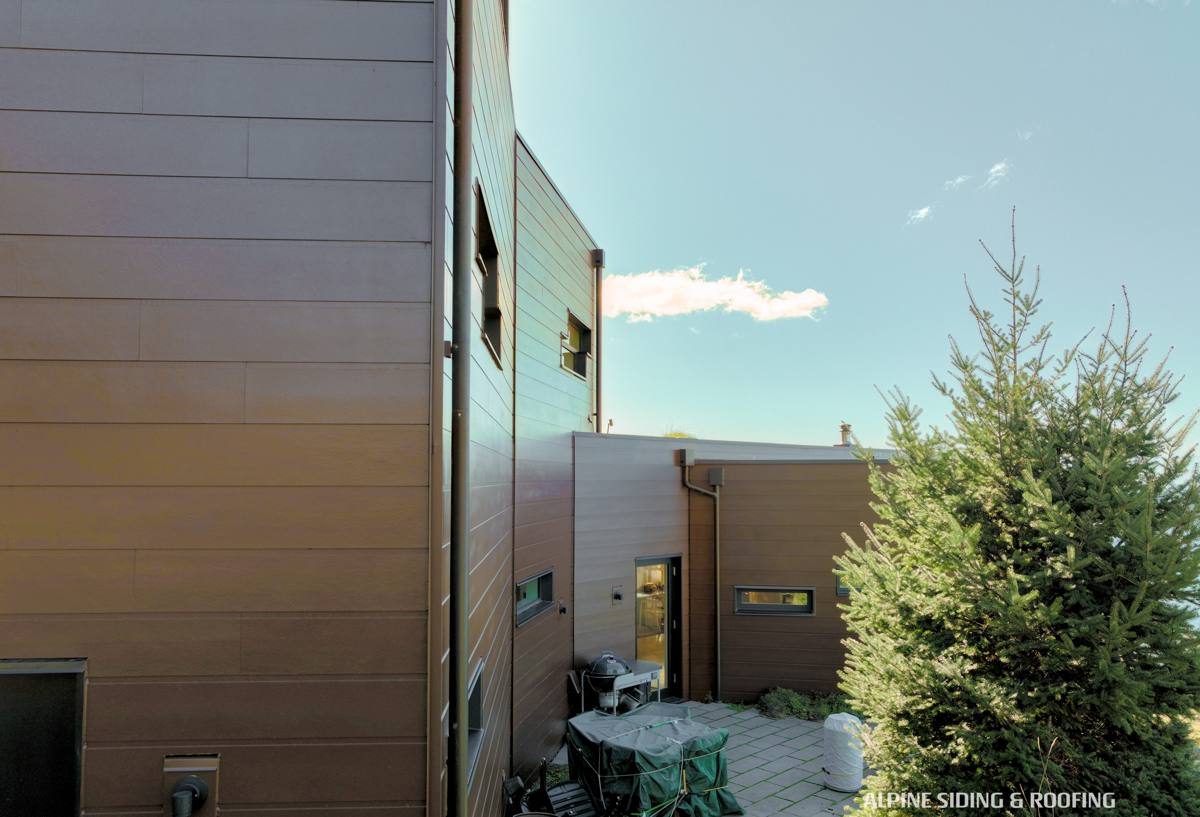
What Sudden Valley's Environment Actually Does to Siding
Shade, Moisture, and a Long Moss Season
Whatcom County's marine climate already means long stretches of driving rain and short windows of direct sun. Sudden Valley adds tree canopy and proximity to the lake on top of that, which keeps north- and east-facing walls damp longer after a storm and gives moss and algae more time to establish before anything dries out. On a lot with a full canopy overhead, siding can stay wet for days after the rest of the neighborhood has dried off.
Wider siding families across western Washington deal with the same driving rain and salt-tinged coastal air near the water, but Sudden Valley's specific version of that problem is shade and organic moisture — falling needles, leaf litter, and constant low light on the north side of a house. That combination is what actually shortens the life of the wrong siding product here, more than wind or direct storm exposure.
Wide Vertical Boards Behave Differently Than Lap Siding
Board and batten isn't just lap siding turned sideways. The panels are wider, the seams run vertically instead of shedding water downward panel-over-panel, and the battens create dozens of extra joints and fastener points per wall. Every one of those joints is a place where moisture can get behind the cladding if the water-resistive barrier, flashing, and fastening aren't done correctly. In a climate that keeps walls damp longer than most, that detail work matters more here than it would in a drier region.
Why the Substrate Choice Matters More in This Neighborhood
Board and batten is sold in several materials, and the differences that seem minor in a showroom become real maintenance headaches on a shaded Sudden Valley lot. We install James Hardie fiber cement exclusively, and this is one of the clearest examples of why: the same look in wood, engineered wood, or vinyl behaves very differently once it's sitting under trees near the lake.
| Material | How it handles Sudden Valley's shade and moisture | Long-term maintenance burden |
|---|---|---|
| James Hardie fiber cement (HZ10 formulation) | Non-combustible, dimensionally stable, engineered for the Pacific Northwest's wet cycle; won't swell, rot, or feed moss the way organic materials can | Occasional gentle wash to keep moss from taking hold; factory ColorPlus finish holds up without repainting on the original schedule |
| Primed wood or cedar board and batten | Absorbs and releases moisture repeatedly in shaded areas; end grain and joints are entry points for rot in a climate that rarely lets wood fully dry | Repainting or restaining on a recurring cycle; higher risk of localized rot repair over time |
| LP SmartSide or similar engineered wood | Better than raw wood but still wood-based; edges and cut ends need diligent field sealing, and prolonged shade/moisture is its least favorable condition | Caulk and touch-up maintenance is less forgiving of gaps in upkeep |
| Vinyl board and batten | Won't rot, but flexes with temperature swings and can distort or gap at fastener points; doesn't hold paint if a color change is ever wanted | Low maintenance but limited repairability and a shorter practical service life on style |
We don't say this to knock every other product on the market — wood siding has real appeal, and engineered wood and vinyl both have their place. But for a wooded, moisture-heavy lot like a lot of Sudden Valley properties, fiber cement's stability and moisture resistance is the difference between a wall that needs attention every few years and one that mostly takes care of itself.
What a Correct Board & Batten Installation Actually Involves
A Drainage Plane Behind the Battens
Because board and batten creates so many vertical seams and fastener penetrations, the water-resistive barrier behind it has to be installed and lapped correctly, and on a shaded wall we'll often recommend a rainscreen gap so any moisture that does get past the surface can drain and dry instead of sitting against the sheathing.
Batten Spacing and Fastening
Battens need consistent spacing for both looks and function — uneven spacing shows immediately on a flat board and batten wall, and incorrect fastener placement or over-driven nails create the small openings that let water track behind the panel over a wet Bellingham winter.
Flashing at Every Transition
Windows, corners, roof-to-wall intersections, and the bottom termination near grade all need proper flashing detail. On heavily treed Sudden Valley lots, the bottom edge of the siding is especially important — splash-back from mulch beds and slower-drying ground cover means that detail gets tested more than it would on an open, sunny lot.
Manufacturer-Correct Fastening for the Panel Size
James Hardie specifies fastener type, spacing, and embedment for its board and batten products, and following that spec is what keeps the transferable warranty intact — it's also simply what keeps a wide vertical panel from working loose over years of wind and moisture cycling.
Our Process on a Sudden Valley Job
- On-site assessment of shade exposure, existing moss/moisture staining, and the condition of the wall behind the current siding
- Removal of failing material and inspection of sheathing for any hidden rot before we close the wall back up
- Correct water-resistive barrier and flashing installation, with a rainscreen gap where the wall's exposure calls for it
- James Hardie board and batten installation to manufacturer fastening spec, including corners, trim, and window details
- Final walk-through so you understand exactly what was done and what routine care, if any, the finished wall needs
We don't treat every wall the same way. A south-facing gable that gets sun most of the day doesn't need the same drainage detailing as a shaded, tree-covered north wall a few lots over — that's a call we make on site, not off a standard spec sheet.
Maintenance a Board & Batten Wall Actually Needs Here
One reason board and batten fits well in a place like Sudden Valley is that, done correctly in fiber cement, it doesn't ask for much. But "not much" isn't "nothing," especially with tree cover overhead.
- Rinse the siding once or twice a year, focusing on shaded, north-facing walls where moss gets a head start
- Keep gutters and downspouts clear so overflow isn't running down the wall face during heavy rain
- Trim back branches and vegetation that hold moisture directly against the siding
- Clear leaf and needle debris from the base of the wall and any horizontal trim ledges before it composts in place
- Have caulking at trim and window transitions checked periodically — this is the first place a small gap turns into a moisture path
Why It Matters That We Already Work in This Neighborhood
Sudden Valley is its own community within greater Bellingham, with its own access points and a homeowners' association that many residents deal with for exterior projects. A crew that's already worked in the neighborhood knows the practical side of that — how access and staging typically work on these lots, and what a shaded, wooded property usually looks like once the old siding comes off. That's not a substitute for a proper on-site assessment of your home specifically, but it does mean fewer surprises and a crew that isn't learning the neighborhood on your dime.
It also means we've seen how board and batten actually performs on Sudden Valley's mix of lake-adjacent and heavily wooded lots over time, not just in a manufacturer's marketing photos from a different climate.
Cost Factors Worth Knowing Before You Get a Quote
Board and batten pricing depends on more than square footage. A few factors that move the number up or down on a Sudden Valley home:
- How much of the existing wall assembly needs repair once old siding is removed
- Whether the job needs a rainscreen/drainage gap added, versus a standard installation
- Amount of trim, corner detail, and window flashing work relative to plain wall area
- Access and staging on a sloped or tree-covered lot
- Panel width and batten spacing chosen, which affects material quantity and labor time
We'd rather walk your specific property and give you real numbers than throw out a broad range that doesn't reflect your home's actual condition and layout.
If you're weighing board and batten for a home in Sudden Valley, we're glad to come take a look and give you a straightforward, no-pressure estimate — what your walls actually need, what correct installation involves, and what it will cost to do right.