 Bellingham Siding
 Deck Repair Built for Cordata's Climate
Cordata sits far enough north in Bellingham that homeowners feel the full range of what Whatcom County weather throws at an outdoor structure. You get salt-tinged air drifting in off Bellingham Bay, long stretches of driving rain through fall and winter, and a moss season that can run eight months or more depending on how much shade your yard gets. None of that is unusual for this part of Washington, but it is hard on a deck. Wood decks and even composite systems in this neighborhood age differently than the same materials would in a drier climate, and repairs that ignore that reality tend to fail again within a season or two.
We repair decks in Cordata regularly, which means we're not guessing at how moisture moves through a structure here — we're working from what we actually see when we pull up boards and check framing on homes a few streets over from yours.
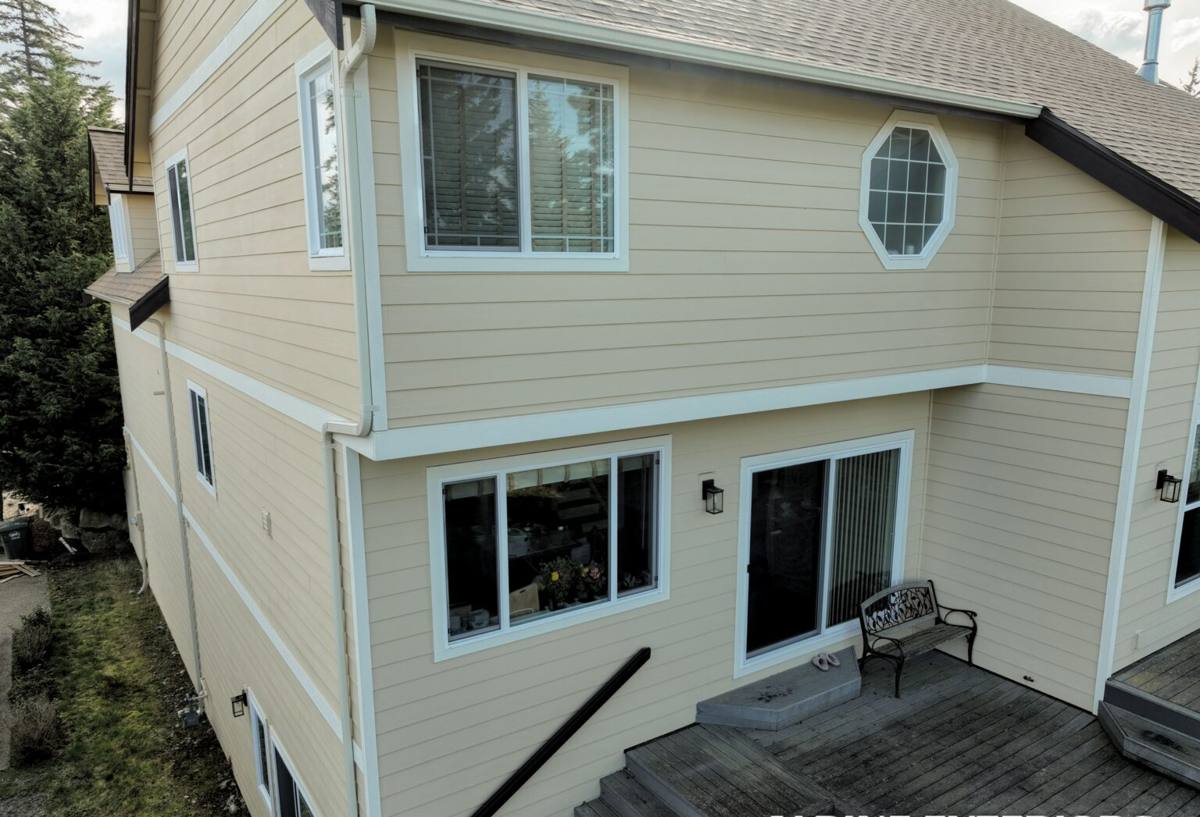
Why Local Decks Break Down the Way They Do
Three climate factors do most of the damage to decks in this part of Bellingham:
- Moisture retention: Extended wet seasons mean wood surfaces rarely get a full dry-out period, especially on decks with limited sun exposure or tree cover.
- Salt-influenced air: Proximity to Bellingham Bay means metal fasteners, brackets, and hardware corrode faster than they would inland, which weakens connections before the wood itself shows obvious damage.
- Moss and algae growth: Shaded decks and north-facing structures collect moss on decking boards and stair treads, which holds moisture against the wood surface and creates a slip hazard at the same time.
Individually, each of these is manageable. Combined, and left unaddressed over several wet seasons, they're what turn a small repair into a structural one.
Signs Your Cordata Deck Needs Repair
Some deck problems are obvious. Others hide until someone puts weight in the wrong spot. Here's what we tell Cordata homeowners to check for before calling:
- Soft, spongy, or springy decking boards, especially near the house or in shaded corners
- Visible moss, algae, or dark staining that keeps coming back after cleaning
- Rust streaks running down from screws, bolts, or metal brackets
- Railings or balusters that wiggle or feel loose when pushed
- Gaps opening up where the deck meets the house (the ledger board connection)
- Stair stringers that flex or creak more than they used to
- Nails backing out or popping above the board surface
- A musty smell coming from underneath the deck or near the rim joist
Any one of these on its own might just need a targeted fix. Several at once usually means moisture has been working on the structure for a while and it's worth a full assessment rather than a patch.
What a Proper Deck Assessment Involves
A repair is only as good as the diagnosis behind it. When we walk a deck in Cordata, we're not just looking at the surface boards — that's where the damage shows, but it's rarely where it starts. We check:
The Ledger Board Connection
This is where the deck attaches to the house, and it's the single most important structural point on most residential decks. Flashing failures here let water get behind the siding and into the rim joist, which can rot both the deck framing and the wall structure it's attached to. We probe this area on every inspection, not just when it's the obvious complaint.
Framing and Joists
We check for soft spots, delamination in engineered lumber, and rust bleeding from joist hangers. Undersized or corroded hardware is common on older decks that were built before current fastener standards were widely used in wet coastal climates.
Posts and Footings
Ground contact posts and footings take on moisture from below, which is a different failure pattern than the sun-and-rain exposure the deck surface deals with. We check for rot at the base of posts and any movement or settling in the footings themselves.
Decking, Railings, and Stairs
Surface-level issues — cupped boards, loose balusters, worn stair treads — get evaluated for whether they're isolated or a symptom of something underneath.
Common Repairs We Handle in Cordata
| Issue | Typical Cause Here | Repair Approach |
|---|---|---|
| Rotted ledger board | Failed or missing flashing, moisture trapped against siding | Remove affected section, correct flashing detail, replace with treated lumber rated for ground/moisture contact |
| Corroded fasteners and hangers | Salt-influenced air, standard-grade hardware | Replace with stainless steel or hot-dip galvanized hardware rated for coastal exposure |
| Soft or cupped decking boards | Prolonged moisture exposure, poor airflow underneath | Board-by-board replacement, or full resurfacing if damage is widespread |
| Loose railings and balusters | Wood movement, fastener loosening over repeated wet-dry cycles | Re-secure or replace connection hardware, sister damaged posts where needed |
| Moss and algae buildup | Shade, limited airflow, long wet season | Surface cleaning plus airflow or drainage adjustments to slow regrowth |
| Weak or spongy stair stringers | Water pooling at stair base, ground contact rot | Sister or replace stringers, improve drainage at the base |
Repair or Replace: How We Help You Decide
Not every damaged deck needs to come out. But a repair that only addresses what's visible, while ignoring framing underneath, doesn't hold up long in this climate. We look at three things when advising a Cordata homeowner:
| Factor | Leans Toward Repair | Leans Toward Replacement |
|---|---|---|
| Structural framing condition | Solid, isolated soft spots only | Widespread rot in joists, beams, or ledger |
| Age of the deck | Under 15-20 years, built to a reasonable standard | Older deck, outdated fastener types, undersized framing |
| Extent of the damage | Contained to a few boards, one railing section, or one area | Damage spread across multiple systems (decking, framing, and hardware) |
| Cost over time | Repair cost is a fraction of replacement | Repairs would need to be repeated within a year or two |
We'll always tell you honestly which side of that line your deck falls on. A deck with a rotted ledger board and sound framing everywhere else is a repair. A deck where three different framing members are compromised is usually money better spent on a rebuild.
Materials and Hardware We Use
What goes into a repair matters as much as the workmanship. For a deck that's going to sit through another decade of Whatcom County winters, we default to:
- Pressure-treated lumber rated for ground contact on any framing, posts, or stair stringers, even where the original material wasn't
- Stainless steel or hot-dip galvanized fasteners in place of standard coated screws, especially on decks within a few miles of the bay where salt air accelerates corrosion
- Proper flashing and drainage detailing at the ledger board, since this is the single most common point of repeat failure we see
- Matched decking material where possible — cedar, treated lumber, or composite — so a repaired section doesn't stand out or age differently than the rest of the deck
If your existing deck used standard hardware or lumber not rated for this level of moisture exposure, we'll flag that during the assessment. Upgrading hardware during a repair is usually a small cost difference that meaningfully extends how long the fix lasts.
Our Repair Process
- On-site assessment: We inspect the full structure, not just the area you called about, and probe suspect wood rather than relying on a visual check alone.
- Written scope and estimate: You get a clear explanation of what's damaged, why, and what we recommend — repair, partial rebuild, or full replacement — with pricing before any work starts.
- Demolition of affected areas only: We remove what needs to come out and protect the surrounding structure and landscaping while we work.
- Framing and structural repair: Any compromised joists, posts, beams, or ledger board sections are replaced or sistered with properly rated materials.
- Decking, railing, and stair repair: Surface elements are replaced or reinstalled with corrosion-resistant hardware.
- Final check and cleanup: We walk the deck with you before we consider the job finished, and haul away debris.
Permits and Local Code Considerations
Depending on the scope of work, deck repairs in Bellingham and unincorporated Whatcom County can fall under different permit thresholds — minor board and railing repairs typically don't require one, while structural framing replacement or work affecting the ledger board connection to the house sometimes does. Guardrail height and baluster spacing on any deck above a certain height off grade also need to meet current code, even during a repair, if the existing railing is being rebuilt. We handle this conversation with you as part of the estimate so there are no surprises, and we pull permits when the scope calls for it rather than leaving that on you to sort out.
Maintaining Your Deck After the Repair
A repair holds up longer with a little seasonal attention, especially given how much rain and shade this area gets. A simple yearly routine goes a long way:
- Clear leaves and debris from between boards before the fall rains set in
- Clean moss and algae off decking and stairs before it gets slick, using a deck-safe cleaner rather than a pressure washer set too aggressively
- Check railings and stair treads for looseness once a year
- Keep gutters and downspouts near the deck clear so runoff isn't draining onto or under it
- Reseal or restain wood decking on the manufacturer's recommended schedule, typically every one to three years in this climate
- Trim back vegetation that's shading the deck and slowing it from drying out between rains
Why Hire a Crew That Already Works in Cordata
A lot of deck problems in this neighborhood trace back to work that was done with materials or details suited to a drier climate. Standard hardware, insufficient flashing, or lumber not rated for the moisture load here will eventually cause the same failures again, no matter how clean the workmanship looked on day one. We work on decks throughout Bellingham and Whatcom County, which means we're not applying generic fixes — we're applying what we've seen actually hold up against this specific mix of rain, salt air, and shade. That matters more for deck repair than almost any other exterior project, because the parts you can't see when you're standing on the deck are usually the parts that decide whether the repair lasts five years or fifteen.
If you're noticing soft boards, a wobbly railing, or moss that won't quit coming back, we're happy to take a look. Reach out for a free, no-pressure estimate — we'll tell you honestly what your deck needs, and nothing it doesn't.