 Bellingham Siding
 Building Decks for Columbia's Corner of Bellingham
Columbia sits close enough to Bellingham Bay that salt-laden air, wind-driven rain, and heavy tree cover all factor into how a deck should be built here. A deck design that works fine in a dry inland climate can fail early in this neighborhood if it isn't detailed for what Whatcom County weather actually does to wood, fasteners, and footings over time. We build custom decks specifically for these conditions, not a generic spec pulled from a catalog.
This page covers what a properly built deck looks like for a Columbia-area home: the materials that hold up, the construction details that keep water out of the structure, the permitting most projects require, and what our process looks like from first visit to final walkthrough.
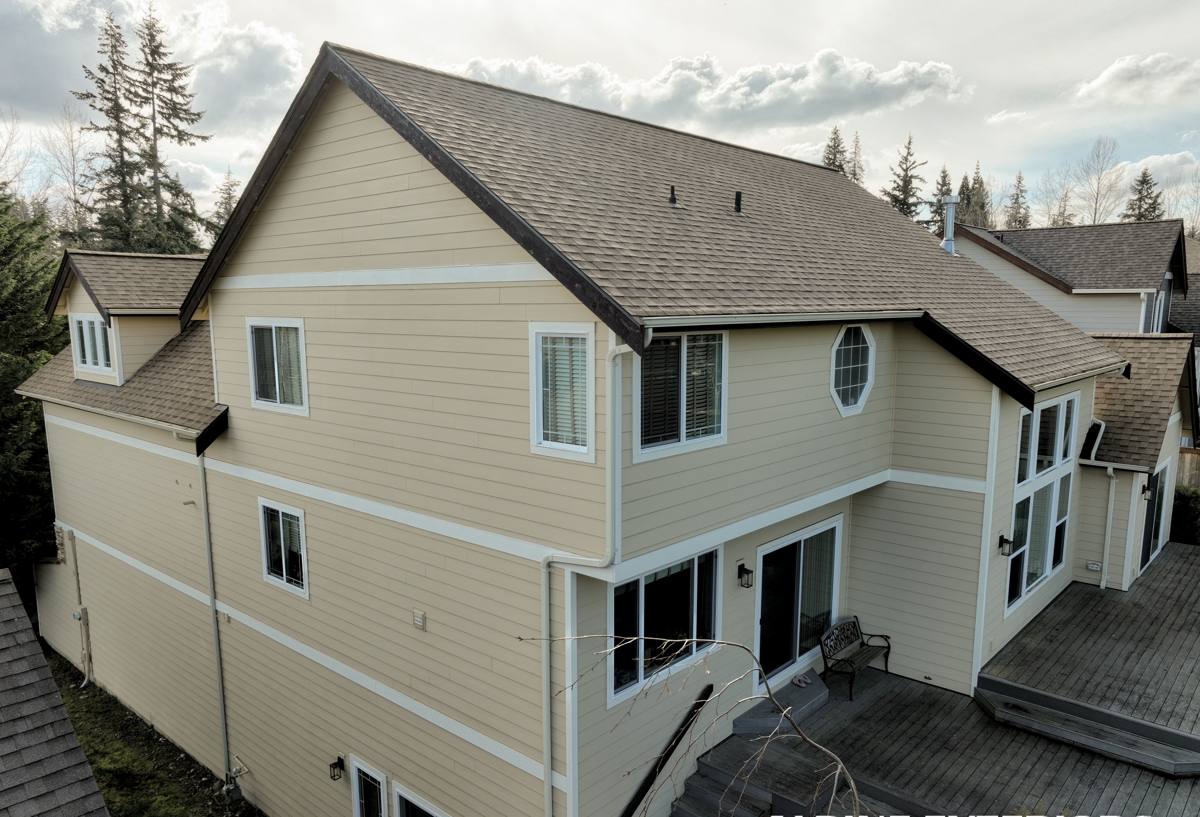
What Local Conditions Ask of a Deck
A handful of climate factors show up again and again on decks we inspect or rebuild in this part of Bellingham:
Salt air and corrosion
Proximity to the bay means airborne salt reaches framing, fasteners, and hardware even on properties that aren't waterfront. Standard galvanized screws and connectors corrode faster here than in inland Whatcom County, which shows up as rust streaking, loosening joints, and eventually structural weakness at the worst possible spot — the ledger connection to the house.
Driving rain and wind-blown moisture
Storms here don't just fall straight down; wind pushes rain sideways into ledger boards, under railings, and into any gap in the flashing. A deck built without proper ledger flashing and joist protection will trap that moisture against the framing, where it can't dry out between storms.
Moss, algae, and shade
Columbia has a good amount of mature tree canopy, which is great for the neighborhood but bad for a deck surface. Shaded, damp decking grows moss and algae fast, which makes boards slick and, over years, breaks down wood fiber and dulls composite finishes if the wrong cleaning approach is used.
Freeze-thaw cycling at footings
Whatcom County doesn't see deep, sustained freezes most winters, but it does see repeated freeze-thaw swings. Footings that aren't poured to proper depth and bearing can heave or settle unevenly over a few seasons, which telegraphs up through the whole structure as squeaks, gaps, and out-of-level surfaces.
Choosing the Right Decking Material
There's no single "best" decking material — the right choice depends on your budget, how much sun or shade the deck gets, and how much upkeep you actually want to do. Here's how the common options compare for a Columbia-area build:
| Material | Upfront Cost | Maintenance | How It Handles This Climate |
|---|---|---|---|
| Pressure-treated fir/hem-fir | Lowest | Annual cleaning, re-sealing every 1-2 years | Affordable and available, but needs consistent sealing to resist moss and moisture intrusion in shaded yards |
| Cedar | Moderate | Sealing every 1-2 years, periodic cleaning | Naturally rot- and insect-resistant, weathers well with driving rain, but greys and needs upkeep to keep its color |
| Composite (capped) | Higher | Occasional washing, no sealing | Resists moisture and moss buildup best of the three, holds up well to salt air, higher upfront cost pays off in lower upkeep |
| PVC decking | Highest | Occasional washing | Fully moisture-proof surface, good choice for shaded, damp lots but priciest option |
We'll walk you through samples and actual pricing for your project rather than pushing one product line — the right call often comes down to how much sun your particular lot gets and how the deck will be used.
Framing Material Matters Too
The decking surface gets the attention, but the framing underneath is what actually determines the deck's lifespan. We frame with pressure-treated lumber rated for ground contact where it applies, and we don't cut corners on fastener grade — in a salt-air environment, stainless steel or heavy-duty coated fasteners rated for treated lumber are worth the extra cost. Mixing the wrong fastener metal with treated lumber accelerates corrosion, which is a problem we see on older decks built with mismatched hardware.
The Construction Details That Actually Prevent Failure
Most deck problems we're called out to fix in this area don't come from the decking boards themselves — they come from a handful of details that were skipped or done poorly during the original build.
Ledger board flashing
The ledger board — where the deck attaches to the house — is the single most common failure point on decks in wet climates. Proper flashing (typically a metal or high-quality membrane flashing integrated with the house's water-resistive barrier) keeps rain from tracking behind the ledger and into the rim joist or sheathing. This is not a spot to save money.
Joist tape and end-grain protection
Cut ends and the tops of joists are where treated lumber's protective coating is compromised. Taping joist tops and sealing cut ends slows moisture absorption at those points, which matters more here than in a dry climate because the wood rarely gets a long stretch to fully dry out.
Proper drainage and airflow underneath
Decks built low to the ground or without adequate slope and ventilation trap moisture underneath, which is exactly the environment moss, mold, and rot need. We grade and detail for water to move away from the structure, not pool under it.
Footing depth and bearing
Footings need to be sized and set to Whatcom County's frost and soil requirements, not just "deep enough to look right." Undersized or shallow footings are a common cause of the sagging, uneven decks we see on older homes in the area.
Permits and Whatcom County Requirements
Most custom deck projects in the City of Bellingham require a building permit, particularly for decks attached to the house, decks over a certain height, or any structure with guardrails. Permit requirements typically cover:
- Footing depth and spacing based on the deck's size and load
- Ledger attachment and flashing details
- Guardrail height and baluster spacing (critical for any deck more than a couple feet off grade)
- Stair rise, run, and handrail requirements
- Setback from property lines
We handle the permitting process as part of the job, including scheduling inspections, so you're not the one tracking down paperwork or hoping an inspector signs off.
Our Process, Start to Finish
- On-site visit — we walk the property, look at sun/shade exposure, drainage, and how the deck connects to the house
- Design and material discussion — honest pros and cons on decking material, layout, and railing options based on your budget and how you'll use the space
- Written estimate — clear scope and pricing before any work starts, no vague allowances
- Permitting — we pull and manage the permit through the City of Bellingham or Whatcom County as required
- Demolition of the old deck (if applicable) — removed and hauled off
- Framing and flashing — ledger flashing, joist tape, and fastener grade handled to the standard described above, not skipped to save time
- Decking, railing, and stairs installed — to the material and layout agreed on upfront
- Final walkthrough and inspection sign-off
Keeping a Deck Looking Good in a Mossy, Shaded Climate
Even a well-built deck needs some seasonal attention in this part of Whatcom County. A few habits go a long way:
- Sweep debris and fallen leaves off the surface regularly, especially in fall — trapped organic matter holds moisture and feeds moss growth
- Rinse or gently wash the surface a couple times a year, particularly in shaded areas, before moss gets established
- Check and re-seal wood decking on the schedule appropriate to the product — don't wait until it's visibly graying and dry
- Keep gutters and downspouts near the deck clear so runoff isn't dumping directly onto or under the structure
- Have fastener and railing connections checked periodically, especially on older decks, since salt-air corrosion isn't always visible until it's advanced
Why Local Experience Matters for This Job
A deck built to a generic national spec will often survive just fine in a dry climate and still fail early here. Crews who work regularly in Bellingham and Whatcom County know which details — ledger flashing, fastener grade, footing depth, drainage — actually matter for salt air, driving rain, and a long moss season, and which are optional elsewhere but not optional here. That local pattern recognition is the difference between a deck that needs real repairs in five years and one that's still solid in twenty.
If you're planning a new deck or replacing one that's showing its age, we're happy to take a look and give you an honest, no-pressure estimate for your Columbia-area property. Use the form below to get started.