 Bellingham Siding
 Building Decks for Edgemoor's Wooded, Waterfront Lots
Edgemoor sits on the bluff above Bellingham Bay, and that setting shapes almost every deck we build there. Big evergreens hold shade and moisture over a house long after a storm has passed. Salt-laden air off the bay works its way into hardware and finishes faster than it does a few miles inland. And the stretch of gray, wet weather that Whatcom County gets from fall through spring gives moss and algae months to take hold on any deck surface that doesn't shed water well. None of this makes deck building here harder, exactly — it just means the details that get skipped on an easy, sunny-lot deck are the details that actually matter on an Edgemoor lot.
We've built and repaired decks across Bellingham long enough to know the difference between a deck that looks good at the final walkthrough and one that still looks good in year eight. This page is about what that difference comes down to for a deck in Edgemoor specifically.
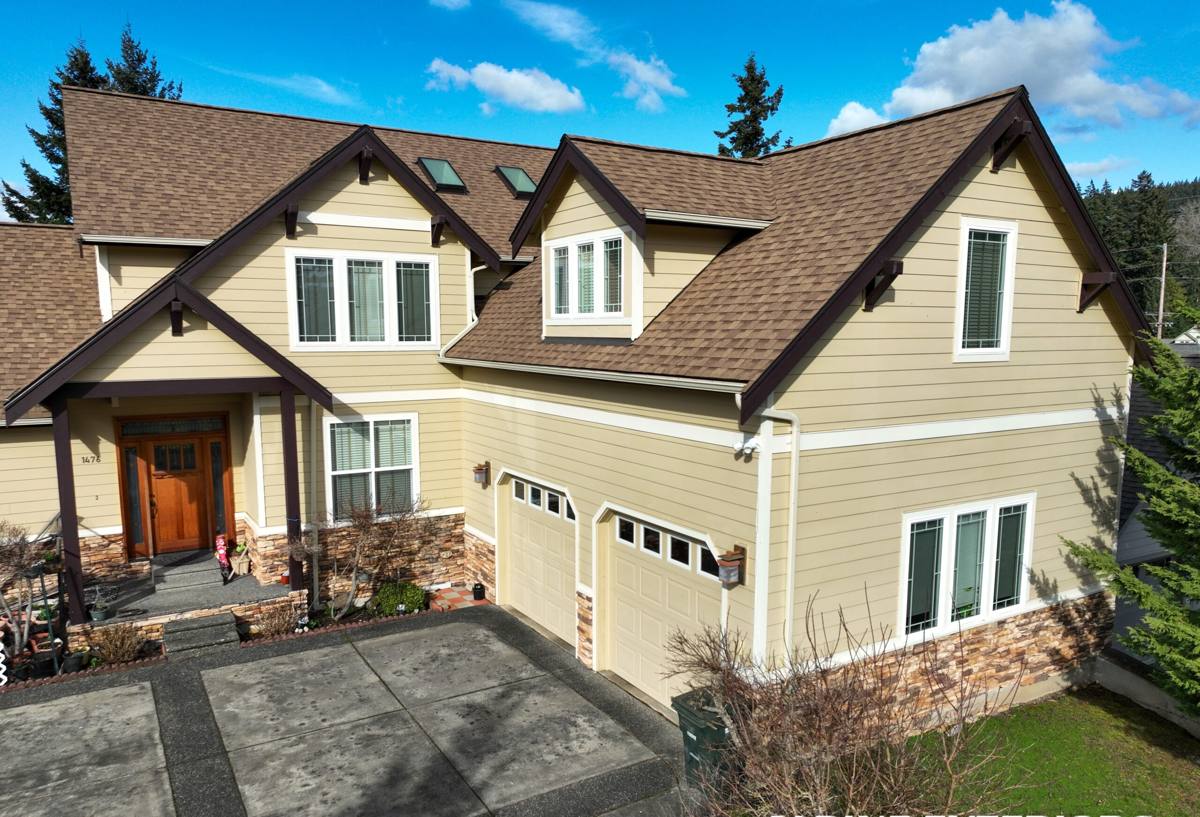
What Edgemoor's Site Conditions Demand From a Deck
Tree Cover and Standing Moisture
Mature trees are part of what makes Edgemoor's lots attractive, but they also mean decks here often sit in partial shade most of the day. Shaded, tree-covered decking dries out slower after rain, which is exactly the condition moss, algae, and mold need to establish themselves. A design that ignores this — tight board spacing, poor airflow underneath, low clearance to grade — will grow moss within a season or two no matter what material it's built from.
Slope and Bluff Grading
Many Edgemoor properties step down toward the bay or sit on a grade, which changes how footings, beams, and stairs get engineered. A deck on sloped ground needs footings sized and placed for the actual soil and drainage conditions on that lot, not a generic flat-lot layout. Where a deck extends toward a slope or bluff edge, we also look at how stormwater moves across the yard so the structure isn't sitting in a path that channels runoff underneath it.
Salt Air and Corrosion
Proximity to Bellingham Bay means airborne salt reaches fasteners, flashing, and connectors faster than it would on a deck ten miles inland. Hardware rated for standard treated lumber isn't always rated for a marine-influenced environment, and using the wrong fastener grade is one of the more common shortcuts we see on decks that failed years ahead of schedule.
Material Choices That Hold Up Here
There's no single "best" decking material — there's a best material for a given lot, budget, and how much upkeep an owner actually wants to take on. For Edgemoor's shaded, damp conditions, we weigh moisture behavior and mold resistance more heavily than we might on an open, sunny lot elsewhere in the county.
| Material | Moisture & Mold Behavior | Maintenance | Typical Lifespan |
|---|---|---|---|
| Cedar | Naturally moisture- and insect-resistant; still needs sealing to prevent graying and surface mildew in shade | Cleaning and re-sealing every 1-2 years in shaded areas | 15-20 years with upkeep |
| Pressure-Treated Fir/Hem-Fir | Treated against rot, but can trap surface moisture if boards are laid tight or without airflow beneath | Annual cleaning; periodic sealing | 15-25 years with upkeep |
| Composite/PVC Decking | Doesn't absorb moisture into the board itself, though surface mildew can still grow on a pollen and algae film in heavy shade | Periodic washing; no sealing or staining | 25-30+ years, manufacturer-dependent |
Composite decking tends to be the lower-maintenance choice for the shadier, tree-covered lots common in Edgemoor, since it won't rot or splinter even if it stays damp longer than boards in full sun. Real wood costs less up front and can look excellent, but it asks for more consistent maintenance in a climate that gives it fewer dry days to recover between rains. We'll walk through the honest trade-offs for your specific lot rather than push one material across the board.
Framing, Footings, and Railings Done Right
The framing underneath a deck matters more than the decking on top of it, and it's the part a homeowner can't easily inspect once the project is finished. On Edgemoor jobs we pay particular attention to:
- Ledger flashing — the connection where a deck attaches to the house is the single most common source of hidden rot if it isn't flashed correctly, especially in a climate with this much annual rainfall.
- Footings sized for the actual soil — sloped or fill soil common on bluff-adjacent lots needs footings engineered for that ground, not a standard flat-lot spec.
- Joist protection — tape or coating on joist tops so standing moisture under the decking doesn't rot the frame from underneath, where nobody sees it until it fails.
- Fastener and hardware grade — stainless or high-grade coated hardware suited to a marine-influenced, salt-air environment rather than standard hardware rated for inland use only.
- Airflow beneath the deck — proper clearance to grade so shaded, damp ground air can actually move and dry the underside of the structure.
Railings and Guardrails on a View Lot
A lot of what draws people to build or rebuild a deck in Edgemoor is the view toward Bellingham Bay, and that puts railings under more scrutiny than on a typical backyard deck. Code sets minimum guardrail height and maximum baluster spacing regardless of the view, so the real design question is how to meet those requirements without boxing in the outlook the deck is built for in the first place. Cable rail and narrow picket designs both preserve sightlines better than solid rail sections, but cable rail systems bring their own consideration in this environment: the tensioning hardware and cable itself need to be rated for a marine-influenced climate, or they'll show rust and slack years before a standard inland installation would. We spec hardware for the actual environment a deck sits in, not just the lowest-cost option that happens to meet code on paper.
Fighting Moss, Mold, and Algae Before They Start
Once moss and algae establish themselves on a deck surface, they hold moisture against the boards and make the surface genuinely slick underfoot — a real hazard on stairs and landings, not just a cosmetic issue. The fix isn't a single product; it's a handful of design and build decisions that add up over the life of the deck.
Board spacing matters more in shade than in sun, since gapping that's fine on an open, breezy lot won't dry fast enough under tree cover. Where gutters and downspouts discharge close to a deck, we route that water away from the structure rather than letting it sheet across the decking or saturate the ground underneath. And on composite decking, an occasional wash-down keeps the pollen-and-algae film that feeds mildew from building up in the first place — it's a five-minute job a couple of times a year, not a restoration project.
Permits and Local Requirements
Deck projects in Bellingham typically need a building permit once they cross certain size or height thresholds, and the city reviews setbacks, guardrail height, and structural details as part of that process. Because Edgemoor sits along the bluff above Bellingham Bay, some lots may also fall under shoreline or critical areas review depending on exact location and distance from the bluff edge — that's worth confirming with the city early, before a design is finalized, rather than after materials are ordered. We handle the permit submittal as part of our process, but we'd rather flag this upfront than have it surprise a homeowner partway through the project.
Our Process, From Estimate to Finished Deck
- On-site walkthrough — we look at the actual grade, tree cover, drainage, and how the deck will attach to the house, not just a photo or a phone description.
- Honest material conversation — we lay out real trade-offs between wood and composite for your specific lot, including the upkeep you're signing up for either way.
- Design and permit submittal — footings, framing, and layout engineered for the site, submitted to the city where a permit is required.
- Construction — framing and flashing built to hold up through a Whatcom County winter, not just pass a quick glance at handoff.
- Walkthrough and care guidance — a plain explanation of what maintenance your specific deck actually needs, so you're not guessing later.
Maintenance Checklist for Edgemoor Deck Owners
Whatever material you choose, a little seasonal attention goes a long way in this climate:
- Clear leaves and debris from board gaps and stair treads before fall rains set in
- Check that gutters and downspouts near the deck are discharging away from the structure, not onto it
- Wash the deck surface at least once a year to remove the algae and pollen film that feeds moss growth
- Inspect ledger flashing and any visible framing connections for staining or soft spots
- Re-seal or re-stain wood decking on the schedule its finish calls for — don't wait until it's visibly gray
- Watch hardware for rust streaking, which can signal the wrong fastener grade for this environment
Why a Crew That Already Works Edgemoor Matters
A deck builder who hasn't worked this neighborhood before is guessing at things we already know: how the ground behaves on a bluff lot, how much shade a given tree canopy actually casts through the seasons, and what the city looks for in a permit application for a property this close to the shoreline. That's not a knock on any other contractor — it's the difference between site-specific experience and a generic approach. We've built and repaired decks throughout Bellingham and Whatcom County, and we bring that same attention to every Edgemoor project, whether it's a small landing off a back door or a full deck built to take in a bay view.
If you're planning a new deck or thinking about replacing one that's showing its age, we're happy to walk your property, talk through what it actually needs, and give you a straightforward, no-pressure estimate. There's a form below — reach out and we'll take it from there.