 Bellingham Siding
 New-Construction Windows: What the Term Actually Means
"New-construction window" is a specific term in our trade, not just a window going into a new house. It refers to a window built with a nailing fin (sometimes called a nail flange) around the perimeter of the frame. That fin gets fastened directly to the wall sheathing before the weather-resistive barrier and siding go on, which lets us integrate the window into the wall's water management system from the stud out. This is different from a pocket or insert replacement window, which gets set into an existing frame from the interior or exterior after the wall is already finished.
For Edgemoor homeowners, this distinction matters most during additions, garage or bonus room builds, full siding tear-offs down to the sheathing, and true new-home construction. If we're already opening the wall to the studs for a siding project, installing new-construction windows properly — rather than working around old flashing — is usually the better long-term move.
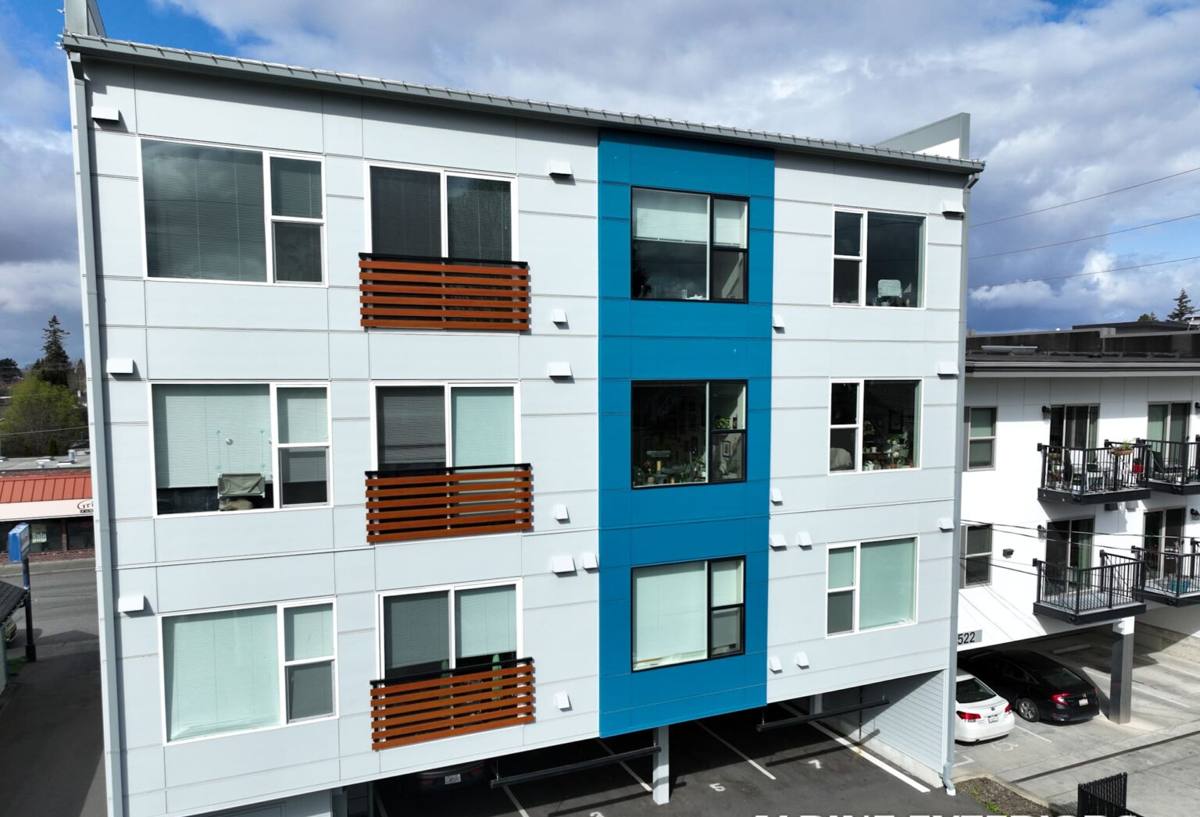
What Edgemoor's Environment Asks of a Window Installation
Edgemoor sits close to Bellingham Bay, and that proximity shapes how a wall assembly needs to be built. Salt-laden air off the water accelerates corrosion on exposed fasteners, hinges, and lesser-grade flashing metals faster than it would a few miles inland. Driving rain off Puget Sound storms — especially the southwest gales that hit the Bellingham waterfront through fall and winter — pushes water sideways against window openings, not just straight down, which is exactly the condition that exposes a sloppy flashing job. And the mature tree canopy that gives Edgemoor its character also means longer periods of shade and dampness on north and west-facing walls, extending the moss and algae season and keeping wood trim and sills wetter, longer, than a more exposed lot in Whatcom County would see.
None of that is exotic engineering — it's a reason to be disciplined about sequencing and material choice rather than treating a window as a plug-and-play product. A window that's a fine fit in a drier inland climate can still fail in Edgemoor if the sill pan, flashing laps, and sealant details aren't built for sustained wind-driven moisture.
What a Correct New-Construction Window Installation Involves
The window unit itself is only part of the job. Most leaks and rot we get called to diagnose in older Bellingham-area homes trace back to the flashing and sequencing around the window, not the window itself.
Sill Pan and Flashing Sequence
Before the window ever goes in, the rough opening needs a sloped sill pan so any water that gets past the window has somewhere to go — out, not into the wall cavity. Flashing tape and building paper or housewrap then get layered in a specific shingle-style order: sill pan first, then the window's nailing fin over it, then jamb flashing over the fin, then head flashing last, lapped over the weather-resistive barrier above. Get that order backward and you've built a funnel instead of a drain.
Fastening and the Nailing Fin
The nailing fin needs full, even contact with the sheathing and fasteners at the manufacturer's specified spacing — not just enough nails to hold the window in place. Gaps behind the fin or skipped fasteners create voids where wind-driven rain can work its way in over time, which is a slower failure but a real one in a climate that sees rain more often than not.
Insulating and Sealing the Rough Opening
The gap between the window frame and the rough opening gets backer rod and a compatible low-expansion sealant, or a proper insulating foam — never packed tight with fiberglass alone, which does little to stop air and moisture movement. Interior and exterior sealant joints are both part of the job; skipping the interior side is a common shortcut that shows up later as condensation or drafts.
Choosing a Window Frame for an Edgemoor Home
Frame material affects how a window holds up to salt air and sustained moisture, and how much upkeep it asks of you. There's no single correct answer for every home — it depends on your budget, your home's style, and how much maintenance you want to take on.
| Frame Material | Moisture & Salt-Air Behavior | Maintenance | Typical Fit |
|---|---|---|---|
| Vinyl | Won't corrode or rot; performs well in damp coastal air | Low — occasional cleaning | Budget-conscious new construction, additions |
| Fiberglass | Very stable in temperature swings and moisture; strong long-term option near the water | Low | Higher-end new builds, larger openings |
| Wood-clad | Interior wood look with exterior cladding for protection, but cladding seams need attention in wet climates | Moderate — watch cladding joints and interior wood over time | Traditional or estate-style Edgemoor homes |
| Aluminum | Strong but conducts cold and can show condensation in our damp winters unless thermally broken | Moderate | Modern designs, larger glass areas |
Whatever frame material you land on, we'd rather talk through the trade-offs honestly than push a single product. Wood-clad windows, for example, can look great on an Edgemoor home with a more traditional character, but they ask for regular attention to the cladding seams and any exposed end grain given how much rain the neighborhood sees.
Glazing and Ratings That Actually Matter Here
Bellingham's climate is mild but overcast much of the year, so a window's U-factor (how well it resists heat loss) generally matters more day-to-day than solar heat gain coefficient, which is more relevant in sunnier climates. Look for a U-factor suited to the Pacific Northwest and a solid air infiltration rating — that's the number that reflects how well the window resists wind-driven air and moisture, which is the more relevant stress in a waterfront-adjacent neighborhood like Edgemoor.
How We Sequence Windows with Siding on Your Project
On any job where windows and siding are happening together — an addition, a full re-side, or new construction — the order of operations is what protects the wall long-term. Windows go in after the weather-resistive barrier is on the sheathing but before the siding starts, with flashing integrated at each step rather than caulked over afterward. If we're coordinating with a general contractor or builder on a new home, we work from the same set of plans and confirm rough opening sizes and flashing details before framing is closed in, so there's no guessing once walls are up.
Our Process, Start to Finish
- Site visit and measurement — we look at rough openings, wall assembly, and exposure (which walls take the most wind-driven rain) before recommending anything.
- Product selection — we walk through frame material, glazing, and budget options based on your home and how much maintenance you want going forward.
- Coordination — on new builds or additions, we confirm timing with your general contractor so windows go in at the right point in the framing and weather-barrier sequence.
- Installation — sill pan, flashing, fastening, and sealing done in the correct order, not shortcuts to save a step.
- Final check — we verify operation, seals, and flashing laps before we call it done.
Why a Crew That Already Works in Edgemoor Matters
Edgemoor is a specific kind of neighborhood to build or renovate in. Lots are often tighter and more heavily treed than newer Bellingham subdivisions, which affects staging, scaffolding, and how much drying time a wall gets between steps in wetter months. Many homes carry an established architectural character that homeowners want new windows to respect rather than clash with. And the neighborhood's closeness to the water means we plan flashing and sealant details with wind-driven rain in mind by default, not as an afterthought. A crew that already knows this stretch of Whatcom County — its weather patterns, its typical lot conditions, and its permitting expectations — spends less of your project figuring things out and more of it building the wall correctly the first time.
Maintaining New-Construction Windows in a Marine Climate
Good installation is most of the battle, but a little seasonal attention keeps windows performing for the long haul in a damp, moss-prone climate like this one.
- Rinse salt and pollen film off exterior glass and frames a few times a year, especially on walls facing the water.
- Check exterior sealant joints annually for cracking or separation, particularly after a hard winter storm season.
- Keep gutters and downspouts clear so overflow doesn't run down over window heads.
- Trim back tree branches and vegetation that keep a wall shaded and damp longer than necessary.
- Operate hardware periodically, even on windows you don't open often, so mechanisms don't seize from disuse in the damp months.
- Watch for any interior condensation between panes, which can signal a failed seal on an insulated glass unit.
If you're planning an addition, a new build, or a full re-side in Edgemoor and want windows installed the right way the first time, we're happy to come take a look and talk through your options. The estimate is free, there's no pressure, and you'll get a straight answer about what your project actually needs.