 Bellingham Siding
 Edgemoor's Setting Puts Real Demands on a Window
Edgemoor sits close enough to the water that Bellingham Bay's weather reaches every exterior surface of a home, not just the ones that face the shoreline. It's a quieter, tree-shaded part of Bellingham with a mix of older, established homes and custom builds, many of them designed around the view — which usually means more glass, larger openings, and window placements that weren't chosen with maintenance in mind. That combination of coastal exposure and view-driven design is exactly why a generic, big-box window replacement often falls short here. A window that would hold up fine on a dry, inland lot can start failing within a few years on a bluff-adjacent property in Whatcom County.
Custom windows, done right, aren't just about matching an unusual opening size. They're about matching the product, the installation detail, and the materials to what this specific setting throws at a house year after year: salt-laden air, driving rain that hits at an angle instead of falling straight down, and a moss season that runs longer here than almost anywhere else in the state.
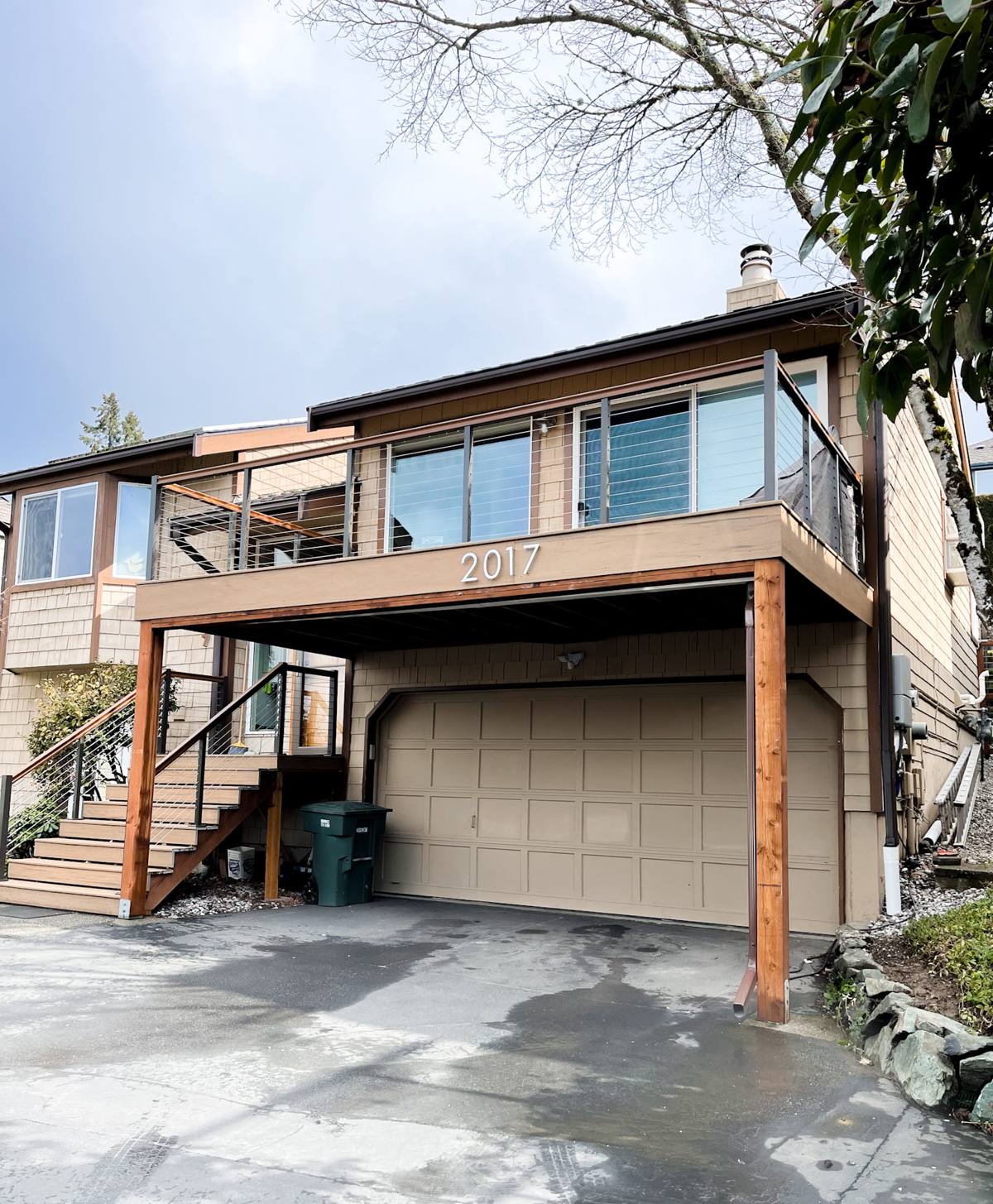
What Bellingham's Marine Climate Does to a Window Over Time
Salt Air and Metal Fatigue
Even a few miles inland from the water, salt-laden air accelerates corrosion on window hardware — hinges, locks, balance mechanisms, and especially older aluminum frames. Once corrosion starts on a moving part, windows stop closing flush, which opens the door to air and water infiltration that compounds every season after.
Driving Rain and Wind-Driven Water
Whatcom County doesn't just get a lot of rain — a good share of it arrives sideways, pushed by wind off the water. That matters because a window can be perfectly watertight in a straight-down rainstorm and still leak under wind-driven rain if the flashing and sealant details weren't built for it. Homes on more exposed lots, including many in Edgemoor, take this kind of weather more directly than homes tucked further into town.
The Long Moss Season
Constant moisture plus shade from mature tree cover means moss, algae, and mildew have a long growing season on this side of the state. On windows, that shows up as green or black staining on sills and lower sashes, and — more seriously — as trapped moisture sitting against wood trim or frame material for weeks at a time. That trapped moisture is what eventually leads to soft, rotted wood behind a window that still looks fine from a few feet away.
Why "Off the Shelf" Doesn't Work for Many Edgemoor Homes
A lot of the housing stock in and around Edgemoor was built in phases over many decades, sometimes with additions or renovations that didn't follow a single standard. Rough openings can be slightly out of square, slightly non-standard in size, or built to dimensions that predate current manufacturer standard sizes entirely. On top of that, many of these homes were designed with the view as the priority — larger picture windows, corner units, or mixed window styles across one wall — which means a straightforward, stock-size replacement often doesn't exist for the opening you actually have.
That's the real meaning of "custom" on a project like this: field-verified measurements for every opening, a product ordered to match, and installation detail that accounts for whatever the original builder did (or didn't do) correctly. Forcing a stock-size unit into a non-standard opening usually means gaps packed with extra trim or sealant — a shortcut that tends to fail early in this climate.
Choosing Window Materials and Glass for a Bluff-Side, Marine Climate
Material choice matters more here than in a drier inland climate, because the frame is fighting constant humidity and occasional salt exposure, not just temperature swings. Here's how the common options generally compare for this kind of setting:
| Material | Performance in Salt Air/Moisture | Maintenance | Typical Fit |
|---|---|---|---|
| Vinyl | Good — won't corrode or rot, handles moisture well | Low | Most standard and custom-sized replacements |
| Fiberglass | Very good — dimensionally stable, resists warping | Low | Larger openings, higher-exposure elevations |
| Wood-clad | Fair — exterior clad protects wood, but any breach in the cladding invites rot | Moderate to high | Homes prioritizing an interior wood look |
| Bare aluminum | Poor in salt air — prone to corrosion and condensation | High | Not recommended for this setting |
Beyond frame material, the glass package matters just as much in a house full of humid, shaded rooms. Double-pane with a low-E coating is the baseline we'd recommend for most Edgemoor replacements; triple-pane and warm-edge spacers are worth the upgrade cost on north-facing or heavily shaded rooms where interior condensation tends to be worst. Argon gas fill between panes adds a modest efficiency gain and is inexpensive enough that we include it as standard on most insulated units.
Our Custom Window Replacement Process
The process is the same whether it's one window or a whole-house replacement — we just don't skip steps to save time, because skipped steps are exactly what shows up as a leak two winters later.
- On-site assessment of every opening, including a look at the condition of the framing and sill behind the existing window, not just the window itself.
- Field measurement of each opening individually — we don't assume two openings that look alike are actually identical.
- Product and glass package selection based on the elevation's sun, shade, and wind exposure.
- Careful removal of the old unit, with an honest check for rot, soft wood, or prior water damage before anything new goes in.
- Proper flashing and a continuous moisture barrier at the sill and jambs — this is the single most important step for stopping wind-driven rain.
- Setting, leveling, and shimming the new unit so it operates correctly and seals evenly.
- Insulating the gap around the frame and sealing the exterior with a sealant appropriate to the siding material.
- Interior trim work and a final walkthrough with the homeowner before cleanup.
Common Problems We Find Replacing Older Windows in This Neighborhood
When we pull out an older window on an Edgemoor property, a few issues come up often enough that we check for them every time:
- Rotted or soft sill framing hidden behind an old aluminum or wood window that looked intact from the outside.
- Fogged or cloudy double-pane glass, meaning the insulated seal has failed from years of moisture cycling.
- Moss, algae, or mildew staining on sills and lower sashes, especially on shaded or north-facing walls.
- Missing or undersized flashing that let water track behind the siding for years without an obvious interior sign.
- Interior condensation and mildew on window glass and trim during winter months, a sign the old unit's glass package wasn't keeping up with the home's humidity.
What a Custom Window Project Costs — and What Drives the Price
We won't quote a number without seeing the openings, but broadly, a single custom-sized replacement typically runs a few thousand dollars, while a whole-house project scales up from there depending on the count and complexity of openings. The factors below move that number more than anything else:
| Cost Factor | Why It Matters |
|---|---|
| Opening size and shape | Large picture windows, corner units, and non-rectangular shapes cost more to fabricate and install |
| Frame material | Vinyl is typically the most affordable; fiberglass and wood-clad cost more upfront |
| Glass package | Triple-pane, upgraded Low-E coatings, and warm-edge spacers add cost but pay off on shaded, humid elevations |
| Existing damage | Rotted framing found during removal adds repair work before the new window can go in |
| Access and elevation | Upper-story or hard-to-reach openings take longer and require more setup |
| Number of openings | Per-unit cost typically drops as the total project size grows |
Checklist: What to Ask Before Hiring a Window Contractor in Edgemoor
- Do they field-measure every opening individually, rather than quoting off a rough estimate?
- Do they check and repair rotted framing before installing the new window, or just install over it?
- Can they explain their flashing and moisture-barrier approach for wind-driven rain, not just standard installation?
- Do they carry proper licensing and insurance for exterior work in Washington State?
- Will they put the material, glass package, and warranty terms in writing before work starts?
- Have they worked on homes in this specific area before, and can they speak to what they typically find?
Why a Crew That Already Works Edgemoor Matters
A lot of what makes a window installation last in this neighborhood isn't visible once the job is done — it's the flashing detail under the trim, the condition of the framing that got repaired instead of covered up, and the sealant that was actually rated for wind-driven rain instead of just any caulk on the truck. A crew that regularly works Bellingham's bluff-side and waterfront-adjacent properties has already seen how the older construction in this area tends to be built, what kind of hidden rot to expect behind a 30- or 40-year-old window, and how to schedule installation around the wetter stretches of the year so the opening isn't sitting exposed during a storm. That local familiarity shows up as fewer surprises mid-project and a finished install that's actually built for the conditions it has to survive here, not just for a mild-climate average.
If you're weighing a window replacement on an Edgemoor property, we're happy to take a look, walk the openings with you, and give you a straight answer on what's actually needed — no pressure, no upsell. Use the form below to request a free estimate.