 Bellingham Siding
 Edgemoor's Roofs Work Harder Than Most
Edgemoor sits close to Bellingham Bay, tucked under a heavy canopy of fir, cedar, and maple. That combination is part of what makes the neighborhood beautiful, and it's also exactly what shortens the life of an asphalt shingle roof if the roof wasn't built with this specific setting in mind. Salt-laden air off the bay accelerates corrosion on exposed metal fasteners and flashing. Wind-driven rain off the water pushes moisture sideways under shingle tabs that would stay dry in a more sheltered part of Whatcom County. And the tree cover that gives Edgemoor its character also means near-constant shade on north- and east-facing slopes, which is exactly where moss and algae take hold first and stay latest into the season.
None of that means asphalt shingle roofing is the wrong choice for this neighborhood — it's still the most practical, cost-effective option for the vast majority of Edgemoor homes. It means the installation details matter more here than they would in a drier, more open part of the state, and it means the roof needs a maintenance rhythm that matches the local conditions rather than a generic schedule.
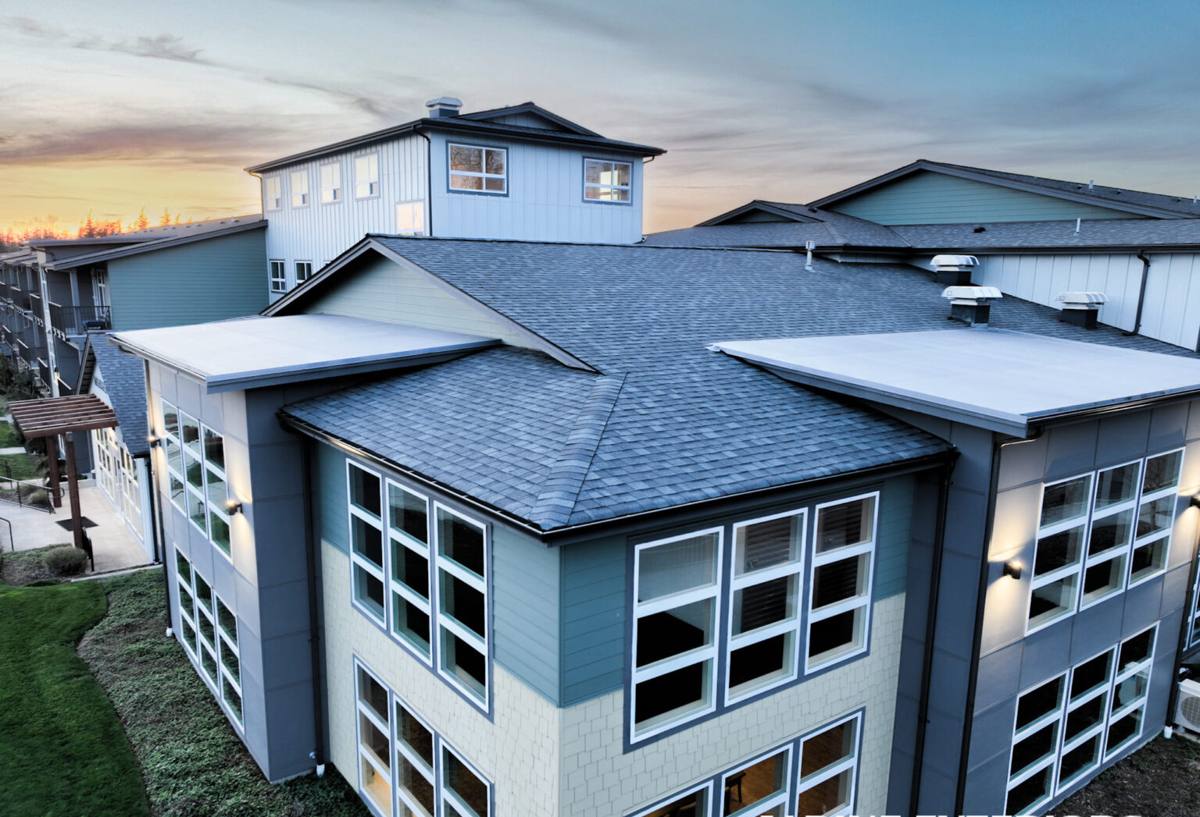
What "Correct" Actually Means on an Edgemoor Roof
A shingle roof is a system, not a single product. On a roof exposed to Bellingham's wet, mossy, salt-tinged climate, every layer of that system earns its keep.
Underlayment and Ice/Water Protection
We use a synthetic underlayment rated for extended exposure, and we run self-adhering ice-and-water membrane at eaves, valleys, and any low-slope transitions — the spots where wind-driven rain is most likely to work its way backward under the shingle course. In a canopy-shaded yard where snow and slush can sit longer than on an open roof, that extra layer at the eaves is cheap insurance against ice damming later on.
Ventilation
Trapped attic moisture is one of the fastest ways to rot a deck from underneath, and it's a bigger risk on shaded, moisture-heavy lots than on sun-exposed ones. We check intake at the soffits and exhaust at the ridge before we ever talk shingle color, because a beautiful roof over an unventilated attic will fail from the inside regardless of the shingle brand on top of it.
Flashing and Fasteners
Salt air corrodes cheap metal faster than most homeowners expect. We use corrosion-resistant flashing at chimneys, skylights, and sidewalls, and we fasten with nails or screws rated for coastal exposure rather than whatever is cheapest at the yard. This is a small material cost difference that pays for itself many times over in years of service life.
Wind and Sealant Strip Performance
Gusts off the bay can catch a poorly sealed tab and start a chain of lifted shingles down a whole slope. We install so the factory sealant strips bond properly — correct nail placement, correct exposure, and hand-sealing any tabs installed outside ideal temperature ranges so the roof isn't relying on luck through its first storm season.
Signs an Edgemoor Roof Needs a Closer Look
Because so many lots here are shaded and tree-lined, problems can hide in plain sight longer than they would on a fully exposed roof. Homeowners who catch these signs early save money on the eventual repair or replacement:
- Dark streaking or a greenish cast on north-facing slopes — usually algae, not just dirt
- Moss clumps at shingle edges or in valleys, especially under overhanging branches
- Granules collecting in gutters or at downspout outlets
- Curling, cupping, or cracked shingle tabs, particularly on slopes that get the most wind
- Soft spots or a slight give underfoot near valleys or chimney flashing
- Daylight visible through the attic roof deck, or damp insulation after a storm
- Rust staining below flashing or exposed fasteners
Any one of these on its own isn't necessarily an emergency, but they're worth a professional look before the next wet season rather than after.
How Our Installation Process Works
We keep the process straightforward and we walk you through it before any work starts, not after.
- On-site inspection and honest scope. We look at the existing roof, attic ventilation, deck condition, and any tree-cover or drainage issues specific to your lot before quoting anything.
- Tear-off and deck check. Old roofing comes off completely so we can inspect the sheathing underneath. Soft or rotted decking gets replaced — this is called out and priced before it's fixed, never hidden in a change order after the fact.
- Underlayment and ice/water membrane. Installed per the details above, matched to your roof's slopes and exposure.
- Flashing. New corrosion-resistant flashing at all penetrations, valleys, and wall transitions rather than reusing old flashing that's already been through several wet seasons.
- Shingle installation. Laid to manufacturer spec for nailing pattern, exposure, and sealing, with attention to wind performance on exposed slopes.
- Ventilation confirmation. Intake and exhaust checked and corrected as needed so the new roof isn't fighting trapped moisture from day one.
- Cleanup and walkthrough. Magnetic sweep for stray fasteners, debris hauled off, and a final walkthrough so you know exactly what was done and what to watch for going forward.
Choosing a Shingle for This Microclimate
Not every asphalt shingle line is built the same way, and the differences matter more in a shaded, damp, salt-air setting than they would somewhere drier. The table below is a general guide to the trade-offs, not a recommendation of any single manufacturer.
| Shingle Tier | Typical Wind Rating | Algae Resistance | Best Fit For |
|---|---|---|---|
| Standard 3-tab | Lower | Often minimal or none | Budget-limited projects on less exposed, sunnier slopes |
| Architectural / laminate | Moderate to high | Usually includes algae-resistant granules | Most Edgemoor homes — the practical middle ground |
| Premium / designer laminate | High | Enhanced algae-resistant granule blends | Heavily shaded, north-facing, or highly exposed waterfront slopes |
For most homes in this neighborhood, we steer clients toward a mid-to-upper architectural laminate with algae-resistant granules. It's a modest cost increase over basic 3-tab, and given how much shade and moss pressure this area sees, that granule treatment typically pays for itself in fewer years lost to premature staining and softening.
A Note on Moss-Resistant Treatments
Algae-resistant granules (often copper- or zinc-infused) slow moss and algae growth but don't eliminate the need for maintenance on a heavily shaded roof. We're upfront about that trade-off rather than overselling any single product as a permanent fix — a shaded valley under overhanging branches will always need more attention than an open, sun-exposed slope, regardless of shingle brand.
Keeping a Shingle Roof Healthy After Installation
A correctly installed roof still needs periodic attention in a canopy-heavy, coastal-adjacent neighborhood like this one. A simple annual rhythm covers most of it:
- Clear gutters and downspouts of needles and leaf litter at least twice a year, more often under heavy tree cover
- Have moss and algae growth treated before it spreads under shingle tabs, not after it's visibly thick
- Trim back branches that overhang the roofline to cut down on shade, debris, and physical abrasion
- Check attic ventilation isn't blocked by insulation or debris after any attic work
- Have flashing and sealant checked every few years, especially after major windstorms off the bay
None of this requires a contractor visit every time — a lot of it is homeowner-level maintenance — but knowing what to look for is half the battle.
Repair or Full Replacement? What Actually Drives the Decision
Homeowners often assume any visible damage means a full replacement, and that's not always true. The honest answer depends on a handful of factors:
| Factor | Leans Toward Repair | Leans Toward Replacement |
|---|---|---|
| Roof age | Well within expected lifespan | Near or past the shingle's rated life |
| Extent of damage | Isolated to one slope or a few shingles | Spread across multiple slopes or valleys |
| Deck condition | Solid, dry sheathing underneath | Soft spots, rot, or repeated leak history |
| Granule loss | Minimal, mostly cosmetic | Widespread, exposing the shingle mat |
| Ventilation issues | None found | Chronic moisture or mold in the attic |
We'll tell you plainly which side of that line your roof falls on. If a repair genuinely makes sense, that's what we'll recommend — a roof replacement isn't the right answer just because it's the bigger job.
Why It Matters to Hire a Crew That Already Works in Edgemoor
Edgemoor's lots tend to be tighter and more heavily treed than a lot of newer Bellingham subdivisions, which changes how a roofing job actually gets done — where staging and material drop happen, how tear-off debris gets managed around mature landscaping, and how much care goes into protecting plantings and hardscape that took decades to establish. A crew that's worked in the neighborhood before isn't guessing at any of that on your job.
Local experience also means we've seen firsthand how Whatcom County's wet season, moss pressure, and bay-driven wind actually play out on shingle roofs over years, not just in a manufacturer's spec sheet. That's the difference between a roof that's technically installed to code and one that's actually built for where it sits.
Straightforward Pricing, No Surprises
Every roof is different based on size, pitch, tear-off complexity, deck condition, and shingle tier chosen, so we don't publish blanket prices — anyone who does is either guessing or leaving out the details that matter. What we can promise is a clear, itemized estimate before work starts, no hidden change orders for problems we should have caught during inspection, and a straight answer if a repair is the smarter move instead of a full tear-off.
If your Edgemoor roof is showing moss, staining, granule loss, or you just haven't had it looked at in a few years, we're happy to come take a look. Reach out for a free, no-pressure estimate using the form below — we'll give you an honest read on where your roof stands and what it actually needs.