 Bellingham Siding
 Roofing in Sunnyland: A Different Set of Problems Than Inland Bellingham
Sunnyland sits close enough to Bellingham Bay that homes here deal with a specific combination of weather most inland neighborhoods don't: salt-laden air off the water, wind-driven rain that gets pushed sideways under eaves and flashing, and a moss season that runs longer than almost anywhere else in Whatcom County. None of that is dramatic on its own, but stacked together over a few decades, it wears a roof down faster than the shingle warranty label suggests. We've replaced roofs throughout Sunnyland and the surrounding Bellingham neighborhoods, and the failures we see here follow a pattern — it's rarely one catastrophic problem, it's slow, compounding moisture damage that starts small and gets ignored.
This page covers what a roof replacement actually involves for a Sunnyland home, what tends to go wrong with roofs in this specific area, and how we approach the job so it's done right the first time.
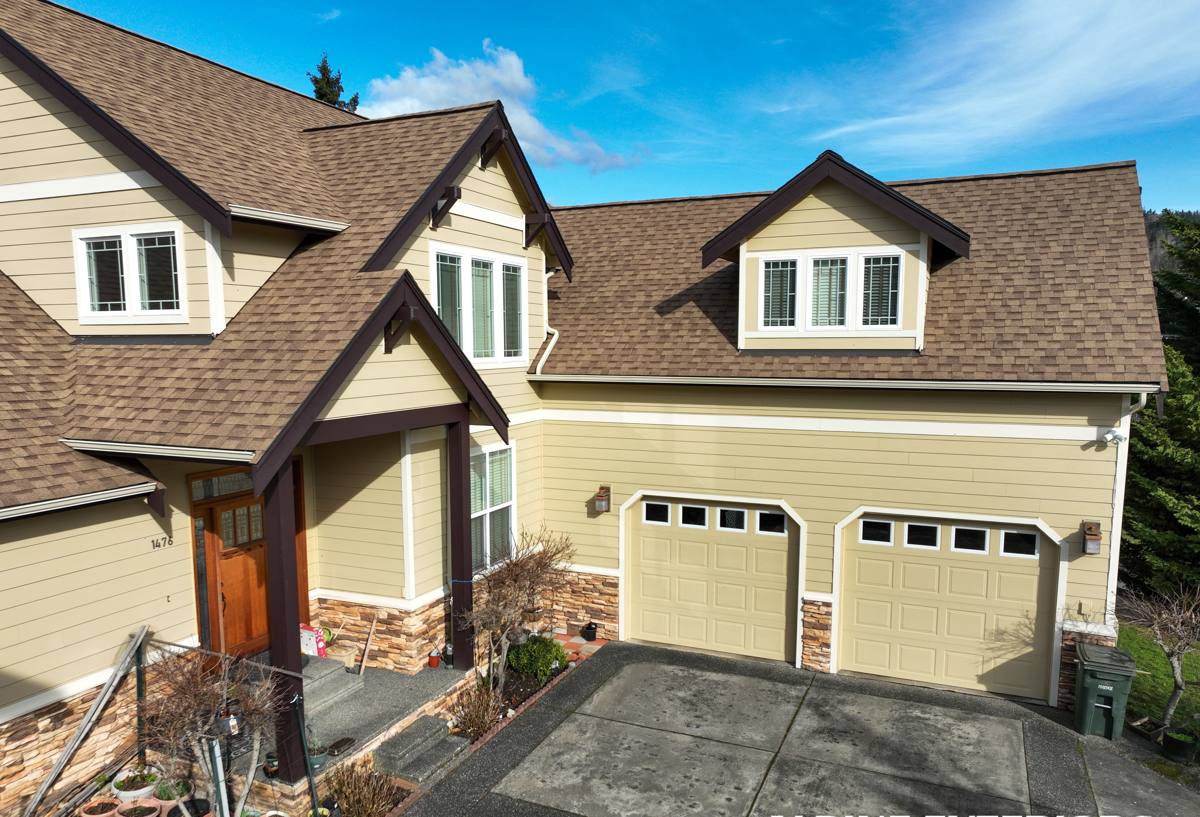
What Bellingham Bay Weather Does to a Roof
Salt Air and Metal Fatigue
Salt in the air accelerates corrosion on anything metal — flashing, fasteners, gutter hardware, and exposed nail heads. On older Sunnyland roofs we often find flashing that's pitted or thinned at the edges, and fasteners that have backed out or rusted faster than they would inland. Salt air doesn't ruin a roof on its own; it shortens the working life of the metal components that keep water out at every seam, valley, and penetration, which is why we spec corrosion-resistant fasteners and flashing on every replacement in this part of town.
Driving Rain and Wind-Driven Moisture
Bellingham gets a lot of rain, but the rain that does the most damage here comes in sideways — wind off the bay pushing water up under shingle edges, around chimney flashing, and into vents that were sealed for straight-down rain, not horizontal. A roof that stays watertight in a light drizzle can still leak during a wind event if the underlayment, flashing laps, and vent seals weren't installed with that in mind. This is a detail-level issue, not a materials issue, and it's where a lot of budget roof jobs fall short.
Moss, Shade, and a Long Wet Season
Sunnyland has mature tree cover on a lot of lots, which is great for shade and tough on roof drainage. Combined with Whatcom County's long wet season, north-facing slopes and shaded valleys stay damp for months at a stretch — ideal conditions for moss. Moss doesn't just look bad; it holds moisture against the roofing material, lifts shingle edges as it grows, and can work its way under the shingle mat over time. A moss-covered roof is a roof that's staying wet longer than it was ever designed to.
Signs a Sunnyland Roof Is Due for Replacement, Not Another Repair
Not every roof problem calls for a full tear-off. But there's a point where patching stops making financial sense and a replacement becomes the honest recommendation. Here's what we look for:
- Granule loss heavy enough that you can see bare asphalt in valleys or on south-facing slopes
- Shingles that are cupping, curling, or cracking across multiple sections of the roof, not just one spot
- Moss growth that's returned within a year or two of cleaning, especially on shaded slopes
- Soft spots in the decking, visible sagging, or daylight through the attic where there shouldn't be any
- Flashing around chimneys, skylights, and vents that's rusted, lifted, or was never properly step-flashed to begin with
- Water stains on interior ceilings or attic framing that show up after wind-driven rain specifically, not just heavy rain
- A roof that's near or past the manufacturer's expected service life for its material, especially if it's had repeated repairs
If a roof only has one or two of these and the decking underneath is sound, a targeted repair can still be the right call. We'll tell you that directly rather than push a replacement a roof doesn't need yet.
What a Correct Roof Replacement Involves
Tear-Off and Deck Inspection
Every replacement starts with a full tear-off down to the decking, not a layover. That's the only way to actually see what's underneath — and on older Sunnyland homes, it's common to find sections of decking that have gone soft from years of slow moisture intrusion around a vent or valley that looked fine from the roofline. Any compromised decking gets replaced before anything new goes down; installing new roofing over soft decking just hides a problem that will resurface, usually as a sag or a leak, within a few years.
Underlayment and Ice/Water Protection
Given how much wind-driven rain this area sees, underlayment choice matters more here than in drier climates. We use synthetic underlayment across the field for its water resistance and durability, and self-adhering ice-and-water membrane at the eaves, valleys, and around every roof penetration — the spots where wind-driven rain is most likely to find a way in. This is the layer that does the real work if a shingle ever gets compromised in a storm, and it's not optional in a coastal Whatcom County installation.
Flashing Done Right
Flashing failures cause more roof leaks than worn-out shingles do, and it's almost always because flashing was reused, caulked instead of properly lapped, or installed with the wrong metal for a salt-air environment. We install new step flashing, counter-flashing, and valley flashing on every replacement, using corrosion-resistant metal, and we don't rely on sealant as a substitute for correct lapping and integration with the underlayment.
Ventilation
A roof that isn't ventilated correctly traps heat and moisture in the attic, which shortens shingle life from underneath and can contribute to ice damming in a cold snap. We check intake and exhaust balance as part of every replacement and correct it where the existing setup is inadequate — this is easy to skip and it's one of the most common oversights we find on older roofs in the neighborhood.
Material Selection for This Climate
Most Sunnyland homes are well served by a quality architectural asphalt shingle rated for high wind, paired with algae-resistant granules to slow moss and lichen growth on shaded slopes. Metal roofing is a solid option too, particularly for homes with heavy shade or steep pitches where moss and debris shedding matter more, though it comes with a higher upfront cost and different maintenance considerations around fastener checks and expansion noise. We'll walk through the honest trade-offs for your specific roof rather than defaulting to one product for every house.
Comparing Roofing Materials for Sunnyland Homes
| Material | Moss/Algae Resistance | Coastal Durability | Typical Lifespan | Upfront Cost |
|---|---|---|---|---|
| Standard 3-tab asphalt | Low | Fair — fasteners and flashing need extra attention | 15–20 years | Lowest |
| Architectural asphalt (algae-resistant) | Moderate to good | Good with proper flashing and fasteners | 25–30 years | Moderate |
| Standing-seam metal | Very good — sheds moss and debris | Excellent with coated fasteners | 40–50+ years | Highest |
| Cedar shake | Poor without regular treatment | Requires diligent maintenance in wet, shaded settings | 20–30 years with upkeep | High |
We don't steer every homeowner toward the most expensive option. Cedar shake, for example, can look great on the right home, but in a shaded, damp Sunnyland lot it demands a maintenance commitment — regular treatment and moss control — that not every homeowner wants to take on. That's a maintenance-burden trade-off worth knowing upfront, not a knock on the material itself.
Cost Factors Specific to a Roof Replacement Here
Every roof is priced on its own specifics, but a few factors come up repeatedly on Sunnyland jobs:
- Tree cover and access: mature trees mean more debris cleanup and sometimes tighter equipment access, which affects labor time
- Roof complexity: valleys, dormers, and multiple roof planes all add flashing work and material cuts compared to a simple gable
- Decking condition: homes with a history of moss cover or slow leaks sometimes need decking replacement discovered only after tear-off
- Layer count: a tear-off of two existing layers costs more in disposal and labor than a single-layer roof
- Ventilation corrections: adding or upgrading intake/exhaust vents where the current setup is undersized
- Material choice: asphalt, metal, and cedar carry different material and labor costs, as shown above
We give a written estimate that itemizes these factors so you know what you're paying for, not a single lump number with no breakdown.
Our Process for a Sunnyland Roof Replacement
- On-site inspection: we walk the roof and attic, check decking condition where accessible, and assess flashing, ventilation, and moss/moisture history
- Written estimate: a clear breakdown of materials, labor, and any decking or flashing corrections we expect to need
- Scheduling around weather: we plan tear-off and dry-in around Bellingham's rain patterns so your home isn't left exposed longer than necessary
- Tear-off and deck repair: full removal down to the decking, with any soft or damaged sections replaced
- Underlayment, flashing, and ventilation installed correctly: the layers that actually stop wind-driven rain and slow moss regrowth
- Final walkthrough: we go over the completed roof with you, including care and moss-prevention tips specific to your lot's shade and drainage
Why Local Experience in Sunnyland Matters
A roofing crew that only occasionally works this side of Bellingham can still install a roof competently, but they're less likely to catch the details that are specific to this stretch of coastline — how far salt air travels inland from the bay on this block, which slopes on a typical Sunnyland lot hold moss longest, or where wind-driven rain tends to find weak points on homes with this area's common roof styles. We work in this neighborhood regularly, which means we're not guessing at how a roof here needs to be detailed differently from one built ten miles inland in a drier microclimate.
It also means faster response if something does come up after the job — whether that's a warranty question or a request to take a look at something before the next big wind event.
Maintaining a New Roof in a Moss-Prone Neighborhood
Even a well-installed roof needs some upkeep in a climate like this one. A short list of what actually helps:
- Keep gutters clear so water isn't backing up under the roof edge, especially under tree cover
- Trim overhanging branches to cut down on shade and debris buildup on the roof surface
- Have moss growth addressed early — a light buildup is a quick treatment, a heavy mat is a bigger job
- Schedule a periodic visual check of flashing around chimneys and vents, since that's where problems typically start
- Watch for granule buildup in gutters, which can signal accelerated shingle wear
None of this requires a maintenance contract or constant attention — just a once-or-twice-a-year look, which we're happy to help with if you'd rather not get on the roof yourself.
If your Sunnyland roof is showing its age, or you just want an honest opinion on whether it's a repair or a replacement, we're glad to take a look. The estimate is free, there's no pressure, and you'll get a straight answer either way — use the form below to get started.