 Bellingham Siding
 Windows for Edgemoor's Bluff-Top Climate
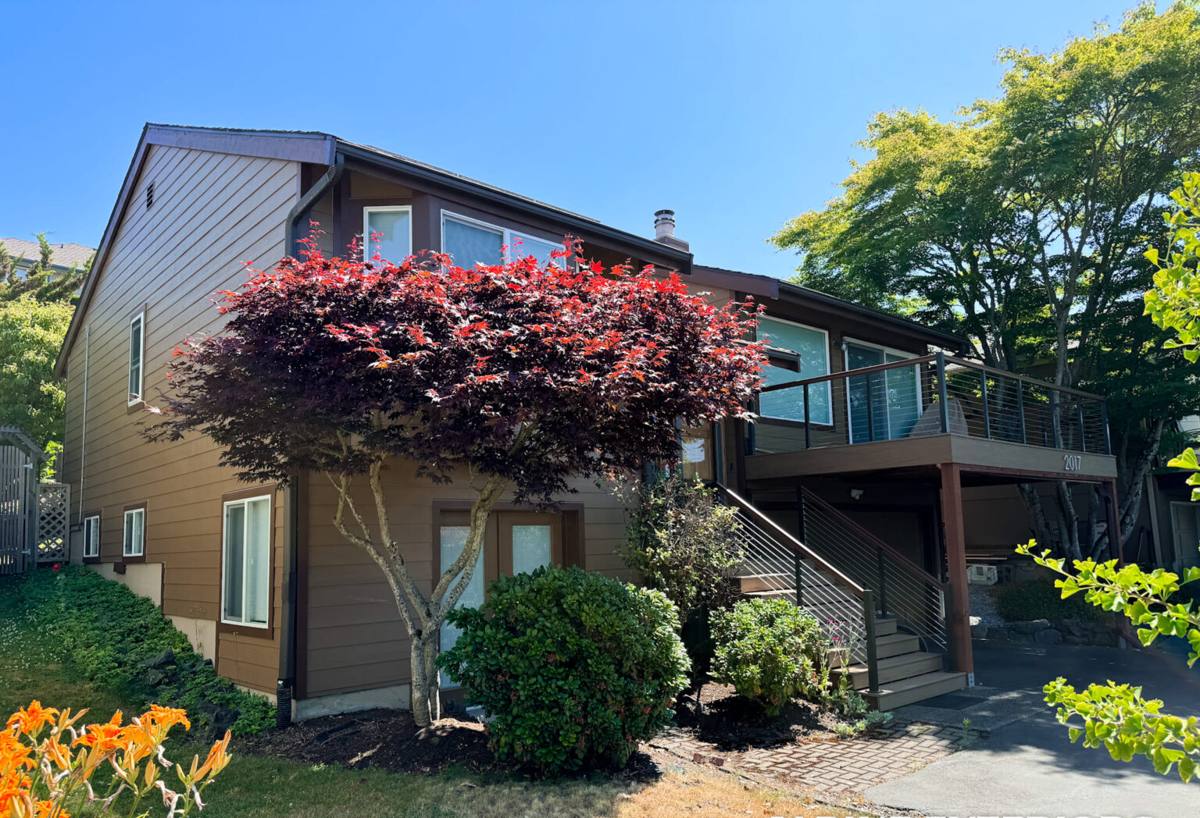
Edgemoor sits on wooded, bluff-top terrain along Bellingham Bay, and that setting cuts both ways for the windows in these homes. The tree cover and elevation that make the neighborhood desirable also mean shaded walls that stay damp longer after a storm, wind that comes off the water with real force, and a moss and mildew season that runs long even by Whatcom County standards. Add in salt-tinged marine air moving up off the bay, and you have a combination that's genuinely harder on window frames, seals, and sills than a typical inland Bellingham lot sees. We work on homes throughout Edgemoor and the surrounding bay-facing neighborhoods, and we've learned that a window package that performs fine in a drier, more sheltered part of the county doesn't always hold up the same way here.
Edgemoor also has a distinct mix of housing stock: older, established homes with original wood-frame windows sitting alongside newer custom builds. That range matters, because the right approach for a house with decades-old single-pane windows is often different from what a newer home with underperforming builder-grade windows actually needs. We look at each home on its own rather than quoting a generic package off a square-footage estimate.
What Bellingham's Marine Environment Does to Windows Over Time
Salt Air and Hardware Corrosion
Bay-facing exposure means a steady presence of salt-laden moisture in the air, not just on stormy days. Over years, that exposure works on metal hardware, corner keys, and lower-quality fasteners in ways that are slow and easy to miss until a window won't latch properly, won't glide the way it used to, or starts letting in a draft you can feel but not quite pinpoint.
Wind-Driven Rain and Water Intrusion
Rain along this stretch of the bay rarely falls straight down. Wind pushes it sideways and up under sills, which puts real pressure on flashing details and sealant joints that a calmer climate wouldn't test the same way. A window that was installed correctly for typical rainfall can still leak here if the flashing wasn't built to handle rain arriving at an angle, particularly around the bottom corners and sill pan.
Shade, Moss, and Sill Rot
Edgemoor's tree canopy is part of the neighborhood's character, but it also means many walls and window openings stay in shade and stay damp longer after rain than a home on an open lot would. That's exactly the condition moss, mildew, and wood rot need. On older wood-frame windows especially, we regularly find soft or rotted sill and jamb wood that's been slowly failing behind paint that still looks fine from a few feet away.
What "Energy-Efficient" Actually Means in a Window
"Energy-efficient" gets used loosely in the window trade, so it's worth being specific about what it means in practice. The two numbers that matter most are U-factor, which measures how well a window resists heat transfer, and Solar Heat Gain Coefficient (SHGC), which measures how much solar heat passes through the glass. Lower U-factor numbers mean better insulation; the right SHGC depends on how much direct sun a given wall actually gets, which varies a lot across a shaded, tree-covered lot like a typical Edgemoor property versus a wall with more open southern exposure.
Glass Packages and Coatings
Most energy-efficient replacement windows today use dual-pane insulated glass with a low-E (low-emissivity) coating, which is a microscopically thin layer that reflects heat while still letting light through, plus an inert gas fill (typically argon) between the panes to slow heat transfer further. Triple-pane glass adds a third layer and another gas-filled cavity, which improves insulation further but adds weight, cost, and isn't always necessary depending on the wall orientation and how the room is used. We size the glass package to the specific window opening rather than defaulting to the most expensive option on every wall.
NFRC Labels
Legitimate energy-efficient windows carry an NFRC (National Fenestration Rating Council) label showing verified U-factor, SHGC, and other performance numbers. That label is worth checking on any window you're considering, because efficiency claims that aren't backed by NFRC data are just marketing language.
Frame Material Options
Frame material affects both energy performance and how well a window holds up to Edgemoor's specific exposure. Here's how the common options compare for this climate:
| Frame Material | Energy Performance | How It Handles This Climate |
|---|---|---|
| Vinyl | Good insulation, no thermal bridging | Low maintenance and moisture-resistant, though quality varies significantly by manufacturer |
| Fiberglass | Excellent insulation, very stable | Handles temperature swings and moisture well with minimal expansion or contraction |
| Wood-clad | Strong insulation, natural interior look | Exterior cladding protects the wood, but any breach in the cladding exposes wood to rot in a wet climate |
| Aluminum-clad | Weaker insulation unless thermally broken | Durable exterior but prone to condensation and heat loss without a thermal break, a real concern on shaded walls |
For most Edgemoor homes, we lean toward vinyl or fiberglass frames because they resist the moisture and salt exposure this location sees without the ongoing maintenance that wood cladding requires. Wood-interior, clad-exterior windows still make sense on some custom or historically styled homes, and we'll walk through that trade-off honestly rather than pushing one material on every job.
Full-Frame Replacement vs. Insert Replacement
There are two basic approaches to replacing a window, and which one applies depends heavily on the condition we find once we're actually at the opening.
Insert (Pocket) Replacement
An insert replacement fits a new window into the existing frame, leaving the original exterior trim and siding undisturbed. It's faster and less invasive, and it works well when the existing frame is still structurally sound and dry.
Full-Frame Replacement
A full-frame replacement removes the window down to the rough opening, which lets us inspect and repair the sill, jambs, and surrounding sheathing, and reset flashing and a sill pan from scratch. On older Edgemoor homes where we suspect water has been getting behind the trim for years, this is often the only way to actually solve the problem instead of sealing a new window into a compromised opening.
We don't default to the cheaper option to win the bid. If a frame is soft or the flashing is clearly failing, we'll tell you that plainly and explain why an insert replacement would just be putting a new window into a wall that's still going to leak.
Signs It's Time to Look at Replacement
- Visible condensation or fogging between the panes, which means the seal has failed and the insulating gas is gone
- Drafts you can feel near the frame even with the window fully latched
- Soft, discolored, or crumbling wood at the sill or jambs
- Windows that are difficult to open, close, or lock, often from swollen or warped frames
- Persistent moss or dark staining on or around the window trim that returns quickly after cleaning
- A noticeable jump in heating costs without another clear explanation
What a Correct Installation Actually Requires
The window itself is only part of the equation. Installation detail is where energy performance and water resistance either hold up for decades or fail within a few years. A correct install includes a properly sloped sill pan so any water that does get past the exterior sheds outward instead of pooling, continuous flashing integrated with the house wrap rather than just caulked over the surface, and low-expansion foam or backer rod and sealant used correctly at the perimeter, not oversprayed foam used as a substitute for proper flashing. The window also needs to be shimmed square and plumb in the opening; a window that's slightly racked can bind, fail to seal fully, or put uneven stress on the frame over time. Rushed installation is one of the most common reasons a genuinely good window ends up leaking or underperforming, which is why we treat the install detail with the same seriousness as the product choice.
Our Process, Start to Finish
We start with an on-site walkthrough of the actual openings, not a phone estimate, because the condition behind existing trim varies enough house to house that we need to see it. From there:
- We assess each window opening individually, checking for rot, water staining, or flashing issues that affect whether an insert or full-frame approach is the right call
- We walk through frame material, glass package, and grille or hardware options based on the wall's actual sun exposure and the home's style
- We provide a written estimate that reflects what we found at the opening, not a blanket per-window price
- On install day, we remove the old window, repair any compromised sheathing or framing, set flashing and a sloped sill pan, and install and seal the new window to spec
- We do a final walkthrough with you to check operation, sealing, and finish work before we consider the job done
Windows Alongside Siding and Roofing
Window problems in a wet climate like this rarely stay isolated to the window itself. A window that's been leaking for years can rot the siding and sheathing around it, and a roof or gutter issue upstream can send water down a wall and show up first as a wet window sill. Because we also handle siding and roofing, we can look at a window replacement as part of the whole wall assembly instead of treating it as a standalone swap, and flag related issues before they turn into a bigger repair.
Why a Crew That Already Works Edgemoor Matters
A contractor who regularly works Edgemoor's bluff-top, tree-shaded lots has already seen how salt air, wind-driven rain, and moss actually behave on windows here across a full year, not just how a product performs on a spec sheet. That translates into practical decisions on install day: which openings need extra flashing attention, which walls stay damp longest and deserve a more moisture-resistant frame material, and which older sills are worth a closer look before a new window ever goes in. Edgemoor's mix of established older homes and newer custom builds means no two jobs look quite the same, and a crew with real hands-on experience in the neighborhood accounts for that instead of applying one approach to every house.
If your Edgemoor home has windows that are drafty, fogged, hard to operate, or just old enough that you're wondering whether it's time, we're glad to take a look and give you a straight answer. Reach out using the form below to schedule a free, no-pressure estimate.