 Bellingham Siding
 Roofing Built for Sunnyland's Conditions, Not a Generic Climate
Sunnyland is one of Bellingham's older, established residential neighborhoods, with a mix of mid-century homes and newer infill sitting under mature tree canopy just a short distance from Bellingham Bay. That combination — tree cover, proximity to salt water, and Whatcom County's wet-season weather pattern — puts specific and sustained stress on a roof that a generic "any climate" installation doesn't account for. A new roof installation here isn't just about swapping old shingles for new ones. It's about building an assembly that can shed constant moisture, resist moss colonization under shade, and hold up to salt-laden air moving in off the bay, year after year.
We install roofs across Whatcom County, and Sunnyland's tree-shaded lots and older roof decks come up often enough that we've developed a clear approach to them specifically — one that accounts for what actually shortens a roof's life in this neighborhood, not just what a manufacturer's spec sheet assumes.
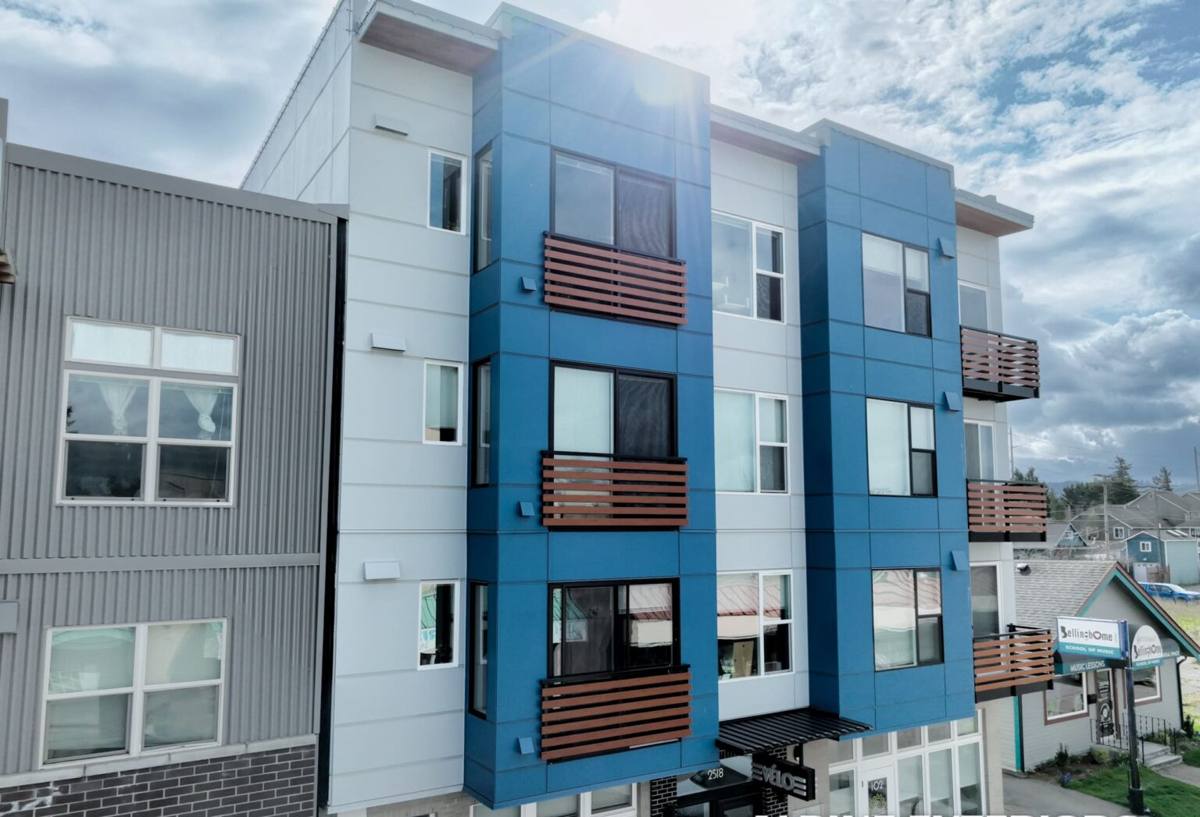
What the Local Climate Actually Does to a Roof
Salt Air
Homes closer to Bellingham Bay are exposed to a low but steady level of salt in the air, carried inland on marine wind. Salt exposure accelerates corrosion on exposed metal — flashing, fasteners, vents, gutters — well before the shingles or panels themselves would otherwise need replacing. A roof that ignores this and uses standard-grade fasteners or bare metal flashing will show rust streaking and early flashing failure years ahead of schedule.
Driving Rain
Bellingham doesn't just get frequent rain — a good share of it arrives sideways, pushed by wind off the Strait and the bay. Driving rain finds every weak point in a roof's water-shedding path: undersized laps, poorly sealed valleys, flashing that relies on caulk instead of proper metal work, and vents that weren't detailed correctly. A roof that would perform fine in a calmer climate can leak in Bellingham simply because the water isn't falling straight down — it's being driven sideways and even slightly uphill under wind pressure.
Moss Season
Whatcom County's long, cool, damp stretch from fall through spring is exactly the environment moss needs to establish. Sunnyland's tree-covered lots make this worse — shaded roof sections stay damp longer after every rain, and organic debris (needles, leaves, seed litter) collects in valleys and against roof-wall intersections, giving moss and moisture a place to sit against the roofing material. Left unchecked, moss doesn't just look bad — it lifts shingle edges, holds water against the roof deck, and shortens the life of the roofing material significantly.
Signs a Sunnyland Home May Need a New Roof
- Shingles that are cupping, curling at the edges, or missing granules in patches
- Moss or dark streaking established across shaded sections, especially north-facing slopes
- Soft spots or sagging when walked on, which usually points to deck damage underneath
- Rust staining running down from flashing, vents, or valleys
- Daylight visible through the attic roof boards, or damp insulation after a storm
- Granules collecting in gutters in noticeably increasing amounts each year
- A roof that's 20+ years old and has never had a full tear-off, only patch repairs
What a Correct New Roof Installation Actually Involves
A roof is a system, not a single layer of material. Skipping or shortcutting any one component is usually where premature failures start, especially in a wet, wind-driven climate like this one.
Full Tear-Off and Deck Inspection
We remove the existing roofing down to the deck rather than layering over it. This lets us inspect the sheathing directly for rot, delamination, or soft spots — common on older Sunnyland homes where a prior roof trapped moisture for years without anyone knowing. Any damaged decking gets replaced before anything new goes down; installing new roofing over a compromised deck just guarantees an early repeat job.
Underlayment Built for Wind-Driven Rain
Given how often rain here arrives at an angle, we install synthetic underlayment with self-sealing membrane at the eaves, valleys, and any low-slope transitions — the areas most exposed to wind-driven water and ice-adjacent moisture backup during cold snaps.
Flashing That Won't Corrode
Around chimneys, skylights, roof-to-wall intersections, and valleys, we use corrosion-resistant metal flashing rather than relying on sealant alone. Given the salt air exposure closer to the bay, this is one of the details we don't shortcut — cheap or bare metal flashing is often the first thing to fail on a coastal-influenced roof, well before the field material does.
Ventilation That Matches the Attic
Proper intake and exhaust ventilation keeps the attic space at a stable temperature and moisture level, which does two things: it protects the new roof's warranty (most manufacturers require adequate ventilation), and it reduces the damp, static air conditions that moss and mildew both prefer. On tree-shaded homes especially, we treat attic ventilation as part of the moss-prevention plan, not an afterthought.
Fastening Rated for Wind Exposure
We fasten to match or exceed the wind-exposure requirements for this area rather than using minimum-code shortcuts — a roof that lifts a shingle course in a windstorm is a roof that starts leaking from that point forward.
Comparing Roofing Material Options for Sunnyland Homes
| Material | How It Handles This Climate | Maintenance Consideration |
|---|---|---|
| Architectural asphalt shingles | Solid all-around performer when installed with proper underlayment and flashing; widely available in styles that fit the neighborhood's older housing stock | Benefits from periodic moss treatment on shaded slopes; moderate lifespan |
| Standing seam metal | Excellent water-shedding on driving rain and steep pitches; sheds moss and debris better due to smooth surface | Requires coated, corrosion-resistant panels and fasteners near the bay; higher upfront cost |
| Synthetic/composite shingles | Resists moisture absorption well; good option for heavily shaded, moss-prone roof sections | Product-specific installation detailing matters — not all crews are trained on it |
| Cedar shake | Traditional look that suits older Sunnyland homes, but organic material under tree cover needs active upkeep to resist moss and rot | Highest maintenance commitment in this climate; we walk homeowners through this trade-off honestly before recommending it |
We don't push one material as universally "best" — the right choice depends on how shaded the lot is, the roof's pitch, the home's age and structure, and how much ongoing maintenance the homeowner wants to take on. A steep, heavily shaded roof and a sunnier, low-pitch roof two streets apart can have genuinely different right answers.
Our Installation Process
- On-site inspection. We assess the current roof, attic ventilation, decking condition, and any moss or moisture patterns specific to the lot's shade and exposure.
- Written estimate. A clear scope covering material, tear-off, deck repair allowance, flashing, ventilation, and cleanup — no vague line items.
- Scheduling around weather. Given how much of the year sees rain, we plan tear-off and dry-in around forecast windows so the deck isn't left exposed longer than necessary.
- Tear-off and deck repair. Old roofing removed, deck inspected and repaired as needed before anything new is installed.
- Underlayment, flashing, and field installation. Installed in the sequence and overlap pattern that actually sheds wind-driven rain, not just straight-down rain.
- Ventilation check. Intake and exhaust venting confirmed or upgraded to match the attic space.
- Final walkthrough and cleanup. Site cleared of debris and fasteners, gutters checked, and the finished roof reviewed with the homeowner before we consider the job done.
Why Local Experience in Sunnyland Matters
A roofing crew that regularly works Bellingham and greater Whatcom County knows which details actually matter here versus which ones are just generic best practice from a drier climate. That shows up in small but consequential decisions: which flashing grade to spec so close to the bay, how much valley protection to add under mature tree cover, which slopes on a given lot will need moss-resistant detailing versus which get enough sun to stay clear on their own, and how to schedule a tear-off so the deck isn't sitting exposed during an unplanned rain window. A crew unfamiliar with the area is more likely to apply a one-size-fits-all approach that looks fine on paper but underperforms once the wet season sets in.
We also know this neighborhood's housing stock — the mix of older mid-century homes and newer builds means roof decking, pitch, and existing ventilation setups vary more than in a newer subdivision built all at once. Walking in with that context helps us give an accurate estimate the first time, rather than discovering surprises mid-project.
What Affects the Cost of a New Roof
| Factor | Why It Matters |
|---|---|
| Roof size and pitch | More material and more complex access directly increase labor time |
| Deck condition | Rot or soft decking found during tear-off adds repair cost not visible from the ground |
| Material choice | Asphalt, metal, synthetic, and cedar carry different material and labor costs |
| Roof complexity | Valleys, dormers, skylights, and chimneys each add flashing detail and time |
| Tree cover and access | Heavily shaded, hard-to-access roofs may need extra debris protection and cleanup during the project |
| Ventilation upgrades | Bringing older attic ventilation up to a proper intake/exhaust balance adds scope but protects the new roof |
Because of this range of variables, we don't quote roof replacement over the phone with a flat number — an accurate estimate needs eyes on the actual roof, attic, and lot conditions.
Maintaining a New Roof Through Whatcom County's Wet Season
A correctly installed roof still benefits from basic seasonal attention, especially under tree cover. Keeping gutters and valleys clear of needle and leaf debris before the fall rains set in prevents standing water from sitting against the roofing material. On heavily shaded slopes, periodic moss inspection catches growth while it's still surface-level, before it has a chance to lift shingle edges or hold moisture against the deck. We're glad to walk homeowners through a simple seasonal checklist specific to their roof's exposure after installation, so the investment holds up as intended.
If you're in Sunnyland and dealing with an aging roof, active leaks, or visible moss buildup, we're happy to take a look and give you a straightforward, no-pressure estimate — just fill out the form below to get started.