 Bellingham Siding
 Building Decks for Edgemoor's Waterfront Conditions
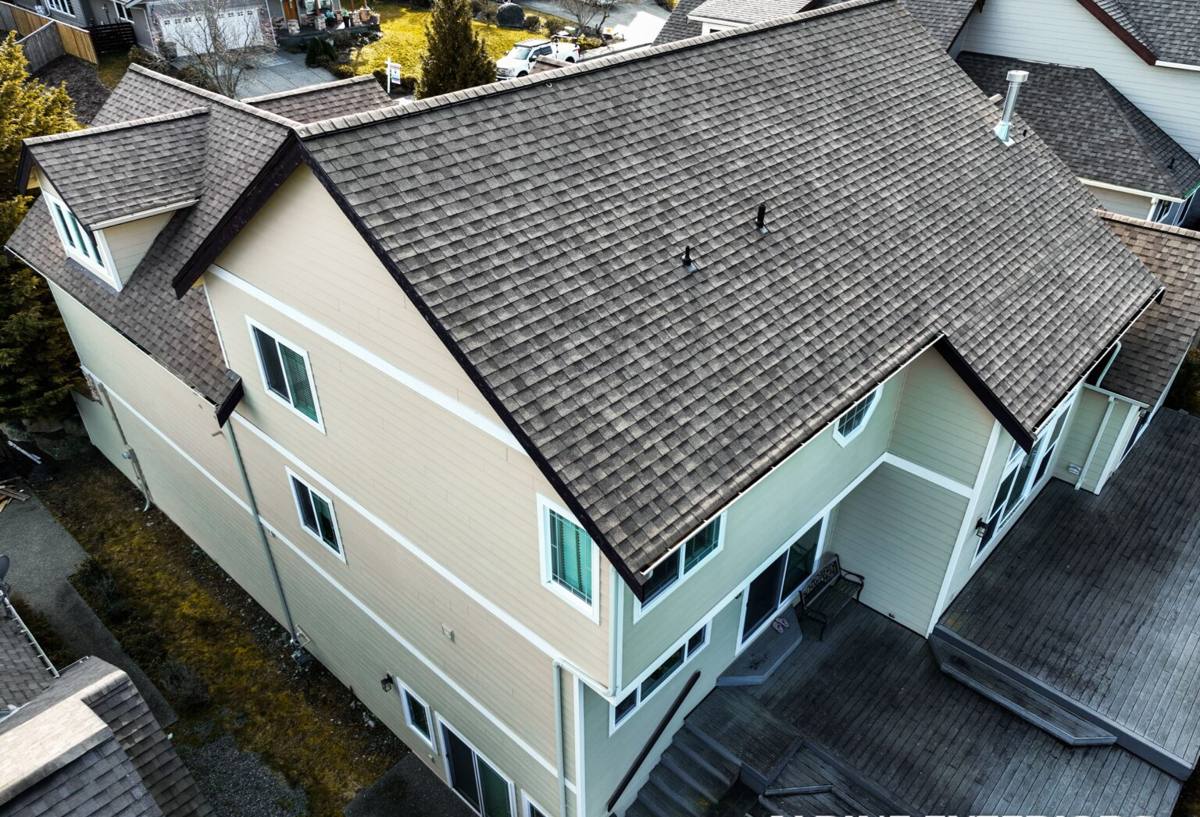
Edgemoor sits along Bellingham Bay, and that location cuts both ways. The views are part of why people love living there, but the same exposure that makes the setting beautiful also makes it hard on an outdoor deck. Salt-laden air off the bay accelerates corrosion on anything metal. Driving rain off the water finds every gap in flashing and fastening. And the tree cover common to Edgemoor's bluff lots keeps things shaded and damp long after the rain stops, which means moss and algae get a real foothold on any surface that doesn't drain and dry quickly. A deck built without those three factors in mind — salt, rain, and moss — will show problems within a few seasons, not a few decades.
Composite decking, installed correctly, holds up to this environment far better than most alternatives. But "installed correctly" is doing a lot of work in that sentence, and that's really what this page is about: what a correct composite deck build looks like for an Edgemoor property, and why the details matter more here than they would somewhere inland and dry.
Why Composite Makes Sense for This Location
Wood decking isn't a bad product everywhere, but in a marine, shaded, high-moisture setting like Edgemoor it asks a lot of a homeowner: annual cleaning, periodic sealing, and constant vigilance for soft spots where rot has started underneath the finish. Composite boards don't absorb water the way wood does, which matters directly here — less moisture uptake means less swelling, less warping, and far less surface for moss and algae to colonize in the first place.
| Factor | Wood Decking | Composite Decking |
|---|---|---|
| Moisture absorption | High — swells, cups, and checks over time | Low — resists swelling with proper board spacing |
| Moss and algae growth | Takes hold quickly in shaded, damp areas | Slower growth; capped boards resist staining |
| Maintenance | Annual sealing/staining recommended | Periodic washing, no sealing required |
| Fastener corrosion risk | Standard fasteners can stain and weaken wood | Stainless or coated hardware still required near the bay |
| Typical lifespan here | 10-15 years with regular upkeep | 25-30+ years with correct installation |
That said, composite is not maintenance-free, and it's not immune to bad installation. The material's advantages only show up if the framing underneath, the fasteners holding it down, and the drainage beneath the deck are all suited to a wet marine climate.
What a Correct Installation Involves Here
Framing and Joist Spacing
Composite boards are heavier than wood and behave differently under load and temperature swings. Manufacturers specify joist spacing for a reason — usually tighter than what's traditional for wood decking — and skipping that spec is one of the most common shortcuts we see on decks that later develop bounce or board sag. In a wet climate, we also treat the joists and framing themselves with the same seriousness as the decking, since that structure has to survive Bellingham's rain season for decades even though it's hidden from view.
Ledger Attachment and Flashing
Where a deck attaches to the house is the single most common source of long-term water damage on any deck, composite or wood. Correct flashing at the ledger board — installed so water sheds away from the house framing rather than behind the decking — is non-negotiable on a property that gets the rainfall Edgemoor does. This is also the detail that's invisible once the deck is finished, which is exactly why it's the detail most often cut corners on by crews that don't know the area.
Fasteners and Hardware
Standard hardware corrodes faster near the bay than it would a few miles inland. We use stainless steel or marine-grade coated fasteners and connectors on waterfront and near-waterfront builds, because a rusted joist hanger or a fastener head that bleeds rust through a composite board is a problem that shows up in year two or three, not year twenty.
Drainage and Airflow Underneath
A deck that traps moisture underneath — because of poor grading, no gap for airflow, or vegetation growing up against the framing — stays damp for days after a storm even if the surface material itself sheds water fine. That trapped dampness is what feeds moss and mildew and eventually attacks fasteners and framing from below. Grading the ground under the deck, keeping a ventilation gap, and clearing vegetation back from the structure are basic steps that get skipped more often than they should.
Choosing the Right Composite Board for This Exposure
Not all composite decking is built the same, and the differences matter more in a marine climate than a dry one.
- Capped composite — has a protective outer shell bonded to the core; the shell is what actually resists moisture, staining, and moss growth, so this is what we recommend for shaded, damp Edgemoor lots.
- Uncapped composite — costs less up front but the exposed core can absorb more moisture over time, which shows up as fading, mold susceptibility, or surface fuzzing sooner than capped boards.
- Board color and grain pattern — darker boards run hotter in direct sun but hide moss discoloration better in shaded spots; lighter boards stay cooler but show algae staining faster if the deck doesn't get much sun exposure.
- Hidden vs. face-fastened systems — hidden fastener clips give a cleaner look and eliminate exposed screw heads that can corrode or stain over time, which we generally prefer on waterfront builds.
We'll walk through these trade-offs with you based on how much sun and tree cover your specific spot gets, since two lots a block apart in Edgemoor can have very different exposure.
Our Process, Start to Finish
- On-site assessment — we look at existing structure (if replacing a deck), grading, drainage, sun/shade exposure, and proximity to the water, since all of that changes the spec.
- Design and material selection — board type, color, railing, and fastening system chosen for your specific site conditions, not a one-size-fits-all package.
- Permitting — we handle the permit process where required, based on deck size, height, and attachment to the home.
- Demolition and framing — old decking removed, framing inspected and repaired or rebuilt to spec, ledger flashing corrected if it's inadequate.
- Decking installation — boards installed to manufacturer spacing and fastening requirements, with attention to expansion gaps and drainage.
- Final walkthrough — we go over care and cleaning with you before we consider the job done.
Maintaining a Composite Deck in a Salt-Air, Moss-Prone Climate
Composite decking cuts down maintenance significantly compared to wood, but "low-maintenance" isn't "no-maintenance," especially this close to the water and under tree cover. A little seasonal attention keeps a composite deck looking and performing the way it should for its full service life.
- Rinse or sweep debris (leaves, needles, seed pods) off the deck regularly — trapped organic matter is what feeds moss and mildew, not the board material itself.
- Wash the deck surface with a soft-bristle brush and mild soap a couple of times a year, more often in heavily shaded sections.
- Check railing posts and fastener points annually for any early corrosion staining, especially on the side of the house facing the bay.
- Keep gutters and downspouts clear so runoff isn't dumping extra water directly onto or under the deck.
- Trim back vegetation encroaching on the deck's edges or underside to keep airflow and sunlight reaching those areas.
Cost Factors for an Edgemoor Composite Deck
Every deck project is different, but the factors that move the price up or down are consistent. We give a firm, itemized quote after seeing the site — general ranges below are for planning purposes only.
| Cost Factor | Why It Matters |
|---|---|
| Deck size and shape | Larger and more complex footprints (multi-level, angled) increase material and labor |
| Height above grade | Elevated decks common on bluff lots need engineered railing and support |
| Board and railing selection | Capped composite and premium railing systems cost more than base-grade options |
| Existing structure condition | Rot or inadequate framing found during demo adds repair scope |
| Site access | Waterfront and bluff lots can have tighter access, affecting labor time |
Why Hire a Crew That Already Works Edgemoor
A contractor who's worked this neighborhood before already knows that a deck spec that works fine in a dry inland suburb needs upgrades here — different hardware, different attention to flashing, different expectations around moss and shade. That's not a sales pitch, it's just what happens when a crew has seen what actually fails on waterfront and bluff-lot decks around Bellingham Bay versus what holds up for decades. Hiring locally also means someone who understands Whatcom County's permitting norms and can flag site-specific issues — drainage patterns, tree root systems, slope — before they turn into change orders mid-project.
If you're considering a new composite deck or replacing an aging one in Edgemoor, we're happy to come take a look and give you a straightforward, no-pressure estimate. There's no obligation — just an honest read on what your specific property needs and what it would take to do the job right. Use the form below to get started.