 Bellingham Siding
 James Hardie Siding for Edgemoor Homes
Edgemoor sits close to Bellingham Bay, tucked under a heavy canopy of mature conifers and big-leaf maples on hillside streets that stay shaded for a good part of the year. That combination — waterfront exposure on one side, dense tree cover on the other — puts a specific kind of stress on exterior siding that a lot of inland Bellingham neighborhoods simply don't deal with in the same way. Homes here need siding that can shrug off salt-tinged air coming off the water, take a beating from wind-driven rain without letting moisture behind the wall, and resist moss and mildew on shaded elevations that may not see direct sun for months at a stretch.
We install James Hardie fiber cement siding exclusively, and on a neighborhood like Edgemoor, that's not a marketing line — it's the reason the material holds up here in ways that alternatives struggle to match once a house has been through a few wet Whatcom County winters.
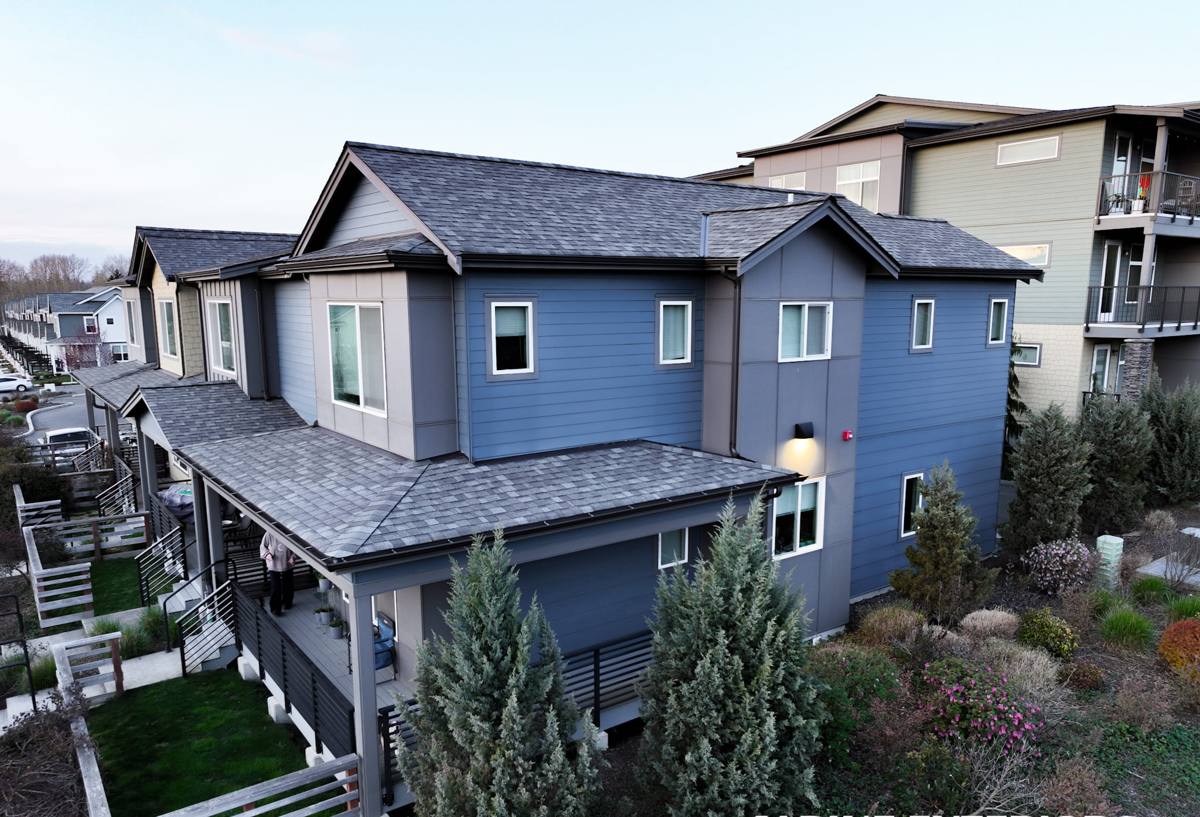
What Edgemoor's Climate Asks of a Siding System
Salt Air Off the Bay
Homes within sight of the water pick up a steady trace of salt in the air, and that salt exposure is hard on anything metal or porous over time — fasteners, trim, and any siding material that relies on a field-applied finish to keep moisture out. It doesn't take a house right on the water to feel this; Edgemoor's proximity to the bay means most of the neighborhood gets some degree of salt exposure, just in varying amounts depending on elevation and how exposed a given wall is to the water side.
Wind-Driven Rain
Rain in this part of Bellingham rarely falls straight down. Wind coming off the bay pushes it sideways into walls, which means horizontal lap seams, corner details, and anywhere siding meets a window or door take on more water pressure than a calm-air rain event would produce. Siding that isn't installed with the right lap, gap, and flashing details can look fine for a season or two before that wind-driven moisture finds its way behind the surface.
Mature Tree Canopy and Extended Moss Season
Edgemoor's tree cover is part of what makes the neighborhood distinctive, but it also means a lot of exterior walls stay shaded and slow to dry for much of the year. Shaded, damp surfaces are exactly what moss and mildew need to take hold, and a siding material that stains, absorbs moisture, or holds organic growth against its surface is going to show it here faster than it would on a sun-exposed wall across town. Bellingham's moss season already runs long compared to drier parts of Washington; heavy tree cover extends it further on the walls it shades.
Why We Only Install James Hardie
Every siding material handles these three conditions — salt air, wind-driven rain, and extended shade and moisture — a little differently, and the differences show up over years, not on install day. That's the timeline that matters to a homeowner who plans to be in the house long enough to see how the material actually ages.
| Material | Behavior in Salt Air & Rain | Behavior in Shade & Moss | Maintenance Burden |
|---|---|---|---|
| James Hardie fiber cement | Non-combustible, dimensionally stable core; factory finish resists salt and moisture intrusion | Doesn't absorb moisture into the board itself; factory finish resists staining | Low — occasional rinse, no repainting cycle |
| Vinyl | Can warp or become brittle with temperature swings; seams are a moisture entry point | Moss and mildew sit on the surface and can be hard to fully clean off ridged panels | Low labor, but hidden moisture behind panels is hard to catch early |
| LP SmartSide (engineered wood) | More sensitive to moisture at cut edges, seams, and fastener holes | Wood-based substrate is more vulnerable to prolonged damp exposure | Moderate — edge sealing and inspection matter more over time |
| Cedar | Absorbs moisture readily without regular sealing or refinishing | Prone to moss growth and rot in shaded, damp conditions without upkeep | High — recurring sealing, staining, or repainting |
Vinyl, LP SmartSide, Cemplank, Allura, primed spruce, and cedar are all legitimate products, and plenty of contractors install them well. We made a professional decision to standardize on one material system rather than offer several, because on a neighborhood like Edgemoor — where salt exposure and shade both work against a siding wall at the same time — the trade-offs of the alternatives are trade-offs we're not willing to put on a homeowner's house and call it a good outcome.
What Makes James Hardie's System Work Here
James Hardie's fiber cement is engineered from cement, sand, and cellulose fiber, which makes it dimensionally stable in a way wood-based and vinyl products aren't — it doesn't swell, cup, or contract the way those materials can when they take on moisture or swing through temperature changes. That stability matters directly in a climate that alternates between soaking wet winters and drier summer stretches.
Hardie also builds region-specific product lines under its HZ5 engineering designation for climates like ours — the Pacific Northwest's combination of sustained moisture and moderate temperatures is a different engineering problem than a hot, dry climate, and the HZ5 line is built around that. On top of the substrate itself, Hardie's ColorPlus finish is baked on at the factory rather than applied on site, which means the color layer is more consistent and more resistant to fading and moisture intrusion than a field-painted finish depends on being. In practice, that means fewer places on the wall where a paint job — rather than the siding material itself — is the thing standing between the house and the weather.
Color and Style Considerations for Edgemoor
Edgemoor's mix of established character homes and newer construction under heavy tree cover means color choice matters both for curb appeal and for practical upkeep. Darker ColorPlus tones can show pollen and organic debris from overhanging trees more readily than mid-tones, while lighter colors show moss staining sooner if a wall stays shaded and damp. None of this rules out any color — it's just worth discussing during planning so the finish you pick is one you'll be happy maintaining given your specific lot's tree cover and sun exposure.
What a Correct Installation Actually Involves
The material is only half of what determines how a siding job performs over time. The installation details matter just as much, especially on a lot with the shade and moisture patterns common in Edgemoor:
- House wrap or weather-resistive barrier installed and properly lapped before any siding goes up
- A drainage plane or rainscreen gap behind the siding so moisture that gets past the surface can dry out instead of sitting against the sheathing
- Corrosion-resistant fasteners, correctly sized and spaced to Hardie's published specification for this climate zone
- Proper clearance between siding and grade, decks, and roof lines so water sheds away from the wall instead of wicking up into it
- Correctly flashed and lapped transitions at every window, door, and corner — the most common places a rushed install lets water in
- Field-cut edges primed before installation, since the factory finish doesn't extend to a cut edge on its own
- Extra attention to shaded, tree-covered elevations where slower drying times call for more conservative gapping and flashing
Skip any one of these on a shaded, salt-exposed lot and the wall can still look fine at handoff. The problems — trapped moisture, staining at seams, soft spots at the base of the wall — tend to surface a few wet seasons later, which is exactly why a rushed install is easy to get away with until it's the homeowner dealing with the consequences.
Our Process for an Edgemoor Project
Site Walkthrough
We start by walking the property and looking at each elevation individually — which walls face the bay and take wind-driven rain directly, which sit under heavy tree cover and stay damp longer, and whether the existing wall assembly shows any signs of moisture issues that need addressing before new siding goes on. Covering an existing problem with new siding just delays it, it doesn't solve it.
Planning Before Install Day
We work out fastening pattern, flashing details, and any wall-specific adjustments — extra drainage consideration on shaded sides, for instance — before crews start cutting material. Deciding these details on paper first keeps the crew from improvising decisions in the field, which is where corners tend to get cut on a rushed job.
Installation to Manufacturer Spec
Every fastener, gap, and flashing detail follows James Hardie's published installation requirements for this climate zone rather than a generic national standard. That's what keeps the manufacturer's warranty valid, and it's also simply what makes the wall perform the way it's designed to for decades.
Final Walkthrough
We walk the completed job with you, explain what little ongoing maintenance the material actually needs, and make sure you know what to look for if you ever want to check the wall yourself down the road.
Why Hire a Crew That Already Works Edgemoor
Edgemoor's combination of bay-side salt exposure and heavy tree shade isn't something every contractor in Whatcom County deals with regularly. A crew that's installed Hardie siding across this specific neighborhood through multiple wet seasons already has a feel for which elevations need extra drainage attention because of shade, how much clearance actually holds up against wind-driven rain off the bay, and where a rainscreen gap earns its keep rather than being an optional add-on. That kind of judgment doesn't show up on a spec sheet — it's the difference between a wall that still looks and performs the same in twenty years and one that's showing staining and soft spots by year five.
Cost Factors for Edgemoor Homes
James Hardie siding costs more up front than vinyl or unfinished wood alternatives, largely because of the material itself and the correct installation practices that go with it. A few things specific to Edgemoor properties tend to move the price on a given project:
| Factor | Why It Matters |
|---|---|
| Tree removal or trimming needs | Branches touching the house or blocking access can require attention before install |
| Existing wall condition | Moisture damage found during tear-off on a shaded wall needs repair before new siding goes up |
| Wall height and roofline complexity | Multi-story and steep-roof homes common on hillside lots add cuts and flashing detail |
| Access and site slope | Sloped, wooded lots can add setup time and equipment considerations |
| Trim and window detailing | More openings and architectural detail mean more flashing and finish work |
We'll walk your specific property and give you real numbers based on its actual condition and layout, rather than a rough estimate based on square footage alone — two Edgemoor homes with similar footprints can have very different costs depending on tree cover, wall condition, and access.
Planning Ahead of a Wet Season
If you're considering new siding, timing the project ahead of the wettest months gives the crew clean working conditions and gives freshly installed material a chance to weather in before the heaviest rain arrives. It's not a strict requirement — Hardie siding can be installed responsibly in most conditions — but on a shaded, water-adjacent lot, starting with dry walls and good drying time simplifies the whole job.
If you're weighing James Hardie siding for a home in Edgemoor, we're happy to walk the property, talk through what your specific walls and tree cover mean for the job, and give you a straightforward, no-pressure estimate. There's a form below — reach out and we'll set up a time to take a look.