 Bellingham Siding
 Deck Building in Birchwood: A Different Set of Problems Than Most Contractors Plan For
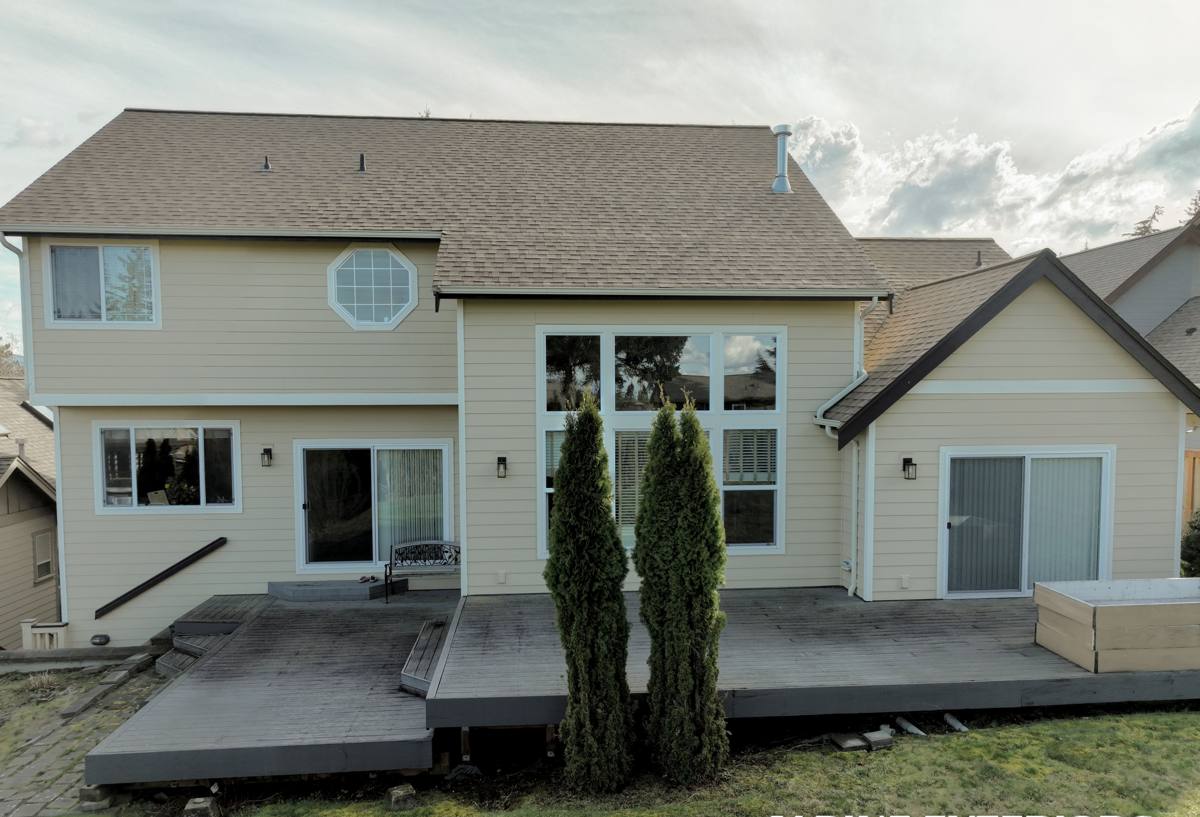
A deck in Birchwood doesn't fail the same way a deck fails in a dry climate. It doesn't usually crack from sun exposure or dry out and split. It fails quietly, from below and behind — a ledger board that's been wicking moisture for three winters, joist hangers rusting under a coat of surface paint, a walking surface that looks fine but has gone soft and green underneath. Bellingham's position on the bay means Birchwood homes deal with a mix of salt-tinged air, long stretches of driving rain, and a moss season that can run eight or nine months of the year. A deck built without that in mind will look good the day it's finished and start showing problems within a couple of winters.
This page is specifically about building decks for homes in Birchwood — not a generic rundown of deck options. The materials, fasteners, framing details, and maintenance schedule that make sense here are shaped directly by Whatcom County's weather, and we build every deck with that as the starting point, not an afterthought.
What Bellingham's Climate Actually Does to a Deck
Moisture that never fully clears
The bigger issue isn't any single storm — it's that wood surfaces in this area rarely get a long enough dry stretch to fully release moisture between rain events. Framing lumber, decking boards, and especially anything horizontal that collects standing water stays damp longer here than it would in most of the country. That extended dampness is what drives rot, not the rain itself.
Moss and organic growth
Moss needs shade, moisture, and time, and Birchwood's tree cover combined with our wet season gives it all three. Moss on a deck surface isn't just cosmetic — it holds water against the boards, and on horizontal wood surfaces it turns walking areas slick and dangerous well before it becomes an eyesore. Decks that don't get sun exposure or airflow underneath are especially prone to it.
Salt-influenced air
Homes closer to Bellingham Bay deal with airborne salt that accelerates corrosion on anything metal — fasteners, joist hangers, railing hardware, screws. Standard interior-grade or even basic exterior-rated hardware can start showing rust within a few seasons in this environment. This is one of the most common corners cut on decks built by contractors who don't regularly work this region.
Freeze-thaw cycling
Whatcom County doesn't get the deep, sustained freezes of the Midwest, but it does get repeated short freeze-thaw cycles through the winter. Water that gets into a crack, a fastener hole, or a poorly sealed board end expands and contracts repeatedly, which widens the damage over a few seasons instead of causing a single dramatic failure.
Choosing Decking Material for a Birchwood Home
There's no single "best" decking material — there's a best material for this climate, this budget, and how much upkeep a homeowner actually wants to do. Here's how the common options actually perform under Bellingham conditions:
| Material | Moisture/Moss Resistance | Maintenance | Typical Lifespan Here |
|---|---|---|---|
| Pressure-treated fir/hem-fir | Fair — needs sealing and airflow underneath | Annual cleaning, re-sealing every 2-3 years | 15-20 years with upkeep |
| Cedar | Good natural resistance, but surface still needs care | Regular cleaning, periodic oil/stain | 15-25 years with upkeep |
| Capped composite | Very good — resists moisture absorption and moss staining | Periodic washing, no sealing/staining | 25-30+ years |
| PVC decking | Excellent — fully synthetic, no wood fiber to absorb moisture | Occasional washing | 30+ years |
Composite and PVC cost more upfront, but in a climate like ours the maintenance savings and moss resistance often make them the more honest long-term choice. That said, plenty of Birchwood homeowners still prefer the look and feel of real wood, and a well-built cedar deck with a realistic maintenance routine holds up fine here — the key word is realistic. We'll walk through the actual trade-offs for your project rather than pushing one material by default.
The Structure Underneath Is Where Decks Actually Fail
Homeowners tend to focus on the decking boards because that's what they see, but the framing, footings, and connections underneath are what determine whether a deck lasts fifteen years or forty. In a wet climate, this is not the place to save money.
Footings and posts
Footings need to be sized and set below frost depth per code, with proper drainage so water doesn't pool against the concrete or post base. Post bases should hold the post above the concrete and slab surface, not embed wood directly into or against it — direct wood-to-concrete contact in a wet climate is a rot shortcut.
Ledger board attachment
The ledger board — where the deck attaches to the house — is the single most common source of hidden rot in this region. It has to be properly flashed so water sheds away from the house band board instead of running behind the ledger, and it needs the correct structural fasteners, not just deck screws, to carry the load safely.
Fasteners and hardware
Every screw, hanger, and bolt below the decking surface should be rated for exterior, corrosion-resistant use — stainless steel or heavy hot-dip galvanized, matched correctly to the wood treatment being used (some treated lumber chemically corrodes standard galvanized hardware faster). This is a small cost difference at build time and a major difference in how long the structure holds up.
Airflow underneath
Decks built low to the ground or against a slope with no ventilation underneath trap moisture and encourage rot and moss growth from below, where nobody looks until there's a problem. Grading, gaps, and skirting design all affect how well a deck breathes.
How We Build a Deck in Birchwood
- On-site assessment — we look at drainage, sun/shade exposure, grade, and how the deck will tie into the house before any material gets picked.
- Design and material selection — sizing, layout, and material chosen around how the space will actually be used and how much maintenance the homeowner wants long-term.
- Permit handling — we prepare and submit the paperwork required for the project rather than leaving that step to the homeowner.
- Footings and framing — footings set to code depth, structural framing built to span and load requirements, ledger flashed and fastened correctly.
- Decking, railing, and finish work — boards, railing systems, and any stairs installed with attention to fastening pattern and board spacing for drainage.
- Final walkthrough — we go over the finished deck and a realistic maintenance schedule so the homeowner knows what upkeep is actually needed and when.
Permits and Local Rules
Most new decks in Bellingham and unincorporated Whatcom County require a building permit once they exceed a certain height above grade or attach to the structure, and setback and lot coverage rules can affect where a deck can be placed. These requirements can vary by exact location and property, so we handle the permit review and submission as part of the project rather than asking homeowners to navigate it themselves. This also protects you at resale — an unpermitted deck attached to the house is a common flag in home inspections.
Maintaining a Deck Through a Whatcom County Winter
Even the best-built deck needs some seasonal attention in this climate. A simple, honest maintenance routine goes a long way toward avoiding early repairs:
- Clear leaves and debris from the deck surface and between boards regularly through fall — trapped organic matter holds moisture and feeds moss.
- Wash the surface at least once a year to remove algae and moss buildup before it gets a foothold.
- Check railings, stair connections, and any visible hardware annually for looseness or surface rust.
- Re-seal or re-stain wood decking on the schedule appropriate to the product — don't wait until it visibly needs it, since damage starts before it's visible.
- Keep gutters and downspouts near the deck clear so roof runoff isn't dumping extra water onto or under the structure.
- Trim back overhanging branches where practical to reduce shade and debris that encourage moss.
Why a Crew That Already Works in Birchwood Makes a Difference
A contractor who mostly builds in drier parts of the country — or even just outside this specific microclimate — can build a structurally sound-looking deck that still fails early here, simply because the hardware, flashing details, and material choices that work elsewhere aren't matched to Bellingham's moisture load. A crew that regularly works Birchwood and the surrounding Bellingham neighborhoods already knows which fastener grades hold up near the bay, how much ventilation a given lot's tree cover requires, and what the local permitting process actually expects. That local pattern-recognition is the difference between a deck that needs real repairs at year eight and one that's still solid at year twenty-five.
Get a Straight Answer for Your Property
Every lot in Birchwood handles sun, shade, drainage, and wind a little differently, so the right approach for your deck depends on your specific property, not a generic template. If you're planning a new deck or replacing one that's showing its age, we're happy to come take a look, walk you through material and design options honestly, and put together a free, no-pressure estimate using the form below.