 Bellingham Siding
 Siding Repair Built for Edgemoor's Bayside Conditions
Edgemoor sits close to the water, tucked among mature trees along Bellingham Bay, and that setting is exactly why siding here wears differently than it does a few miles inland. Salt-laden air moves off the bay and settles on exterior walls. Driving rain off Puget Sound hits west- and south-facing elevations hard during fall and winter storms. And the tree cover that makes the neighborhood so pleasant also means shade, damp air, and a moss and algae season that can run eight months or longer. Siding that isn't installed or repaired with those specific conditions in mind tends to fail early — and often fails quietly, behind the surface, before a homeowner ever sees a problem.
We repair siding in Edgemoor regularly, and we've learned to read the specific damage patterns this neighborhood produces. A repair job here isn't the same as a repair job in a dry, open subdivision on the other side of town. It calls for someone who understands moisture behavior in a marine climate, not just someone who can nail up a replacement board.
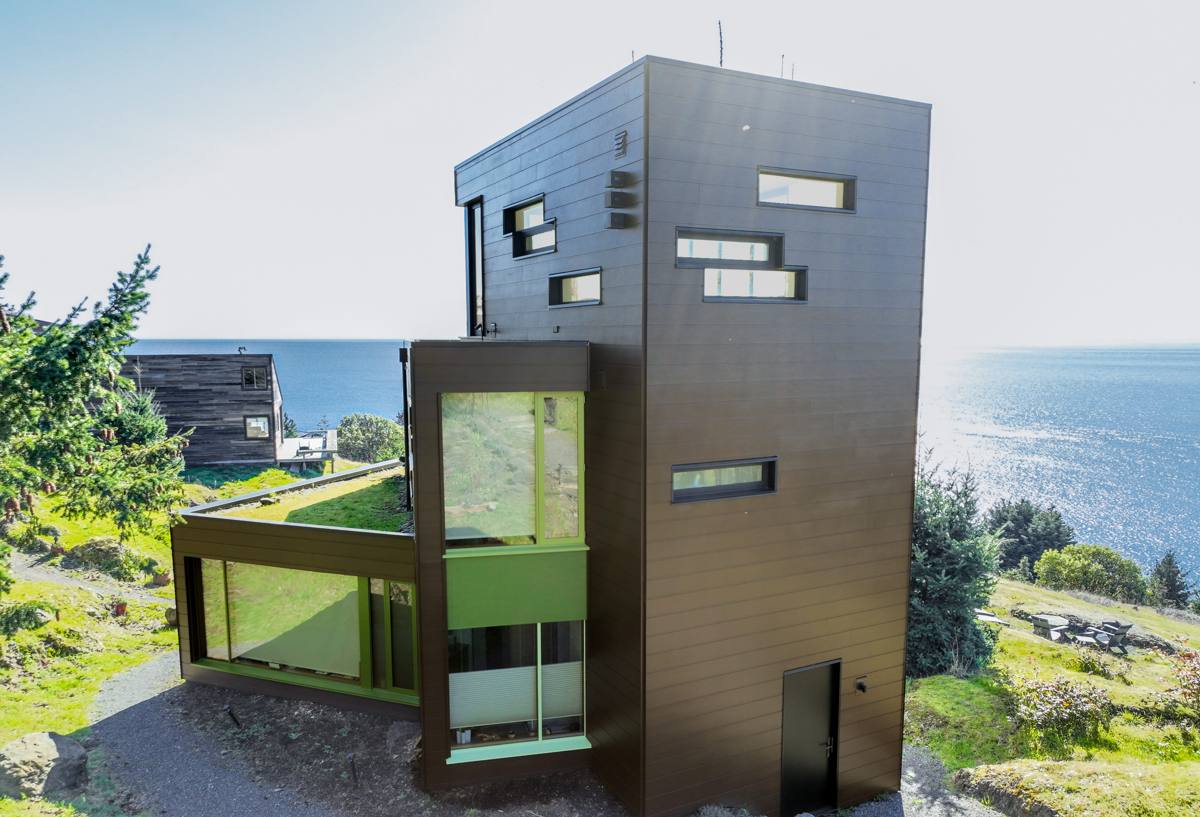
Common Siding Problems We See in Edgemoor
Most of the repair calls we get in this part of Bellingham fall into a handful of categories. Recognizing them early is the difference between a targeted repair and a much bigger, more expensive fix.
Moisture Intrusion Behind the Siding
This is the one that does the most damage and shows the least warning. Wind-driven rain finds its way behind poorly lapped siding, failed caulk joints, or old flashing around windows and trim. By the time you see staining, bubbling paint, or a soft spot on the wall, water has usually been getting in for a while. Sheathing and framing underneath can rot long before the siding face looks obviously bad.
Moss, Algae, and Persistent Staining
Shaded, damp walls — common under Edgemoor's tree canopy — grow moss and algae faster than siding in full sun. Beyond the cosmetic issue, moss holds moisture against the siding surface for extended periods, which accelerates rot in wood-based products and can degrade paint film and caulk over time.
Cracked, Warped, or Delaminating Boards
Older wood, engineered wood, and some fiber cement installations develop cracking or warping as they take on repeated wet-dry cycles. Once a board's surface is compromised, it absorbs water faster than a healthy panel, which speeds up the damage.
Failed Caulk and Open Joints
Caulk is a wear item, not a permanent seal. In a climate that sees this much rain, gaps at trim, corners, and butt joints open the door for water intrusion long before the siding itself is actually failing.
Nail Pops and Fastener Corrosion
Salt air accelerates corrosion on fasteners that aren't rated for coastal exposure. Popped or rusted nails leave small gaps that let water track behind the siding — a small problem that gets worse every winter it's ignored.
What a Correct Siding Repair Actually Involves
A repair that only addresses what's visible on the surface is a repair that will need to be redone. We treat every repair call as an investigation first, a fix second.
- Full-wall assessment, not just the damaged spot. Water travels. We check the full elevation, not just the board where the stain showed up.
- Moisture testing where rot is suspected. Visual inspection alone misses hidden damage — we check sheathing and framing condition before closing anything back up.
- Correct water management on reinstall. Proper lapping, flashing at windows and penetrations, and correctly installed weather-resistant barrier matter as much as the siding material itself.
- Matched materials and profile. A patch that doesn't match reveals more than a cosmetic mismatch — it often signals a shortcut was taken on the underlying prep.
- Fasteners rated for the exposure. Given the salt air in this area, corrosion-resistant fasteners aren't optional.
Repair or Replace? How We Make That Call
Not every damaged section needs full replacement, and not every repair is worth doing if the underlying material is on its way out. We walk homeowners through this honestly rather than defaulting to the bigger job.
| Situation | Usually a Repair | Usually Points to Replacement |
|---|---|---|
| Damage extent | Isolated to one or two sections or elevations | Recurring problems across multiple walls |
| Underlying sheathing | Dry, structurally sound | Soft, rotted, or water-stained over a wide area |
| Siding material condition | Otherwise stable, single failure point (caulk, flashing, one board) | Widespread warping, delamination, or age-related breakdown |
| Material type | Fiber cement in good general condition | Aging wood, LP-style engineered wood, or vinyl showing systemic wear |
| Root cause | Identifiable and fixable (bad caulk joint, missing flashing) | Chronic moisture exposure with no clear single source |
When the damage is contained and the wall behind it is sound, a properly executed repair can extend the life of your siding for years. When it isn't, patching over a bigger problem just delays a more expensive fix and hides it in the meantime.
Why We Repair and Rebuild Using James Hardie Fiber Cement
We install and repair with James Hardie fiber cement exclusively — we don't work in vinyl, LP SmartSide, primed spruce, or cedar. That standard applies to repair work too, and it's worth explaining why, especially for a climate like Bellingham's.
When we're called in to fix damage on non-fiber-cement siding, the honest answer is often that the repair will only hold for so long. Wood and engineered-wood products absorb moisture at the cut edges and any exposed grain, which is exactly where repairs happen. Vinyl can be patched but never matches color-for-color once it's UV-faded, and it doesn't offer the same protection against wind-driven rain at seams. In a neighborhood dealing with salt air, sustained damp shade, and heavy winter storms, we've found that repairs hold up longest — and look right longest — when they're done in fiber cement with a factory-applied ColorPlus finish, matched to Hardie's climate-engineered HZ product line for the Pacific Northwest.
That's not a sales pitch inserted into a repair conversation — it's the same reasoning that led us to standardize on Hardie for full installations: it doesn't rot, it resists moss and algae better than wood-based sidings, the finish is baked on rather than field-painted, and the color match on a patch or replaced section holds up over time instead of drifting.
Our Repair Process in Edgemoor
- On-site inspection. We look at the full elevation, not just the reported problem area, and check for hidden moisture.
- Honest diagnosis. We tell you what's actually happening — cosmetic, structural, or somewhere in between — and what it will take to fix it correctly.
- Written scope and estimate. No pressure, no vague verbal quote. You see exactly what's being repaired and why.
- Removal and inspection of sheathing. Any water-damaged framing or sheathing gets addressed before new siding goes back on — covering it up isn't a repair.
- Correct water management reinstall. Flashing, weather barrier, and lapping done to spec, not just "close enough."
- Matched fiber cement replacement. Profile and color matched as closely as the product line allows.
- Final walkthrough. We show you what was found and what was done before we consider the job finished.
Why a Crew That Already Works in Edgemoor Matters
Edgemoor's mix of mature landscaping, bay-facing exposure, and older housing stock means siding problems here don't look identical to problems elsewhere in Whatcom County. A crew that regularly works this specific pocket of Bellingham already knows which elevations take the worst weather, how shaded, tree-covered lots tend to hold moisture longer, and what kind of prior installation work is common in the neighborhood's older homes. That local pattern recognition shortens the diagnosis phase and reduces the chance of missing a related problem nearby. It also means less guesswork about how the house was likely built and flashed in the first place — useful information before pulling the first board.
Homeowner Checklist: Signs Your Edgemoor Home May Need Siding Repair
- Soft or spongy spots when you press on the siding
- Peeling or bubbling paint, especially on shaded or west-facing walls
- Visible moss or persistent green/black staining that keeps returning after cleaning
- Gaps or cracks in caulk joints around trim, windows, or corners
- Warped, cupped, or separating boards
- Popped nails or visible rust streaks below fasteners
- Musty smell or visible staining on interior walls near exterior siding
- Higher-than-expected heating bills, which can point to moisture-compromised insulation behind the siding
If any of these sound familiar, it's worth having someone take a real look rather than waiting for the problem to become obvious from the street.
Get a Straight Answer About Your Siding
If you're in Edgemoor and dealing with damaged, stained, or aging siding, we're glad to come take a look and give you an honest read on what's going on — repair, partial replacement, or otherwise. There's no cost and no pressure to a walkthrough and estimate; use the form below to get started.