 Bellingham Siding
 Why Silver Beach Siding Wears Differently
Silver Beach sits close enough to Bellingham Bay that the air itself becomes part of the maintenance equation. Salt-laden marine air, wind-driven rain off the water, and Whatcom County's long, damp shoulder seasons put a different kind of load on exterior siding than you'd see a few miles inland. Homes here don't just get wet — they stay wet longer, and the combination of moisture and airborne salt accelerates corrosion on fasteners, trim, and any siding material that isn't built to handle it.
That's the backdrop for every siding repair call we take in this neighborhood. A crack or gap that might sit harmless for years in a drier climate becomes an open door for water intrusion here within a single wet season. Repair work in Silver Beach isn't just cosmetic patching — it's damage control against an environment that actively works to get behind your siding.
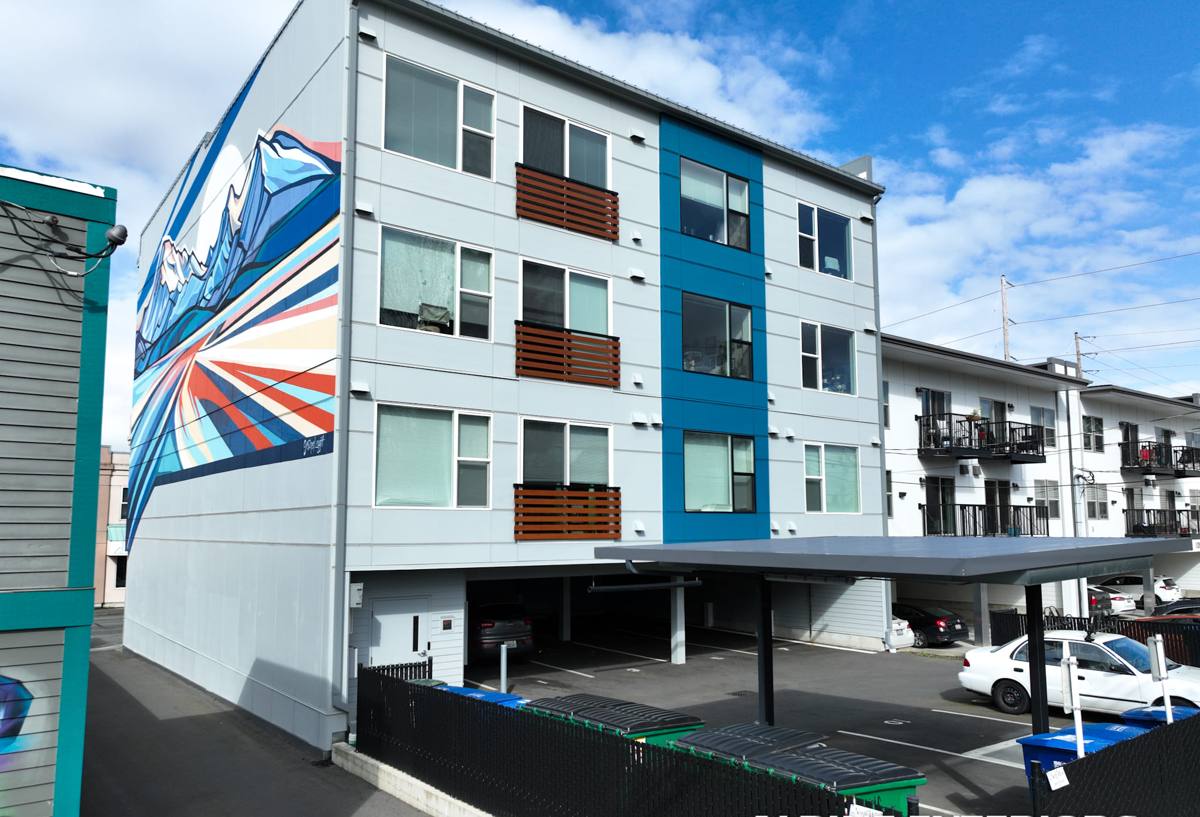
What Driving Rain and Moss Season Actually Do to Siding
Wind-Driven Rain
Rain that comes in sideways off the bay doesn't behave like rain falling straight down. It gets pushed up under laps, into seams, and around poorly sealed penetrations — vents, hose bibs, light fixtures, anywhere the siding was cut and not properly flashed. Over time, that repeated pressure finds every weak point in a siding system, which is why the same house can look fine from the street while quietly rotting or delaminating behind the surface.
Moss and Sustained Moisture
Whatcom County's moss season isn't a cosmetic issue — it's a moisture-retention issue. Moss and algae growth on siding, trim, and roof-adjacent areas hold water against the surface far longer than bare siding would on its own. On wood-based products especially, that sustained dampness is what triggers rot, not any single storm. By the time moss is visibly established, moisture has usually been sitting against that surface for one or more full seasons already.
Salt Air and Fasteners
Proximity to the water also means faster corrosion of exposed or under-sized fasteners, flashing, and trim metal. Rust streaks bleeding through paint, popped nail heads, and corroded trim screws are common early warning signs on Silver Beach homes well before the siding panels themselves show obvious damage.
Signs Your Siding Needs Repair, Not Just a Wash
Pressure washing and repainting can make tired siding look better for a season, but they don't fix an underlying moisture problem — and in some cases they push water further into places it shouldn't be. Here's what actually signals a repair is needed:
- Soft, spongy, or crumbling spots when pressed, especially near the bottom courses or around trim
- Visible gaps, cracks, or separation at seams, corners, and butt joints
- Paint that's bubbling, peeling, or failing in patches rather than evenly across the wall
- Dark staining or streaking below joints, windows, or roof intersections
- Persistent moss or algae growth that returns quickly after cleaning
- Warping, bowing, or visible waviness in individual boards or panels
- Rust bleed at fastener heads or corroded trim pieces
- A musty smell or soft drywall on the interior side of an exterior wall
Any one of these on its own might be minor. Several appearing together, or appearing in the same general area of the house, usually points to a moisture path that's been active for a while.
What a Correct Siding Repair Actually Involves
A repair that just replaces the visible damaged piece and stops there is a temporary fix at best. Done correctly, siding repair in a climate like this starts before the new material ever goes up.
Diagnose Before You Patch
We remove enough surrounding material to see what's actually happening behind the siding — the house wrap or building paper, the sheathing, the framing where accessible. Damaged siding is often a symptom, not the root cause. If the water-resistive barrier is torn, if flashing was never installed or was installed backward, or if sheathing underneath is already soft, replacing the surface piece alone just buys a little time before the same spot fails again.
Address the Water Path, Not Just the Symptom
Proper repair means correcting flashing details at windows, doors, and penetrations; restoring or replacing damaged house wrap; and making sure kick-out flashing and drip edges are actually directing water away from the wall assembly rather than into it. This is the part of the job that doesn't show once the siding goes back on — and it's the part that determines whether the repair lasts five years or fifteen.
Match Material and Method
Repairs also need to account for how the existing siding was installed. Lap siding, panel siding, and trim boards each have their own fastening patterns, clearances, and joint treatments. A repair that doesn't respect the original installation method — or that uses the wrong caulk, the wrong fastener, or the wrong gap spacing — creates a new weak point right next to the one you just fixed.
Common Siding Problems by Material, Given This Climate
Not every siding material handles salt air, driving rain, and moss season the same way. Here's how the materials we commonly see on Silver Beach homes tend to hold up, and what that means for repair work.
| Material | Common Failure Mode Here | Repair Consideration |
|---|---|---|
| Untreated or primed wood siding | Rot at butt joints, bottom courses, and behind moss growth | Often more sheathing damage than visible; repairs frequently expand once opened up |
| Vinyl siding | Cracking in cold snaps, warping near heat sources, wind lift in storms | Panels are brittle with age and can be hard to color-match when patching |
| LP SmartSide (engineered wood) | Edge swelling and delamination where moisture reaches cut ends or seams | Swelling is often progressive; localized patches can mask a wider moisture issue |
| James Hardie fiber cement | Failures usually trace to installation error, not the material itself | Non-combustible and dimensionally stable; repairs focus on flashing/install details |
This is also why we're candid with homeowners about what we will and won't install. We only install James Hardie fiber cement siding — not vinyl, not LP SmartSide, not primed spruce or cedar. That's a company standard, not a knock on every homeowner who has one of those products on their house today; we still repair what's there when repair is the right call. But when a wall needs more than a repair, we're not going to put back a product that we know struggles with this exact climate.
Repair vs. Replacement: How We Actually Decide
Homeowners understandably want a straight answer on whether their siding can be repaired or needs to come off entirely. The honest answer depends on scope, not on the age of the house alone.
Repair Usually Makes Sense When:
Damage is isolated to one wall or a handful of boards, the sheathing underneath tests dry and sound, and the rest of the siding system is performing as expected. In these cases, a targeted repair — done with correct flashing and moisture management — is a legitimate, cost-effective fix.
Replacement Becomes the Better Call When:
Moisture damage shows up in multiple areas, the water-resistive barrier is compromised across a broad section, the siding is a product with known long-term maintenance issues in this climate, or repair costs start approaching a meaningful share of full replacement cost. At that point, patching becomes spending money to delay a decision rather than solve a problem.
We'll tell you plainly which situation you're in. If a repair is the right, honest answer for your house, that's what we'll recommend and price.
Our Repair Process
- On-site inspection of the damaged area and a broader check of similarly exposed walls, since moisture problems rarely stay perfectly contained
- Removal of affected siding and trim to expose the water-resistive barrier and sheathing
- Moisture testing and visual assessment of the sheathing and framing before any new material goes up
- Repair or replacement of damaged house wrap, flashing, and sheathing as needed
- Installation of new siding material matched appropriately to the surrounding wall, with correct fastening, clearances, and sealant details
- Final review of the repaired area against the rest of the wall for both performance and appearance
We document what we find before we close the wall back up, so you know exactly what was wrong and what was done about it — not just that a new piece of siding is now hanging on the house.
Why We Repair (and Rebuild) With James Hardie Fiber Cement
When a repair calls for new siding material — whether it's a small patch or a full wall section — we use James Hardie fiber cement, and only James Hardie. It's non-combustible, dimensionally stable in the wet-dry cycling that defines a Whatcom County winter, and it comes with a factory-applied ColorPlus finish that holds up to UV and moisture without the repeated repainting that field-finished materials need. Hardie's HZ product lines are engineered specifically for climates with sustained moisture exposure, which describes Silver Beach about as well as any place in the region.
We're not going to pretend every product on the market is equally suited to this environment, because they're not. We made the call to standardize on one system so that every repair and every install we do is backed by the same performance expectations and the same transferable warranty, rather than juggling the maintenance quirks of five different products.
Why Local Experience on Silver Beach Actually Matters
A siding repair crew that hasn't worked this specific stretch of Bellingham doesn't know, until they open up the wall, how far moisture typically travels here, which wall orientations take the worst of the wind-driven rain, or how aggressively moss reestablishes itself after cleaning. That's knowledge you only get from repeated jobs in the same conditions.
It also matters for something more practical: sequencing work around the weather. Repairs that expose sheathing need dry windows to do the job right, and a crew that knows this neighborhood's weather patterns plans around that instead of leaving a wall open and hoping the forecast holds.
After the Repair: What Keeps It Lasting
A correctly done repair still benefits from basic upkeep, especially in a climate that doesn't give siding much of a break. A quick seasonal check goes a long way:
- Rinse off moss and algae buildup before it re-establishes, rather than after it's thick
- Keep gutters clear so overflow isn't running down the wall face
- Trim back vegetation that's shading siding and keeping it damp
- Check caulking at trim joints and penetrations once a year for cracking or shrinkage
- Watch for new staining or soft spots near the repaired area or anywhere else on the house
None of this is complicated, but skipping it is exactly how a small, contained repair area turns into a bigger one a few years later.
If you're seeing warning signs on your Silver Beach home — soft spots, staining, cracked or gapping siding, moss that won't quit — we're happy to take a look and give you a straight, no-pressure assessment of what's going on and what it would take to fix it right. Fill out the form below for a free estimate.