 Bellingham Siding
 Why Cordata Roofs Wear the Way They Do
Cordata sits in north Bellingham, close enough to the Salish Sea to catch salt-laden marine air and far enough inland to still sit under heavy tree cover from the surrounding Whatcom County landscape. That combination is tougher on a roof than either factor alone. Salt air accelerates corrosion on exposed metal fasteners, flashing, and vents. Driving rain off the water finds every weak seam, nail pop, and undersized flashing detail. And the shaded, moisture-holding conditions around mature trees and landscaping in this part of Bellingham mean moss and algae get a long growing season with almost no dry stretch to slow them down.
None of that means a roof here fails faster than it should — it means a roof here has to be built and maintained correctly from day one, because there's no forgiving climate to cover for shortcuts. A roof that would coast for years in a dry inland climate can show real trouble in eight to twelve years in Cordata if it was installed with the wrong underlayment, poor ventilation, or minimal flashing work.
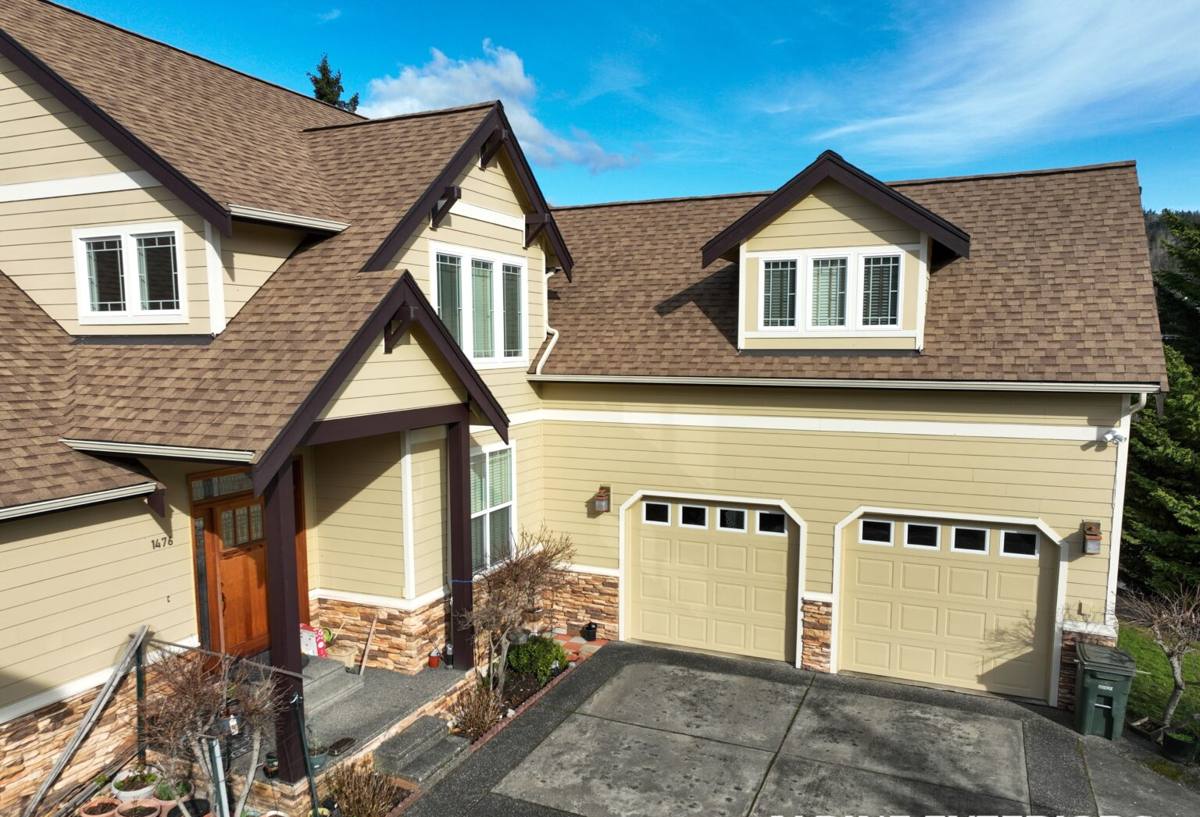
Signs a Cordata Roof Needs Replacement, Not Just Repair
A lot of roofing problems in this climate look like isolated leaks but are actually signs the whole system is wearing out. Before assuming a patch will solve it, look for these patterns:
- Granule loss showing up in gutters or at the base of downspouts, especially after a heavy rain
- Shingles that are cupping, curling at the edges, or visibly thinner than surrounding shingles
- Moss established in thick mats rather than a light surface film — thin moss can be managed, thick moss is often already lifting shingle edges
- Dark streaking that keeps returning within weeks of cleaning
- Soft spots in the decking felt underfoot, or daylight visible through the attic roof boards
- Multiple separate leak repairs in the same season in different spots on the roof
- A roof that's already had one layer of shingles installed over the original — a second tear-off is usually the more honest fix
If you're only seeing one or two of these, a repair may genuinely be the right call. If you're seeing several at once, that's usually the roof telling you it's at the end of its practical service life rather than the start of a repair list.
What a Correct Roof Replacement Actually Involves
Full Tear-Off, Not a Cover-Over
In a climate this wet, installing new shingles over old ones traps moisture between layers and hides decking problems until they're expensive. A proper replacement means stripping down to the roof deck, so every board can be inspected and any water-damaged or delaminated sections replaced before anything new goes down.
Underlayment That Matches the Exposure
Underlayment is doing more work here than in drier regions. Synthetic underlayment across the full roof, combined with ice-and-water shield at eaves, valleys, and around every penetration, gives the roof a second line of defense when wind-driven rain gets under the shingle course — which it will, eventually, in a place that sees this much sideways weather off the water.
Ventilation That Actually Balances
Intake at the eaves and exhaust at the ridge need to work as a matched system. Under-ventilated attics in this climate trap moisture, which shortens shingle life from underneath and feeds the same mold and rot issues homeowners are already fighting from the outside via moss and algae. A replacement is the right time to correct ventilation that was never balanced properly the first time.
Flashing Done as Custom Work, Not an Afterthought
Chimneys, skylights, dormers, and roof-to-wall transitions are where the overwhelming majority of leaks originate — not in the open field of shingles. Flashing should be formed and fitted to each specific detail, not pulled from a one-size roll and caulked into place. Caulk is a maintenance item; correctly formed flashing is a permanent one.
Fasteners and Metal Rated for Salt Exposure
Given the marine air common to this part of Whatcom County, corrosion-resistant fasteners and flashing metals hold up meaningfully longer than standard-grade hardware. It costs a little more up front and pays for itself by not rusting through in a decade.
Comparing Roofing Materials for a Cordata Home
| Material | Typical Lifespan Here | Moss/Algae Resistance | Notes for This Climate |
|---|---|---|---|
| Standard 3-tab asphalt | 15–20 years | Low unless treated | Lowest upfront cost, least margin for a wet, shaded lot |
| Architectural (dimensional) asphalt | 25–30 years | Moderate; better with algae-resistant granules | Best balance of cost and durability for most Cordata homes |
| Algae-resistant (AR) shingles | 25–30 years | High | Copper/zinc granules slow algae streaking; worth it under tree cover |
| Standing seam metal | 40–50+ years | Very high | Sheds moss and debris well; higher upfront cost, fewer seams for wind-driven rain to exploit |
| Cedar shake | 20–30 years with upkeep | Low without regular treatment | Needs consistent maintenance in this moisture level to avoid rot |
For most homes in this neighborhood, algae-resistant architectural shingles offer the best combination of upfront cost and low-maintenance performance. Metal roofing is a strong option for homeowners planning to stay long-term and wanting to largely opt out of the moss conversation altogether.
How Our Process Works
- On-site assessment. We walk the roof and the attic, not just look from the ground, and check decking condition, ventilation, flashing details, and moss/moisture patterns specific to your property's sun and tree exposure.
- Written proposal. You get a clear scope covering materials, underlayment, ventilation plan, and flashing approach — no vague "and other work as needed" language.
- Material delivery and protection. Landscaping, siding, and gutters get protected before tear-off starts.
- Full tear-off and deck inspection. Old roofing comes off completely; any compromised decking is identified and replaced before dry-in.
- Underlayment, flashing, and ventilation installed. This is the stage that determines how the roof performs in year eight, not just year one.
- New roofing installed to manufacturer spec, which matters for keeping the material warranty intact.
- Site cleanup, including magnetic sweep for stray nails around the house and driveway.
- Final walkthrough so you can see the finished work and ask questions before we consider the job done.
What Affects the Cost of a Roof Replacement Here
| Factor | Why It Matters in Cordata |
|---|---|
| Roof size and pitch | Steeper pitches take longer and carry higher labor and safety requirements |
| Decking condition | Wet-climate homes more often need partial decking replacement, found only after tear-off |
| Material choice | Standard architectural shingles vs. algae-resistant vs. metal have a wide cost spread |
| Number of penetrations | Chimneys, skylights, and vents each require custom flashing work |
| Ventilation upgrades | Correcting an unbalanced attic system adds scope but prevents underside deterioration |
| Access and tree clearance | Mature trees common on Cordata lots can add setup and protection time |
We'll always give you honest broad ranges once we've actually seen the roof — anyone quoting a firm number over the phone without an on-site look isn't giving you a real estimate.
Moss, Tree Cover, and Ongoing Maintenance
North Bellingham's mix of established landscaping and nearby wooded areas means most Cordata roofs deal with organic debris and shade for a good part of the year. A new roof buys you time, but it doesn't remove the underlying conditions. A few habits keep a new roof performing closer to its full lifespan:
- Clear needles and leaf debris from valleys and behind chimneys a couple of times a year, especially going into the wet season
- Keep gutters flowing freely — backed-up water at the eaves is one of the more common causes of early rot in this climate
- Have moss treated gently (low-pressure application, not power-washing) before it establishes into thick mats
- Trim back branches that keep a section of roof shaded and damp longer than the rest
Why Hiring a Crew That Already Works This Neighborhood Matters
A crew that regularly works Cordata and the rest of Bellingham already knows which details tend to fail first in this specific climate — where driving rain finds gaps, which flashing details need extra attention under heavy tree cover, and how to sequence a tear-off around our wet-season weather windows instead of getting caught mid-project by a system rolling in off the water. That local pattern recognition is the difference between a roof that's technically installed to code and one that's actually built for what this part of Whatcom County throws at it year after year.
Questions Worth Asking Before You Hire
- Will you do a full tear-off and deck inspection, or install over the existing layer?
- What underlayment and ice-and-water shield coverage is included, and where specifically?
- How will you balance intake and exhaust ventilation, not just replace the ridge vent?
- Is flashing custom-formed for my chimney, skylights, and roof-to-wall details?
- What's covered under the material warranty versus your workmanship warranty, and for how long?
- How do you handle weather delays mid-project during our wet season?
If you're weighing repair versus replacement, or just want an honest look at where your current roof stands, we're happy to come take a look. The estimate is free, there's no pressure attached to it, and you'll walk away with a clear picture of your options — use the form below to get started.