 Bellingham Siding
 Windows in Edgemoor Face a Different Kind of Wear
Edgemoor sits close enough to the water that homes here take on a specific combination of stress most inland Bellingham neighborhoods don't deal with in the same way. Salt-laden air off Bellingham Bay works its way into metal components year-round. Driving rain off Puget Sound pushes water sideways into places builders assumed would only ever see water falling straight down. And Whatcom County's long, wet moss season keeps window sills, tracks, and exterior trim damp for months at a stretch. None of that is dramatic on its own, but stacked together over ten or twenty years, it's exactly the kind of slow, patient wear that eats window seals, corrodes hardware, and rots sills from the inside out before a homeowner ever notices from the curb.
We install windows across Whatcom County, but we treat Edgemoor jobs with an awareness of this specific exposure. A window that performs fine in a sheltered inland yard can fail years early here if it wasn't selected, flashed, and sealed with this microclimate in mind.
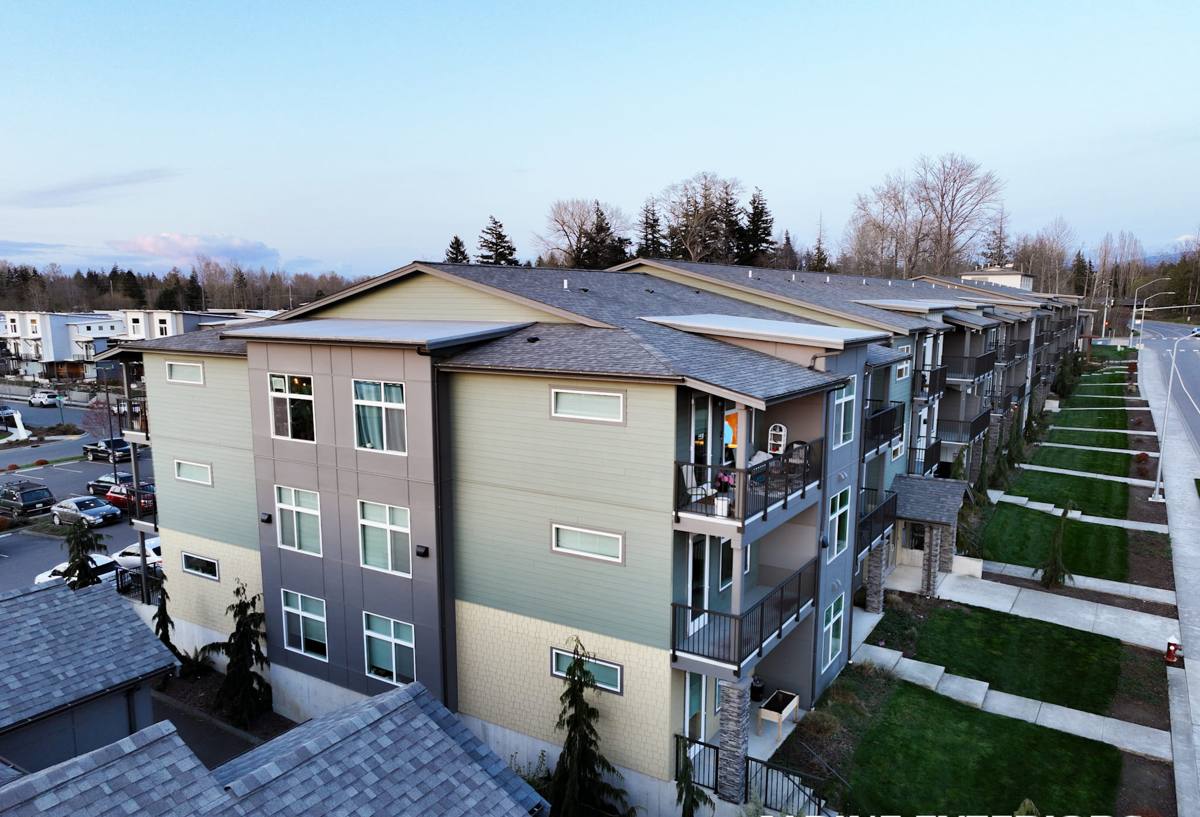
What Salt Air, Rain, and Moss Actually Do to a Window
Salt Air and Hardware
Cheaper window hardware — hinges, cranks, locks, and screws — is often plated steel or basic aluminum that wasn't designed for a marine-influenced environment. Salt in the air accelerates corrosion on these parts even when the window itself looks fine. Once hardware starts to pit or seize, a window stops sealing tightly, and that's when air and moisture start finding their way in around the sash.
Driving Rain and Water Intrusion
Wind off the water doesn't just rain down on a window — it pushes rain sideways and upward into gaps that would never see water in a calmer inland setting. This is almost entirely about installation quality: flashing details, sill pan design, and how the window integrates with the surrounding siding and weather-resistive barrier. A well-built window installed without proper flashing will still leak in these conditions. A modest window installed correctly, with attention to how water is meant to shed and drain, will hold up far better.
Moss Season and Sill Rot
Whatcom County's wet season stretches long, and shaded, north-facing walls in Edgemoor often stay damp for weeks without a real drying window in between. Moss and organic debris that collect on sills and in track channels hold moisture against wood and vinyl components. Over time this leads to soft sills, staining, and — on older wood-frame windows — actual structural rot at the bottom corners, which is usually where we find the worst damage during a replacement.
Signs It's Time to Replace, Not Repair
- Sills that feel soft, spongy, or show dark staining when pressed
- Cranks, locks, or hinges that are stiff, seized, or visibly corroded
- Condensation forming between panes on double- or triple-glazed units
- Drafts you can feel near the frame even with the window fully latched
- Visible daylight or gaps between the sash and frame
- Wood trim around the window that's soft, cracked, or peeling repeatedly despite repainting
- Moss or persistent green growth building up in the track or sill corners
What a Correct Window Replacement Actually Involves
A window replacement isn't just swapping an old sash for a new one. Done right, it's a sequence of steps where each one protects the next, and skipping any of them is usually what leads to a callback five years later.
- Remove the old unit carefully and inspect the rough opening for hidden rot, especially at the sill and lower corners — this is where Edgemoor homes most often surprise us.
- Repair any damaged framing before the new window goes in. Installing a new window over compromised wood just hides the problem for a while.
- Install a proper sill pan that directs any water that gets past the window back outside, rather than letting it pool against the framing.
- Flash the opening correctly, integrating the window with the weather-resistive barrier so water sheds down and over each layer, not behind it.
- Set the window plumb, level, and square, then shim and fasten according to the manufacturer's installation instructions — this affects both operation and long-term seal integrity.
- Insulate the gap between the frame and rough opening without overpacking, which can bow the frame and cause operational issues.
- Seal and trim the exterior with materials suited to the exposure, paying particular attention to the bottom corners where driving rain concentrates.
Every one of these steps matters more in a marine-exposed neighborhood like Edgemoor than it does in a sheltered inland lot. A flashing detail that would be forgiving elsewhere in Whatcom County can be the difference between a dry wall cavity and a slow leak here.
Choosing Window Materials for This Exposure
There's no single "best" window material for every home — it depends on the home's style, budget, and how exposed a particular wall is. Here's how the common options actually perform under Edgemoor's conditions.
| Material | How It Handles Salt Air & Moisture | Maintenance | Typical Fit |
|---|---|---|---|
| Vinyl | Doesn't corrode; performs consistently in salt air | Low — occasional cleaning | Most homes, best value |
| Fiberglass | Very stable, resists warping and corrosion well | Low | Higher-exposure walls, larger openings |
| Aluminum-clad wood | Good if cladding and flashing are done right; interior wood still needs protection from condensation | Moderate | Homes wanting a wood interior look with exterior durability |
| Solid wood | Most vulnerable to this specific climate without diligent upkeep | High — regular painting/sealing required | Historic or character homes where owners accept the maintenance tradeoff |
We're upfront with Edgemoor homeowners about this: solid wood windows can look great, but on a wall that takes direct salt air and driving rain, they demand a maintenance commitment that vinyl or fiberglass simply doesn't. That's not a knock on wood as a material — it's a matter of matching the product to the exposure and being honest about the upkeep involved.
Our Process for Edgemoor Window Replacement Projects
1. On-Site Assessment
We start by looking at each window in context — which walls take the worst of the weather off the bay, where moss and moisture have been sitting longest, and what condition the framing is actually in behind the trim. This tells us which windows are cosmetic replacements and which ones involve hidden repair work.
2. Straightforward Written Estimate
You get a clear breakdown of what's being replaced, what materials are being used, and what the labor involves — no vague line items. If we find rot or damage that changes the scope once we open things up, we tell you before we proceed, not after the invoice.
3. Careful Removal and Prep
Old windows come out carefully to protect interior and exterior finishes. Any rough opening issues get addressed before a new window ever goes in.
4. Installation to Manufacturer Spec
We follow manufacturer installation instructions closely, because that's what keeps warranties valid and performance consistent — cutting corners here is where most premature failures come from.
5. Final Walkthrough
We check operation, seal, and exterior finish work with you before calling the job done.
Why Local Experience in Edgemoor Matters
A crew that's worked in Edgemoor specifically has already seen how this neighborhood's exposure plays out on real homes — which walls take the worst of the weather, how moss builds up differently on shaded versus sun-exposed sills, and where driving rain tends to find weak flashing. That's not something you get from a manufacturer spec sheet. It comes from doing the work here, repeatedly, and paying attention to what holds up and what doesn't.
It also means we're not guessing at appropriate materials for the exposure — we're specifying based on what actually performs in this part of Whatcom County, not just what's easiest to install.
What to Expect for Cost
Window replacement pricing depends on the number of windows, size, material, and how much rough opening repair is needed once the old units come out. As a broad range, homeowners in this area typically see per-window costs from the low thousands into the mid-thousands depending on material and complexity, with whole-house projects scaling accordingly. The only way to get a number that actually reflects your home is a walkthrough — we won't quote sight unseen, because hidden rot or framing issues change the scope more often than not on homes with this level of exposure.
Ready to Talk Through Your Windows?
If your windows are drafty, hard to operate, or showing the kind of wear that's common on Edgemoor homes near the water, we're happy to take a look. Reach out for a free, no-pressure estimate using the form below — we'll walk your home, tell you honestly what we see, and give you a clear picture of your options.