 Bellingham Siding
 Deck Replacement Built for Edgemoor's Conditions
Edgemoor sits close to the water, on bluffs and wooded lots overlooking Bellingham Bay, and that setting is exactly what wears a deck out faster than almost anywhere else in Whatcom County. Salt-tinged air off the bay accelerates corrosion on fasteners and hardware. Tree cover keeps many lots shaded and damp long after a storm has passed, which is ideal for moss and algae growth on decking boards, stair treads, and railings. Add the Pacific Northwest's long, wet moss season, and you have a combination that quietly breaks down framing, connections, and surfaces even when a deck still looks serviceable from a distance.
A deck replacement done right in this neighborhood isn't just about swapping old boards for new ones. It's about addressing the specific ways salt air, driving rain, and moss attack a structure over time, and building back something that will actually hold up to another decade or two of Bellingham weather.
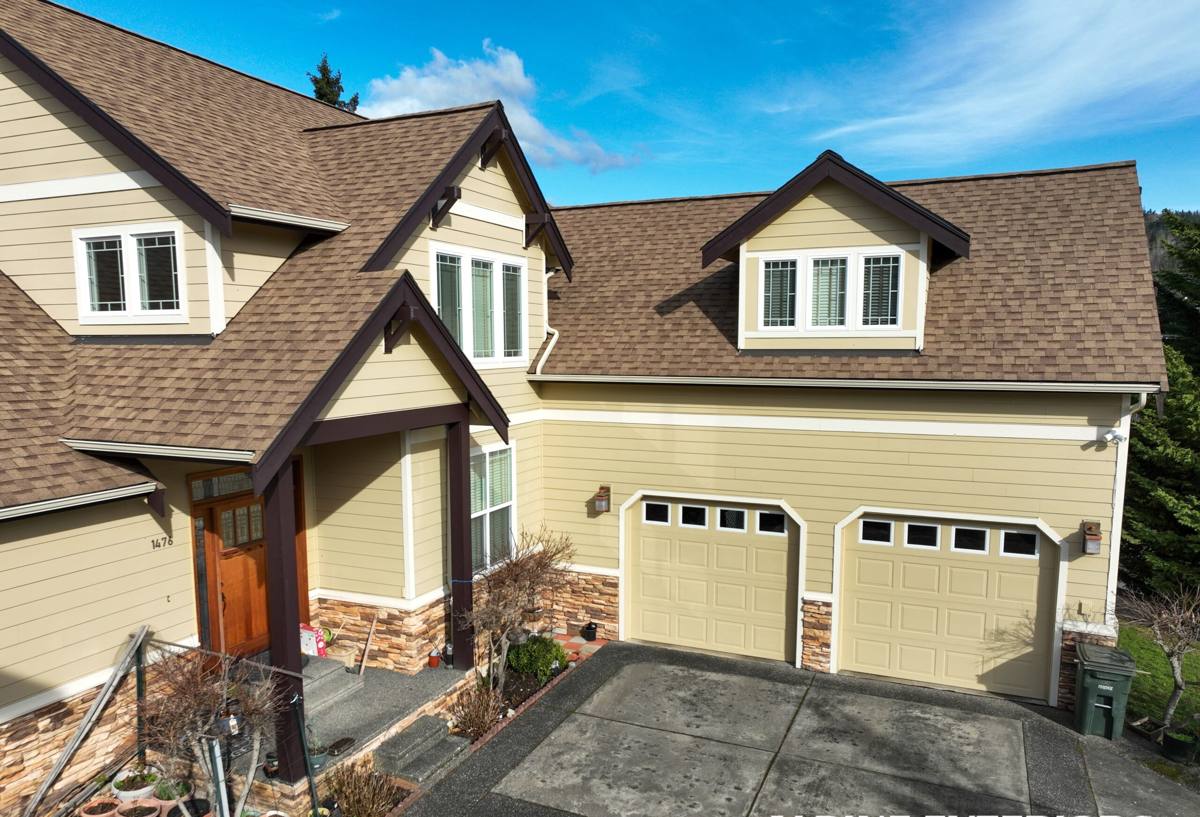
Signs Your Edgemoor Deck Needs Replacing, Not Just Repair
Homeowners often ask whether a deck can be patched instead of replaced. Sometimes it can. But once a deck reaches a certain point, repairs become a way of spending money without solving the underlying problem. Here's what tells us a full replacement makes more sense than another round of board swaps:
- Soft, spongy, or spring-back decking boards, especially near the house or in shaded corners
- Visible rot or dark staining at the ledger board where the deck attaches to the house
- Rust streaks bleeding from fasteners, joist hangers, or structural screws
- Wobble or movement in the railing posts when you push on them
- Persistent moss or black-green growth that returns within weeks of cleaning
- Gaps opening between boards or boards cupping and twisting despite regular maintenance
- A deck older than 15-20 years that has never had the substructure inspected
Any one of these on its own might be a repair. Two or three together, especially involving the framing or ledger connection, usually means the structure has been compromised long enough that patching the surface won't fix what's underneath.
Why Framing Failures Are Easy to Miss
The part of a deck that fails first in this climate is rarely the part homeowners look at. Decking boards get walked on and get attention. Joists, beams, and the ledger connection sit underneath, out of sight, and can be losing structural integrity for years before a board ever feels soft. Moisture that gets trapped between decking and framing, or that wicks into end grain at cut boards, does its damage quietly. That's one reason we always inspect the substructure before quoting a replacement, rather than assuming the frame is fine because the surface still looks okay.
What a Correct Deck Replacement Involves
A deck replacement is a structural project, not a cosmetic one, even though the finished decking is what everyone sees. Doing it correctly in a coastal, moss-prone area like Edgemoor means paying attention to several things that a rushed job tends to skip:
Ledger and Flashing
The ledger board, where the deck ties into the house, is the single most common source of water intrusion and structural failure on a deck. Proper flashing at this connection sheds water away from the house framing instead of letting it collect against it. This is also one of the most frequently done wrong spots on decks we've replaced in this area, and it's not something that shows up on a casual inspection.
Framing and Fasteners
Given the salt air near the bay, hardware matters more here than it does further inland. Structural connectors, joist hangers, and fasteners rated for corrosion resistance cost more up front but are the difference between a frame that lasts and one that starts rusting from the inside within a few seasons.
Drainage and Airflow
Standing water and trapped moisture are what feed moss and rot. Correct joist spacing, proper slope away from the house, and gaps that let air move under and between boards all reduce how much moisture sits on the deck after our long wet stretches.
Footings
On sloped or wooded lots, which describes a lot of Edgemoor, footings need to be sized and set for the actual soil and drainage conditions on that specific property, not just built to a generic minimum.
Choosing Decking Material for Salt Air and Moss
Material choice matters more here than in a dry inland yard. Every option has real tradeoffs, and the right one depends on how much maintenance a homeowner actually wants to do versus how much they want to spend up front.
| Material | How It Handles Moss and Damp Shade | Maintenance | Typical Lifespan |
|---|---|---|---|
| Pressure-treated wood | Prone to moss and algae in shaded, damp spots without regular cleaning | Annual cleaning and periodic sealing | 10-15 years |
| Cedar | Naturally more rot-resistant but still needs care in constant shade | Regular cleaning, occasional oil or sealant | 15-20 years |
| Composite decking | Resists rot well; can still grow surface algae in deep shade if not cleaned | Occasional washing, no sealing | 20-30 years |
| PVC/capped composite | Best moisture and mold resistance of common options | Low; occasional washing | 25-30+ years |
We don't push one material as the only right answer. A wood deck under mature trees near the bay will need a real maintenance commitment to stay ahead of moss. A composite or capped board reduces that burden significantly but costs more upfront and still needs periodic washing, since algae will grow on any surface that stays damp and shaded long enough. Framing lumber, hardware, and fasteners matter as much as the decking material itself, and we're upfront about that instead of letting the surface material be the whole conversation.
Our Deck Replacement Process
Here's how a typical Edgemoor deck replacement runs with our crew, start to finish:
- On-site assessment — we inspect the existing deck, including the ledger connection and framing where accessible, not just the surface boards
- Honest scope discussion — we tell you what's actually failing, what can be reused if anything, and what has to go
- Material and design decisions — decking material, railing style, and layout, weighed against your budget and how much upkeep you want long-term
- Permitting — we handle the permit application and inspections required for the project
- Demolition — full removal of the old deck down to what's being reused, if anything, with debris hauled off-site
- Framing and structural work — new or repaired footings, joists, ledger flashing, and hardware sized for coastal exposure
- Decking, stairs, and railing installation — built to code, with attention to drainage and airflow underneath
- Final walkthrough — we go over the finished deck with you and answer maintenance questions before we consider the job done
Permits and Whatcom County Requirements
Most deck replacements, especially anything involving new framing, footings, or a deck attached to the house at a certain height above grade, require a permit and inspection through the local building department. This isn't optional paperwork to skip — it protects you when you sell the house, and it's what makes sure the framing and ledger connection were actually inspected by someone other than the crew that built it. We handle the permit process as part of the job rather than leaving it for the homeowner to sort out, and we build to the code requirements that apply in Whatcom County, not a generic national minimum.
Cost Factors for Deck Replacement
Every deck replacement is priced around the specifics of that property, but the same handful of factors drive cost up or down on most projects we quote in this area:
| Factor | Why It Matters |
|---|---|
| Deck size and layout | More square footage and multiple levels or stairs increase material and labor |
| Decking material | Composite and PVC boards cost more upfront than wood but reduce long-term maintenance |
| Framing condition | Rotted joists, beams, or footings found during demo add scope beyond the surface replacement |
| Site access and slope | Bluff lots and wooded, sloped yards can complicate footing work and material staging |
| Railing style and code requirements | Height, spacing, and material choices affect both cost and code compliance |
| Ledger and flashing work | Correcting a poorly flashed original connection adds labor but prevents repeat water damage |
We give straightforward pricing based on what we actually find during the assessment, not a number pulled from a generic per-square-foot estimate that ignores your specific lot and structure.
Maintaining a New Deck Through Moss Season
A new deck still needs upkeep in this climate, even a low-maintenance material. A few habits go a long way toward protecting the investment:
- Sweep debris and leaves off the deck regularly, especially under tree cover, so organic matter doesn't sit and hold moisture
- Wash the surface at least once or twice a year to remove algae and moss buildup before it takes hold
- Keep gutters and downspouts near the deck clear so runoff isn't draining directly onto or under it
- Check railings and stair connections annually for movement or loosening hardware
- For wood decks, plan on resealing on the schedule appropriate to the product, don't wait until it's visibly gray and dry
- Trim back overhanging branches where practical to reduce shade and speed drying after rain
None of this is complicated, but skipping it is how a well-built deck ends up needing early repairs anyway. We walk every homeowner through a maintenance plan specific to the material and layout of their new deck before we leave the job.
Why a Crew That Already Works Edgemoor Matters
Deck replacement in a bay-adjacent, wooded neighborhood like Edgemoor isn't the same project as a deck replacement on a flat, sunny lot inland. A crew that hasn't worked this kind of site before can miss the details that actually matter here: corrosion-resistant hardware for salt air exposure, drainage and airflow design that accounts for near-constant shade, footing work suited to sloped or wooded ground, and flashing detail that holds up through a genuinely long wet season. We've built and replaced decks across Bellingham and Whatcom County long enough to know which shortcuts show up as problems in year two instead of year twenty, and we build to avoid them the first time.
If your deck is showing its age, or you're just not sure whether it needs a repair or a full replacement, we're happy to take a look and give you a straight answer. Reach out for a free, no-pressure estimate using the form below.