 Bellingham Siding
 Why Lynden Roofs Take a Different Kind of Beating
Lynden sits in one of the wetter corners of Whatcom County, close enough to Bellingham Bay and the Sound that salt-laden air still reaches inland on a west wind. Add long stretches of driving rain through fall and winter, and a moss season that can run nearly eight months out of the year, and you end up with roofs that age differently here than they would somewhere drier and warmer. It isn't one dramatic storm that wears a roof out — it's the slow, steady combination of moisture, organic growth, and salt exposure working on the same square footage year after year.
That steady exposure is why roof repair in Lynden isn't just "patch the leak and move on." A repair done without understanding how local weather actually attacks a roof tends to fail again within a season or two. A repair done right accounts for where water is really coming from, what the moss and algae have already done underneath the surface, and how fasteners and flashing hold up against damp, salty air over time.
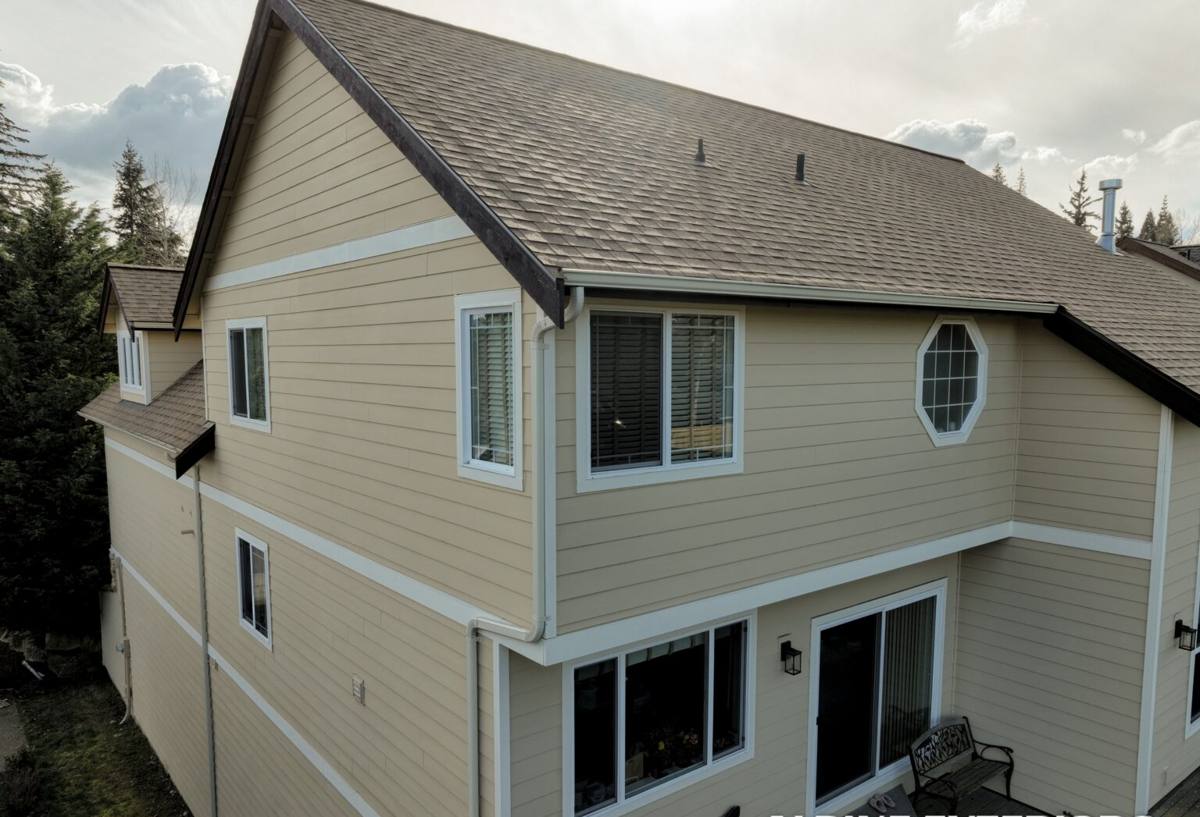
Common Roof Repair Issues We See on Lynden Homes
Most of the repair calls we get in this area fall into a fairly predictable set of problems. Recognizing them early is the difference between a straightforward repair and a much bigger project.
- Moss colonies established in ridge lines, valleys, and north-facing slopes that hold shade and moisture longest
- Curled, cracked, or granule-bare shingles from repeated wet-dry and freeze-thaw cycling
- Failed or corroding flashing around chimneys, skylights, and roof vents, often the real source of a "mystery" ceiling stain
- Clogged valleys and gutters that back water up under the shingle edge instead of letting it run off
- Nail pops and lifted fasteners as wood sheathing swells and shrinks with seasonal moisture
- Wind-lifted or torn shingle tabs along exposed roof edges and gable ends
Any one of these can look minor from the ground. Underneath, moisture has usually been getting into the deck or underlayment for longer than the visible damage suggests.
What a Correct Roof Repair Actually Involves
Tracing the Real Leak Path
Water rarely enters a roof where it shows up on a ceiling. It can travel along a rafter or across sheathing for several feet before finding a gap in the drywall or insulation to drip through. A repair that only addresses the visible stain, without finding and correcting the actual entry point, is a repair that comes back. Our approach starts with identifying the true path — checking flashing, fastener penetrations, valleys, and shingle laps upslope from the interior damage — before any material gets replaced.
Matching Materials the Right Way
Shingles fade and weather over time, so a patch using brand-new material next to a ten-year-old roof will stand out and, more importantly, may not shed water the same way if the profile or weight doesn't match. We match shingle type, exposure, and fastening pattern to what's already on the roof whenever possible, and we're upfront when an exact match isn't available so you can decide how much that matters to you.
Our Roof Repair Process in Lynden
- On-site inspection of the affected area and a walk of the full roof, since one visible problem often has related issues nearby
- A written scope of work and estimate before anything is touched, so there are no surprises mid-repair
- Scheduling that accounts for weather — asphalt and moisture-sensitive materials need a reasonably dry window to seal correctly
- The repair itself, including any flashing, underlayment, or decking work the leak actually requires
- Site cleanup, including a magnetic sweep for stray nails and staples in the yard and driveway
- A follow-up conversation so you know exactly what was done and what to watch for going forward
Repair or Replace? How We Help You Decide
Not every roof problem in Lynden needs a full replacement, and not every leak can be permanently solved with a patch. We tell homeowners honestly which category their roof falls into, based on the actual condition we find rather than an assumption.
| What We Find | Usually Points to Repair | Usually Points to Replacement |
|---|---|---|
| Leak source | Isolated to one flashing point, vent, or valley | Multiple, unrelated leak points across the roof |
| Shingle condition | Localized cracking or granule loss | Widespread curling and bare spots roof-wide |
| Roof age | Well within expected lifespan for the material | At or past the material's typical service life |
| Moss damage | Surface growth with sound shingles underneath | Root penetration has lifted or broken shingles |
| Decking condition | Sheathing is sound once flashing is corrected | Soft, delaminated, or rotted decking found on inspection |
When the honest answer is "this roof needs replacing," we'll say so and explain why. When it's a genuine repair, we don't upsell you into more roof than you need.
Moss, Algae, and Roof Longevity in a Wet County
Given how many months of the year Whatcom County stays damp, moss and algae growth is close to unavoidable on shaded or north-facing roof slopes. The risk isn't cosmetic — moss holds moisture against the shingle surface and its rhizoids work their way under shingle tabs and edges, lifting them enough for wind-driven rain to get underneath. Left alone through a full moss season, that lifting can turn a cleaning job into a repair job.
We remove moss with low-pressure methods and the correct cleaning approach for the material involved — pressure washing asphalt shingles strips granules and shortens their life, so we avoid it. Zinc or copper strips installed near the ridge can help slow regrowth between cleanings by releasing metal ions that inhibit moss as rain washes over them. Timing matters too: clearing moss and debris in the fall, before the heaviest rains set in, and again after the wettest stretch of winter, keeps valleys and gutters doing their job when it counts most.
Repairing Different Roof Types Around Lynden
Most homes in this area are roofed in asphalt composition shingle, and that's where the majority of our repair work happens — matching shingle courses, resetting flashing, and correcting nailing patterns that have failed over time. Metal roofing shows up on a fair number of homes and outbuildings too; repairs there usually center on fastener backout, seam sealant that's aged out, or panel damage rather than the shingle issues above.
We also see cedar shake roofs, particularly on older homes. Shake can look excellent and has real advantages, but it's more sensitive to this region's constant moisture — it needs consistent airflow underneath and regular maintenance to resist the rot and moss intrusion that a wet climate encourages. When we repair shake, we're honest about that maintenance burden so you can weigh it against other roofing options for future work, rather than just patching and moving on without the context.
What to Look for Before You Hire a Roof Repair Crew in Lynden
Roof repair is one of those jobs where a rushed or careless fix can cost more than the original leak ever would. Before you hire anyone to work on your roof, it's worth checking a few basics.
- Current Washington contractor license and bonding, verifiable through the state's public lookup
- General liability insurance that actually covers roof work, not just interior remodeling
- A written estimate that spells out the scope, materials, and what happens if hidden damage is found
- A crew that inspects before quoting, rather than pricing a repair sight-unseen
- Willingness to explain why a repair — not a replacement — is the right call, with reasoning you can follow
- A clear answer on warranty coverage for both materials and labor, in writing
A crew that's used to Lynden's weather and roofing stock will recognize these problems faster and won't need to guess at how the local climate behaves.
Why Local Experience Matters
Roof repair done right in Whatcom County isn't complicated, but it does require paying attention to conditions that are easy to underestimate from a general playbook — the length of the moss season, the way salt air affects fasteners and flashing over the years, and how much water a Lynden roof needs to shed during a heavy winter storm system. A crew that works this area regularly has already seen how these homes' roofs age and knows what an honest, lasting repair looks like versus a quick cover-up.
If you've got a leak, a soft spot, or a roof that's overdue for a real inspection, we're happy to take a look and give you a straightforward assessment. Reach out for a free, no-pressure estimate using the form below.