 Bellingham Siding
 Why Blaine Roofs Wear Differently
Blaine sits right on the water near the Canadian border, which means homes here take on a different kind of weather than roofs just a few miles inland. Salt-laden air off the water accelerates corrosion on fasteners, flashing, and metal roofing components. Add in the driving, wind-blown rain that comes through Whatcom County in the fall and winter, and you've got a roof that's constantly tested at its weak points — valleys, penetrations, and edges — rather than just soaking up steady, straight-down rainfall.
Then there's moss. Blaine's tree cover, shade patterns, and long damp season give moss and algae months at a time to get a foothold on north-facing slopes and anywhere debris collects. Left alone, moss doesn't just look bad — it holds moisture against the roofing material, lifts shingle edges, and shortens the life of a roof that might otherwise have years left in it. A roof built and maintained for this climate looks different, in small but important ways, than one installed for a drier or more sheltered part of the state.
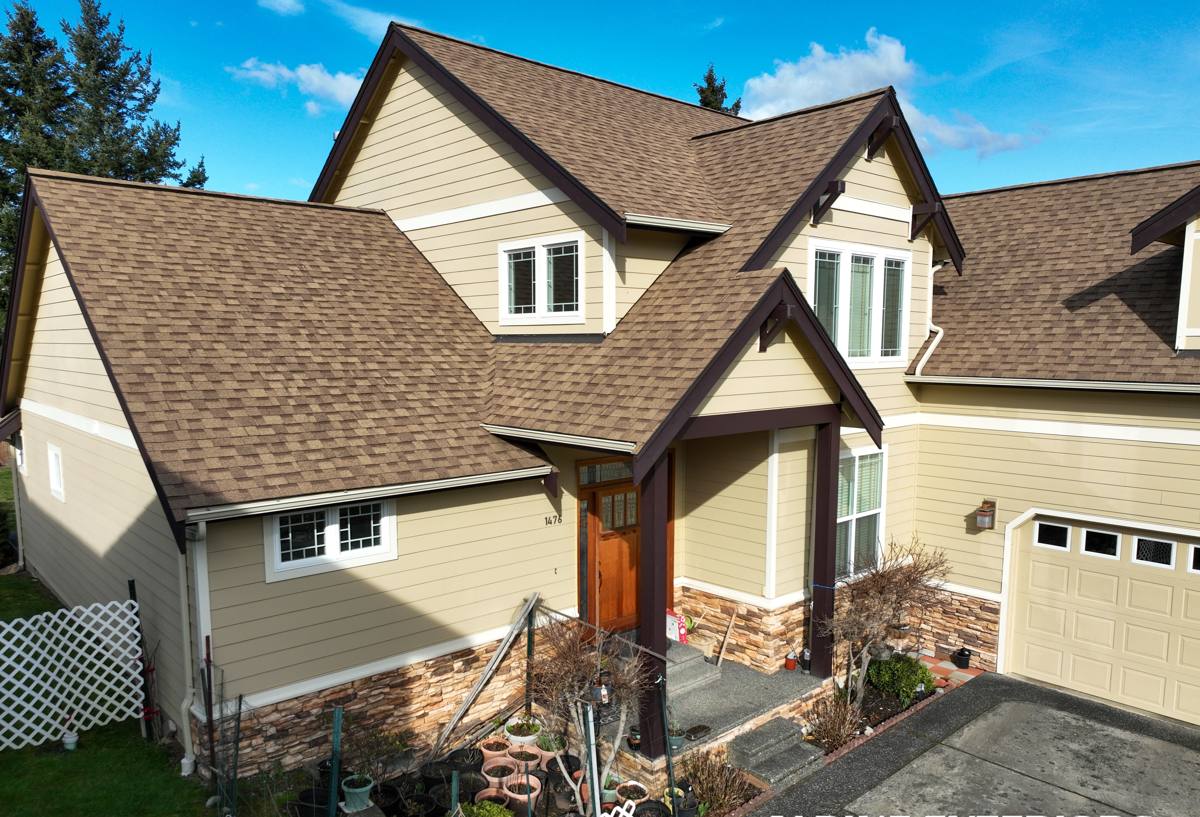
Signs a Blaine Roof Needs Replacing, Not Just Repair
Not every roof problem calls for a full tear-off. Part of doing this job honestly is telling a homeowner when a repair will genuinely hold and when it's just delaying an inevitable, more expensive failure. A few signs tend to point toward replacement:
- Granule loss heavy enough that you can see bare, shiny patches on multiple slopes, not just one worn area
- Moss or algae staining that keeps returning within a year or two of cleaning, especially on the same shaded slopes
- Soft or spongy decking felt underfoot, or daylight visible through the attic sheathing
- Curling, cupping, or cracked shingles across large sections rather than isolated spots
- Repeated leaks around the same valley, chimney, or vent boot even after prior patch repairs
- A roof already past 20–25 years old (for asphalt) that's now stacking multiple issues at once
One or two of these in isolation might mean a targeted repair is enough. Several at once, especially on a roof that's already had patchwork done to it, usually means the underlying material and underlayment have reached the end of their useful life and further repairs are just spending money on a roof that's still going to fail.
What a Correct Roof Replacement Involves Here
Tear-Off and Deck Inspection
A proper replacement starts with a full tear-off down to the decking, not a layover. This is the only point in the job where the roof deck is actually visible, and in a coastal, high-moisture area like Blaine it's common to find soft spots or delaminated sheathing around old vent boots, valleys, or chimney flashing that a layover would simply bury. Any compromised decking gets cut out and replaced before anything new goes down — skipping this step is one of the most common shortcuts that leads to problems years later.
Underlayment and Moisture Protection
Given the amount of driving rain Whatcom County sees, underlayment choice matters more here than in drier climates. Self-adhered ice-and-water shield belongs at eaves, valleys, and around every penetration — the places wind-driven rain is most likely to work its way underneath the roofing material. A synthetic underlayment across the rest of the field gives better tear resistance and water shedding than old-style felt, which matters during the install itself when a roof can sit partially exposed if weather turns.
Ventilation
A roof replacement is the right time to correct ventilation problems, not ignore them. Poor intake and exhaust balance traps moisture in the attic, which condenses on the underside of the deck and accelerates rot from the inside — a problem that has nothing to do with the roofing material on top and everything to do with airflow. We check soffit intake and ridge or box-vent exhaust as part of every replacement, not as an upsell after the fact.
Flashing and Edge Details
Salt air is hardest on metal, so flashing material and detailing deserve real attention. Step flashing at walls, counterflashing at chimneys, and drip edge at eaves and rakes all need to be sized and lapped correctly — these are the details that fail first in a coastal environment, long before the field shingles themselves wear out. Cutting corners on flashing is invisible on installation day and expensive two or three winters later.
Choosing Materials for Blaine's Coastal Climate
There's no single "best" roofing material — the right choice depends on budget, how the home is shaded, and how much long-term maintenance a homeowner wants to take on. Here's how the common options actually compare for a home exposed to salt air, rain, and moss pressure:
| Material | Moss & Moisture Behavior | Salt Air Durability | Typical Lifespan | Maintenance Burden |
|---|---|---|---|---|
| Architectural asphalt shingle | Good with proper ventilation; algae-resistant granules help | Good — least sensitive to salt corrosion | 25–30 years | Low to moderate |
| Standing seam metal | Excellent shedding; sheds moss buildup on steeper pitches | Fair — needs marine-grade coatings/fasteners near the water | 40–50+ years | Low, but fastener/coating checks matter |
| Cedar shake | Poor in shaded, damp areas without diligent upkeep | Fair | 20–30 years with upkeep | High — regular treatment needed |
| Synthetic/composite shingle | Good; resists moisture absorption better than wood | Good | 30–50 years | Low |
For most Blaine homes, a quality architectural asphalt shingle with algae-resistant granules and correct ventilation offers the best balance of cost, appearance, and low maintenance. Metal is a strong option for homes closer to the water or with steep, hard-to-access roofs where shedding moss matters more than upfront cost. We'll walk through the honest trade-offs for your specific roof rather than pushing whatever's easiest to install.
Our Roof Replacement Process
Homeowners generally want to know two things upfront: what actually happens, and what it's going to disrupt. Here's the sequence we follow on a standard replacement:
- On-site inspection and measurement, including attic ventilation check and photos of any deck damage found
- Written estimate with material options and a clear scope — what's included, what isn't
- Material delivery and site protection (landscaping, siding, and windows covered before tear-off begins)
- Full tear-off to the deck, with damaged sheathing replaced as needed
- Underlayment, ice-and-water membrane, and flashing installed at all vulnerable points
- New roofing material installed per manufacturer specification
- Ventilation components installed or corrected
- Full site cleanup, including a magnetic nail sweep of the yard and driveway
- Final walkthrough and warranty paperwork
Weather windows matter for scheduling in this part of Whatcom County — we plan tear-off days around forecasts so a roof is never left exposed longer than necessary, and we don't start a job we can't reasonably finish before rain moves in.
Moss, Algae, and Long-Term Roof Health
A new roof in Blaine doesn't stay maintenance-free forever, and it's honest to say so upfront. The same conditions that wear out an old roof — shade, humidity, and salt air — will start working on a new one too. A few habits extend the life of a new roof significantly:
- Keep gutters and valleys clear of needles and debris where moss tends to establish first
- Trim back overhanging branches to reduce shade and let roof surfaces dry out between rain events
- Have moss and algae growth treated before it spreads, rather than after it's visible from the street
- Schedule a roof check after major windstorms to catch lifted flashing or displaced shingles early
None of this requires a maintenance contract or constant attention — just periodic checks, which we're happy to help homeowners plan for as part of the original estimate conversation.
Permits and Timeline
A full roof replacement in the Blaine area typically requires a building permit, and we handle that process as part of the job rather than leaving it to the homeowner. Timeline depends on roof size and complexity, but a standard residential replacement is usually a matter of a few days of on-site work once materials are on hand and weather cooperates. We'll give a realistic start and completion window before work begins, not an optimistic one that assumes perfect weather.
Why Hire a Crew That Already Works Blaine
Roofing crews unfamiliar with this stretch of coastline sometimes install roofs the same way they would twenty miles inland — same underlayment specs, same flashing details, same assumptions about moss pressure. That approach isn't wrong everywhere, but it leaves gaps in a place where salt air, driving rain, and shade all stack up against a roof at once. A crew that regularly works Blaine and the surrounding Whatcom County coastline already knows which slopes tend to hold moss, which details fail first near the water, and how to sequence a tear-off around this area's weather rather than fighting it.
That familiarity shows up in small decisions — where extra ice-and-water shield goes, how flashing gets lapped, which fasteners hold up near salt air — that don't show up on a spec sheet but do show up in how long a roof actually lasts.
Get a Free, No-Pressure Estimate
If your roof is showing its age, or you just want an honest opinion on whether repair or replacement makes more sense for your home, we're happy to take a look. Use the form below to request a free estimate for your Blaine property — no pressure, no pushy sales pitch, just a straight assessment of what your roof needs.