 Bellingham Siding
 Storm Damage Roof Repair for Edgemoor Homes
Edgemoor sits close to the water, which means the roofs here take a different kind of beating than roofs a few miles inland. Salt-laden air off Bellingham Bay accelerates corrosion on fasteners, flashing, and exposed metal. Winter storms bring driving rain that finds its way sideways under loose shingles instead of just falling straight down. And the long, wet Pacific Northwest moss season keeps roof surfaces damp for months at a stretch, which weakens shingles and rots decking from the top down. When a windstorm or heavy rain event hits, the damage is often a combination of all three factors working together, not just one clean, obvious problem.
This page covers what storm damage roof repair actually involves for a home in Edgemoor specifically — what to look for, how a proper repair is done, and why local storm history and site conditions matter as much as the repair technique itself.
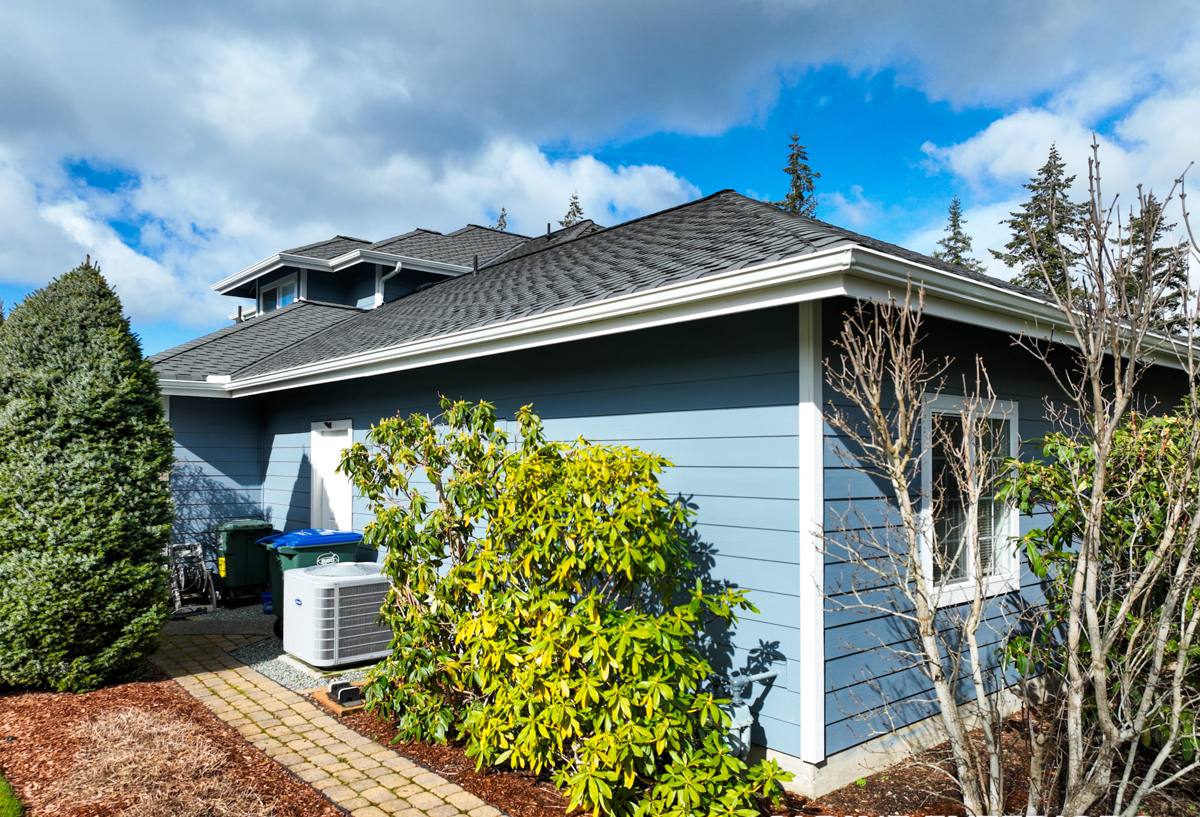
What Storm Damage Looks Like on an Edgemoor Roof
Not all storm damage announces itself with a missing shingle on the lawn. Whatcom County storms tend to combine wind gusts with sustained rain, which produces damage that's easy to miss from the ground.
Wind Damage
Wind lifts shingle tabs, breaks the adhesive seal strip underneath them, and can crease or tear shingles without fully removing them. A shingle that's lifted but still attached will often lie back down and look fine from the street — until the next rain, when water gets underneath it. Ridge caps and hip caps, being the highest and most exposed parts of the roof, are usually the first to go in a strong gust.
Wind-Driven Rain Intrusion
Because Edgemoor gets weather off the water, rain here often comes in at an angle rather than falling straight down. That matters at every penetration point on the roof — chimneys, vent stacks, skylights, and the step flashing where a roof meets a wall. A flashing detail that's held up fine for years can start leaking the first time a storm pushes rain sideways into a gap that was never a problem before.
Moss and Debris Damage
Storms knock branches and debris onto the roof, and that debris traps moisture against shingles that are often already carrying moss growth from the wet season. Moss holds water against the shingle surface, and over time it lifts shingle edges and works its way under tabs, which is exactly the kind of weak point a storm will exploit. A roof with moss going into a storm is at higher risk than a clean one.
Granule Loss
Heavy, driving rain and hail-like debris impact strip the protective granules off asphalt shingles. Granule loss doesn't cause an immediate leak, but it shortens the shingle's remaining life and shows up as bald, darker patches or as granules collecting in gutters and downspouts after a storm.
Why Site Conditions in Edgemoor Change the Approach
A storm repair plan for a home in Edgemoor should account for a few things that don't apply the same way further inland.
- Salt air corrosion: Metal flashing, fasteners, and vent hoods near the water corrode faster. Repairs here should use corrosion-resistant materials, not just whatever matches the existing metal.
- Tree cover: Many Edgemoor lots have mature trees, which means storm damage often comes with debris impact, not just wind and rain alone. A repair isn't complete until the roof is cleared and checked for punctures, not just re-sealed.
- Roof orientation to the water: Roof slopes facing the bay take the brunt of wind-driven rain during a storm system moving through. Those slopes deserve a closer inspection even if the rest of the roof looks fine.
- Moss season length: Whatcom County's wet season runs long, so a roof that took storm damage in the fall may sit under damp, shaded conditions for months before a dry stretch allows a full assessment and repair. Temporary protection matters more here than in drier climates.
What a Correct Storm Damage Repair Involves
A rushed storm repair — a few shingles swapped out and a bead of sealant over the damage — is a short-term patch, not a repair. Doing it right means a few consistent steps.
1. Full Roof Assessment, Not Just the Obvious Spot
Storm damage is rarely limited to the one spot a homeowner noticed a stain on the ceiling. A proper assessment covers the whole roof surface, all flashing points, the ridge and hips, and the attic or crawlspace underneath the affected area for signs of water intrusion that hasn't shown up as a visible stain yet.
2. Identifying the Actual Water Path
Water doesn't always leak straight down from where it enters. It can travel along the underlayment or decking and show up on a ceiling several feet from the actual entry point. Chasing the visible stain instead of the entry point is one of the most common reasons a "repaired" roof leaks again in the next storm.
3. Replacing Damaged Materials, Not Just Sealing Over Them
Cracked, torn, or granule-stripped shingles need to be replaced, not caulked. Compromised flashing needs to be replaced or properly re-set, not just re-sealed on top of a failing joint. Sealant is a finishing detail on a correctly installed flashing system, not a substitute for one.
4. Checking the Decking Underneath
If water has been getting in for any length of time before the storm damage was noticed, the roof decking underneath can be softened or rotted. Any repair that skips checking the decking risks nailing new shingles to a surface that won't hold them properly.
5. Matching Materials Correctly
A repair that uses the wrong shingle profile, weight, or color creates a visible patch and can also create a performance mismatch — different products shed water and age differently side by side. We match materials to the existing roof as closely as the product line allows, and we're upfront when an exact match isn't available.
Our Process for Edgemoor Storm Repair Calls
- Initial contact and triage: We ask what happened, when, and whether there's active water intrusion inside the home. Active leaks get prioritized.
- On-site inspection: We walk the roof (weather permitting) and check attic access points, documenting what we find.
- Temporary protection if needed: If the full repair can't happen immediately — because of ongoing weather, material availability, or insurance timing — we can install temporary covering to stop further water intrusion.
- Written scope and estimate: We explain what's damaged, what needs to be replaced versus repaired, and give a clear estimate before any work starts.
- Repair execution: We do the work, including replacing decking if it's compromised, and clean up debris and old materials from the site.
- Final check: We confirm the repair holds under a hose test on flashing and penetration points where practical, and walk the homeowner through what was done.
Insurance and Storm Damage Claims
Many storm repairs in Edgemoor end up going through a homeowner's insurance claim, especially after a named storm event. A few things are worth knowing going in.
| Factor | What It Means for You |
|---|---|
| Documentation | Photos and a written scope from the inspection make the claims process faster and reduce disputes over what was actually damaged. |
| Timing | Insurers often want damage documented close to the storm event, not weeks later, so prompt inspection matters even if repair has to wait. |
| Adjuster visits | We can walk the roof with an adjuster and point out damage that's easy to miss from a ground-level or drone-only inspection. |
| Scope disputes | An initial insurance estimate sometimes underscopes the repair. A detailed written estimate from us gives you something concrete to reference if you need to push back. |
We're not a public adjuster and don't handle the claim itself, but we provide the documentation and scope homeowners need to work with their insurer.
Repair vs. Full Replacement After a Storm
Storm damage doesn't automatically mean a full roof replacement, and it doesn't automatically mean a small patch either. The right call depends on a few things.
| Consider Repair When | Consider Replacement When |
|---|---|
| Damage is localized to one section or a handful of shingles | Damage is spread across large portions of multiple slopes |
| The roof was in good condition before the storm | The roof was already near the end of its service life |
| Decking underneath is sound | Decking shows widespread rot or soft spots |
| Matching materials are reasonably available | The existing product is discontinued and patches would look mismatched |
We'll give you an honest read on which side of that line your roof falls on, rather than defaulting to the more expensive option.
What Edgemoor Homeowners Should Check After a Storm
- Ceiling stains, especially new ones near chimneys, skylights, or exterior walls
- Granules collecting in gutters or at downspout outlets
- Visible shingle tabs that look lifted, curled, or missing from the ground or a neighbor's upper-story view
- Damp or musty smell in the attic
- Debris resting on the roof surface, especially near valleys where it can dam water
- Sagging or uneven roof lines, which can indicate decking damage underneath
- Moss buildup that got worse or shifted position after the storm
If you notice any of these, it's worth getting an inspection before the next storm system rolls through — a small repair now is almost always less disruptive than dealing with interior water damage later.
Why Local Experience Matters Here
A crew that regularly works Edgemoor and the surrounding Bellingham waterfront neighborhoods has already seen how salt air affects fastener choice, how the specific wind patterns off the bay stress certain roof orientations, and how long moss actually takes to become a structural problem in this microclimate versus a cosmetic one. That local pattern recognition shortens the inspection process and reduces the chance of missing a secondary issue that isn't obvious on a first look. It also means we're working from current knowledge of Whatcom County permitting and typical insurer expectations for storm claims in this area, not general assumptions carried over from a different climate.
If a recent storm has left you with damage — or you're just not sure whether that lifted shingle or ceiling spot is something to worry about — we're happy to come take a look. The estimate is free, there's no pressure to move forward, and you'll walk away with a clear, written picture of what's going on with your roof.