 Bellingham Siding
 Metal Roofing for Sunnyland Homes
Sunnyland is one of Bellingham's older, established residential neighborhoods, and like most of the city's neighborhoods it sits inside a marine climate that doesn't go easy on roofs. Salt-tinged air drifting in off the bay, rain that comes in sideways as often as it falls straight down, and a moss season that can run most of the year on shaded slopes all add up over time. A roof that looks fine from the curb can still be failing underneath if it wasn't built or maintained for exactly this kind of weather. We install metal roofing across Bellingham and Whatcom County, and Sunnyland's mix of mature tree cover and older housing stock is a neighborhood where the material's advantages tend to show up clearly.
This page is about metal roofing specifically for Sunnyland, not a general product pitch. What follows is what the local climate actually does to a roof, what a correct metal roof installation involves, and how we approach the work on a neighborhood we already know.
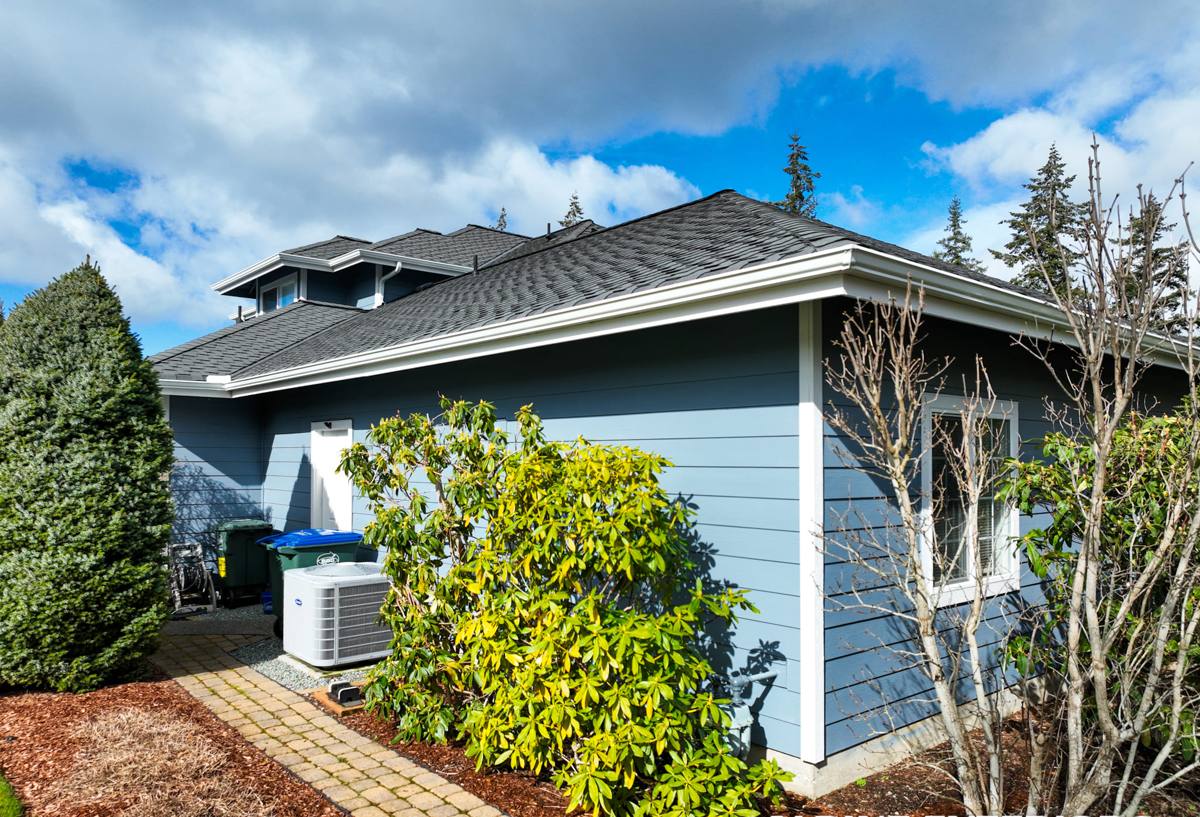
What Sunnyland's Climate Does to a Roof
Salt Air and Bay Proximity
Bellingham's location on the water means a steady presence of moisture-laden, salt-tinged air moving through the whole city, Sunnyland included. That kind of exposure is hard on fasteners, flashing, and lower-grade coatings over time, and it's a slow, cumulative kind of wear rather than something that shows up after one storm.
Driving Rain
Like the rest of coastal Whatcom County, this area gets rain pushed by wind, not just dropped straight down. That matters for a roof because water gets driven up under laps, into valleys, and around penetrations from angles a simple shedding design doesn't always account for. Flashing detail and fastener sealing matter more here than they would in a drier, calmer climate.
A Long Moss Season
Mild temperatures, consistent dampness, and heavy tree canopy in a neighborhood like Sunnyland mean moss and algae growth can persist across most of the year on north-facing and shaded roof slopes. Moss holds moisture against a roofing surface and, on some materials, works into seams and fastener lines over time. A roofing material's texture and how it sheds water directly affects how much of a foothold moss ever gets.
Why Metal Roofing Fits This Neighborhood
Metal roofing isn't the right answer for every home or budget, but for a neighborhood dealing with this specific combination of salt exposure, wind-driven rain, and shade, it has real advantages worth understanding before you decide.
- Smooth, non-porous surface: Moss and algae have a much harder time gripping a smooth metal panel than they do a textured shingle surface, which matters directly under Sunnyland's tree cover.
- Fast water shedding: A steep-shed metal panel moves wind-driven rain off the roof quickly rather than giving it time to work into laps or seams.
- Long service life: A correctly installed metal roof with a quality finish routinely outlasts multiple cycles of asphalt shingle replacement, which matters on a roof under constant tree debris and moisture load.
- Fire resistance: Metal roofing is non-combustible, which some insurers factor into premiums and which matters for households in wooded, tree-canopied neighborhoods.
- Low maintenance surface: Metal doesn't need the periodic recoating or moss treatment that some other roofing materials require to hold up long-term in this climate.
The trade-off is upfront cost. Metal roofing typically costs more than asphalt shingles at installation. Whether that trade-off makes sense for a given Sunnyland home depends on how long you plan to own it, how shaded the roof is, and what the existing roof structure can support, and we'll walk through that honestly rather than assume metal is automatically the right call.
Metal Roofing Panel Types: What's Actually Different
"Metal roofing" covers more than one product, and the differences matter for how a roof performs in this climate over time.
| Panel Type | How It's Fastened | Best Fit |
|---|---|---|
| Standing seam | Concealed clips, no exposed fasteners through the panel face | Homes wanting maximum weathertightness and the longest realistic service life; the standard we recommend for full roof replacements in this climate |
| Exposed fastener panel | Screws driven directly through the panel face into the deck | Lower upfront cost projects, but the exposed fasteners are a long-term maintenance point in a climate this wet, since washers age and need periodic checking |
| Metal shingle or shake profile | Interlocking panels designed to mimic shingle or shake appearance | Homeowners wanting a metal roof's durability with a more traditional look, common on older Sunnyland homes where a standing seam profile may look out of place |
We'll talk through which profile actually fits your home's roofline and the look of the neighborhood, not just the cheapest option on the list.
What a Correct Metal Roof Installation Actually Requires
The material is only part of the job. A metal roof that performs the way it's engineered to depends on how it's installed, and this is where a lot of the real-world failures we get called out to repair actually start.
Flashing and Penetrations
Valleys, chimneys, skylights, vent stacks, and roof-to-wall transitions are where wind-driven rain finds a way in if flashing isn't detailed correctly. On a metal roof, flashing has to be integrated with the panel system itself, not just caulked over the top, since sealant alone degrades faster than the metal around it and isn't a substitute for a properly lapped detail.
Underlayment and Deck Preparation
A synthetic or self-adhered underlayment underneath the metal gives the roof a second line of defense if wind-driven rain ever gets past the panel seams, and it protects the deck during installation. On older Sunnyland homes, we also check the condition of the existing roof deck before installation, since decades of moisture exposure can leave sheathing that needs repair before new roofing goes on top of it.
Ventilation
Metal roofs need proper attic or roof-deck ventilation to manage condensation on the underside of the panels, especially in a climate with this much sustained humidity. Skipping or under-sizing ventilation is a common corner-cutting mistake that shows up years later as hidden moisture damage rather than an obvious leak.
Metal Roofing Cost Factors in Sunnyland
| Factor | What It Affects | Why It Matters Here |
|---|---|---|
| Panel type | Material and labor cost | Standing seam costs more upfront than exposed fastener panels but needs far less long-term maintenance in a wet climate |
| Roof complexity | Labor time and flashing detail | Older Sunnyland homes often have dormers, valleys, and roof intersections that add flashing work |
| Tear-off vs. overlay | Labor scope and deck access | Tear-off exposes hidden moisture damage that's common under decades-old roofing in this climate |
| Deck condition | Repair costs before new roofing goes on | Years of trapped moisture under old roofing can rot sheathing before it's visible from outside |
| Tree cover and site access | Labor time and staging | Heavy mature tree canopy common in Sunnyland can add debris removal and equipment staging time |
Real numbers depend on the specific roof, which is why we walk the property and inspect the existing structure before quoting instead of pricing off square footage alone.
Signs Your Sunnyland Roof Needs Attention
- Moss or dark streaking that returns quickly after cleaning, especially on shaded, north-facing slopes
- Rusted, curling, or loose fasteners on an older metal or exposed-fastener roof
- Granule loss, curling, or bald patches on aging asphalt shingles
- Visible sagging along the roofline or in valleys
- Water stains on interior ceilings or in the attic after wind-driven rain
- Daylight visible through the roof deck from inside the attic
- Rising heating bills that may point to attic moisture or failing ventilation
Repair, Recoat, or Full Replacement
Not every roofing issue in Sunnyland means a full tear-off. A single damaged panel, a flashing detail that's failed around one penetration, or loose fasteners on an otherwise sound metal roof can often be repaired without redoing the whole roof. But when moisture has been tracking under the roofing for a while, or the deck itself has soft or rotted sections, patching usually just delays a bigger job and can let hidden damage keep spreading underneath. We'll tell you plainly which situation you're actually looking at before we recommend a scope of work.
Roofing Alongside Your Siding, Windows, and Gutters
A roof rarely fails in isolation. Undersized or clogged gutters, a poorly flashed window above a roofline, or siding that's trapping moisture against a wall can all put stress on a roof system or make roof-related water damage worse than it needs to be. Because we also handle siding, windows, and decks, we can look at a Sunnyland home as one connected exterior system rather than treating the roof as a separate problem from everything below it.
Why a Local Crew Matters in Sunnyland
A crew that already works this part of Bellingham has seen how salt air, wind-driven rain, and a long moss season actually behave on real roofs across a full year, not just how a panel performs on a spec sheet. That shows up in practical decisions on install day: which valleys need extra flashing attention, which slopes stay shaded and wet the longest, and where the extra hour of detail work now saves a callback two winters later. Sunnyland's older housing stock and mature tree canopy aren't identical to every other Bellingham neighborhood, and a crew with hands-on experience here accounts for that instead of applying a one-size-fits-all approach.
If your Sunnyland home needs a new metal roof, repair work, or just an honest look at what's really going on up there, we're glad to take a look. Reach out using the form below to schedule a free, no-pressure estimate.