 Bellingham Siding
 Building New in Columbia Means Getting the Windows Right the First Time
When you're framing a new home or a significant addition in the Columbia neighborhood, the windows aren't just a finishing touch — they're part of the building envelope. Get the flashing, the sequencing, and the product selection right during new construction, and you avoid the leaks, rot, and premature failures that show up five or ten years down the road. Get it wrong, and you're paying to fix it twice: once to correct the installation, and again for whatever water damage happened in between.
Whatcom County's climate doesn't leave much room for shortcuts. Bellingham sits in a marine environment where salt-laden air, long stretches of driving rain, and an extended moss season put steady pressure on every exterior detail. New-construction windows have to be installed as part of a coordinated water-management system with the siding, weather-resistive barrier, and roofline — not treated as a standalone product that gets set into a rough opening and caulked around the edges.
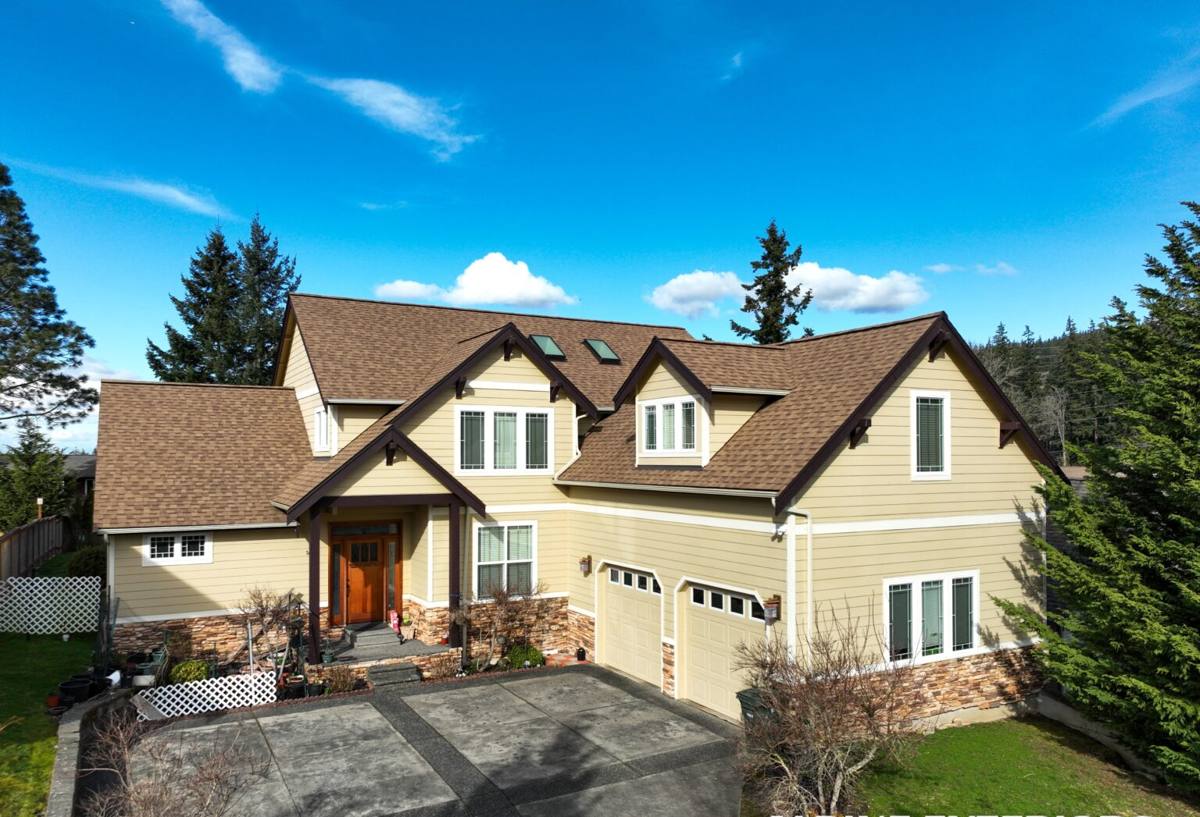
New-Construction Windows vs. Replacement Windows: Why the Distinction Matters
These are two different jobs with two different sets of rules, and homeowners are sometimes surprised at how much that changes the approach.
New-Construction Windows
New-construction windows have a nailing flange around the perimeter that gets integrated directly into the wall's weather-resistive barrier before siding goes on. This is the correct method any time the wall is open — new builds, additions, or a full siding tear-off. It gives us full access to flash the opening properly in layers, so water is directed out and down rather than trapped behind the window.
Replacement (Insert) Windows
Replacement windows are built to fit inside an existing frame without disturbing the surrounding siding. They're the right call when the exterior is otherwise sound and you're not touching the wall assembly. Using an insert window on new construction — or a flanged window on a replacement job where you can't properly integrate the flashing — is a mismatch that tends to cause problems later.
On new builds in Columbia, we always spec and install flanged new-construction windows, because that's the only method that lets us build a continuous drainage plane around every opening.
What a Correct New-Construction Window Install Actually Involves
A properly installed new-construction window is really a sequence of layered details, each one shedding water onto the layer below it. Skipping or rushing any single step is where most window leaks trace back to.
- Sill pan flashing installed first, sloped slightly outward, so any water that gets past the window has a path out of the wall instead of pooling at the bottom of the opening
- Back-dam or end-dam details at the sill to keep water from migrating sideways into the framing
- Jamb and head flashing integrated with the weather-resistive barrier in proper shingle-lap order — head flashing goes over the barrier above it, never under
- Correct fastening of the nailing flange per the manufacturer's schedule, so the window stays square and the warranty stays valid
- Shimming and squaring the unit in the rough opening before fastening, so sashes operate smoothly for the life of the window
- Interior and exterior sealant at the right points only — sealing everything shut traps moisture instead of letting it drain
On a house exposed to the kind of driving, wind-blown rain Bellingham sees in the fall and winter, that sill pan and back-dam detail is not optional. It's the difference between a window that sheds a wind-driven rain event and one that slowly saturates the framing around it over several winters.
Window Materials and Performance in a Marine Climate
Material choice matters more here than in a drier, inland climate. Salt air accelerates corrosion of hardware and fasteners, and constant damp conditions punish anything prone to swelling, warping, or moisture absorption.
| Material | How It Handles Whatcom County Conditions | Maintenance |
|---|---|---|
| Vinyl | Won't rot or corrode; good performer in damp, salt-air conditions at a moderate price point | Low — occasional cleaning |
| Fiberglass | Very stable dimensionally, resists moisture and temperature swings well; strong long-term choice for exposed elevations | Low |
| Wood-clad | Attractive interior wood look, but exterior cladding and any exposed hardware need real attention in a marine, moss-prone climate | Higher — periodic inspection of cladding seams and finish |
| Aluminum | Strong and slim sightlines, but standard aluminum is a poor fit near salt air unless it's a marine-rated, thermally broken product | Moderate to high |
We'll walk through these trade-offs with you based on your home's exposure — a wall facing prevailing weather off the Sound needs a different level of protection than a sheltered elevation.
Hardware and Glazing Details
Beyond the frame material, ask about the hardware finish and glazing package. Stainless or corrosion-resistant hardware holds up far better than standard steel components in this climate, and a quality low-E, dual-pane (or triple-pane, for exposed or north-facing walls) glazing package pays off in comfort and condensation control during our long, damp winters.
How the Process Works for a New Build in Columbia
- Plan review — we look at window schedules, rough opening sizes, and elevations early, before framing is finalized, to catch sizing or flashing conflicts
- Coordination with your builder or GC — window installation has to happen in the right order relative to the weather-resistive barrier and siding, so we coordinate timing directly with whoever's running the job
- Sill pan and flashing installation — done in the correct shingle-lap sequence before any window goes in
- Window setting — squared, shimmed, and fastened per manufacturer specs
- Integration with siding and trim — head flashing, kick-out flashing, and trim details tied into the overall drainage plane
- Final inspection — we check every opening before siding closes it up, because that's the last point you can actually see the flashing work
That last step matters more than people expect. Once siding goes up, the flashing details are hidden for the life of the house. We treat that pre-siding inspection as a checkpoint, not a formality.
Where New-Construction Window Jobs Go Wrong
Most of the window problems we get called out to diagnose on newer homes trace back to one of a handful of recurring issues, and they're almost always installation issues, not product defects.
- Head flashing installed under the weather-resistive barrier instead of over it, so water runs behind the barrier instead of over it
- No sill pan, or a sill pan without a back-dam, leaving no path for incidental water to drain back out
- Windows fastened before they're properly squared, leading to operational problems and stressed seals within a few years
- Sealant used as the primary water barrier instead of the flashing sequence, which fails once the sealant ages, cracks, or gets covered by moss and organic growth during our long wet season
- Standard hardware or fasteners that weren't rated for a marine climate, corroding faster than the window itself ages
None of these show up on move-in day. They show up two, five, or ten winters later, after repeated exposure to driving rain and the slow, steady moss growth that Whatcom County's damp season encourages on anything that stays wet.
A Practical Checklist Before Windows Go In
- Confirm window type matches the job — new-construction flanged units for new walls, not insert units
- Verify rough openings match the approved window schedule before framing is closed up
- Confirm sill pan flashing with a back-dam is part of the install plan
- Ask what hardware and fastener finish is specified, given the marine air
- Confirm the installation sequence with your siding contractor so flashing laps correctly
- Request a pre-siding walkthrough so flashing can be visually verified before it's covered
Why It Matters to Hire a Crew That Already Works in Columbia
A window flashing detail that works fine in a drier climate can fail here simply because of how much more water this region throws at a house, and for how much of the year. A crew that regularly works new construction in Bellingham and Whatcom County already knows how the local weather-resistive barrier and siding systems are typically detailed, what inspectors here are looking for, and where the recurring trouble spots are on this type of build. That's not something you can fully substitute with a generic installation manual — it comes from doing this specific work, in this specific climate, on a regular basis.
It also means we're not guessing at material choices. We know which products hold up to a Whatcom County winter and which ones are a better fit for a milder, drier region, and we'll tell you honestly which is which rather than defaulting to whatever's easiest to install.
Let's Talk About Your Project
If you're framing a new home or addition in Columbia and want windows installed correctly the first time — flashed, sequenced, and integrated with your siding the way this climate demands — we're happy to take a look at your plans. Reach out for a free, no-pressure estimate using the form below.