 Bellingham Siding
 Windows Built for Columbia's Weather, Not Just Any Weather
The Columbia neighborhood sits close enough to the water and to Bellingham's marine weather patterns that windows here take a different kind of beating than windows fifty miles inland. Salt-laden air corrodes hardware and finishes faster than dry-climate manufacturers ever design for. Driving rain off the Sound and the Strait doesn't fall straight down — it comes in sideways, testing every seal and every sill. And Whatcom County's long, wet moss season means anything with a horizontal ledge, including a window sill or exterior trim, becomes a place for organic growth to take hold if it's not detailing correctly.
None of this is exotic information to anyone who's lived in Bellingham a few winters. But it matters a lot when you're choosing windows and choosing who installs them, because a window that's technically "energy efficient" on a spec sheet can still underperform badly if it's not matched to this climate and not installed with the flashing and sealing details this climate demands.
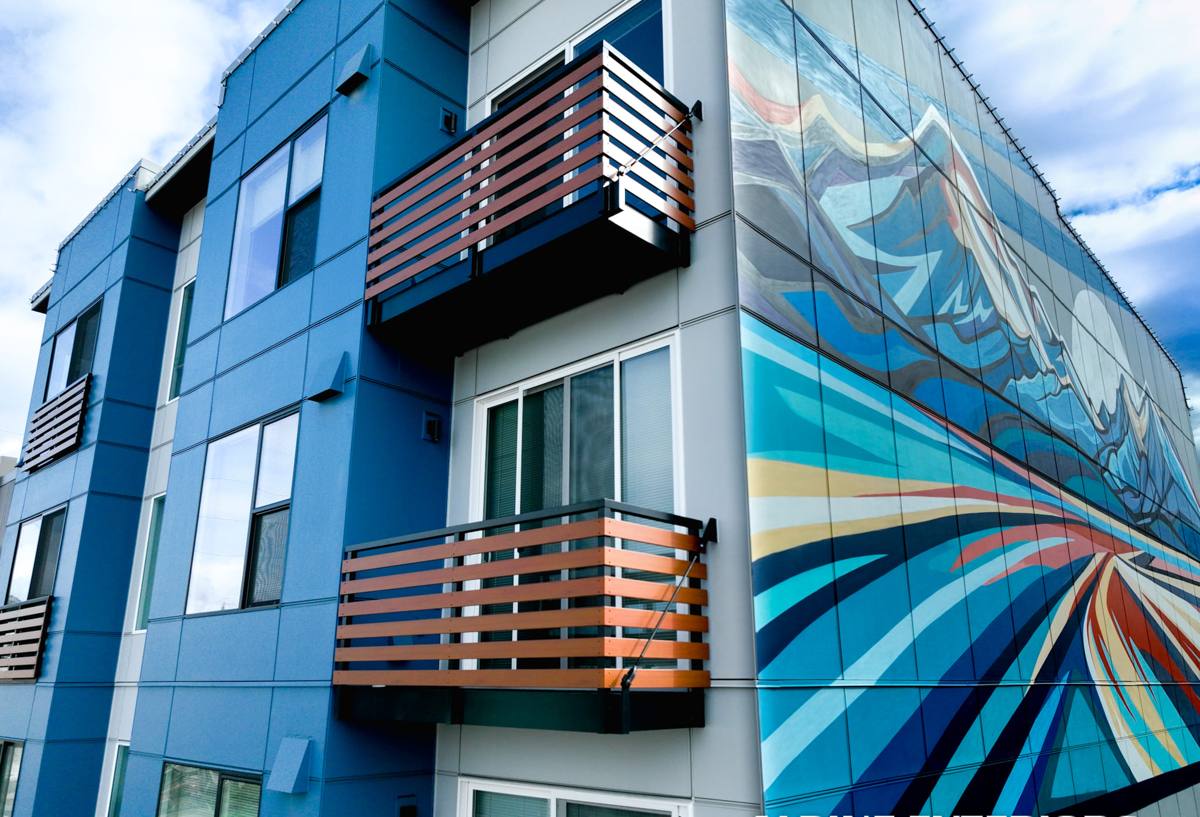
How Coastal Whatcom County Conditions Wear Down Windows
Salt Air and Hardware
Salt in the air accelerates corrosion on window hardware — hinges, locks, balance mechanisms, and screen frames. Aluminum components are especially vulnerable unless they're properly coated or anodized. Over years, corroded hardware means windows that stick, don't latch fully, or start letting drafts in around a frame that no longer closes flush.
Driving Rain and Wind-Driven Moisture
Bellingham doesn't just get rain — it gets sideways rain, pushed by wind off the water. That means water is regularly hitting window assemblies at angles standard flashing details don't always account for. If the flashing, sill pan, and sealant details aren't done right at install, wind-driven rain finds its way behind the trim and into the wall cavity, where it does damage long before anyone notices a stain.
Moss, Algae, and Prolonged Dampness
Whatcom County's extended wet season keeps exterior surfaces damp for long stretches of the year. Wood sills, wood trim, and any horizontal surface near a window are prone to moss and algae growth if drainage isn't designed in from the start. That growth holds moisture against the material, which is exactly the condition that leads to rot in wood components and premature failure in poorly sealed vinyl or composite units.
Signs Your Current Windows Are Underperforming
- Visible condensation or fogging between panes (a sign the seal on a double- or triple-pane unit has failed)
- Drafts you can feel by hand near the frame, especially during wind events
- Windows that are hard to open, close, or lock — often a sign of hardware corrosion or frame warping
- Soft or discolored wood trim around the window opening
- Visible moss or dark streaking on sills or trim that keeps coming back after cleaning
- A noticeable jump in heating costs without any other explanation
- Rooms near windows that feel noticeably colder than the rest of the house
What "Energy-Efficient" Actually Means
"Energy efficient" gets used loosely in this industry, so it's worth being specific about what actually affects performance:
U-Factor
This measures how well a window prevents heat from escaping — lower is better. In a heating-dominated climate like Bellingham's, U-factor is usually the single most important number on the spec sheet.
Low-E Coatings
Low-emissivity coatings are microscopically thin layers that reflect heat while still letting light through. They help keep interior heat in during our long heating season and reduce summer heat gain during the warmer months.
Gas Fills and Multi-Pane Construction
Double-pane windows with an argon gas fill between panes are standard for good performance today. Triple-pane goes further and can be worth the added cost on north-facing walls or rooms that are hard to keep warm, though it's not always necessary on every elevation of every home.
Frame Material and Spacer Systems
The frame and the spacer between panes matter as much as the glass. A well-insulated frame with a warm-edge spacer resists condensation and heat loss far better than a cheap frame paired with expensive glass.
Comparing Frame Materials for This Climate
| Material | Energy Performance | Salt Air / Moisture Resistance | Maintenance | Typical Lifespan |
|---|---|---|---|---|
| Vinyl | Good to very good; depends on chamber design | Good — won't corrode or rot | Low | 20–30 years |
| Fiberglass | Very good; low expansion/contraction | Very good — highly stable in moisture and temperature swings | Low | 30+ years |
| Wood-clad | Very good with proper glazing | Moderate — cladding protects wood, but seams need monitoring | Moderate | 20–30 years with upkeep |
| Aluminum | Poor unless thermally broken | Poor to moderate — prone to corrosion near salt air without coating | Moderate | 20–25 years |
For most Columbia homes, we steer people toward vinyl or fiberglass because both handle wind-driven rain and salt exposure well without the ongoing upkeep that wood cladding requires. Wood-clad units can still be the right call for a home where matching an existing look matters, but it's a decision we make with clear eyes about the maintenance trade-off, not a sales pitch.
What a Correct Installation Actually Involves
The window unit itself is maybe half the performance equation. The other half is installation detail, and this is where a lot of window jobs go wrong — not because the window is bad, but because the flashing and sealing weren't done for this climate.
- Remove the old unit and inspect the opening. This is the point where hidden rot, old flashing failures, or framing issues get found — and it's much cheaper to fix them now than after a new window is sealed over them.
- Install a sloped sill pan. Any water that gets past the window itself needs somewhere to go. A properly sloped sill pan directs it back outside instead of into the wall cavity.
- Flash in the correct order. Sill, then jambs, then head flashing, each one lapping over the one below it — so water sheds down and out, never getting trapped behind a layer.
- Air-seal and insulate the gap around the frame. The space between the window frame and the rough opening needs to be sealed and insulated correctly — too little insulation leaves a cold gap, too much (or the wrong material) can bow the frame.
- Set and shim the unit plumb, level, and square. A window that's slightly out of square won't operate smoothly and won't seal evenly for years.
- Finish exterior trim and caulking with drainage in mind. Trim details need to shed water and moss-prone growth, not trap moisture against the house.
Cost Factors to Understand Before You Get a Quote
| Factor | Why It Affects Price |
|---|---|
| Frame material | Fiberglass and wood-clad typically cost more than vinyl for comparable performance |
| Glazing package | Triple-pane and specialty low-E coatings add cost over standard double-pane argon-filled units |
| Full-frame vs. insert replacement | Full-frame replacement (tearing out to the studs) costs more but is often necessary when there's hidden rot or the old flashing failed |
| Number and size of openings | Larger units and more openings mean more material and labor |
| Existing condition of the opening | Rot repair, re-framing, or old flashing removal adds labor that's hard to estimate until the old window is out |
| Trim and exterior finish work | Matching existing trim profiles or upgrading trim material adds to the scope |
We give honest, itemized estimates rather than a single lump number, because homeowners deserve to know what they're actually paying for — and where the real cost drivers are on their specific house.
Why a Crew That Already Works Columbia Makes a Difference
Window installation isn't a one-size-fits-all trade. A crew that's worked a lot of homes in this neighborhood has already seen how the housing stock here tends to be built, what kind of flashing failures show up most often, and how badly a poorly detailed install can go wrong once wind-driven rain and moss season get to it. That familiarity shows up in fewer surprises during the job and in installation details that are dialed in for this exact climate, not a generic install method pulled from a manufacturer's national training manual.
It also matters for accountability. A local crew that plans to keep working in this neighborhood has every incentive to do the job right the first time and to stand behind it if something needs adjustment. That's a different relationship than a here-today, gone-tomorrow install crew passing through the region.
Maintaining Your New Windows in a Bellingham Climate
- Rinse frames and sills periodically to clear salt residue and organic buildup before it stains or grows moss
- Check weep holes at the base of the frame each fall to make sure they're clear and draining
- Lubricate hardware — locks, hinges, balance mechanisms — annually to fight the corrosion effect of salt air
- Inspect exterior caulking each spring for cracking or separation and re-seal promptly if you find any
- Keep gutters and downspouts clear so roof runoff isn't dumping extra water onto window heads
- Trim back vegetation that keeps foliage or moisture pressed against window trim
Getting Started
If your windows are drafty, fogged, hard to operate, or just old enough that you're wondering whether replacement makes sense, we're happy to take a look and give you a straight answer — including telling you if a repair is all you actually need. We offer a free, no-pressure estimate for Columbia homeowners; use the form below to get started.