 Bellingham Siding
 Why Columbia Roofs Take a Beating in Bellingham's Coastal Climate
Homes in the Columbia neighborhood sit close enough to Bellingham Bay and the Salish Sea that the weather here plays by different rules than it does further inland. Roofs in this part of Whatcom County deal with three things at once, year after year: salt-laden air off the water, driving rain that gets pushed sideways by wind instead of falling straight down, and a moss season that can run from early fall through late spring. None of these is dramatic on its own. Together, over enough winters, they wear a roof out faster than most homeowners expect.
Salt Air and Metal Fatigue
Salt air accelerates corrosion on anything metal — flashing, fasteners, gutter hangers, vent caps. A roof that would hold up for decades in a dry inland climate can show rusted fasteners and pitted flashing much sooner this close to the water. Once a fastener corrodes and loses its grip, the shingle or panel around it loses its wind resistance right when a storm needs it most.
Driving Rain and Wind-Driven Water
Bellingham's storms rarely drop rain straight down. Wind off the water drives it sideways and up under roof edges, around chimneys, and into any gap in flashing or underlayment that a calm-weather rain would never reach. This is why storm damage often shows up in places a homeowner wouldn't think to check — the uphill side of a dormer, the back edge of a chimney cricket, the seam where a lower roof meets a wall.
The Long Moss Season
Shaded, moisture-heavy lots — common throughout Columbia's tree-lined streets — grow moss on a roof almost year-round. Moss holds water against the roofing material long after a storm has passed, which softens shingles, works its way under tabs, and slowly lifts material away from the deck. A roof that's already compromised by moss takes storm damage worse than a clean one, because wind and rain have an easier time finding their way in.
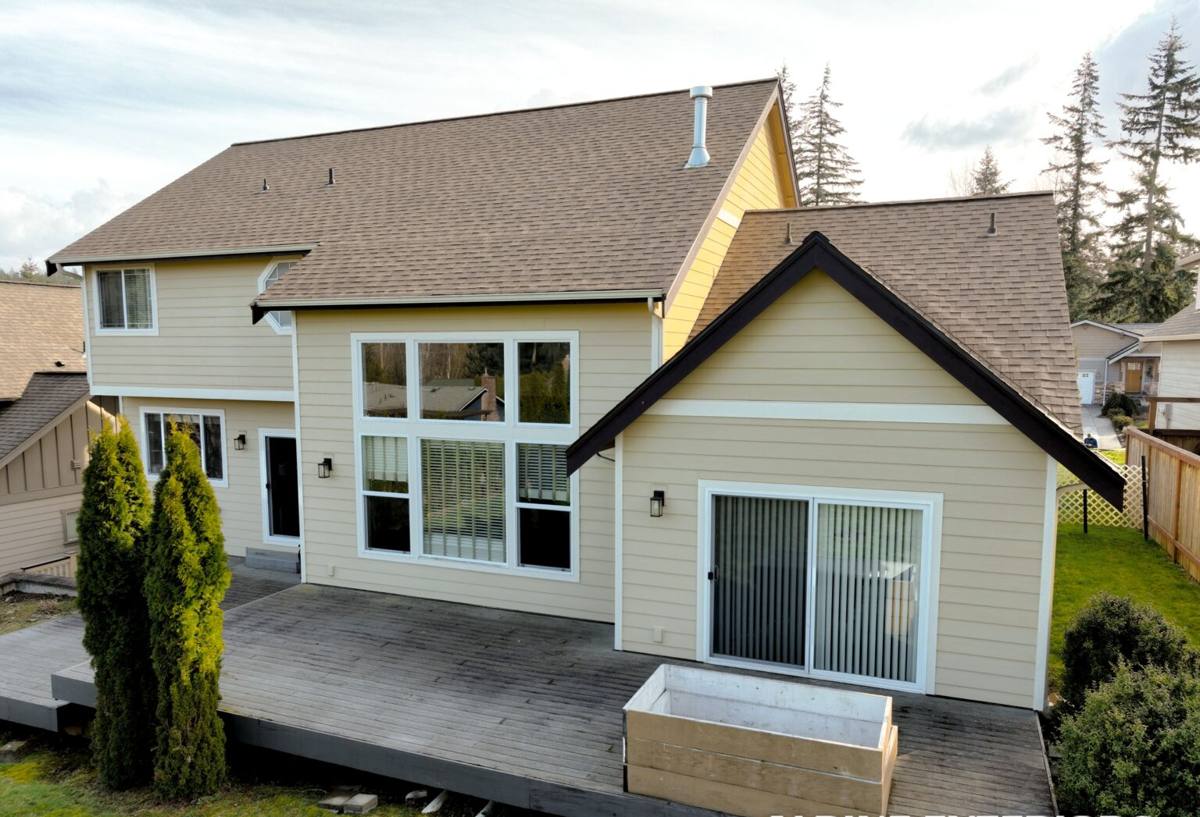
Signs Your Columbia Home Has Storm Damage
Storm damage isn't always a missing shingle in the yard. Some of it is obvious right after a windstorm; some of it only shows up weeks later as a stain on a ceiling.
Damage You Can See From the Ground
- Shingles that are curled, cracked, creased, or missing entirely
- Granules collecting in gutters or at downspout outlets after a storm
- Flashing that's bent, lifted, or pulled away from a chimney, vent, or wall
- Gutters pulled loose from the fascia or sagging under debris weight
- Visible daylight or gaps at the roof ridge or hip lines
Damage That Hides in the Attic
The most costly storm damage is often the kind you can't see without going into the attic: a dark water stain on the sheathing, damp insulation, or a musty smell near an exterior wall. Wind can lift a shingle just enough to let water in without tearing it off completely, so the roof can look intact from the driveway while it's already leaking. If your home has had a storm come through with sustained wind, an attic check is worth doing even if nothing looks wrong from outside.
What a Correct Storm Damage Repair Actually Involves
A quick patch over the spot that's obviously damaged can stop today's leak, but it often misses the reason the damage happened in the first place. A correct repair addresses both.
A Full Inspection, Not Just a Patch
Before any repair work starts, the roof deserves a walk of the whole surface, not just the area where the leak showed up inside. Wind damage rarely stays in one tidy spot — a gust that lifted one section usually stressed the shingles around it too, even if they didn't tear loose. We check flashing, valleys, penetrations (vents, skylights, chimneys), and the condition of the decking underneath before we say what the repair actually needs to include.
Matching Materials and Methods to the Damage
Wind damage, impact damage from debris, and moisture damage from long-term moss growth each call for different repair approaches. A torn shingle can often be replaced in place. A section that's been softened by trapped moisture may need the deck underneath inspected before new material goes on, because nailing a new shingle over a soft or rotted deck doesn't hold. Flashing that's corroded from years of salt air gets replaced, not resealed, since sealant on corroded metal is a short-term fix at best.
Our Storm Damage Repair Process for Columbia Homeowners
Storm repair calls tend to be urgent, so we keep the process straightforward:
- Initial call and scheduling — we ask what happened, when, and whether there's active water intrusion so we can prioritize accordingly.
- On-site inspection — we walk the roof and check the attic where accessible, documenting what we find with photos.
- Written scope and estimate — you get a clear explanation of what's damaged, what caused it, and what the repair involves, in plain language.
- Temporary protection if needed — if there's active leaking, we can address immediate water intrusion before the full repair is scheduled.
- Repair work — materials matched to your existing roof where possible, with attention to the flashing and fastening details that caused the failure.
- Final walkthrough — we go over the completed work with you before we consider the job done.
Repair or Replace? Cost Factors Worth Weighing
Not every storm-damaged roof needs a full replacement, and not every damaged roof should be patched. The right call depends on a handful of factors, not just the size of the visible damage.
| Factor | Leans Toward Repair | Leans Toward Replacement |
|---|---|---|
| Extent of damage | Isolated to one section or a few shingles | Spread across multiple roof planes |
| Roof age | Roof is well within its expected lifespan | Roof is already near the end of its service life |
| Underlying deck condition | Decking is sound and dry | Decking shows rot or long-term moisture damage |
| Moss and granule loss history | Minimal prior moss or granule loss | Years of moss growth or heavy granule loss already present |
| Material availability | Matching shingles are available | Original material is discontinued or badly mismatched |
A localized repair after a single storm event is typically a modest cost — often in the range of a few hundred to around a couple thousand dollars, depending on access and the extent of flashing work involved. A full replacement is a much larger investment, but it also resets the clock and removes the guesswork of repairing around damage that keeps recurring. We'll always give you an honest read on which category your roof falls into rather than defaulting to the bigger job.
Working With Insurance After a Storm
Many storm damage repairs in this area are at least partly covered by homeowners insurance, particularly when the damage is tied to a specific wind event. If you're filing a claim, documentation matters — photos of the damage, a clear description of when the storm occurred, and a contractor's written assessment all help the process move faster. We're glad to provide the documentation and scope of work an adjuster will want to see, and to point out damage you might not have noticed on your own. We don't handle the claim itself — that's between you and your insurer — but we make sure the repair estimate reflects what actually needs to be done, not what's convenient to claim.
Preventing the Next Round of Storm Damage
Whatcom County's weather isn't going to change, but a roof's ability to handle it can improve with the right maintenance. A few habits go a long way toward keeping storm damage minor instead of major:
- Have moss physically removed rather than just treated once it's established, since a heavy moss mat can already be holding moisture against the roof
- Keep gutters and downspouts clear so wind-driven rain has somewhere to go instead of backing up under the roof edge
- Trim back branches that overhang the roof — they drop debris that clogs gutters and they scrape shingles loose in wind
- Check flashing around chimneys and vents every year or two, since these are the first places salt air corrosion shows up
- Address small leaks immediately rather than waiting — a small stain today is a cheaper fix than a rotted deck section next year
Why It Matters to Hire a Crew That Already Works in Columbia
Storm damage repair goes better when the crew doing it already understands the conditions specific to this side of Bellingham. That means knowing which roof details tend to fail first in salt air, recognizing moss damage that's been building for years versus damage from a single storm, and being familiar with the driving-rain patterns that push water into places a textbook inspection might skip. It also means being available quickly when a storm comes through — waiting weeks for an out-of-area crew to get to a leaking roof usually turns a repair into a much bigger job.
If your roof took a hit in a recent storm, or you've noticed a stain, a soft spot, or granules building up in the gutters, we're happy to take a look. Reach out for a free, no-pressure estimate using the form below, and we'll give you a straight assessment of what's going on and what it will take to fix it right.