 Bellingham Siding
 Siding Built for What York's Weather Actually Does
York is one of Bellingham's older in-city neighborhoods, which means a lot of its homes have already been through several rounds of siding, paint, and patch repairs. If you're looking at your exterior right now and seeing soft spots, peeling paint, or green streaks that come back no matter how many times you power-wash them, you're seeing what Whatcom County weather does to siding that isn't built for it. Proximity to Bellingham Bay means periodic salt-laden air moving through the neighborhood. Add driving rain that comes in sideways during fall and winter storms, and a moss season that can run eight months or longer in shaded, tree-lined lots, and you have a climate that punishes any siding material with weak points in its moisture management.
Fiber cement siding, installed correctly, is built to take that punishment without becoming a maintenance project every spring. That's the standard we hold every York job to.
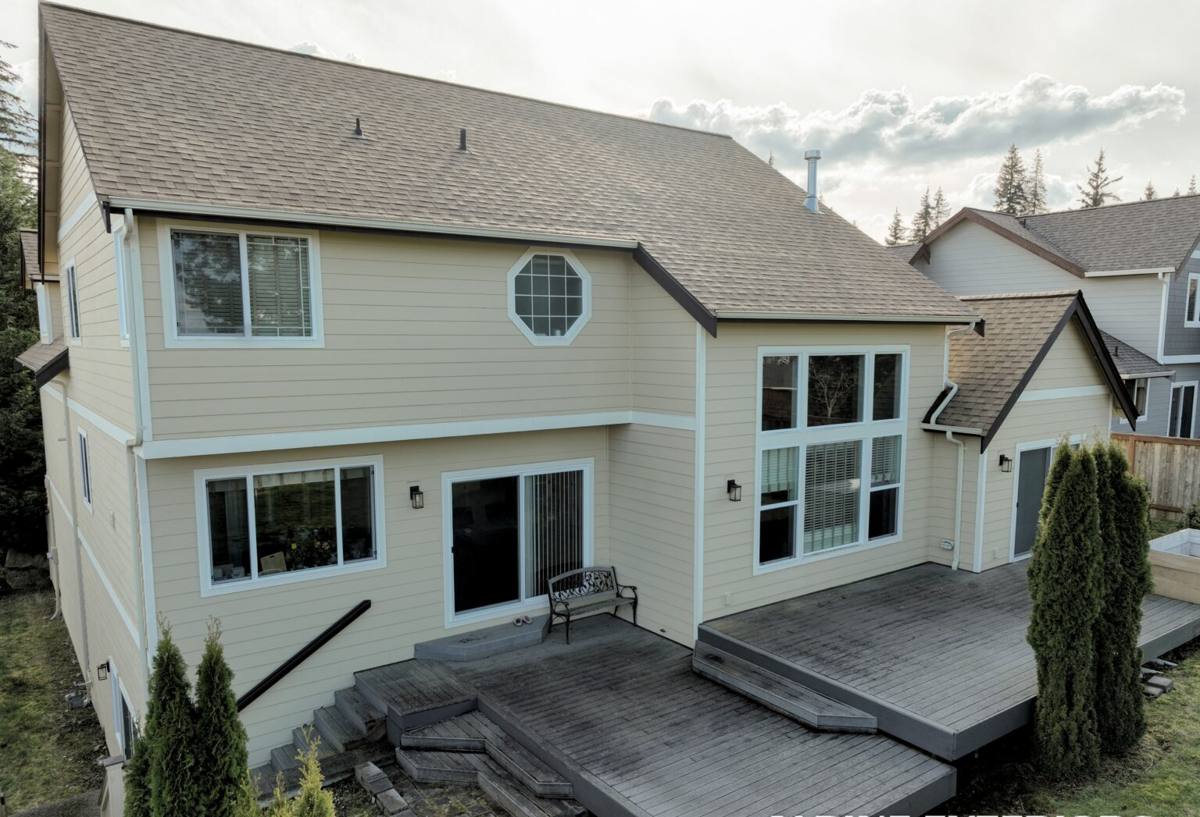
Why We Install James Hardie Fiber Cement — and Nothing Else
We install James Hardie fiber cement siding exclusively. We don't install vinyl, LP SmartSide, Cemplank, Allura, or primed wood products like spruce or cedar lap. That's not a marketing position — it's a decision based on what holds up in this climate versus what tends to create callbacks and premature failure.
Hardie siding is a fiber cement composite: sand, cement, and cellulose fiber, cured into a dense, non-combustible board. It doesn't absorb water the way wood-based products do, it doesn't warp or buckle the way vinyl can in temperature swings, and it holds paint and factory finish far longer than primed wood siding because the substrate itself is dimensionally stable.
What "HZ5" Means for a York Home
James Hardie engineers its products by climate zone. Homes in our region qualify for the HZ5 product line, which is formulated for high-moisture, freeze-thaw climates like ours. It's a meaningful distinction — a board engineered for a dry southwestern climate doesn't perform the same way here, and installing the wrong zone product is a mistake we won't make.
Hardie's ColorPlus factory finish is baked on under controlled conditions, which gives it better adhesion and UV resistance than field-applied paint. For homeowners who are tired of repainting siding every five to seven years, that finish is one of the biggest practical advantages of the system.
What a Correct Installation Actually Involves
Fiber cement siding is only as good as the installation behind it. Most of the siding failures we get called out to inspect in older Bellingham neighborhoods aren't material failures — they're installation shortcuts that let water behind the cladding.
Flashing and Moisture Management
Every window, door, and roofline intersection needs proper flashing and a drainage plane behind the siding, not caulk used as a substitute for flashing. We install a weather-resistant barrier and rain screen detailing so that any moisture that does get past the surface has a way to drain and dry out, rather than sitting against your sheathing.
Fastening and Clearances
Hardie has specific nailing patterns, fastener spacing, and clearance requirements — including ground clearance and roof-to-wall clearance — that are there for a reason. Skipping them is how you end up with cupping, cracking at fastener points, or wicking at the bottom edge of the boards.
Caulking and Trim Details
Butt joints, trim boards, and penetrations get sealed with a high-quality, paintable sealant rated for the product — not whatever's cheapest at the time. Small details like this are the difference between siding that looks factory-fresh at year ten and siding that's already showing seams.
Signs Your Siding in York Needs a Closer Look
Before assuming full replacement is necessary, it helps to know what to actually check for. Some of these are cosmetic; others point to moisture already working its way behind the cladding.
- Persistent moss or algae streaking that returns within a season or two of cleaning
- Paint that's peeling, bubbling, or chalking rather than just fading
- Soft or spongy spots when you press on the siding, especially near the bottom courses
- Visible gaps, warping, or cupping in individual boards or panels
- Rising utility bills that could point to compromised insulation behind failing siding
- Cracks radiating from nail heads or corner trim
- Interior wall staining or musty smells on exterior-facing walls
If you're seeing more than one or two of these, it's worth having someone look at the wall assembly, not just the surface.
Comparing Siding Options for Whatcom County Homes
We get asked fairly often why we don't offer a lower-cost alternative alongside Hardie. The honest answer is in how these materials behave over time in a wet, coastal climate.
| Material | Moisture Behavior | Finish Longevity | Fire Rating |
|---|---|---|---|
| James Hardie fiber cement | Dimensionally stable, doesn't absorb and swell | Factory ColorPlus finish, long repaint intervals | Non-combustible |
| Vinyl | Can warp or distort in temperature swings; seams allow water intrusion | Color molded in, fades and can't be repainted easily | Combustible, softens under heat |
| Primed wood (spruce/cedar) | Absorbs moisture, prone to rot without diligent maintenance | Needs repainting every 5-7 years | Combustible |
| LP SmartSide | Engineered wood strand product, moisture-sensitive at cut edges | Factory finish, but edges require careful sealing | Combustible |
Every product on that list has homeowners who are happy with it. Our job is to build homes we're willing to stand behind for decades in this specific climate, and that's where fiber cement consistently wins out for us.
Our Process, Start to Finish
- On-site assessment — we walk the exterior, check for existing moisture damage, and evaluate the wall assembly, not just the visible siding.
- Written estimate — a clear scope covering material, trim, flashing details, and any sheathing repair we anticipate.
- Tear-off and inspection — once old siding comes off, we inspect sheathing and framing for hidden rot before anything new goes up.
- Weather barrier and rain screen installation — the drainage plane behind the siding gets installed to spec, not skipped to save time.
- Hardie board installation — proper fastening, clearances, and flashing at every penetration and joint.
- Trim, caulking, and final detailing — the finishing work that determines how the job looks and performs long-term.
- Final walkthrough — we go over the finished work with you before calling the job done.
What Drives the Cost of a Fiber Cement Job
Every home is different, so we won't quote a number without seeing the house, but these are the factors that typically move the price:
| Factor | Why It Matters |
|---|---|
| Extent of hidden damage | Rotted sheathing or framing found during tear-off adds repair scope |
| Home size and wall complexity | More corners, gables, and trim details mean more labor and cut material |
| Board profile and texture | Lap siding, panel systems, and shingle-style Hardie products price differently |
| Trim and accent work | Window trim, fascia, and accent bands add material and installation time |
| Site access | Tight lots, mature landscaping, or multi-story walls affect staging and labor |
Why a Crew That Already Works in York Matters
A contractor who's worked in your neighborhood before has already seen the housing stock — the mix of home ages, the common wall assemblies, the spots where moisture tends to collect on north- and west-facing walls closest to the water. That's not a substitute for a proper inspection of your specific home, but it means fewer surprises during tear-off and a crew that understands the local permitting and inspection expectations that come with exterior work in Bellingham. It also means we're not learning Whatcom County's weather patterns on your house — we're applying what we already know.
Maintenance and Warranty After Installation
One of the practical advantages of fiber cement is how little it asks of you afterward. An occasional rinse to keep moss and pollen from building up, a visual check after major storms, and prompt attention to any caulking that starts to separate is about the extent of it. There's no repainting cycle every five years like you'd face with primed wood.
James Hardie backs its products with a manufacturer warranty on the material itself, and ColorPlus finishes carry their own finish warranty — both are transferable, which matters if you sell the home down the road. We stand behind our installation work separately, since even the best material depends on correct installation to perform as designed.
If your York home's siding is showing its age, or you're just ready for something that won't be a recurring project, we're happy to take a look and walk you through what we're seeing. Reach out for a free, no-pressure estimate using the form below.