 Bellingham Siding
 Siding Repair Looks Different in the Columbia Neighborhood
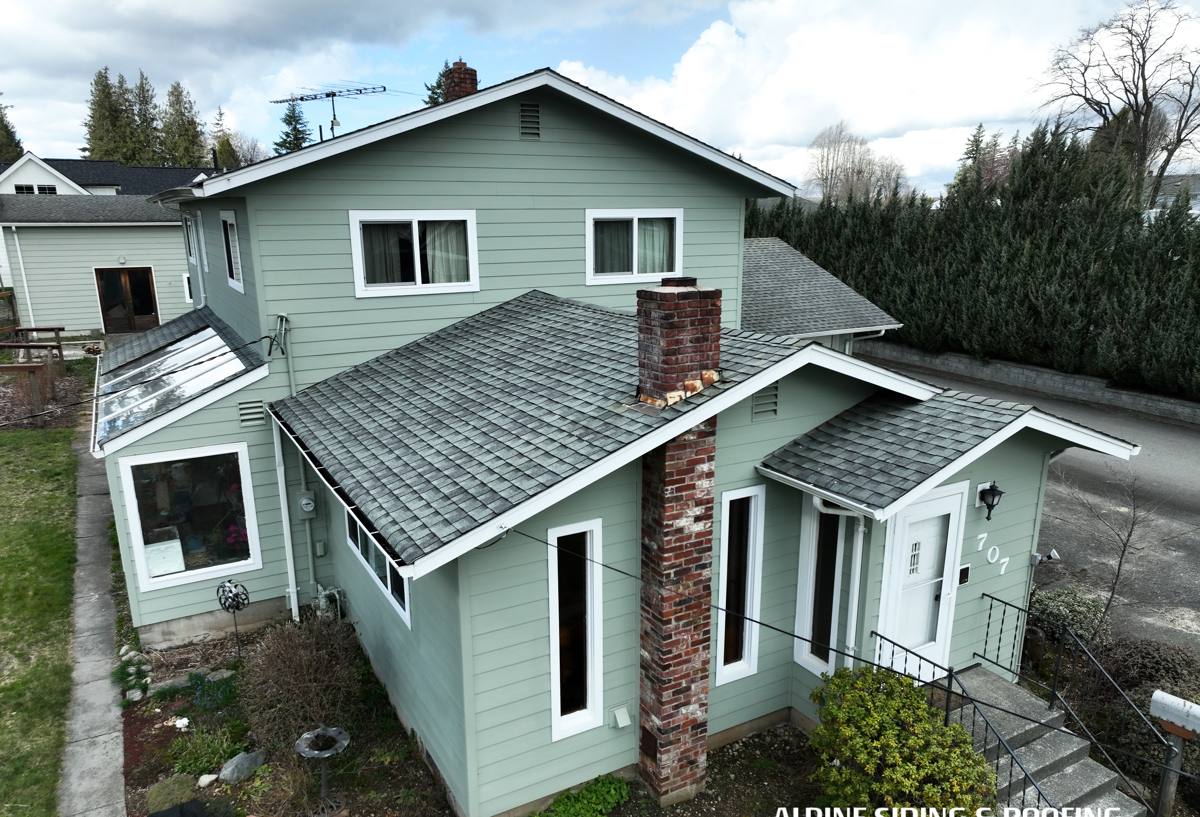
Columbia is one of Bellingham's established, close-in neighborhoods, with a mix of older housing stock and newer infill built under mature tree cover. That combination creates a specific siding problem: homes here spend a lot of the year shaded, damp, and slow to dry out. Whatcom County's marine climate already brings driving rain off the Sound and a long stretch of overcast, wet weather from fall through spring. Add tree canopy and older construction details, and you get siding that holds moisture longer than it should, invites moss and algae growth, and often fails first at the joints, trim, and lower courses rather than across the whole wall.
That's the pattern we see most often when we're called out to look at siding in Columbia: a homeowner notices a soft spot, a streak of green-black growth, or a section of trim that's pulling away, and it turns out to be one part of a larger moisture story playing out behind the cladding. Repairing it correctly means understanding that story, not just patching the visible symptom.
Common Warning Signs Homeowners Overlook
Siding damage in a shaded, wet neighborhood like Columbia rarely announces itself with a dramatic failure. It shows up as small, easy-to-dismiss details that add up over a season or two. Here's what we tell homeowners to watch for:
- Soft, spongy, or slightly bowed siding when you press on it, especially near the bottom of walls or under windows
- Persistent moss, algae, or black streaking that comes back within weeks of being cleaned off
- Paint that's peeling, bubbling, or chalking unevenly rather than uniformly across a wall
- Visible gaps at butt joints, corner boards, or trim where caulk has shrunk or failed
- Staining or discoloration below window sills, hose bibs, or downspout connections
- A musty smell in an adjacent interior room, which often points to moisture already inside the wall cavity
- Nail pops, warping, or delamination on older lap siding, particularly on north- and west-facing walls that stay wet longest
Any one of these on its own might be minor. Several together, especially clustered in one area, usually mean water has been getting behind the siding for a while.
What Correct Siding Repair Actually Involves
Diagnosing the Real Problem, Not Just the Symptom
A repair that only replaces the damaged board and caulks the edges is a temporary fix. Before we touch a wall, we're checking what's underneath: whether the house wrap or building paper is intact, whether flashing at windows, doors, and penetrations is doing its job, and whether the damage is isolated or a sign of a systemic drainage issue. In an established neighborhood like Columbia, where a lot of homes were built or re-sided under older code and detailing standards, it's common to find that the original installation simply didn't account for how much water this region gets.
Matching Materials and Reveal
Once we know the extent of the damage, the repair has to match the existing siding's profile, reveal, and finish closely enough that it doesn't stand out as a patch. This matters more with fiber cement than with some other claddings, because plank width, exposure, and texture vary by product line and manufacturer. Sourcing the right match, or planning a broader repair that blends cleanly, is part of doing the job right the first time.
Rebuilding Flashing and Drainage Paths
The most important — and most often skipped — part of a real repair is restoring the drainage plane: proper flashing at penetrations, correct lapping of house wrap, and a drainage gap where the siding needs one to shed water instead of trapping it. Replacing boards without fixing what let water in is why the same repair often has to happen again in a few years.
Repair or Replace? How We Help You Decide
Not every problem area means the whole wall, or the whole house, needs new siding. But sometimes a repair estimate reveals that patching isn't the responsible answer. We walk homeowners through the tradeoffs honestly:
| Factor | Favors Repair | Favors Replacement |
|---|---|---|
| Extent of damage | Isolated to one or two sections | Spread across multiple walls or elevations |
| Underlying moisture barrier | House wrap/flashing still intact | Barrier compromised or missing in multiple spots |
| Age and material of existing siding | Newer fiber cement in good condition elsewhere | Older wood, hardboard, or failing material nearing end of life |
| Structural sheathing condition | Sheathing sound and dry | Sheathing shows rot or delamination |
| Homeowner's time horizon | Planning to address the rest later | Wants one project, one warranty, done |
We'll always tell you plainly if a repair is enough, and we'll never push a full replacement when a targeted fix will genuinely hold up.
Why We Only Repair and Install with James Hardie Fiber Cement
When a repair calls for new material, or when the inspection shows it's time to replace a section or a whole elevation, we use James Hardie fiber cement exclusively. We don't install or patch with vinyl, LP SmartSide, Cemplank, Allura, or primed wood siding, and in a climate like Whatcom County's, that's a deliberate standard, not a brand preference.
Fiber cement doesn't feed mold or rot the way wood-based products can when they stay damp through a long moss season. It's non-combustible, holds paint and factory finish far longer than wood substrates, and James Hardie's HZ product lines are engineered for wet, humid climates like ours specifically — a meaningful difference from siding designed for drier regions. The ColorPlus factory finish also means repaired sections can be color-matched with a consistency that field-painted materials can't reliably deliver over time. And because Hardie backs its products with a strong, transferable warranty when installed to spec, a repair or partial replacement done correctly protects the value of the whole exterior, not just the patched section.
Our Process for Columbia Siding Repair
- Inspection. We look at the visible damage and check the areas around it — corners, trim, penetrations, and adjacent courses — for signs the problem extends further than what's obvious.
- Moisture and drainage check. Where we suspect water intrusion, we check the condition of the underlying house wrap, flashing, and sheathing before quoting anything.
- Honest scope and estimate. You get a clear explanation of what's damaged, why, and what it takes to fix it — repair or replace, no upsell.
- Material matching or upgrade. For repairs, we match existing James Hardie profiles and finish where possible; where the existing material isn't Hardie, we'll talk through what a proper replacement section looks like.
- Correct installation. Flashing, house wrap laps, fastening, and clearances are rebuilt to spec — not just to get the new board on the wall, but to keep water out going forward.
- Final walkthrough. We show you what was done and why, so you understand the wall, not just the invoice.
Why Local Experience in Columbia Matters
Crews that already work in Bellingham neighborhoods like Columbia know what a season of tree cover, marine air, and sustained rain actually does to a wall over time — which elevations fail first, where moss takes hold fastest, and which older detailing habits tend to cause problems down the road. That experience shortens the diagnostic process and reduces the chance of a repair that looks fine for a year and then fails again. It also means we're not guessing at how Whatcom County's climate and this neighborhood's building stock interact — we've seen the pattern before.
Being local also matters for the practical side: knowing typical permitting expectations for exterior work in Bellingham, being available for a follow-up look if something needs attention after a heavy winter, and standing behind the work because we're not driving in from out of the area.
What Affects the Cost of a Repair
Every repair is different, but the same handful of factors drive most of the cost variation we see on jobs like these:
- How much of the wall is affected, and whether the drainage plane needs to be rebuilt, not just the visible siding
- Whether matching material is readily available or needs to be sourced for an exact profile and color match
- Access — height, landscaping, and how much of the area around the repair needs protection or clearing
- Condition of the sheathing underneath, which sometimes isn't clear until the damaged siding is removed
- Whether trim, flashing, or paint touch-up beyond the siding itself is needed to finish the repair properly
We'll always give you a firm scope before starting, and flag anything that changes once the wall is opened up.
If you're seeing moss buildup, soft spots, or trim damage on your Columbia neighborhood home, it's worth getting a straight answer on what's actually going on before it spreads further. We offer free, no-pressure estimates — use the form below to get one scheduled.