 Bellingham Siding
 Why Columbia Homes Are Hard on Siding
Columbia is one of Bellingham's older, established neighborhoods, and that shows in its housing stock — a mix of early-century homes, mid-century additions, and newer infill, many sitting close enough to Bellingham Bay to catch salt-laden air off the water. That combination of age and exposure is exactly what wears siding down faster than homeowners expect. Salt air accelerates corrosion on fasteners and trim, driving rain off the bay finds every gap in old siding laps, and Whatcom County's long, damp shoulder seasons give moss and algae months at a time to establish themselves on north-facing walls and anything shaded by mature trees.
None of this is unique to Columbia, but the neighborhood's mix of home vintages means we see the full range of siding failure modes in a few square miles — original wood lap that's been repainted a dozen times, 1980s and '90s vinyl gone brittle and faded, and newer builds with composite or engineered wood products already showing edge swelling. A siding replacement here isn't a cosmetic upgrade; it's fixing the one system standing between the house and a climate that doesn't let up.
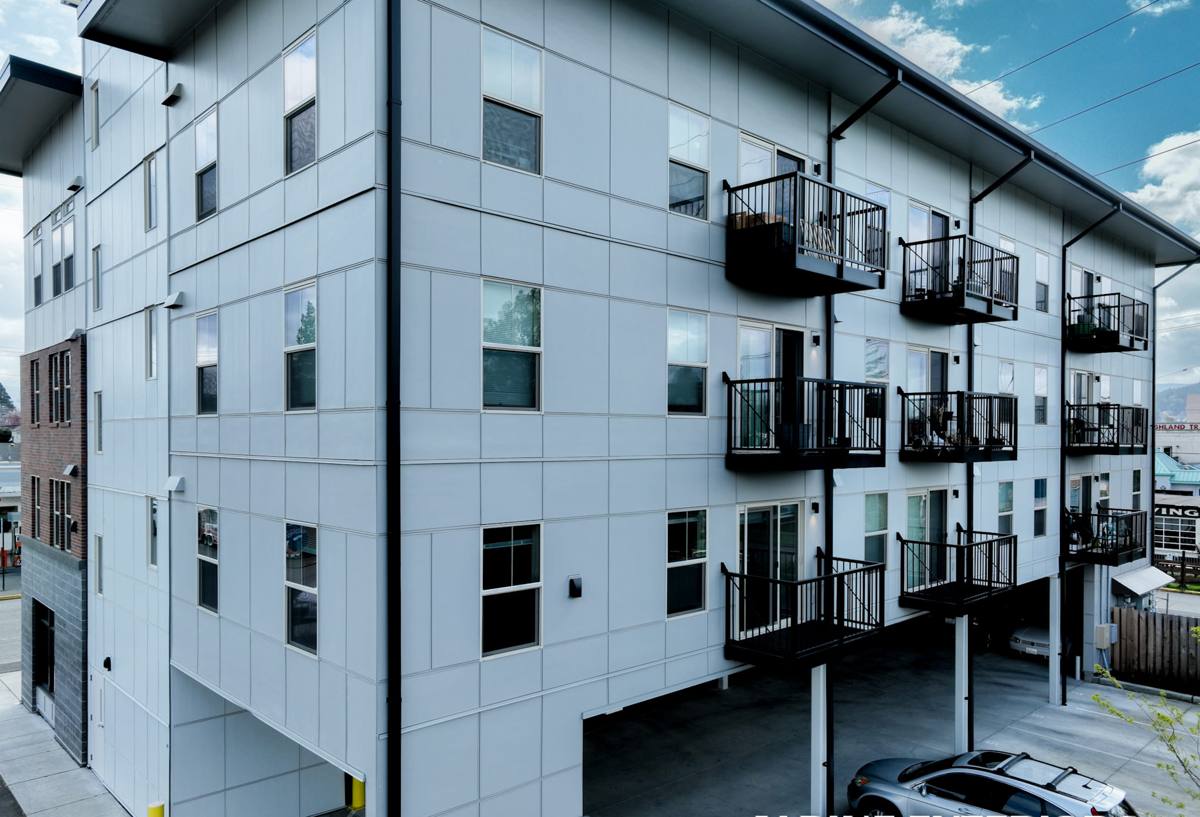
Signs a Columbia Home Needs Siding Replacement, Not Another Repair
Homeowners often call us about a small problem — a soft spot near a downspout, a cracked board, siding that needs painting again — and the honest answer is sometimes "patch it" and sometimes "replace it." The difference usually comes down to whether the damage is isolated or systemic.
- Soft, spongy siding when you press on it, especially near the bottom courses or under windows
- Paint that won't hold anymore, blistering or peeling again within a year or two of a repaint
- Persistent moss or dark streaking on shaded or north-facing walls that comes back after cleaning
- Visible gaps, warping, or buckling in lap siding, particularly around butt joints
- Rot or staining at inside corners, under eaves, or anywhere two roof planes drain onto a wall
- Rising energy bills alongside drafty rooms, suggesting the water-resistive barrier behind the siding has failed
One or two of these in a small area can often be repaired. Several of them, or damage that shows up in multiple locations, usually means the siding and the moisture barrier behind it have been compromised long enough that full replacement is the more honest recommendation.
Why Product Choice Matters More Here Than Almost Anywhere Else
Bellingham's climate is unforgiving of the wrong siding choice, and Columbia's bay-adjacent exposure makes that even more true. Vinyl siding softens, warps, and can crack in temperature swings, and its seams give driving rain a path inward over time. LP SmartSide and other engineered wood products perform reasonably well when installation is flawless, but any breach in the factory coating — a fastener hole, a cut edge, a scuff during install — opens the door to moisture wicking into the wood substrate, and salt air doesn't make that any more forgiving. Cedar and primed spruce are classic looks, but they demand a maintenance schedule most homeowners don't keep up with, and in a climate with this much sustained moisture, gaps in that schedule show up as rot.
We're not saying any of these products are junk — they all have a place, and plenty of homes wear them fine for years under the right conditions. We're saying that after years of doing exterior work in this specific climate, we made a professional call to stop installing them and standardize on one product system that holds up consistently without asking the homeowner to babysit it.
James Hardie: What We Install and Why
We install James Hardie fiber cement siding exclusively. It's non-combustible, doesn't rot, and doesn't provide a food source for moss and mildew the way wood-based products can. Hardie's HZ5 product line is engineered specifically for climates like ours — cold, wet winters and moderate but persistent humidity — with a formulation designed to resist moisture damage and freeze-thaw stress better than a general-purpose version of the same product.
The other piece is the factory-applied ColorPlus finish, which is baked on under controlled conditions rather than brushed on at the jobsite. That finish resists fading and holds up to UV exposure and salt air significantly longer than field-applied paint, and it comes backed by its own finish warranty in addition to Hardie's product warranty on the siding itself. For a Columbia homeowner who's tired of repainting every few years, that's the practical difference: a finish system built to survive this exact climate instead of one that needs constant upkeep to look presentable.
Hardie Product Lines We Work With
| Product | Best Use | Why It Fits This Climate |
|---|---|---|
| HardiePlank lap siding | Most common choice, traditional lap look | Available in HZ5 formulation built for wet, cold climates |
| HardiePanel vertical siding | Accent walls, gables, modern facades | Clean lines, pairs well with board-and-batten details |
| HardieTrim boards | Corners, window and door casing, fascia | Matches siding durability so trim doesn't become the weak point |
| HardieSoffit panels | Eaves and overhangs | Resists moisture buildup in a chronically damp climate |
What a Correct Siding Replacement Job Actually Involves
The siding itself is only part of the job. Most of the failures we see on older Columbia homes trace back to what was — or wasn't — done underneath the old siding, not the siding material itself. A correct replacement means:
- Full removal of the old siding and trim, not installation over top of it
- Inspection of the sheathing underneath for rot, soft spots, or prior water damage, with any compromised sheathing replaced before anything new goes up
- Installation of a proper water-resistive barrier, lapped and taped correctly so water sheds outward at every seam
- Correct flashing at every window, door, and roof-to-wall intersection — this is where the majority of hidden leaks originate
- Fastening and clearances installed to James Hardie's published specifications, including proper gaps at the bottom of the siding and around penetrations
- Final trim, caulking, and touch-up work done to the same standard as the field siding, not treated as an afterthought
Skipping any one of these steps is how a brand-new siding job ends up with the same rot problem five years later. Hardie's warranty itself depends on installation following their specifications, so cutting corners here isn't just a durability risk — it can void the coverage the product is supposed to provide.
Our Process, Start to Finish
We walk every Columbia project the same way, because the fundamentals don't change from house to house even when the damage does:
- On-site assessment: we look at the current siding, check for hidden moisture damage, and evaluate trim, soffits, and flashing, not just the field siding
- Written estimate: a clear scope covering removal, any sheathing repair, materials, and installation, with no vague allowances hiding behind the number
- Tear-off and inspection: old siding comes off, sheathing gets inspected and repaired as needed before anything new goes on
- Weather barrier and flashing: installed to spec before a single piece of Hardie siding is hung
- Siding installation: HardiePlank, panel, or trim installed per manufacturer fastening and clearance requirements
- Final walkthrough: caulking, touch-up, and cleanup, with a homeowner walkthrough before we consider the job done
What Siding Replacement Typically Costs
Every home is different, but the factors that drive cost are consistent across Columbia and the rest of Bellingham:
| Factor | How It Affects Cost |
|---|---|
| Home size and wall area | More square footage means more material and labor |
| Condition of existing sheathing | Hidden rot found during tear-off adds repair scope |
| Home height and access | Multi-story homes or tight lot access require more staging and time |
| Siding profile and trim detail | Board-and-batten, extra trim, and accent panels add labor beyond a straight lap-siding job |
| Existing siding type | Vinyl and wood tear-off differ in disposal and prep time |
We won't quote a number without seeing the house, but we can walk through these factors on-site so the estimate makes sense before you commit to anything.
Keeping Hardie Siding Looking Right in This Climate
James Hardie siding is low-maintenance compared to wood or vinyl, but "low-maintenance" doesn't mean "no maintenance" — especially with the moss and moisture load Bellingham sees for months at a time. A short annual routine keeps it performing the way it's supposed to:
- Rinse the siding once or twice a year with a garden hose or low-pressure wash to clear salt residue and organic buildup
- Check shaded, north-facing sections for early moss or algae growth and clean it before it spreads
- Inspect caulking at trim joints and penetrations annually, since caulk fails well before the siding does
- Keep gutters clear so overflow doesn't run down the wall face during heavy rain
- After major windstorms, do a quick visual check for loose trim or flashing
Why Hiring a Crew That Already Works in Columbia Matters
Siding installation isn't one-size-fits-all across Whatcom County. A crew that regularly works in Columbia and the surrounding Bellingham neighborhoods already understands how bay-adjacent exposure, prevailing wind-driven rain, and the local moss season affect installation choices — where extra flashing attention matters most, which wall orientations need the most careful sealing, and how older homes in this area were typically framed and sheathed. That local pattern recognition catches problems a crew unfamiliar with the area might miss until they're already covered up.
It also means faster response if something needs a look after the job is done — a warranty question, a storm that raises a concern, a follow-up on a trim detail. Working locally isn't a marketing point for us; it's what lets us stand behind the work without excuses about distance or scheduling.
If your Columbia home needs a siding replacement, or you're just not sure whether what you're seeing is a repair or a replacement situation, we're happy to take a look. Reach out for a free, no-pressure estimate using the form below.